
Why Businesses Need Legacy Application Modernization Services in 2026
Legacy Application Modernization Services

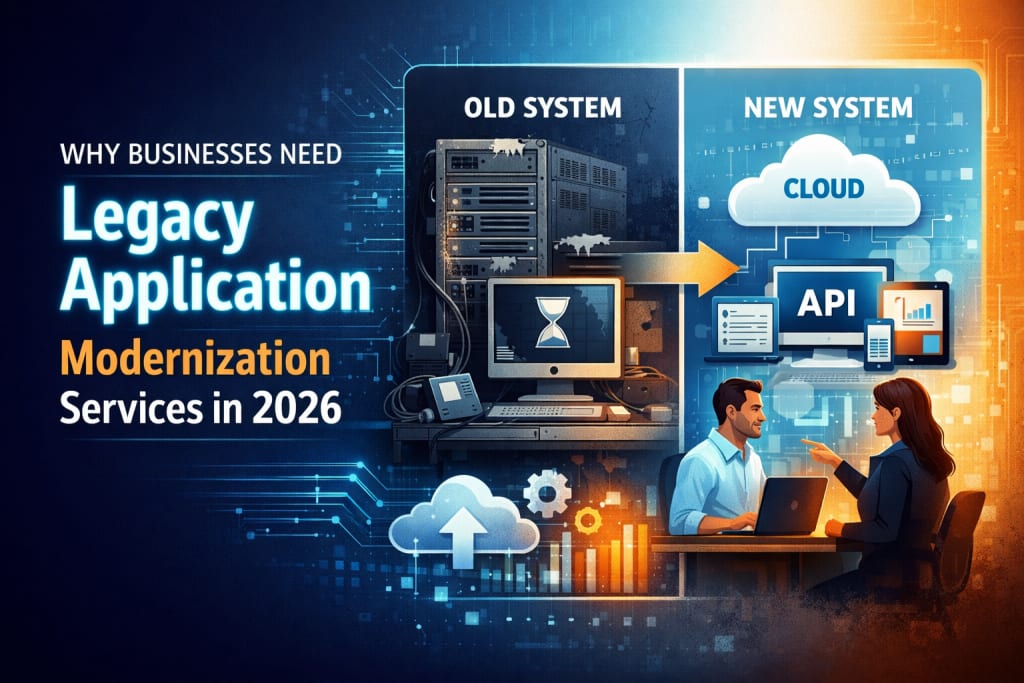
Digital transformation is no longer optional for modern organizations. As businesses adopt cloud computing, AI automation, cybersecurity frameworks, and scalable digital platforms, many companies still rely on outdated legacy software systems built years or even decades ago. While these systems once supported business growth, they now limit innovation, increase operational risks, and create security vulnerabilities.
In 2026, companies across industries such as banking, healthcare, retail, logistics, and manufacturing are actively investing in Legacy Application Modernization Services to remain competitive, secure, and future-ready. Modernization helps organizations transform aging infrastructure into scalable, cloud-ready, and high-performance digital solutions.
This article explains why legacy modernization has become a strategic necessity, the complete Legacy Application Modernization process, benefits, technologies involved, and how businesses can successfully upgrade their applications.
What Are Legacy Application Modernization Services?
Legacy application modernization refers to upgrading or transforming outdated software systems into modern, scalable, and efficient applications without disrupting business operations.
Many legacy systems were developed using older technologies, monolithic architectures, or on-premise infrastructure. These systems may still function but struggle to integrate with modern APIs, cloud services, or mobile platforms.
Why Businesses Need Legacy Application Modernization Services in 2026
1. Rising Cybersecurity Threats
Cybersecurity attacks have increased significantly in recent years. Older applications often lack modern encryption standards, identity verification systems, and compliance features.
- Legacy software may not support:
- Multi-factor authentication
- Advanced encryption protocols
- Secure API gateways
Modernization introduces updated security architecture, helping businesses comply with data protection regulations and avoid costly breaches.
2. Cloud Adoption and Scalability
Businesses today demand flexibility. Cloud infrastructure allows companies to scale applications based on user demand without heavy hardware investments.
Legacy systems hosted on local servers often face:
- Downtime risks
- Hardware limitations
- Expensive maintenance
Through the Legacy Application Modernization process, applications can migrate to cloud-native platforms that support automatic scaling and disaster recovery.
Benefits include:
- Reduced infrastructure cost
- Remote accessibility
- Faster deployment cycles
3. Integration with Modern Technologies
Modern organizations depend on interconnected digital ecosystems.
Examples include:
- AI analytics tools
- CRM platforms
- Payment gateways
- IoT systems
Legacy software often struggles with integration due to outdated architecture.
Legacy Application Modernization Services enable API-driven ecosystems that allow seamless connectivity between multiple business platforms.
4. Improved Customer Experience
Customers expect fast, mobile-friendly, and responsive digital experiences.
Older applications typically suffer from:
- Slow loading speed
- Poor user interfaces
- Limited mobile compatibility
Modernization introduces responsive UI/UX design and mobile optimization.
- Businesses benefit through:
- Better engagement
- Higher customer retention
- Increased conversion rates.
5. Cost Reduction and Maintenance Efficiency
Many companies assume maintaining existing systems is cheaper than modernization. However, outdated applications require specialized developers and constant patching.
Common legacy maintenance problems:
High support costs
Limited developer availability
Frequent downtime fixes.
Legacy modernization reduces long-term expenses by adopting automated deployment and standardized frameworks.
6. Faster Innovation and Product Launches
In competitive industries, speed matters.
Legacy systems slow innovation because:
Updates require lengthy testing.
Monolithic code structures delay feature releases.
The Legacy Application Modernization process converts applications into modular microservices.
This enables:
Faster updates
Continuous integration and deployment
Agile product innovation.
The Legacy Application Modernization Process Explained
Successful modernization requires a structured approach.
Step 1 Application Assessment
Businesses analyze:
- Current performance
- Security risks
- Technology stack
- Operational dependency.
This stage identifies whether to rehost, refactor, replatform, or rebuild applications.
Step 2 Strategy Planning
Organizations choose modernization goals such as:
Cloud migration
Performance improvement
Cost optimization.
Clear planning prevents business disruption.
Step 3 Architecture Transformation
Developers redesign application architecture.
Common upgrades include:
- Monolithic to microservices conversion
- Containerization using DevOps tools
- API-first architecture.
- This stage ensures scalability.
Step 4 Code Refactoring or Rebuilding
Depending on system condition:
Minor updates improve existing code.
Complete rewriting replaces outdated frameworks.
Modern programming languages improve efficiency and maintainability.
Step 5 Data Migration
Databases are moved into modern systems while preserving integrity.
Businesses often adopt:
Cloud databases
Real-time analytics engines.
Proper migration prevents data loss.
Step 6 Testing and Quality Assurance
Modernized applications undergo testing for:
Performance
Security vulnerabilities
Integration compatibility.
Automation tools reduce testing timelines.
Step 7 Deployment and Continuous Monitoring
After deployment, businesses monitor application performance through analytics dashboards.
Continuous monitoring ensures:
Faster issue detection
System optimization.
Industries Benefiting Most from Legacy Modernization
Banking and Finance
Financial institutions modernize systems to support digital payments and real-time transactions.
Healthcare
Hospitals upgrade systems to enable secure patient record sharing and telemedicine platforms.
Retail and E-Commerce
Retail companies modernize inventory and payment systems for omnichannel experiences.
Logistics and Manufacturing
Supply chain companies adopt IoT and predictive analytics through modernization.
Challenges Businesses Face Without Modernization
Organizations delaying modernization often experience:
Increasing downtime
Security vulnerabilities
Slow digital transformation
Poor scalability.
Competitors using cloud-native platforms quickly outperform businesses stuck with outdated infrastructure.
Future Trends in Legacy Application Modernization
Key trends shaping modernization include:
- AI-powered automation
- Serverless computing
- Low-code development platforms
- Hybrid cloud adoption.
Companies investing early gain competitive advantages.
Final Thoughts
In 2026, businesses cannot afford to rely on outdated technology systems that limit growth and innovation. The demand for scalable infrastructure, cybersecurity protection, cloud flexibility, and faster product development makes Legacy Application Modernization Services essential for long-term success.
By following a structured Legacy Application Modernization process, organizations can transform legacy software into modern digital platforms without disrupting operations. Modernization not only improves performance and customer experience but also reduces costs and prepares businesses for future technological advancements.
Companies that embrace modernization today position themselves as leaders in tomorrow’s digital economy.
About the Creator
keith laurance
Keith Laurance, a Tech Blogger and Entrepreneur working with Octal IT Solution. I'm passionate about my work and want to spread knowledge everywhere, so everyone can take advantage of the latest technologies and trends.
Keep reading
More stories from keith laurance and writers in 01 and other communities.
How to Choose an Android App Development Firm for Food Delivery Startups?
The food delivery industry is undergoing its most rapid expansion period. Customers today prefer using mobile applications to order food instead of making direct calls to restaurants. Startups need to select their Android app development company because this decision stands as their most essential choice in this challenging market.
By keith laurance8 days ago in 01
AI Development Services: Everything Businesses Need to Know
Artificial Intelligence (AI) is no longer a futuristic concept—it has become a practical and powerful tool for modern businesses. From automating repetitive tasks to delivering advanced predictive insights, AI is reshaping how companies operate, compete, and grow. Organizations across industries are investing in intelligent systems to improve efficiency, reduce costs, and enhance customer experiences.
By Aarti Jangid4 days ago in 01
Protecting User Data in a Privacy First US Market 2026
The relationship between American consumers and digital platforms is changing. It has reached a critical turning point in 2026. State-level privacy legislations continue to expand across the country. Data breach costs have reached new heights. User data protection is no longer just a technical checkbox. It is the primary driver of brand value. Business leaders face a major challenge today. They must deliver personalized experiences. They must also protect individual anonymity at all times.
By Del Rosario5 days ago in 01


Comments
There are no comments for this story
Be the first to respond and start the conversation.