
Why MQT and MUSD Redefine the Dual Token Economy Model?
Explore how MQT and MUSD operate within a disciplined two-token system, combining fixed supply mechanics, transparent allocation, and operational stability for sustainable digital growth.

What happens when one token is supposed to be a stable settlement layer, a reward engine, a tool for governance, and a tool for liquidity all at the same time? What happens to the pressure when the markets change? And how many promising ecosystems have failed not because there weren't enough new ideas, but because they were too big?
These questions aren't just things to think about. They are the most important thing about designing tokens right now. Separation is becoming more and more the answer. Not tearing things apart, but making them with a purpose. The point of a Dual Token Economy is not to make things harder, but to make them easier. This is where MQT and MUSD can help. They are not the same thing; they are two parts of a carefully planned parallel currency structure that work together.
The model doesn't give one tool all of the economic tasks. Instead, it separates stability from growth. MUSD makes sure that things stay the same. In the long run, MQT keeps everyone on the same page, encourages people to get involved, gives out rewards, and helps the ecosystem grow. These two tokens work together to keep things clear when things get tough.
MUSD: The Layer That Makes Everything Work Well
In a digital economy that will last for a long time, stability must be protected from change. Structural tension happens when incentive emissions, liquidity incentives, or speculative cycles get in the way of the settlement layer. MUSD is there to help with that stress. MUSD is the system that makes sure that transactions and platform features work as expected, even when rewards change the way things work. This difference matters when a system has more than one token. It stays stable because it doesn't have to deal with incentives to grow.
The token separation mechanism builds trust by keeping operational consistency and expansion mechanisms separate. Stability stays the same. It doesn't have to bear the burden of growth.
MQT: The Engine of Ecosystem Growth
MUSD keeps things in order, and MQT makes things happen. MQT is the asset in the ecosystem that is most useful. It helps with incentives, making sure there is enough cash flow, coming up with plans, and getting people to join the community. It is set up to keep the supply in check and encourage people to give money over time.
There will always be ten billion MQT coins. They were made once, and they will never be made again. This set cap makes it hard to find things and easy to guess. The idea behind the issuance model is "give out first, then release." First, allocations are made, and tokens are sent out along a clear unlocking curve. The structure answers any questions about how supply will grow in the future and builds trust over time.
The separation in a dual token model makes sure that the operational layer stays stable even when growth mechanisms are in place. You can grow without putting stability at risk.
A Way to Split Up and Even Out the Structure
The way MQT is spread out shows that there is a careful balance between giving communities power, building ecosystems, supporting liquidity, and getting institutions to work together.
Table 1: A List of the Different Parts of MQT
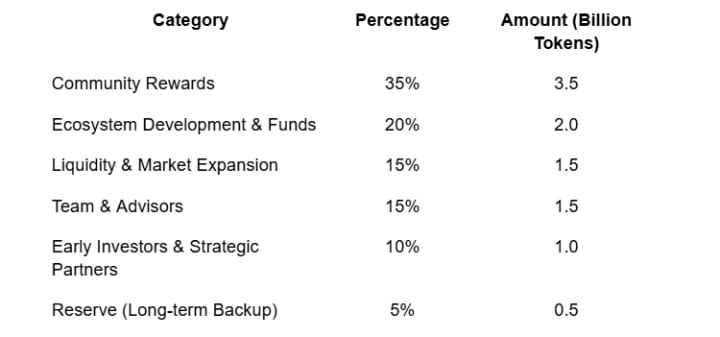
The biggest part of the value is the community rewards, which is what gets people to join. Partnerships, new ideas, and strategic growth are the only things that can get money for ecosystem development. Reserve and liquidity allocations are structural protections that are supposed to make the system less volatile and more stable.
This allocation model makes the bigger operational token structure work better by making sure that everyone who has a stake can take part in a way that is easy to understand.
The Structure of the Release and Long-Term Commitment
Discipline, not allocation, is what keeps things from falling apart. The unlocking schedule is set up so that supply can be added in a slow and responsible way.
People get community rewards over a long period of time, usually five to ten years, depending on how much they participate. Instead of following market trends, ecosystem funds are released in phases that match development milestones. Team allocations stay the same for a year, and then they are given out in a straight line over the next twenty-four to thirty-six months. This makes people want to stick with it for a long time. Early investors go through a similar process, with set lockup periods and schedules for gradually unlocking. The reserve allocation is not used most of the time. People only use it when things are really bad or when the ecosystem changes a lot.
Table 2: A Brief Overview of the Release Structure
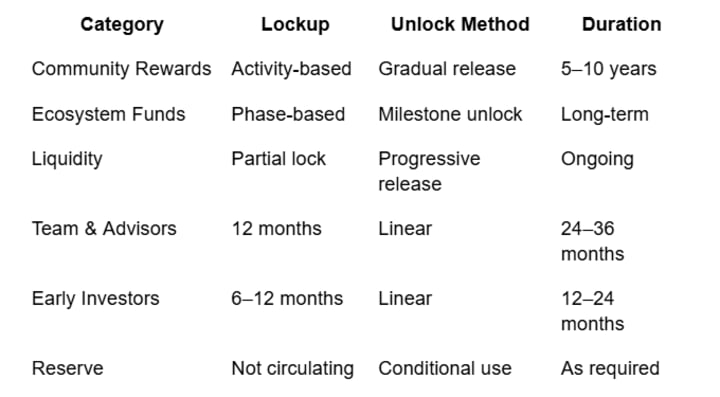
This strict release model supports the ideas behind the two-token economy. You can guess what the emissions will be. The rewards are the same. They look at how much exposure to the market there is.
Separation Makes Things Work More Strongly
When you put MQT and MUSD together, you can see how helpful a two-token system can be. There is no longer just one economic channel for stability, governance, incentives, and liquidity. Each function works in its own layer. The operational layer stays separate. The layer that makes things bigger is still changing. The end result is an ecosystem with a lot of tokens that is meant to last, not just grow.
In a world where market cycles put all of our ideas to the test, we are truly unique because we have structural clarity. MQT and MUSD are not just parts of a project; they are a planned way to build the digital economy that puts long-term growth ahead of short-term momentum and resilience ahead of reaction.
Conclusion
In short, structural pressure builds up when one token has to handle all of these things at once: stability, incentives, liquidity, and governance. Over time, that pressure makes things less aligned, changes their value, and makes it harder to trust them. A Dual Token Economy helps with that stress by making it clear who is in charge of what. MUSD makes sure that everything runs smoothly in this system, and MQT helps the ecosystem grow by having a set supply and a controlled release structure. The end result is a system that is stronger and more balanced, where growth doesn't hurt stability. In the end, smart design is what makes digital economies last, not hype and speed. This is the foundation for MQT and MUSD.
About the Creator
MEXQUICK
Beyond Market Move - At MEXQuick, we combine smart trading infrastructure with global market access — offering users a seamless way to trade, learn, and grow. MEXQuick News & MEXQuick News
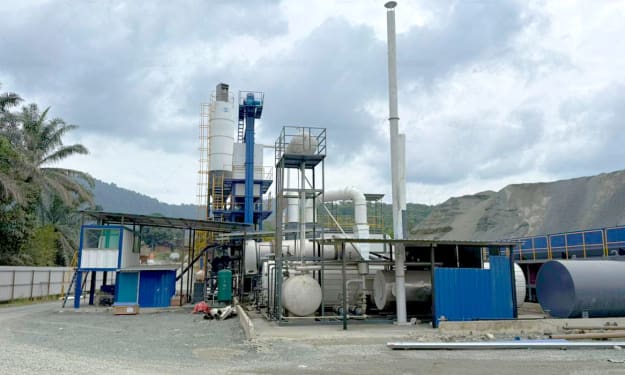
Energy Consumption Impact of Batch Asphalt Plant Working Principles
The working principle of a batch asphalt plant significantly influences energy consumption during asphalt production. Understanding how these plants operate reveals key factors affecting their energy efficiency. This article explores the operational mechanics of a batch asphalt plant, identifying how each stage impacts energy needs and highlighting best practices to enhance energy efficiency while maintaining production quality.
By Macroad Asphalt Plant7 days ago in 01
Milliseconds and Money: Inside the World of Crypto Arbitrage Bots
Introduction In the fast-moving world of cryptocurrency, time is not just money — it is everything. Markets operate 24/7, prices shift within seconds, and opportunities can disappear before a human trader even refreshes the screen. This environment has given rise to a powerful tool: the crypto arbitrage bot. Designed to identify and exploit price differences across exchanges, these automated systems operate at machine speed, turning milliseconds into measurable profit opportunities.
By Nayel Basim Al Shehhia day ago in 01


Comments
There are no comments for this story
Be the first to respond and start the conversation.