Sculpture
The Man from Taured – A Mystery at Tokyo Airport
In the sweltering heat of July 1954, Tokyo’s Haneda Airport buzzed with the usual crowd of businessmen, tourists, and diplomats arriving from around the globe. Among them was a sharply dressed man in his mid-40s. He appeared European, polite, and fluent in several languages, including Japanese. There was nothing remarkable about him—until he handed over his passport at customs.
By Muhammad Saeed9 months ago in Art
The "Last Da Vinci" Mysteries and the $450 Million "Salvator Mundi"
Introduction Leonardo da Vinci's Salvator Mundi, or "Savior of the World," sold for a record-breaking $450.3 million in November 2017 at Christie's New York, making it the most expensive painting ever sold at auction. The sale not only captivated the general public, but it also sparked ferocious arguments among scholars, art historians, and collectors. Was this Leonardo da Vinci's lost masterpiece, or was it a work that was overhyped and lacked authenticity?
By Silas Blackwood9 months ago in Art
Abstract Sculpture: A Bold Expression of Art and Emotion
In the world of contemporary art and modern design, Abstract Sculpture stands out as a powerful and captivating form of expression. Unlike traditional sculptures that depict clear and recognizable figures or scenes, abstract sculptures embrace creativity without boundaries—often representing ideas, emotions, or forms that challenge the viewer’s perception.
By Studio Renaissance9 months ago in Art
Rodin’s Gates of Hell: The Sculpture That Made Suffering Beautiful
At first glance, The Gates of Hell appears like a swirling mass of bodies and chaos, a fevered nightmare frozen in bronze. But stand before it long enough, and something profound begins to unfold: a tragic opera of humanity’s darkest desires, intellectual torment, and spiritual longing. Auguste Rodin’s masterwork is more than a sculpture—it’s a philosophical abyss.
By Zohre Hoseini9 months ago in Art
Why Have There Been No Great Women Artists?
Introduction The question "Why have there been no great women artists?" was famously posed by art historian Linda Nochlin in her groundbreaking 1971 essay of the same name. At first glance, the question seems provocative, even inflammatory. However, Nochlin’s intention was not to suggest that women are incapable of greatness in art but rather to critique the systemic barriers that have historically prevented women from achieving the same recognition as their male counterparts. This article explores the historical, social, and institutional factors that have contributed to the underrepresentation of women in the canon of "great" artists. By examining art education, societal expectations, and the structures of the art world itself, we can better understand why women artists have often been overlooked and how contemporary efforts are reshaping the narrative. 1. Historical Barriers to Women in Art A. Limited Access to Art Education For centuries, formal art training was largely inaccessible to women. During the Renaissance and Baroque periods, aspiring artists typically trained in workshops or academies, which were male-dominated spaces. Women were often excluded from life-drawing classes, which were essential for mastering human anatomy—a cornerstone of traditional Western art. Without access to these foundational skills, many women were denied the opportunity to develop their talents fully. Some exceptions existed, such as Artemisia Gentileschi (1593–1656), who trained under her father and became one of the most accomplished Baroque painters. However, her success was rare and hard-won, requiring familial connections and extraordinary persistence. B. Gendered Expectations and Domestic Roles Women were expected to prioritize marriage, child-rearing, and household duties over professional ambitions. Even women from artistic families, such as Sofonisba Anguissola (1532–1625), often had to balance their creative work with societal expectations. Many talented women artists abandoned their careers after marriage or worked in obscurity, their contributions overshadowed by male peers. C. Patronage and the Art Market Artistic success historically depended on patronage—support from wealthy individuals, the church, or the state. Since women had limited social and professional networks, they struggled to secure commissions. Male artists were often preferred for prestigious projects, reinforcing the perception that great art was inherently masculine. 2. The Myth of the "Great Artist" and Its Exclusion of Women A. The Romanticized Genius The concept of the "great artist" is deeply tied to the Romantic ideal of the solitary, tormented genius—a figure culturally coded as male. Artists like Michelangelo, Van Gogh, and Picasso are celebrated not just for their skill but for their mythologized personas. Women, confined by domestic roles and social restrictions, rarely had the freedom to cultivate such legacies. B. Biases in Art History and Criticism Art historians and critics have long perpetuated the marginalization of women artists. Until the late 20th century, most art history textbooks focused overwhelmingly on male artists, framing their work as universal while treating women’s art as niche or inferior. Even when women produced exceptional work, it was often dismissed as "craft" (e.g., textiles, ceramics) rather than "fine art." C. The Canon and Institutional Exclusion Museums, galleries, and academic institutions have historically favored male artists, reinforcing the idea that greatness in art is male-dominated. The exclusion of women from major exhibitions and permanent collections created a self-perpetuating cycle where their absence was seen as proof of their lack of greatness, rather than a result of systemic bias. 3. Women Artists Who Defied the Odds Despite these obstacles, many women achieved remarkable success, though their recognition often came posthumously or was downplayed during their lifetimes. Some notable examples include: Artemisia Gentileschi – A master of Baroque painting, known for her dramatic depictions of strong female figures. Élisabeth Vigée Le Brun (1755–1842) – A prominent portraitist in pre-revolutionary France and favorite of Marie Antoinette. Berthe Morisot (1841–1895) – A key figure in Impressionism, yet often overshadowed by male peers like Monet and Degas. Georgia O’Keeffe (1887–1986) – One of the few women to gain widespread recognition in modern art, though her work was often sexualized by critics. Frida Kahlo (1907–1954) – Now celebrated as a feminist icon, but initially overlooked in favor of her husband, Diego Rivera. These artists succeeded despite systemic barriers, yet their struggles highlight how the art world has historically sidelined women. 4. Progress and Challenges in the Contemporary Art World A. Feminist Art Movements The feminist art movement of the 1960s and 70s, led by figures like Judy Chicago, Miriam Schapiro, and the Guerrilla Girls, challenged the male-dominated art world. They demanded equal representation, critiqued institutional sexism, and created art that centered women’s experiences. B. Increasing Representation Today, more women artists are gaining recognition, with figures like Yayoi Kusama, Cindy Sherman, and Kara Walker achieving critical and commercial success. Museums are also reassessing their collections, with initiatives like the Tate Modern’s efforts to acquire more works by women. C. Persistent Inequalities Despite progress, disparities remain: Auction Prices – Works by women artists still sell for significantly less than those by men. Exhibition Opportunities – Major retrospectives and solo shows disproportionately feature male artists. Leadership Roles – Women remain underrepresented in directorial positions at major museums.
By Silas Blackwood9 months ago in Art
Shiv Murti: A Sacred Symbol of Power, Peace, and Divine Energy
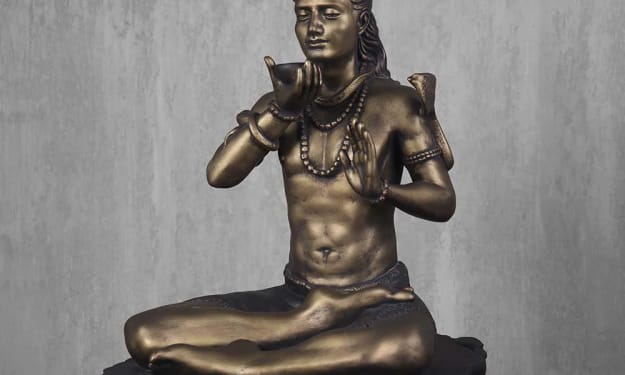
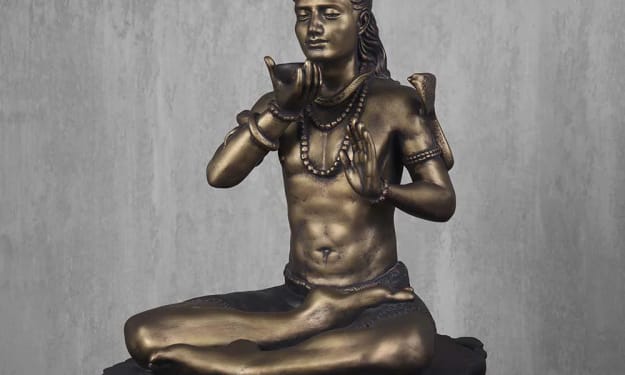
The Shiv Murti, or idol of Lord Shiva, holds immense spiritual, cultural, and aesthetic value in Hinduism. Known as the destroyer and transformer within the holy trinity (Trimurti) of Hindu gods—Brahma, Vishnu, and Shiva—Lord Shiva is revered for his calm, meditative presence as well as his fierce, powerful energy. A Shiv Murti not only enhances home décor but also instills a sense of peace, strength, and divinity in your living space.
By Studio Renaissance9 months ago in Art
Shiv Murti: A Sacred Symbol of Power, Peace, and Divine Energy
In Hinduism, Lord Shiva is one of the most revered deities, known as the destroyer and transformer in the Holy Trinity (Trimurti), alongside Brahma and Vishnu. A Shiv Murti (statue or idol of Lord Shiva) is not just a religious artifact but a deeply spiritual and symbolic presence in homes, temples, gardens, and public spaces. Placing a Shiv Murti in your surroundings is believed to invite divine energy, inner strength, and a sense of calm.
By Studio Renaissance9 months ago in Art
Shiv Murti: A Sacred Symbol of Lord Shiva’s Divine Presence
The Shiv Murti, or Shiva idol, is more than a religious artifact — it is a powerful symbol of faith, spirituality, and cosmic energy for millions of devotees across the world. Revered as a representation of Lord Shiva, one of the principal deities of Hinduism, the Shiv Murti holds immense spiritual and cultural significance. Whether placed in temples, homes, or meditation spaces, it serves as a focal point for devotion, reflection, and inner peace.
By Studio Renaissance9 months ago in Art
Microblading Eyebrows: Understanding The Techniques To Its Core
Microblading Eyebrows is a cutting-edge technique that has transformed the beauty industry as it provides a solution to people with sparse or uneven eyebrows. This semi-permanent technique refers to the process of implanting pigment into the skin, giving the brows an appearance of being fuller, well-defined, and intricately shaped. However, over the years, many techniques and styles have developed to meet the needs of different people and their skin types.
By Metamorphosis Microblading9 months ago in Art
The Enduring Art of Ceramic: From Ancient Silk Roads to Sri Lankan Innovation and Beyond. AI-Generated.
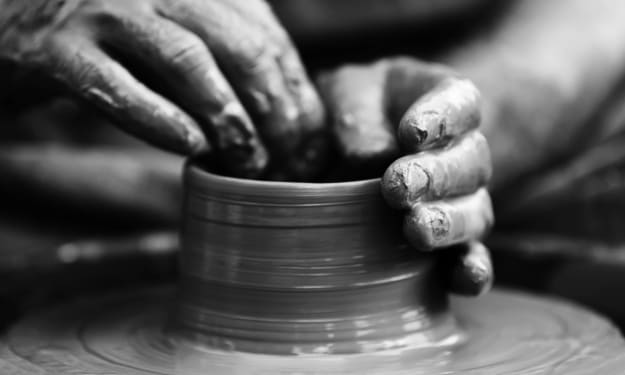
Ceramics, an art form and a functional necessity, boasts a history as rich and varied as the earth from which it originates. From delicate porcelain prized along the ancient Silk Road to the vibrant creations emerging from modern kilns, the story of ceramic is a testament to human ingenuity and our enduring relationship with the natural world.
By The Colors9 months ago in Art
Decorative Objects: The Art of Personalizing Your Living Space
Decorative Objects are more than just accessories—they’re the subtle touches that bring life, personality, and style into your home. Whether it’s a vintage vase, a modern sculpture, or a handcrafted candleholder, decorative objects reflect your tastes and help tell your story through your interior spaces. These items enhance aesthetics, add character, and often serve as conversation starters.
By Studio Renaissance9 months ago in Art