
Traditional Music of the Indian Subcontinent
A Symphony of Heritage
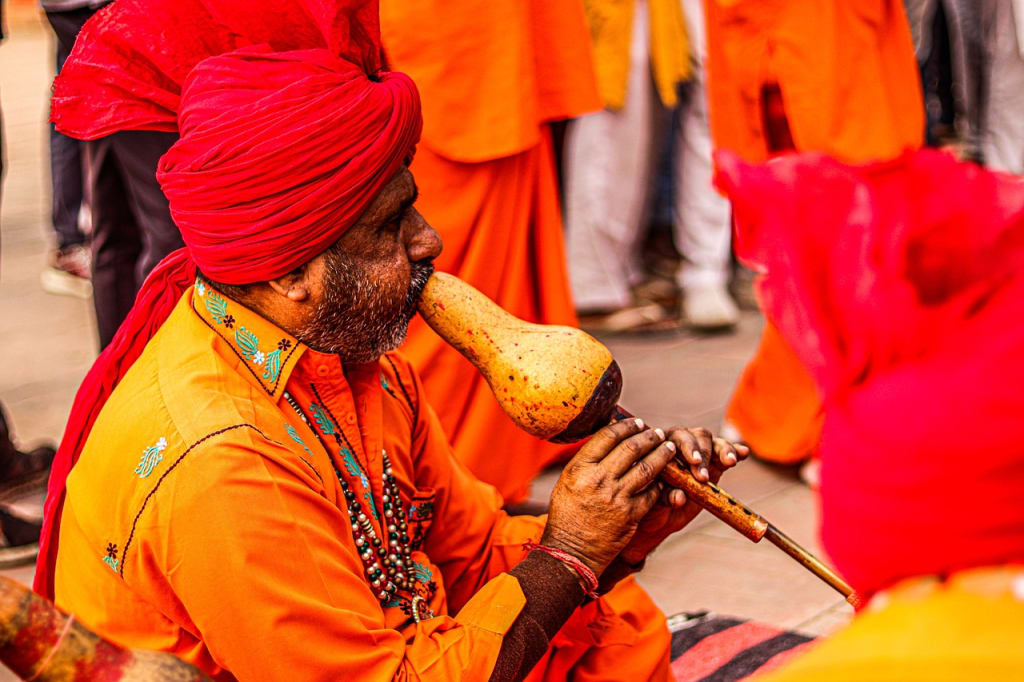
Traditional Music of the Indian Subcontinent: A Symphony of Heritage
The Indian subcontinent boasts a rich musical legacy spanning millennia, deeply intertwined with its cultural, spiritual, and social fabric. Rooted in ancient Vedic traditions and shaped by diverse regional and historical influences, its music reflects a harmonious blend of melody, rhythm, and improvisation. This article explores the key traditions, instruments, and philosophies that define the subcontinent’s musical identity.
1. Classical Music: The Pillars of Raga and Tala”
Indian classical music is divided into two major systems: “Hindustani” (North India) and “Carnatic” (South India). Both share foundational concepts of “raga” (melodic frameworks) and “tala” (rhythmic cycles), yet differ in practice and instrumentation due to historical influences.
A) Hindustani Music:
Emerging around the 13th century, Hindustani music absorbed Persian elements during Mughal rule, incorporating instruments like the sitar, sarod, and tabla. Performances often begin with an alap—a slow, improvised exploration of the raga—before progressing to structured compositions like the “gat”, accompanied by rhythmic interplay between the soloist and tabla . Notable instruments include the “bansuri” (bamboo flute) and the “shehnai” (double-reed wind instrument).
B) Carnatic Music:
Predominantly preserved in South India, Carnatic music emphasizes vocal traditions and fixed compositions, often devotional in nature. Key instruments include the “veena” (plucked string instrument), “mridangam” (barrel drum), and “violin”. The “kriti”, a structured song form, highlights intricate rhythmic patterns (“thalam”) and melodic improvisation.
Both systems prioritize improvisation within rigid frameworks, with ragas evoking specific moods or times of day, and talas governing complex rhythmic cycles like the 16-beat “teental” or the 8-beat “adi tala” .
2. Folk Music: The Voice of the People
Folk traditions, or “desi sangeet”, vary widely across regions, reflecting local customs, languages, and rituals. These genres are often participatory, accompanying dances or communal celebrations:
• Punjab: “Bhangra”, a lively harvest dance, features the “dhol” (double-headed drum) and energetic rhythms.
• Rajasthan: Songs like “panihari” (water-fetching melodies) and “maand” (epic ballads) highlight desert life, often performed with the “sarangi” (bowed string instrument).
• Bengal: “Baul” music, rooted in mysticism, uses the “ektara” (one-string lute) and poetic lyrics exploring spiritual unity.
• Gujarat: “Garba” and “dandiya” dances during Navratri festivals involve clapping and stick rhythms, symbolizing community joy.
Folk music’s simplicity and thematic diversity—from monsoon celebrations to Sufi poetry—contrast with classical rigor, yet both often intersect, with ragas borrowing folk motifs.
3. Instruments: A Legacy of Craftsmanship
The subcontinent’s instruments are as diverse as its traditions, classified into four ancient categories: “strings”, “percussion”, “wind”, and “idiophones”:
• Strings: The “sitar” (with sympathetic strings), “sarod” (fretless lute), and “veena” (gourd-resonated zither) dominate classical genres.
• Percussion: The “tabla” (paired drums) and “mridangam” (barrel drum) provide intricate rhythmic foundations, while the “dholak” and “kanjira” (frame drum) energize folk music.
• Wind: The “bansuri” (flute) and “nagaswaram” (double-reed) evoke pastoral and ceremonial moods, respectively.
4. Spiritual and Cultural Significance
Indian music is deeply spiritual, historically linked to Hindu temple rituals and Sufi devotion. The “dhrupad” genre, one of Hindustani music’s oldest forms, merges meditative chanting with “pakhawaj” drumming, often praising deities. Similarly, Carnatic “kirtanas” blend poetry and melody in worship.
The “guru-shishya parampara” (teacher-disciple tradition) underscores oral transmission, emphasizing not just technical skill but philosophical and ethical values.
“5. Evolution and Global Influence
Post-independence, Indian classical music gained global prominence through maestros like “Ravi Shankar” (sitar) and “Ali Akbar Khan” (sarod). Fusion genres emerged in the 20th century, blending jazz, rock, and electronic elements—exemplified by collaborations like “Shakti” (John McLaughlin and Zakir Hussain). Bollywood music further popularized classical ragas, adapting them into film soundtracks.
Conclusion
The traditional music of the Indian subcontinent is a living tapestry of ancient wisdom and regional diversity. From the meditative depths of ragas to the pulsating energy of folk dances, it continues to inspire both reverence and innovation, bridging the past and present in a timeless resonance.
About the Creator
Keep reading
More stories from MD. HEDAYTUN NABI and writers in Art and other communities.
History of Israel
History of Israel The history of Israel is a great matter of religious significance, colonial mandates, and enduring conflict. This article covers key developments from biblical times to the present-day geopolitical affairs, synthesizing historical indicators and their long lasting impacts.
By MD. HEDAYTUN NABI9 months ago in History
Clan MacBean
It was an eerie lit night. As I wandered across the moors. To find myself following the pursuit of all those missing people. The 1,000 odd people missing over a few years. The seers had met me at the inn and discussed what they had seen, in their dreams, for they say it is a man missing with his 40 odd strong clan. They headed for the mountains. Wild folk. Disappearing messengers into thin air. Never seen again. Scarier than anything from hell. This thing is human. Goes by the name of Seany Bean. His clan of 40 people wild as they come. To what means of disappearance I cannot say. The seers allude to maybe witchcraft. Surely not. The ancient wizardry still lingers of the highlands. Where druids would rule, they would use magic against the beasts that roamed wild.
By Karl McBeath3 days ago in Art
The Pride Flag and the Diversion
For nearly a decade, the LGBTQIA Pride Flag rippled in the wind at Christopher Park, a kaleidoscope of color staked into the soil of America’s first national monument to LGBTQIA+ liberation. That flag came down this week. Federal officials, citing new guidance from the Trump Administration, silently lowered the rainbow flag from its pole across the street from the Stonewall Inn. The birthplace of the modern gay rights movement now flies only the United States flag.
By Tim Carmichael6 days ago in Pride


Comments (1)
Nice writing. Thanks.