Annie Kapur
Bio
I am:
🙋🏽♀️ Annie
📚 Avid Reader
📝 Reviewer and Commentator
🎓 Post-Grad Millennial (M.A)
***
I have:
📖 280K+ reads on Vocal
🫶🏼 Love for reading & research
🦋/X @AnnieWithBooks
***
🏡 UK


Stories (2930)
Filter by community
Book Review: "Call Them By Their True Names" by Rebecca Solnit
Rebecca Solnit previously wrote an incredible book called Recollections of My Non-Existence in which my review called it 'fantastic'. Solnit has a special talent for creating universality in her experiences through her incredible use of language. Articulate and yet, not overly verbose, charming without being saccharine, Rebecca Solnit is one of the best writers of our day and is bound to be remembered as a Joan Didion kind of figure in the future. A woman who's craft is as important as the story she writes. And there are very few more important stories to tell than what has been going down with our friends across the Atlantic for the past decade or so. Let us therefore, not mince our words. We should take these atrocities and call them by their true names...
By Annie Kapurabout 12 hours ago in Geeks
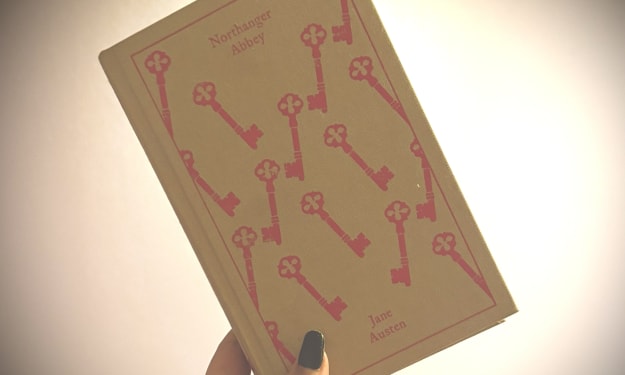
Rereading Review: "Northanger Abbey" by Jane Austen
I've decided to try out something called a 'rereading review' in which I will review now and again, a book I have read before. This usually consists of me reading the book again for some reason (usually because I really have an itch for it) and I promise, I won't just fill this up with rereading my favourite book (which I reread every few months anyway). And if you don't know what my favourite book is, then welcome to my page - you're clearly new here.
By Annie Kapura day ago in Geeks
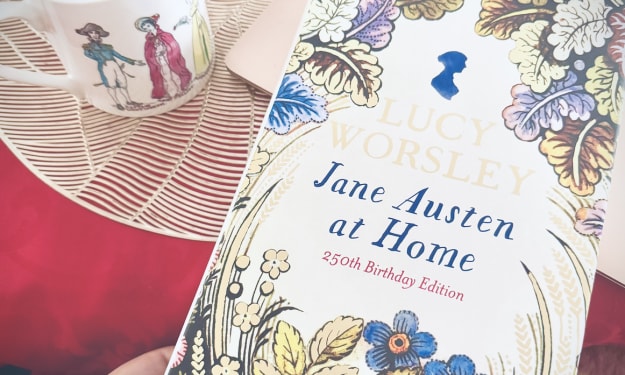
"Jane Austen at Home" by Lucy Worsley (Pt.4)
This review covers chapters 27 through to the end of the book, including the epilogue. *** The 'Great House', where which Jane would receive most of her education in grand houses, may have been part of the inspiration for her later writings like the incomplete Sanditon. But apart from this, we have the wit of Emma coming through. Lucy Worsley teaches us of the trepidations that came with publishing Emma and the expectation that it would be the best selling book yet. There was a lot of back and forths for Jane and her publisher, John Murray. She was starting to prove that, like her main character of Emma Woodhouse, she was capable of holding her own.
By Annie Kapur2 days ago in Geeks
Aurora Floyd by Mary Elizabeth Braddon
Temple Bar Magazine first published Aurora Floyd in serial form between the years 1862 and 1863. After that, it was released as a three-volumed novel and has been considered the most successful work of its writer, Mary Elizabeth Braddon after her sensational Lady Audley's Secret. Melodramatic and filled with domestic intrigue, the story captivated Victorian readers and contributed to those novels which often critique the models of sensibility, preached but not practiced, by the upper class.
By Annie Kapur3 days ago in Geeks
"Jane Austen at Home" by Lucy Worsley (Pt.3)
This review covers chapters 19 through to 26. *** As we continue through the story of Jane, Lucy Worsley gives us something to chew on. We get the story of the first writing of my personal favourite Austen novel, Northanger Abbey - originally entitled Susan. The 'chewing' is to decide exactly when it was being forged. There are known bursts of it in 1798 and 1799, but as the author states, there is certain inspiration from another book that wasn't published until 1801. It is a direct representation that though we may know much about Jane Austen's life from her letters, her everyday mapped out for us, her dislikes and likes seen clearly - we still don't really have the minutae of her writings. It is a bit here and there. Again, maybe this was done on purpose. Jane Austen was clever enough to keep those who didn't need to know in the dark about her actual intentions for the writings and when they were held out.
By Annie Kapur3 days ago in Geeks
Book Review: "Jane Austen at Home" by Lucy Worsley (Pt.2)
This review covers chapters 10 through to 18. *** Chapter 10, entitled 'Novels' covers Jane's written beginnings. We get to see inside the first formations of the novel that would become Sense and Sensibility and how, in installments, she would read it per evening to her family. These were novels written in letters, which were not in fashion and had not been for decades. I'm quite surprised and filled with joy that such an incredible woman existed in a place where more than often, extra-curricular activities outside that of being a wife and mother were not considered very important. However, her father thought them important enough to buy his daughter a writing desk with many drawers. This single act of encouragement was definitely a play to make sure his daughter continued to show her passions - a man clearly ahead of his time and fond of his daughters.
By Annie Kapur4 days ago in Geeks
Book Review: "Cranford" by Elizabeth Gaskell
"I could perceive she was in a tremor at the thought of seeing the place which might have been her home, and round which it is probable that many of her innocent girlish imaginations had clustered" - "Cranford" by Elizabeth Gaskell
By Annie Kapur5 days ago in Geeks
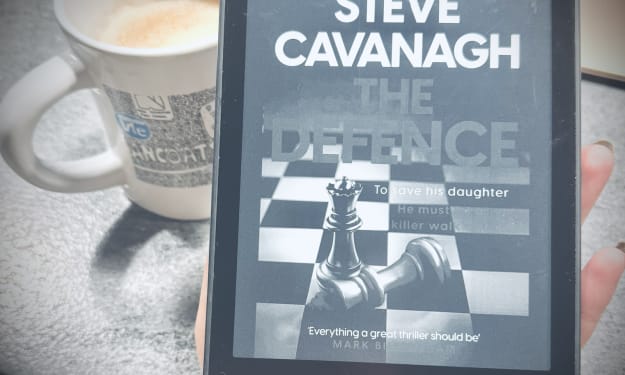
Book Review: "The Defence" by Steve Cavanagh
This book was recommended to me by Twitter and I’m seriously reconsidering taking recommendations from that hellscape. The first novel in a series is supposed to be the one that hooks you in, makes you fall in love with characters and themes and establish real in-depth parts of the backstory to you. This book does none of those things and yet, is so confident about itself that it completely fails to give the reader a coherent story that they can get lost in. I would say the audience of this book is basically people who don’t like to read - why? There’s no atmosphere, there are no in-depth concepts, there is no real story and the characters are hollow as hell. I was quite underwhelmed after reading this, it just felt so forgettable.
By Annie Kapur7 days ago in Geeks
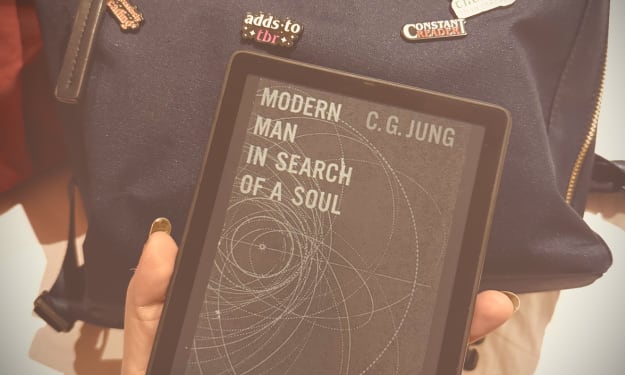
Book Review: "Modern Man in Search of a Soul" by Carl Jung
What happens when we strip human life of meaning? Well, according to Jung, everything begins to go wrong for us. From the moment we started to have control over nature, we start to descend in meaning and value. Rationalism may have brought us comfort in understanding, but it has also brought us less meaning in our soul. I'm not going to lie, if a book doesn't define what a 'soul' or a 'spirit' is, then I have no interest in the argument. The issue is that Jung takes us on a journey in which we start to understand what the soul is - or at least, what it is meant to consist of. So even though I don't agree with all of it, I understand where he is coming from when he talks about the subject of a 'soul'. Science can provide us with understanding but cannot answer the larger, more existential questions regarding ourselves.
By Annie Kapur9 days ago in Geeks
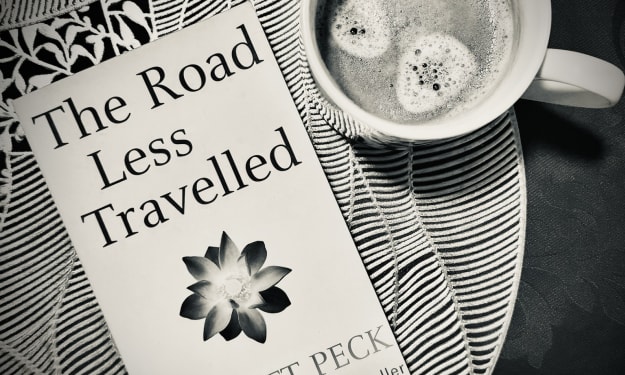
Book Review: "The Road Less Travelled" by M. Scott Peck
This book sort of details the same ideas The Marshmallow Test states but with a spiritual flair to it. Whenever someone mentions the 'human spirit' I usually ask for a definition as you'll probably see in that, they can't actually define what it is. With all the 'spiritual' stuff and the illogical thinking which roots itself in clearly, some sort of religious lexicon, I definitely went into the book telling myself I probably wouldn't be agreeing with many of the points put forward and thus, was cynical about the 'spirit' perspective that the book was pushing. However, it did make some interesting arguments regarding everything from delayed gratification to how incredibly important parenting is.
By Annie Kapur9 days ago in Geeks
The Ballad of Peckham Rye by Muriel Spark
A dark-comic novel which is often regarded as 'sharp', The Ballad of Peckham Rye (1960) displays all of the notes regularly associated with the author Muriel Spark. Set in post-war London, the novel follows the arrival of Dougal Douglas, an enigmatic and manipulative Scottish outsider who disrupts the mundane lives of the working-class community in Peckham. The layered narrative, the explorations of human weakness and the wit are all part and parcel of what makes the novel what it is.
By Annie Kapur10 days ago in Geeks