Kek Viktor
Bio
I like the metal music I like the good food and the history...
Stories (111)
Filter by community
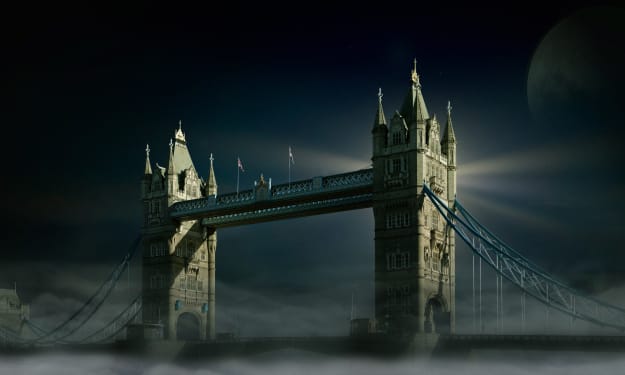
🤢The Great Stink of London, Summer 1858: How the Thames River's Filth Nearly Shut Down Parliament and Sparked Sewer Reforms
The Summer That Stank to High Heaven In the sweltering summer of 1858, London became the setting for one of the foulest crises in urban history. For several weeks, an unbearable stench rose from the River Thames, the city's main waterway and open sewer, engulfing the metropolis in a nauseating miasma that no one - not even the powerful lawmakers in the Palace of Westminster - could escape. The event, which became known as "The Great Stink," was more than just a sensory nightmare; it was a pivotal moment in the evolution of public health and urban infrastructure.
By Kek Viktor9 months ago in History
🧻 The Toilet Paper Panic Buying During Various Pandemics: How a Mundane Household Item Became a Symbol of Global Anxiety
Part I: A Curious Phenomenon — Panic in the Aisles In the early months of the COVID-19 pandemic, a peculiar sight became common across the globe: barren supermarket shelves where once stood neat stacks of toilet paper. This wasn’t an isolated event. From Tokyo to Toronto, from Milan to Melbourne, scenes emerged of people rushing into stores, carts overflowing with bulky packs of toilet rolls, sometimes wrestling them away from fellow shoppers in desperate attempts to “stock up.” The rush on toilet paper became one of the most vivid, surreal images of the global health crisis, replayed in countless news reports and social media posts. As viral as the virus itself, these panic-buying frenzies turned toilet paper — a soft, white, everyday necessity — into a symbol of a world unmoored by fear.
By Kek Viktor9 months ago in History
The Battle of Karansebes, 1788: The Austrian Army Accidentally Fighting Itself in the Chaos of War
Among the most bewildering and farcical episodes in military history, the Battle of Karansebes stands out as a stunning example of miscommunication, panic, and human error spiraling out of control. Fought during the Austro-Turkish War of 1787–1791, the event is infamous not for a valiant clash with the Ottoman enemy, but for a chaotic episode where an Austrian army ended up attacking itself. Taking place on the night of September 17–18, 1788, in what is now modern-day Romania, the so-called battle involved confusion, fear, and an abundance of alcohol - ultimately leading to hundreds of Austrian soldiers dead or wounded by friendly fire, long before the Ottomans even arrived.
By Kek Viktor9 months ago in History
🌷 The Tulip Mania Bubble in the Dutch Republic, 1636–1637: When Tulip Bulbs Became the World's Most Valuable Commodities Before the Crash
🏩 Part 1: A Blooming Republic - The Dutch Golden Age and the Rise of the Tulip In the early 17th century, the Dutch Republic stood at the pinnacle of European power and prosperity. This confederation of provinces, recently liberated from Spanish rule after decades of conflict, had rapidly evolved into a formidable maritime, financial, and cultural powerhouse. The Dutch Golden Age, as historians now call it, was marked by explosive growth in global trade, scientific exploration, art, and banking.
By Kek Viktor9 months ago in History
🧠Quantum Breakthrough at Room Temperature: The Dawn of Practical Quantum Networks
In a discovery that may very well become one of the defining scientific achievements of the decade, researchers from the University of Tokyo and the Delft University of Technology in the Netherlands have successfully demonstrated quantum entanglement at room temperature using diamond-based qubits. This astonishing feat removes one of the largest barriers to real-world quantum computing and communication: the need for prohibitively cold environments. While the phrase "quantum entanglement" might conjure up images of science fiction or highly abstract theory, this new development has immediate and far-reaching consequences. It could mark the beginning of a new era in secure communication, global information transfer, and the development of powerful quantum computers that operate in everyday conditions.
By Kek Viktor9 months ago in Futurism
🍯 The Great Molasses Flood of Boston, January 15, 1919: A Sticky Catastrophe That Swept Through the Streets and Caused Multiple Fatalitie
🌇 Part 1: Boston at Boiling Point - The City Before the Flood To understand how a flood of molasses could destroy part of a city and take lives, we must first travel back to Boston in the winter of 1919 - a city full of contradictions, opportunity, and unrest. The Great War had just ended in November 1918, and like many American cities, Boston was adjusting to the uneasy transition from wartime industry to peacetime life. Amid economic shifts, labor strikes, political radicalism, and the tail-end of a deadly flu pandemic, tension simmered in the air.
By Kek Viktor9 months ago in History
🐖The Pig War on the US–Canada Border, 1859: A Territorial Dispute Triggered by the Killing of a Single Pig
🏞 Part 1: A Snoutful of Trouble - The Pig That Started It All In the otherwise quiet and pastoral June of 1859, San Juan Island - then an unsettled jewel in the Pacific Northwest's emerald crown - became the unlikely battleground for a bizarre territorial standoff between two of the world's most powerful nations: the United States and Great Britain. San Juan Island, lush with cedar forests, rugged coastlines, and fertile grazing fields, was inhabited by a small but tense mix of British employees of the Hudson's Bay Company and independent American homesteaders drawn west by the promise of land and opportunity.
By Kek Viktor9 months ago in History
🏰The Defenestrations of Prague, 1419 and 1618: Political Assassinations by Throwing People Out of Windows That Sparked Wars
Part 1: Introduction - What Is a Defenestration? The term defenestration may sound peculiar to modern ears, but it holds a deeply significant place in European history - particularly in the Czech lands. Derived from the Latin words de- ("down from" or "away") and fenestra ("window"), defenestration simply means the act of throwing someone out of a window. Though seemingly straightforward, this term encapsulates a rare yet dramatic form of political violence that became emblematic of Prague's turbulent religious and political struggles during the late Middle Ages and the early modern period.
By Kek Viktor9 months ago in History
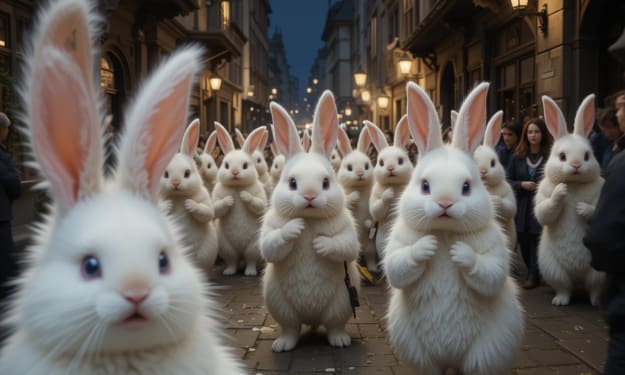
🐇The Great Rabbit Panic of 1730: When Fluffy Bunnies Terrorized England
Part 1: The Quiet Before the Storm - England's Peaceful Countryside In the early 1700s, England's countryside was a patchwork of farmland, pastures, and sleepy villages, where life revolved around planting, harvesting, and simple village traditions. Potatoes were becoming a staple crop, slowly reshaping the British diet. For many, farming was a steady, if humble, livelihood - season after season of sowing seeds, tending fields, and reaping crops.
By Kek Viktor9 months ago in History
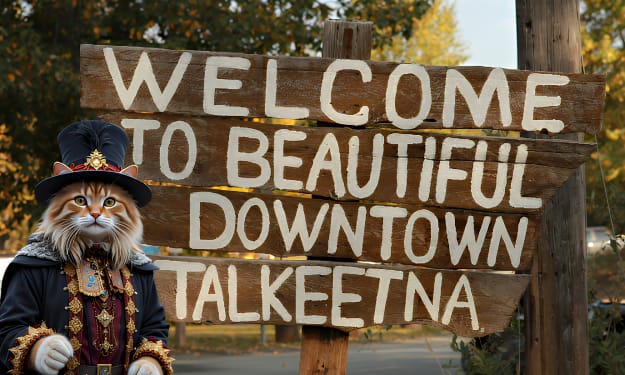
😺Stubbs the Cat: The Legendary Mayor Who Ruled an Alaskan Town with a Purr (1997–2017)
I. Welcome to Talkeetna: Where the Unusual Is the Norm Deep in the icy heart of Alaska, at the confluence of three rivers and nestled under the towering shadow of Denali, lies the quirky town of Talkeetna - a place that proudly marches to the beat of its own drum. It isn't just remote. It's the kind of offbeat outpost that feels as if it were plucked from a Coen Brothers film and plopped into reality. Talkeetna doesn't do things the normal way, and the locals wouldn't have it any other way.
By Kek Viktor9 months ago in History
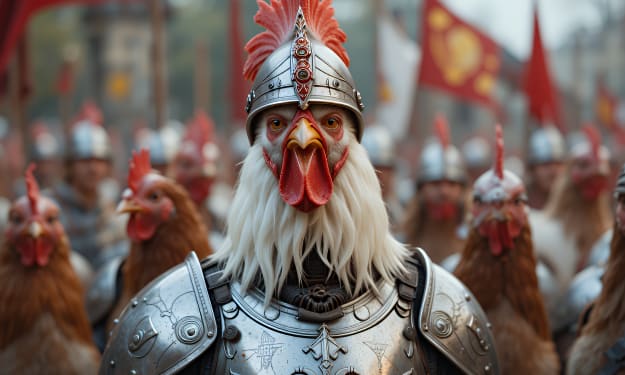
The Chicken War of 1325: When Clucking Chickens Sparked a Noble Revolt
I. A Crown Perched Precariously: Poland Before the Storm In the first decades of the 14th century, Poland was a kingdom stitched together with threadbare seams. Once a mighty and unified entity under the Piast dynasty, it had fractured during the "Period of Fragmentation" - a two-century-long brawl between dukes, princes, and churchmen, each more interested in carving up territory than fostering national unity. From the late 1100s through the 1200s, Poland resembled not a kingdom, but a jigsaw puzzle in a windstorm. Petty dukedoms rose and fell like the tides, and foreign powers nibbled greedily at Polish borders.
By Kek Viktor9 months ago in History
🏰The London Beer Flood of 1814: When a River of Ale Drowned a City Block
Part I: The Day London Drowned in Beer In the early afternoon of October 17, 1814, the ordinary hum of life in St. Giles, one of London's most densely populated and impoverished neighborhoods, was about to be shattered - not by war, fire, or famine, but by something far more absurd and sinister. A freak disaster was brewing behind the brick walls of the Horse Shoe Brewery on Tottenham Court Road. Unbeknownst to the workers inside or the families living nearby, a monstrous force was growing - pressurized, fermented, and lethal. The day would soon turn from mundane to macabre as 320,000 gallons of beer burst into the streets, sweeping away buildings, lives, and any sense of normalcy.
By Kek Viktor9 months ago in History