Muhammad Hassan
Bio
Muhammad Hassan | Content writer with 2 years of experience crafting engaging articles on world news, current affairs, and trending topics. I simplify complex stories to keep readers informed and connected.
Stories (467)
Filter by community
EU Commission Pledges €126 Million for Pakistan, Iran, and Afghanistan: A Strategic Investment in Regional Stability. AI-Generated.
The European Union (EU) has pledged a significant financial commitment of €126 million to support Pakistan, Iran, and Afghanistan, marking an important step in fostering stability, humanitarian relief, and infrastructure development across these countries. This pledge comes amid growing challenges in the region, including ongoing political tensions, economic instability, and the pressing need for humanitarian assistance. The EU’s investment is not only a symbol of solidarity but also a strategic move aimed at building stronger diplomatic ties, fostering peace, and addressing critical developmental needs in these countries. EU’s Commitment: A Response to Urgent Needs The EU's pledge of €126 million is aimed at addressing some of the most urgent challenges facing Pakistan, Iran, and Afghanistan. These nations have been grappling with a host of issues ranging from internal conflicts to regional instability, exacerbated by the broader geopolitical dynamics of the Middle East and South Asia. Pakistan: Despite significant economic growth in recent years, Pakistan continues to face challenges such as poverty, inadequate healthcare, and a lack of access to quality education. The EU’s funding will contribute to initiatives in sectors like healthcare, education, and climate change resilience. With its large refugee population, Pakistan also plays a key role in hosting millions of Afghan refugees, and EU funding will be essential in providing relief and support to these communities. Iran: Iran, long under the weight of international sanctions, is struggling with an economy that is severely constrained, alongside political tensions both at home and abroad. The EU’s financial contribution is expected to target sustainable development, poverty alleviation, and humanitarian aid. Support for Iranian civil society organizations and institutions also forms part of the broader commitment, aiming to empower local communities and promote social stability. Afghanistan: Afghanistan remains in a state of recovery following decades of conflict, and the country’s future remains uncertain, particularly after the Taliban’s return to power in 2021. The EU’s pledge of funding will help support humanitarian projects that provide food, medical aid, and basic infrastructure services. With millions of Afghans displaced within their own country and abroad, the EU’s contribution will be vital in addressing the needs of vulnerable populations. The Humanitarian Dimension: Prioritizing the Most Vulnerable One of the primary focuses of the EU's pledge is humanitarian aid, especially for the most vulnerable communities in these countries. The funds are intended to help mitigate the effects of conflicts and natural disasters that have left millions of people in dire need of assistance. For instance, in Afghanistan, where food insecurity is at an all-time high, the EU has emphasized the importance of providing critical food aid and healthcare to prevent further suffering. Pakistan’s flood-prone regions and Iran’s internally displaced populations are also priorities for the EU’s relief efforts, ensuring that people in crisis situations are provided with the necessary resources for survival. Additionally, the EU's humanitarian support will focus on improving access to healthcare and education for children and women, who are often the most affected by ongoing instability. By focusing on these vulnerable groups, the EU aims to alleviate immediate suffering and lay the groundwork for future prosperity. Promoting Infrastructure Development and Economic Growth While humanitarian aid is vital in the short term, the EU is also investing in long-term solutions to foster economic growth and infrastructure development in the region. In particular, the €126 million will help to improve critical infrastructure such as roads, energy, and water supply systems, which are key to stabilizing these economies and enhancing the quality of life for citizens. In Pakistan, the funds will support initiatives aimed at reducing energy poverty, improving rural infrastructure, and fostering climate resilience through sustainable development practices. These investments are essential for improving the daily lives of Pakistan’s population and ensuring the long-term economic stability of the country. Similarly, in Iran and Afghanistan, the EU’s funding will be used to support infrastructure projects that can boost local economies and create job opportunities for young people. This economic growth will be critical in reducing poverty, promoting peace, and preventing further conflict in the region. Strengthening Diplomatic Relations and Regional Cooperation The EU’s pledge to these three countries is also an important diplomatic gesture. By investing in the socio-economic stability of Pakistan, Iran, and Afghanistan, the EU is sending a clear message of support for regional peace and cooperation. The EU’s involvement in the region is not just about providing financial aid—it is a commitment to playing an active role in promoting peaceful solutions to regional challenges. The EU has long been an advocate for dialogue and multilateralism, and its involvement in Pakistan, Iran, and Afghanistan is part of a broader strategy to encourage diplomatic engagement and promote stability. Additionally, the EU recognizes the importance of engaging with regional powers, particularly in Afghanistan, where the political landscape has shifted significantly since the Taliban's return to power. By providing financial support and aid, the EU hopes to encourage cooperation between regional stakeholders, while at the same time fostering development and addressing human rights issues. A Path Forward: Challenges and Opportunities While the EU's €126 million pledge represents a significant step in fostering stability in Pakistan, Iran, and Afghanistan, challenges remain. Political tensions, security concerns, and the complex geopolitical dynamics of the region will require careful navigation. However, the EU’s commitment signals a willingness to engage with these challenges in a constructive manner. Looking ahead, it will be crucial for the EU to ensure that its funds are effectively utilized, and that the projects funded by this pledge lead to tangible improvements in the lives of citizens across the three countries. Monitoring and accountability mechanisms will be essential to ensuring that the funds are spent efficiently and reach those who need them most. The EU's pledge, however, also presents an opportunity for further engagement and collaboration in the region. As the geopolitical landscape continues to evolve, the EU's role as a provider of humanitarian aid and a proponent of peace and development will be pivotal in shaping the future of South Asia and the Middle East. Conclusion: A Pledge for Peace, Prosperity, and Partnership In conclusion, the EU's pledge of €126 million for Pakistan, Iran, and Afghanistan represents a vital investment in regional stability, humanitarian relief, and long-term development. By focusing on both immediate needs and sustainable growth, the EU is taking a comprehensive approach to addressing the challenges facing these countries. This commitment is not just a financial contribution—it is a reflection of the EU's ongoing support for peace, prosperity, and cooperation in one of the most volatile regions of the world. As the situation evolves, it will be important to monitor the impact of this funding and ensure that the people of Pakistan, Iran, and Afghanistan can reap the benefits of this support for years to come. The EU’s pledge is a reminder that, even in the face of significant challenges, investment in peace and stability is the path forward.Start writing...
By Muhammad Hassanabout a month ago in The Swamp
Trump Says Rare Earths Are Part of His Greenland Deal: It’s ‘Completely Bonkers. AI-Generated.
In 2019, former U.S. President Donald Trump stirred controversy by proposing that the United States purchase Greenland, the vast Arctic island governed by Denmark. While many thought the idea was simply outlandish — or even absurd — one of the most unexpected elements of his pitch was his suggestion that the purchase could help secure rare earth elements. Trump’s words that rare earths were a part of his Greenland deal were met with shock and disbelief. Critics quickly dismissed the notion, calling it “completely bonkers.” But what are rare earths, and why would they have mattered in this context? And more importantly, does Trump’s claim about Greenland’s strategic value hold any weight?
By Muhammad Hassanabout a month ago in Earth
Greenland’s Strategic Position in Seven Maps: Why Trump Wants the Island. AI-Generated.
In 2019, former U.S. President Donald Trump made waves by suggesting the United States should buy Greenland from Denmark. While his offer was quickly dismissed by the Danish government, the incident sparked a wider discussion about the geopolitical and strategic significance of the island. Why, out of all the territories in the world, would a major world power be so keen to acquire this cold, remote landmass?
By Muhammad Hassanabout a month ago in Earth
Japan’s Bond‑Market Tremble Reflects a Fiscal‑Monetary Clash. AI-Generated.
When financial markets whisper, economists listen. But when they tremble, the world takes notice. That’s what’s happening in Japan right now: the country’s bond market — once admired for stability — is showing signs of stress. But this isn’t just a technical fluctuation or a short‑lived blip. What’s really unfolding is a deeper clash between fiscal policy (government spending) and monetary policy (central bank action) — a clash with ripple effects not just for Japan, but for global markets, investors, and everyday people concerned about inflation, interest rates, and economic growth.
By Muhammad Hassanabout a month ago in Earth
Why Peet’s Coffee Is Closing Multiple Bay Area Shops After the Keurig Dr Pepper Takeover. AI-Generated.
Coffee shops are more than places where we grab a morning latte. Especially in the Bay Area, Peet’s Coffee has been part of many people’s daily routines, college memories, and work‑meeting rituals. So when customers learned that several Bay Area locations were closing just months after Peet’s was acquired by Keurig Dr Pepper, the reaction wasn’t just curiosity — it was emotional.
By Muhammad Hassanabout a month ago in Earth
Intel Stock Surges to a 4-Year High Ahead of Earnings. AI-Generated.
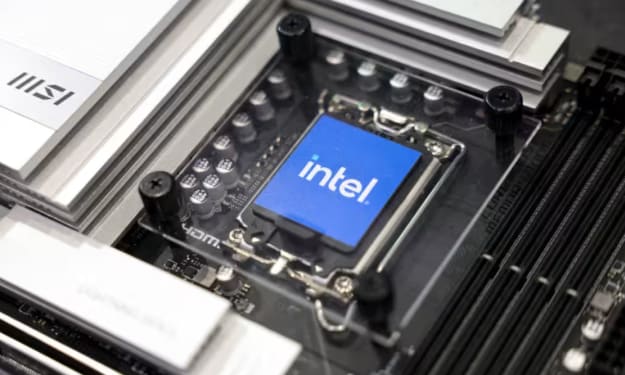
For much of the past decade, Intel was seen as a tech giant struggling to keep pace with faster-moving rivals. Delays in chip manufacturing, rising competition from AMD and Nvidia, and a rapidly changing semiconductor market weighed heavily on investor confidence. But that narrative is changing — and fast. As Intel stock climbs to a four-year high ahead of its upcoming earnings report, optimism is clearly building across Wall Street. This rally is not the result of hype alone. Instead, it reflects a growing belief that Intel’s long-term turnaround strategy may finally be gaining real traction. So why are investors suddenly more confident, and what exactly is driving Intel’s momentum? A Market Shift in Intel’s Favor The semiconductor industry is notoriously cyclical, and Intel appears to be entering a favorable phase at the right moment. After years of supply chain disruptions and uneven demand, the market is stabilizing. Enterprise customers are beginning to invest again, and PC demand — while not booming — is showing signs of recovery. For Intel, even modest improvements in demand can have an outsized impact. As one of the world’s largest chipmakers, scale works both ways. When demand weakens, losses grow quickly. But when conditions improve, revenue and margins can rebound just as fast. This changing market backdrop is one reason investors are positioning themselves ahead of earnings. AI Is No Longer Just Nvidia’s Story Artificial intelligence has been the single biggest driver of semiconductor enthusiasm over the past two years. For a long time, Intel was seen as a secondary player in this space, trailing far behind Nvidia’s dominant GPUs. That perception is starting to evolve. Intel has been steadily expanding its AI-focused product portfolio, particularly in data centers and enterprise applications. Its newer processors are increasingly optimized for AI workloads, and the company has been vocal about integrating AI acceleration directly into CPUs — a different approach from relying solely on standalone GPUs. Investors are warming to the idea that AI growth does not belong to one company alone. As AI adoption spreads across industries, demand for diverse and cost-effective solutions grows — an environment where Intel can compete more effectively. Manufacturing Comeback Builds Credibility Perhaps the most important driver of renewed optimism is Intel’s manufacturing strategy. For years, manufacturing delays damaged the company’s reputation. Falling behind rivals that outsourced production raised serious questions about Intel’s ability to execute. Today, however, that concern is slowly being replaced with cautious confidence. Intel’s push to rebuild its manufacturing leadership — including advanced fabrication nodes and foundry services — is starting to look more credible. Progress may not be instant, but consistency matters more than speed at this stage. Investors are responding not because Intel has already won, but because it is finally delivering predictability — something markets value deeply. Foundry Business Adds a Long-Term Growth Story Intel’s foundry ambitions deserve special attention. By opening its manufacturing capacity to external customers, Intel is attempting to position itself as both a designer and a producer of chips — a rare combination. This move aligns closely with broader geopolitical and economic trends. Governments and corporations are increasingly focused on securing domestic semiconductor supply chains. Intel’s manufacturing footprint gives it a strategic advantage in this environment. While the foundry business will take time to mature, investors see it as a long-term option with enormous upside. That optionality alone can justify higher valuations when sentiment shifts. Earnings Expectations Are Manageable — Not Perfect Interestingly, Intel’s stock surge is not being driven by expectations of flawless earnings. Instead, optimism stems from reasonable expectations. Markets are not demanding record profits. They are looking for: Stable margins Clear guidance Evidence that strategy aligns with execution If Intel demonstrates operational discipline and reaffirms its long-term roadmap, it may not need dramatic earnings beats to sustain momentum. In many ways, this is a healthier rally — built on credibility rather than speculation. Leadership Stability Matters More Than Headlines Intel’s leadership has played a quiet but important role in restoring confidence. Consistent messaging, transparent goals, and a willingness to acknowledge past mistakes have helped rebuild trust with investors. Rather than chasing every tech trend, Intel’s leadership appears focused on doing fewer things better. That strategic clarity is often undervalued — until it begins to show results. Markets reward companies that look steady in uncertain times, and Intel is increasingly projecting exactly that image. Why the Stock Is Rising Before Earnings The timing of the rally is telling. Stocks often move before earnings when investors believe future expectations are being underestimated. In Intel’s case, rising prices suggest that investors fear missing out on a longer-term recovery story. Even those cautious about near-term numbers may be choosing to enter now rather than wait for perfect clarity. This kind of pre-earnings optimism usually reflects belief in direction, not just data. What Comes Next for Intel Investors Intel’s journey is far from complete. Risks remain, competition is intense, and execution must stay consistent. But the market is no longer asking whether Intel can survive — it is asking how strong the recovery could become. That shift in perception is powerful. If Intel continues to show steady progress across AI, manufacturing, and operational discipline, today’s four-year high may look less like a peak and more like a new base. For investors, the growing optimism is not about nostalgia for Intel’s past dominance. It’s about the belief that the company is finally building a future that markets can trust.
By Muhammad Hassanabout a month ago in The Swamp
Nvidia CEO Says AI Will Create Jobs for Electricians and Plumbers. AI-Generated.
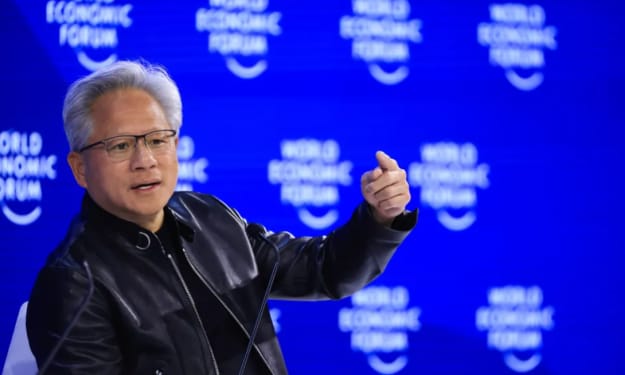
For years, artificial intelligence has been associated with job loss fears. From factory automation to office software, the dominant narrative has suggested that AI will replace human workers across industries. But according to Nvidia CEO Jensen Huang, the AI revolution tells a more complex—and surprisingly optimistic—story.
By Muhammad Hassanabout a month ago in Earth
The AI Boom Will Increase U.S. Carbon Emissions—But It Doesn’t Have to. AI-Generated.
Artificial intelligence is reshaping the U.S. economy at a breathtaking pace. From generative AI tools and cloud computing to data-driven healthcare and finance, the AI boom promises productivity gains, innovation, and economic growth. But beneath this technological optimism lies a growing concern: AI is energy-hungry, and without intervention, it could significantly increase U.S. carbon emissions.
By Muhammad Hassanabout a month ago in Earth
Theranos Founder Elizabeth Holmes Asks Trump to Commute Prison Sentence. AI-Generated.
Elizabeth Holmes, the once-celebrated founder of biotech startup Theranos, has formally asked former U.S. President Donald Trump to commute her federal prison sentence, reviving public debate over white-collar crime, executive accountability, and the power of presidential clemency.
By Muhammad Hassanabout a month ago in The Swamp
Trump Pushes for Lower Rates and Ban on Investor Home Purchases to Tackle Housing Affordability. AI-Generated.
As housing affordability remains one of the most pressing economic issues for American families, former U.S. President Donald Trump has renewed his focus on the housing market with a bold set of proposals. Trump is calling for lower interest rates and a ban on investor home purchases, arguing that these measures are necessary to restore affordability and give ordinary Americans a fair chance at homeownership.
By Muhammad Hassanabout a month ago in The Swamp
2027 Volvo EX60 Revealed: Long Range, Fast Charging, and a Tesla Port. AI-Generated.
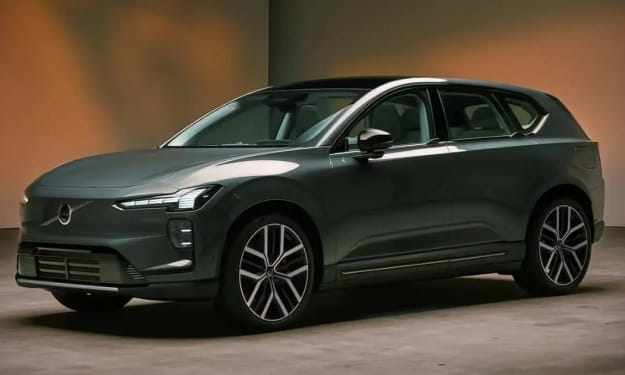
Volvo has officially revealed the 2027 Volvo EX60, and the all-electric SUV is shaping up to be one of the most important models in the company’s transition to a fully electric future. Designed as the electric successor to the popular XC60, the EX60 brings together long-range capability, ultra-fast charging, and—most notably—a built-in Tesla-compatible charging port, marking a significant shift in how automakers approach EV infrastructure.
By Muhammad Hassanabout a month ago in The Swamp
Supreme Court Appears Likely to Allow Lisa Cook to Remain on Fed Board. AI-Generated.
The U.S. Supreme Court appears inclined to allow Federal Reserve Governor Lisa Cook to remain on the Fed’s board, signaling strong judicial support for the independence of the nation’s central bank. During recent proceedings, the justices expressed skepticism toward arguments that would expand presidential authority to remove Federal Reserve officials at will, a move that critics warn could politicize monetary policy and unsettle global financial markets.
By Muhammad Hassanabout a month ago in The Swamp