Muhammad Hassan
Bio
Muhammad Hassan | Content writer with 2 years of experience crafting engaging articles on world news, current affairs, and trending topics. I simplify complex stories to keep readers informed and connected.
Stories (467)
Filter by community
When Beats Bridge Borders. AI-Generated.
Diplomacy is usually imagined as stiff handshakes, long speeches, and carefully worded statements. But at a recent summit between Japan and South Korea, something unexpected — and surprisingly powerful — happened. Instead of ending talks with only press briefings and photo ops, the two leaders capped off their meeting with a K-pop–inspired drum duet. At first glance, it looked symbolic, even playful. But dig a little deeper, and this moment says a lot about modern diplomacy, cultural power, and the evolving relationship between two nations with a complicated shared history. A Summit That Sounded Different Japan and South Korea have had decades of tension rooted in history, wartime memory, trade disputes, and regional security concerns. Recent years, however, have seen cautious steps toward rebuilding trust. The summit itself focused on familiar high-level issues: regional security economic cooperation relations with neighboring powers coordination with global allies Yet it was the final moment — the drum performance — that captured public attention far beyond policy circles. When the leaders picked up the sticks and performed a synchronized K-pop–style drum beat together, it instantly went viral. Videos spread across social media, news platforms, and fan communities, sparking reactions that ranged from surprise to admiration. Why a Drum Duet Matters To some critics, the performance may seem like a gimmick. But in international relations, symbols matter — sometimes as much as treaties. Drumming, especially in East Asian cultures, represents: unity timing and cooperation shared rhythm despite different styles By performing together, the leaders sent a message without words: we may come from different traditions, but we can still play in sync. K-pop’s influence made the gesture even more meaningful. While K-pop originates in South Korea, its global appeal — including in Japan — has transformed it into a shared cultural language rather than a national possession. The Power of K-Pop as Soft Diplomacy This moment highlights the growing role of soft power in global politics. Unlike military strength or economic pressure, soft power works through: culture entertainment shared values emotional connection South Korea has mastered this through K-pop, film, fashion, and digital culture. Japan, too, has long used anime, music, and pop culture to shape its global image. The drum duet brought these parallel cultural strengths together. Instead of arguing over history, the leaders chose to create a new shared memory — one rooted in creativity rather than conflict. Public Reaction: A Different Kind of Engagement What stood out most was how ordinary people reacted. Political summits often feel distant from daily life, but this moment felt accessible. Fans of K-pop, young audiences, and even people usually uninterested in politics engaged with the story. Comments online reflected this shift: “This feels more human than speeches.” “I never thought diplomacy could look like this.” “Music really does connect people.” For younger generations in both countries — many of whom are less emotionally tied to past conflicts — the performance felt like a hopeful sign of what cooperation could look like. Not Erasing History, But Changing the Tone It’s important to be clear: a drum duet does not solve deep-rooted political and historical issues. Disputes over wartime labor, territorial claims, and trade policies still exist. However, diplomacy is not only about solving problems instantly. It’s also about changing the emotional climate in which those problems are discussed. Moments like this: reduce hostility humanize leaders make compromise feel possible In my view, the performance wasn’t about forgetting the past — it was about refusing to let the past define every interaction. A New Style of Leadership? This event also reflects a broader shift in leadership style. Modern leaders are increasingly expected to: connect emotionally understand pop culture communicate visually and digitally A carefully choreographed performance can sometimes achieve what hours of formal dialogue cannot: public reassurance. By stepping into a cultural space rather than remaining behind podiums, both leaders showed confidence — not only in themselves, but in the idea that diplomacy can evolve. What This Means for the Future The drum duet may be remembered as a footnote — or as the start of a new diplomatic tone between Japan and South Korea. Much depends on what follows: sustained cooperation honest dialogue on difficult issues consistent political will Still, the moment has already achieved something valuable: it reminded the world that diplomacy does not have to be cold or rigid. It can be creative, symbolic, and even joyful. Final Thoughts When the last beat faded and the cameras stopped rolling, the real work of diplomacy continued behind closed doors. But that brief performance lingered in the public imagination. To me, the K-pop drum duet was more than entertainment. It was a statement — that even between nations with a painful past, shared rhythm is possible. In an era defined by division and tension, sometimes a drumbeat can say what words cannot: we are listening to each other again.
By Muhammad Hassanabout a month ago in The Swamp
Images Show Aftermath of Deadly Crash on Thai Railway Line. AI-Generated.
Some images stay with you long after you scroll past them. The photographs coming out of Thailand this week do exactly that. Twisted steel, overturned train carriages, scattered luggage, and exhausted rescue workers tell a devastating story — one that words alone cannot fully explain. A deadly crash on a Thai railway line has claimed multiple lives and left dozens injured, turning an ordinary journey into a nightmare. As images from the scene circulate globally, they reveal not just destruction, but grief, courage, and difficult questions about safety in one of Southeast Asia’s busiest rail networks. A Normal Journey That Ended in Disaster For the passengers on board, the day began like any other. People were heading to work, returning home, or traveling to see family. The train moved steadily along the tracks — until everything suddenly changed. According to officials, the crash occurred when heavy construction equipment collapsed onto an active railway line, striking a moving passenger train. The impact derailed multiple carriages, causing chaos inside the train as metal twisted and windows shattered. Within moments, smoke filled the air and cries for help echoed from inside the wreckage. For many passengers, there was no time to react. What the Images Reveal The aftermath photos are haunting. In some images, train carriages lie on their sides, crushed and burned. In others, rescue teams climb over debris, cutting through metal to reach trapped passengers. Personal belongings — backpacks, shoes, food containers — are scattered across the tracks, quiet reminders of lives abruptly interrupted. One particularly striking image shows emergency workers standing silently beside the wreckage, their faces reflecting exhaustion and sorrow. These visuals do more than document damage; they capture the emotional weight of the tragedy. Images like these remind us how fragile routine can be — how quickly normal life can turn into crisis. The Human Cost of the Crash Authorities confirmed that multiple people lost their lives, while dozens were injured, some critically. Hospitals in nearby areas were quickly overwhelmed as ambulances transported victims from the scene. Families rushed to medical centers, searching for loved ones. For many, the wait for information was agonizing. Phone calls went unanswered. Names were not immediately confirmed. In moments like these, uncertainty can be as painful as loss itself. Survivors have described scenes of panic, confusion, and shock. Some helped fellow passengers escape wrecked carriages. Others waited helplessly, trapped until rescuers could reach them. Rescue Efforts Under Pressure Emergency response teams acted quickly, working against time and unstable conditions. Firefighters, paramedics, and volunteers used cutting tools and heavy machinery to clear wreckage and pull survivors to safety. Despite the dangers, many rescuers worked for hours without rest. Some images show medics kneeling beside injured passengers on the ground, administering care before transport. Others show cranes lifting destroyed train cars away from the tracks. Their efforts likely saved lives — but the scale of the damage made the operation incredibly challenging. How Did This Happen? As the shock begins to settle, attention has turned to how such a catastrophic accident was allowed to occur. Early reports suggest the crash involved construction work taking place near or above an active railway line. This has raised serious concerns about oversight, safety planning, and coordination between construction teams and railway authorities. Questions being asked include: Why was heavy equipment operating so close to a moving passenger train? Were safety inspections properly conducted? Were warning systems or track closures considered? An official investigation is now underway, but for many families, answers will come too late. A Wake-Up Call for Railway Safety Thailand has invested heavily in rail infrastructure in recent years, aiming to modernize transport and improve connectivity. But this tragedy highlights the risks that come with rapid development when safety measures fail or are ignored. Experts warn that construction near live railway lines requires strict controls, constant monitoring, and zero tolerance for shortcuts. Even a single failure can lead to irreversible consequences — as this crash painfully demonstrates. Public trust in rail safety has been shaken, and restoring it will require transparency, accountability, and meaningful reform. Grief, Solidarity, and Remembrance In the days following the crash, communities across Thailand have expressed sorrow and support. Vigils have been held. Messages of condolence continue to pour in. Volunteers have donated blood and supplies to help victims and hospitals. The images from the scene have united people in grief — not just in Thailand, but around the world. They serve as a reminder that behind every headline are real people, real families, and real loss.
By Muhammad Hassanabout a month ago in Earth
Try an ‘Airport Divorce’ if You Want to Stay a Happy Couple. AI-Generated.
Traveling together can be exciting, but for many couples, it’s also a source of stress. From missed flights to lost luggage, delays, and cramped airport lounges, the pressure can turn even the strongest relationships into a battleground. That’s where the concept of the “airport divorce” comes in — a simple, intentional separation at the airport that could help couples stay happy, even when traveling together. What Is an Airport Divorce? The term may sound dramatic, but it’s far from it. An airport divorce doesn’t mean ending a marriage; rather, it’s a playful way of describing a temporary, intentional separation at the airport before traveling. The idea is simple: couples part ways at the terminal — or even just for a few hours during the check-in and security process — to avoid unnecessary stress, conflict, or micro-arguments during the travel experience. In essence, it’s about creating a mental and emotional buffer that allows both partners to decompress, reset, and rejoin each other in a better frame of mind once the journey begins. Why Travel Can Strain Relationships Even couples who usually get along well can experience friction while traveling. Common sources of tension include: Planning disagreements: Who packs what? Who decides the itinerary? Time pressure: Airports are stressful, and missed flights can create anxiety. Financial concerns: Travel expenses often spark arguments, from tickets to meals and souvenirs. Decision fatigue: Constantly choosing where to eat, what to see, or which seat to take can wear anyone down. Studies show that couples under stress during travel are more likely to argue and feel frustrated, which can cast a shadow over the entire trip. How an Airport Divorce Helps The airport divorce works as a preventive strategy. By giving each partner a small window of personal space before embarking, couples can: Reduce pre-flight tension: Instead of rushing together, each partner focuses on their own checklist and responsibilities. Reset emotions: Briefly stepping apart allows individuals to breathe and regain perspective, avoiding minor conflicts. Enhance appreciation: Separating temporarily can make reunions at the gate or on the plane feel more rewarding. Encourage autonomy: Each person manages part of the travel process, reducing dependency-related stress. The result? Couples arrive at their destination calmer, happier, and ready to enjoy the trip together. Implementing an Airport Divorce Here’s how couples can try an airport divorce effectively: Agree in advance: Discuss the concept before your trip so both partners understand the goal. Set clear boundaries: Decide how long you’ll be apart at the airport and where you’ll meet afterward. Use technology wisely: Stay connected via text or calls, but avoid excessive check-ins that undermine the separation. Focus on your own tasks: Whether it’s checking bags, grabbing coffee, or passing security, use the time constructively. The key is to treat the airport divorce as a lighthearted, intentional pause, not a source of tension. Psychological Benefits Psychologists highlight several benefits to this approach: Reduces conflict triggers: A few minutes of separation helps prevent arguments over minor travel annoyances. Increases patience and tolerance: Giving each other space fosters empathy and understanding. Improves emotional regulation: Partners can manage stress individually, rather than projecting frustration onto one another. Strengthens the relationship: Short periods of intentional distance can make couples appreciate each other more, promoting long-term harmony. In essence, a small act of separation can lead to big emotional gains. When It Works Best Airport divorces aren’t just for long-haul flights or business travel. They work best in situations like: Family trips: Avoid friction when traveling with kids or in large groups. High-stress journeys: International flights, early-morning departures, or layovers. Busy travel seasons: Holidays and peak vacation times when airports are crowded. Even couples who normally travel well together can benefit from this technique when the environment is especially hectic. Beyond Airports: Applying the Concept in Daily Life Interestingly, the airport divorce concept can extend beyond travel. Couples can benefit from brief, intentional separations in everyday life: Taking short solo walks after a disagreement Spending a few hours pursuing hobbies independently Scheduling personal downtime to decompress after work or family obligations The principle remains the same: space fosters perspective, calm, and appreciation, improving relationship satisfaction. A Fun, Modern Relationship Hack While the term “airport divorce” might raise eyebrows, many couples report that it’s a fun and surprisingly effective strategy. Social media and relationship blogs are filled with anecdotes of couples who now approach travel with humor, rather than stress, thanks to this simple technique. By reframing temporary separation as a tool for connection rather than division, couples can turn potentially tense travel moments into opportunities for bonding. Conclusion Traveling together doesn’t have to be a test of patience and endurance. By embracing the idea of an airport divorce, couples can reduce stress, prevent arguments, and arrive at their destinations calmer and happier. It’s a small, intentional act that protects the relationship, improves emotional regulation, and creates a more enjoyable travel experience. For anyone who dreads the stress of airports, security lines, and long flights, this quirky, modern relationship hack might be the key to staying a happy couple on the road — and in life.
By Muhammad Hassanabout a month ago in Humans
Facing Political Pressure, Trump Seeks Answer to Rising Housing Costs. AI-Generated.
As Americans continue to grapple with soaring home prices and rising rents, former President Donald Trump is once again thrust into the national spotlight — this time on a topic that affects millions of households: housing affordability. Facing mounting political pressure, Trump is reportedly exploring ways to address the rising cost of housing, a move that could influence policy debates, the real estate market, and his political narrative in the lead-up to upcoming elections. The Housing Cost Crisis Housing costs in the United States have been climbing steadily over the past several years. According to recent data: Home prices have risen faster than wages in many urban and suburban markets. Rental rates have increased sharply, particularly in high-demand cities like New York, Los Angeles, and Miami. Many Americans now spend 30–50% of their income on housing, leaving less for healthcare, education, and savings. The issue is not just economic — it is increasingly political, with voters citing housing affordability as a top concern. For a public figure like Trump, addressing this problem is both a strategic and symbolic imperative. Political Pressure Mounts Trump’s renewed attention to housing comes amid rising scrutiny from both political opponents and his own party. Democrats have criticized Republican-led efforts for failing to curb housing inflation, while some GOP voters are pressuring Trump to propose solutions that boost homeownership and reduce rent burdens. Policy analysts suggest that housing has become a litmus test for leadership, particularly as younger voters and working families express frustration over the lack of affordable options. This makes it a high-stakes issue for any political figure seeking influence or office. Trump’s Approach Reports indicate that Trump is focusing on several potential strategies to address rising housing costs: Regulatory Reform: Reviewing local and federal regulations that may restrict new construction, including zoning laws, environmental review processes, and permitting bottlenecks. Tax Incentives: Exploring measures to encourage developers to build more affordable housing units. Federal Support Programs: Considering expansion of federal programs for low-income families, including subsidies or down-payment assistance initiatives. Market-Based Solutions: Encouraging private sector investment in housing developments through incentives, partnerships, and streamlined approval processes. While the specifics of these proposals are still emerging, the focus is on expanding supply and easing financial barriers to homeownership and renting. Why Housing Costs Are Rising Understanding the challenge requires examining the factors behind rising housing costs: Supply Constraints: Many cities face shortages of available homes, particularly in areas with strong job growth. Labor and Material Costs: Construction costs have surged due to inflation, labor shortages, and higher material prices. Investor Activity: Institutional investors buying single-family homes as rental properties have reduced the supply available to individual buyers. Interest Rates: Elevated mortgage rates have increased monthly payments, further reducing affordability. These pressures are compounded in high-demand urban areas, making policy intervention both urgent and complex. Economic and Social Implications Rising housing costs have broad implications: Economic Strain: Families allocate more of their income to housing, leaving less for discretionary spending, healthcare, and education. Migration Patterns: High costs push residents to more affordable regions, reshaping local economies and labor markets. Political Discontent: Voters increasingly associate rising housing prices with government inaction, making it a politically sensitive issue. For Trump, addressing housing affordability is as much about economic outcomes as it is about political perception. Reactions from Industry Experts Housing analysts and economists have weighed in on Trump’s efforts: Some applaud the focus on regulatory reform, noting that local zoning and permitting hurdles are major barriers to new construction. Others caution that market-based incentives alone may not suffice and emphasize the need for targeted programs for low- and moderate-income households. Critics warn that overly aggressive deregulation could compromise environmental standards or neighborhood planning, creating long-term trade-offs. The debate reflects the complexity of housing policy in a country where supply, demand, and regulation intersect. Political Strategy and Messaging For Trump, addressing housing costs is not just policy — it is also political messaging. Analysts suggest that: Highlighting efforts to reduce housing costs allows him to appeal to working-class voters who feel squeezed by inflation. Framing housing as a regulatory and market problem aligns with broader Republican priorities of limiting government overreach. Demonstrating concrete solutions could strengthen his position as a problem-solver in the eyes of the electorate. In short, housing affordability represents both a policy challenge and an opportunity to shape the political narrative. Looking Ahead Trump’s proposals are still taking shape, but the broader housing crisis will remain a central issue in American politics: Policymakers at federal, state, and local levels will face pressure to balance supply, affordability, and environmental considerations. Real estate markets will continue to respond to interest rates, investor activity, and regulatory changes. Political figures will be judged by their ability to provide practical solutions that alleviate the financial burdens of everyday Americans. As the debate unfolds, one thing is clear: housing costs are not just numbers on a chart; they impact families, communities, and the broader economy. Conclusion Facing rising political pressure, Trump’s focus on the housing affordability crisis reflects both a policy challenge and a political imperative. With Americans struggling to pay rent and mortgage costs, any strategy that expands supply, reduces financial barriers, or incentivizes affordable development could have meaningful consequences. Whether his efforts will succeed in lowering costs or simply generate debate remains to be seen. What is undeniable, however, is that housing affordability is now a front-and-center issue in American politics, shaping public perception, economic policy, and the national discourse for years to come.Start writing...
By Muhammad Hassanabout a month ago in Earth
S&P 500 Little Changed as Traders Assess Earnings, Latest Inflation Data. AI-Generated.
The S&P 500 finished little changed this week as traders weighed a mix of corporate earnings reports and the latest economic indicators, including fresh inflation data. Investors appear to be taking a wait-and-see approach, balancing optimism from solid earnings with lingering concerns about price pressures and interest rate trends. Earnings Season in Focus Corporate earnings have been the primary driver of market sentiment in recent weeks. Large-cap companies across technology, finance, and consumer sectors have reported results that are a mixed bag: Some tech giants exceeded analyst expectations, reflecting continued demand for cloud services, AI, and consumer electronics. Financial firms showed resilience, though profit margins are slightly pressured by rising interest rates and cautious loan growth. Consumer companies revealed a slowing trend in discretionary spending, pointing to the impact of persistent inflation on household budgets. Traders are carefully analyzing these reports to gauge corporate health and future earnings guidance, particularly given concerns about slowing growth in key sectors. Latest Inflation Data Adds Nuance Adding to the market uncertainty is the release of recent inflation figures, which showed a moderate increase in consumer prices. While inflation is not accelerating rapidly, it remains sticky above pre-pandemic levels, prompting the Federal Reserve and investors to consider how long current monetary policy may remain in place. Key points from the latest data: Consumer Price Index (CPI): Remains slightly elevated, driven by housing and energy costs. Core Inflation: Excluding volatile food and energy items, core inflation has shown slower growth but still hovers above target. Market Implications: Persistent inflation may influence Fed policy, potentially affecting interest rates and borrowing costs, which in turn impact corporate profits and stock valuations. Market Reactions and Trading Patterns With earnings and inflation in focus, the S&P 500 has shown limited movement. Investors are exhibiting a mix of caution and optimism: Technology Stocks: Slight gains as some AI and cloud-related companies beat expectations. Consumer Goods: Mixed performance, reflecting consumer caution and tight household budgets. Financials: Steady trading as analysts evaluate interest rate impacts on lending and investment income. Overall, the market appears to be digesting data rather than making dramatic moves, a common pattern during periods of overlapping economic and corporate reporting. Investor Sentiment Investor sentiment is balancing between hope and caution: Optimism stems from strong earnings results in certain sectors, which suggest that corporate America can still grow despite macroeconomic challenges. Concerns remain over inflation, interest rates, and geopolitical factors, which could limit growth or create volatility in the coming months. Market analysts emphasize the importance of watching earnings guidance and economic signals in the near term, as they may provide a clearer picture of whether the market will break out of its current range. Sector Highlights Several sectors are drawing particular attention from traders and analysts: Technology: AI, cloud computing, and software firms continue to perform well, with investors eager for growth in emerging technologies. Financials: Banks and insurance companies face pressures from interest rates, regulatory changes, and global economic uncertainty. Consumer Discretionary: Retailers and service providers are experiencing mixed results, highlighting the impact of inflation on everyday spending. Energy: Stable performance as oil and natural gas prices show moderate fluctuation, influenced by seasonal demand and geopolitical factors. These sector dynamics are shaping market expectations and influencing short-term trading patterns. Looking Ahead Traders and investors are now focused on the following factors: Upcoming Earnings Reports: The next wave of quarterly reports could tip sentiment either way. Federal Reserve Policy: Any signals from the Fed regarding interest rates or inflation outlook will be closely monitored. Economic Indicators: Jobs data, consumer confidence, and manufacturing reports may influence market direction. Global Developments: Geopolitical tensions, trade negotiations, and international economic trends could create volatility. Analysts suggest that in this environment, selective stock picking and risk management are more important than broad market bets. What This Means for Investors For investors, a largely unchanged S&P 500 does not indicate market weakness but reflects caution and reassessment: Diversification: Ensuring exposure across sectors can help mitigate risk in uncertain times. Focus on Fundamentals: Companies with strong earnings, cash flow, and growth prospects are likely to outperform over time. Long-Term Perspective: Short-term volatility is normal; staying invested with a disciplined strategy often yields better results than reacting to daily fluctuations. The current market pause offers an opportunity for investors to analyze trends, review portfolios, and plan strategically for potential shifts. Conclusion The S&P 500’s little-change trading pattern reflects the market’s careful balancing act between optimism and caution. Corporate earnings show pockets of resilience, yet inflation data and economic uncertainty continue to influence investor decisions. As traders digest both earnings reports and macroeconomic signals, the market may remain in a holding pattern in the short term. Investors who focus on fundamentals, diversification, and long-term strategy are likely best positioned to navigate the coming months. While the headlines may describe a market “stuck in neutral,” the underlying story is more nuanced — one of careful assessment, strategic positioning, and ongoing adaptation to the dynamic interplay of corporate performance and economic conditions.
By Muhammad Hassanabout a month ago in The Swamp
Cold Weather and Data Centres Drive Up US Greenhouse Gas Emissions. AI-Generated.
As the United States endures one of the coldest winters in recent memory, scientists and energy analysts have reported a surprising twist: greenhouse gas emissions are rising, even as policymakers and businesses strive for cleaner energy. Two main culprits have emerged: the extreme winter weather and the nation’s rapidly expanding data center industry. Together, they are putting unprecedented pressure on the power grid and contributing to emissions that could threaten the country’s climate goals. Cold Weather: More Than Just Frostbite During particularly cold periods, heating demand spikes across homes, businesses, and public facilities. Natural gas, oil, and electricity consumption all surge, forcing utilities to ramp up fossil fuel–based power generation. In December 2025 alone, studies indicate that cold snaps in the Midwest and Northeast increased emissions by several million metric tons compared to typical winter months. Heating buildings, operating infrastructure, and maintaining transportation networks in frigid conditions all contribute to this temporary yet significant rise in carbon output. While renewable energy is part of the mix, its capacity often cannot scale up quickly enough to meet sudden winter demand, leading to greater reliance on coal and natural gas plants. Data Centres: Hidden Energy Guzzlers Alongside the weather, America’s booming digital economy is playing a surprisingly large role in greenhouse gas emissions. Data centers — the massive facilities housing servers for cloud computing, social media, financial services, and artificial intelligence — consume enormous amounts of electricity, much of it still derived from fossil fuels. Recent estimates suggest that U.S. data centers alone account for approximately 2% of national electricity usage, a figure that grows steadily as more companies shift workloads to the cloud and deploy AI-heavy applications. Winter amplifies the problem. Cold weather can strain cooling systems, ironically increasing energy consumption despite the ambient chill. Some older or less efficient data centers require extra heating for sensitive equipment, while modern high-density servers generate enormous heat that must be offset with energy-intensive cooling systems. The Combined Effect: Higher Emissions When extreme cold meets high-demand data infrastructure, the result is a spike in greenhouse gas emissions. Utilities often have to turn on fossil fuel plants that are cheaper but more polluting to meet sudden energy surges. Energy analysts note that these emissions are not limited to winter months. The trend reflects a structural challenge: as America’s digital footprint expands, the electricity demand from data centers and tech infrastructure continues to climb, creating year-round pressure on the grid. Regional Impacts Some regions feel the effects more acutely than others: Northeast and Midwest: Cold weather spikes heating demand, and older grid infrastructure struggles to balance load. West Coast: High-tech hubs like Silicon Valley and Seattle have dense clusters of data centers, which already stress electricity supply during peak periods. Southern states: Data centers require constant cooling even in winter, adding to emissions from local power plants. For residents, this means higher energy bills and a larger carbon footprint, even if personal consumption habits haven’t changed significantly. Industry Response Data center operators are aware of the problem and are implementing energy efficiency measures: Advanced cooling techniques, such as liquid cooling and free-air economizers, reduce electricity use. On-site renewable energy, like solar arrays or partnerships with green energy providers, offsets emissions. AI-powered energy management optimizes server load and cooling systems, reducing unnecessary power draw. Despite these efforts, analysts warn that the scale of America’s digital infrastructure means emissions will continue to rise unless broader changes occur at the grid level and policy incentives align. Policy Implications Policymakers face a difficult balancing act. The need for digital services and economic growth must coexist with climate objectives: Incentives for clean electricity adoption in data centers Grid modernization to integrate more renewables and improve load balancing Regulations promoting energy-efficient construction and cooling technologies Consideration of carbon pricing or emissions caps for high-intensity electricity users Experts argue that without systemic reform, temporary spikes from winter weather and data centers could become permanent contributors to U.S. greenhouse gas totals, jeopardizing targets set under the Inflation Reduction Act and international climate commitments. Looking Ahead: Solutions and Innovations The challenge is both technological and societal. To curb emissions: Grid-level improvements: Modernizing infrastructure allows more renewables and reduces reliance on fossil-fuel peaker plants during cold snaps. Energy storage: Batteries and other storage solutions help bridge the gap between intermittent renewables and peak demand. Smart data centers: Continued innovation in cooling, load management, and AI can significantly reduce energy consumption. Public awareness: Encouraging energy-conscious behavior, even in winter, helps reduce pressure on the grid. Some cities and states are already piloting “green data districts”, where clusters of data centers are powered entirely by clean energy and designed to operate efficiently even in extreme weather. Why It Matters Rising greenhouse gas emissions from cold weather and data centers are more than just statistics. They: Contribute to climate change, worsening storms, droughts, and heatwaves. Highlight the hidden environmental cost of our digital lifestyle. Influence energy policy, infrastructure investment, and economic planning. Show that resilient, clean energy solutions are essential for both public welfare and environmental sustainability. In other words, while the winter chill may be temporary, the emissions problem tied to digital infrastructure is a long-term challenge. Conclusion The U.S. faces a complex confluence of factors driving greenhouse gas emissions: extreme winter weather and the rapid growth of energy-hungry data centers. Addressing these issues requires coordinated action from governments, utilities, tech companies, and individuals. Efficiency measures, renewable energy adoption, and smarter grid management are essential tools. As America continues to digitize and experience extreme weather events, understanding and mitigating these hidden sources of emissions is critical — not just for meeting climate goals, but for ensuring a sustainable future for all.
By Muhammad Hassanabout a month ago in The Swamp
Trump Seeks to Quell Data Center Rebellion. AI-Generated.
In a surprising twist in the ongoing saga of American politics, former President Donald Trump has reportedly turned his attention to a growing conflict with the nation's data center operators. What started as a series of private frustrations has now become a public spectacle, raising questions about the intersection of politics, technology, and the control of critical infrastructure. The Emergence of the Data Center Rebellion Over the past year, multiple reports have emerged of discontent among U.S. data centers, the facilities that house servers, manage cloud storage, and underpin everything from banking systems to social media platforms. According to insiders, these operators are increasingly resisting directives or policies perceived to be influenced by Trump or his allies. The rebellion is not a traditional labor dispute. It is a high-tech clash, rooted in concerns over data security, political influence, and the autonomy of companies that manage some of the most sensitive information in the country. Sources suggest that Trump’s team had attempted to influence data operations, particularly around voter information databases, election-related data, and the handling of federal contracts. Some executives reportedly pushed back, citing legal, ethical, and reputational risks. Trump’s Response and Strategy In response, Trump is said to be taking direct action to regain control and “quell” what his advisors call a rebellion. While details remain murky, strategies appear to include: Political pressure on executives of major data center operators Public messaging aimed at framing the issue as a matter of national security Legal avenues, including the threat of federal oversight or contract review Trump’s move to intervene in the operations of private tech infrastructure highlights a broader tension in the U.S.: the balance between private enterprise autonomy and government influence, especially in sectors deemed critical to national security. Why Data Centers Matter Data centers are often called the “nervous system of the digital age.” They store and manage the information that powers: Banking and financial systems Healthcare records Social media platforms Cloud services for businesses and government agencies Disruptions or interference in data centers can have wide-reaching consequences, including system outages, security vulnerabilities, and breaches of privacy. This makes Trump’s confrontation with the sector particularly sensitive. Industry analysts warn that political clashes with data center operators could undermine investor confidence, slow infrastructure investment, and even threaten U.S. competitiveness in the global tech landscape. The Political Angle The situation is as much political as it is technological. Trump’s interest in data center operations appears linked to: Election-related concerns, including access to voter registration information Influence over political narratives, especially as data and algorithms increasingly shape public opinion Control over federal contracts, which can have massive financial implications for tech companies Critics argue that Trump’s push into data infrastructure is unprecedented for a former president and could blur the lines between private business and political influence, raising legal and ethical questions. Tech Industry Pushback Executives and insiders describe the resistance from data centers as a defensive move rather than an act of defiance. Key concerns include: Protecting client data from political manipulation Maintaining operational independence Avoiding regulatory or legal repercussions that could arise from compliance with politically motivated directives Industry groups have quietly advised operators to document all interactions with political figures, strengthen compliance frameworks, and prepare for potential media scrutiny. Public Perception and Media Coverage Media outlets have highlighted the story as part of a broader narrative about Trump’s post-presidential influence. Headlines have described it as a “tech rebellion” or a “standoff between politics and infrastructure”, emphasizing the unusual nature of a former president seeking to directly influence private companies critical to national operations. Public reactions are mixed. Some Trump supporters see his actions as a defense of American sovereignty and security, while critics warn of overreach and potential threats to data privacy. Potential Outcomes The conflict between Trump and data center operators could unfold in several ways: Negotiation and Compromise: Trump’s team may reach agreements with key operators, ensuring cooperation without legal confrontation. Legal Challenges: Operators may fight back in court, asserting their independence and protection under federal law. Political Escalation: If the dispute becomes highly public, it could influence Trump’s political narrative, campaign strategy, and public perception. Industry Shifts: Companies may invest more in security, decentralization, or overseas operations to reduce vulnerability to political influence. Experts note that how this rebellion resolves could set a precedent for the relationship between political figures and tech infrastructure for years to come. Why This Matters to Americans While the dispute may seem distant to the average citizen, its implications are significant: Data Security: Political interference can create vulnerabilities in systems holding sensitive personal and financial information. Service Reliability: Any disruptions could affect cloud services, banking, healthcare, and government services. Economic Impact: Investor confidence in tech infrastructure could waver, influencing stock markets and job creation. Political Precedent: The case may influence how future leaders interact with private infrastructure critical to national operations. As Americans increasingly rely on digital platforms for work, finances, and communication, conflicts like this serve as a reminder that technology and politics are deeply intertwined. Looking Ahead Trump’s attempt to quell the data center rebellion is still unfolding, and its full consequences remain uncertain. What is clear, however, is that the clash highlights a new dimension of political influence in the digital age. For industry executives, lawmakers, and the public alike, the question is no longer just about political ideology — it’s about who controls the infrastructure that underpins modern life.
By Muhammad Hassanabout a month ago in The Swamp
Inflation Remained at 2.7% in December: High Prices Continue to Weigh on Many Americans. AI-Generated.
As Americans rang in the new year, many were relieved to see that inflation in December held steady at 2.7%, according to the latest reports. On the surface, this might seem like good news — a signal that runaway price growth is slowing. But for countless households across the country, the reality is more complicated: high prices continue to strain budgets, affecting everything from groceries to gas, rent, and beyond. The Numbers Behind the Headlines December’s 2.7% inflation rate, measured year-over-year, shows no significant change from November. This is a continuation of the trend economists have watched closely throughout 2025: after a period of intense price spikes, inflation appears to be moderating but remaining stubbornly above pre-pandemic norms. Key areas contributing to this steady inflation include: Food prices, particularly meat, dairy, and fresh produce, which have remained elevated due to supply chain challenges and global agricultural pressures. Housing costs, including rents and home prices, which continue to rise in many urban and suburban markets. Energy prices, especially gasoline and home heating, which fluctuate seasonally but have not dropped enough to ease household pressure. While 2.7% may seem manageable compared to the double-digit spikes of 2021–2022, it still outpaces wage growth for millions of Americans, meaning that in real terms, many are experiencing reduced purchasing power. How Inflation Affects Everyday Americans For many families, the impact of steady inflation is tangible. Consider this: a household spending $500 a month on groceries in 2025 might now be paying over $535 for the same items. Gasoline, which has seen seasonal swings, can quickly add dozens of dollars to monthly commuting costs. Rent, historically the largest expense for most households, has grown faster than wages in many cities. A steady 2.7% inflation rate means renters face incremental increases in living costs every month, often outpacing salary adjustments. Even seemingly small price increases ripple across budgets. Families may delay purchases, cut discretionary spending, or tap savings, which in turn affects broader consumer demand — a key driver of economic growth. The Role of the Federal Reserve and Economic Policy Inflation is not just about prices at the grocery store — it’s also shaped by monetary policy, interest rates, and government action. Throughout 2025, the Federal Reserve maintained a cautious approach, keeping interest rates relatively high to control inflation without triggering a recession. The Fed’s actions aim to balance: Slowing price growth to protect consumers’ purchasing power Avoiding a sharp economic downturn that could result from overly aggressive rate hikes Despite these efforts, economists warn that inflation’s persistence at 2.7% suggests structural pressures in the economy. Global supply chain disruptions, rising energy costs, and ongoing demand for goods and services continue to exert upward pressure on prices, making it harder for policy alone to bring relief. Inflation and Wage Growth: A Delicate Balance One of the most concerning aspects of steady inflation is its relationship with wages. For workers whose salaries haven’t kept pace with rising costs, inflation effectively reduces real income. Some sectors, like technology and healthcare, have seen modest wage gains, but many service industries — retail, hospitality, and small businesses — continue to struggle. Employees in these fields often find that even small price increases can significantly affect their quality of life, from grocery shopping to transportation and childcare expenses. What This Means for the Economy Steady inflation at 2.7% has several implications for the broader economy: Consumer Spending: When households feel the pinch, discretionary spending declines, which can slow economic growth. Investment Decisions: Businesses facing higher input costs may delay expansion or hiring, affecting job markets. Housing Market Dynamics: Rising rent and home prices continue to challenge affordability, influencing both buyers and renters. Financial Planning: Americans are increasingly turning to budgeting strategies, high-yield savings, or side income to offset higher costs. Economists stress that while inflation at this level is not catastrophic, it remains a long-term concern, especially if wages fail to keep up with price growth. Strategies for Coping with Persistent Inflation For households navigating these pressures, there are several approaches: Budget adjustments: Tracking expenses and prioritizing essential costs can help manage monthly finances. Smart shopping: Using discounts, bulk purchasing, and price comparison can reduce grocery and household costs. Energy efficiency: Lowering utility bills through energy-saving practices mitigates rising energy prices. Financial literacy: Investments, savings, and debt management become even more crucial in times of persistent inflation. While these steps cannot eliminate inflation’s impact, they provide tangible ways for Americans to protect their finances. Looking Ahead Economists predict that inflation in 2026 may continue to hover around 2–3%, barring unexpected shocks such as global conflicts, energy crises, or supply chain disruptions. While not extreme, this range continues to influence household budgets, corporate planning, and government policy decisions. For many Americans, the lesson is clear: even modest inflation can weigh heavily on day-to-day life. Staying informed, adjusting financial habits, and understanding the economic landscape remain essential for navigating a world where prices are higher than before. Steady inflation at 2.7% is a reminder that economic stability is fragile. While the numbers suggest moderation, the lived experience of millions of Americans shows that high prices are far from over, influencing decisions from grocery shopping to career planning. As the new year unfolds, households, businesses, and policymakers alike must grapple with the realities of an economy where every percentage point matters.
By Muhammad Hassanabout a month ago in Earth
Europe and China Take Step to Resolve Dispute on Electric vehicles . AI-Generated.
In a world where economic rivalries often dominate headlines, a fresh chapter of constructive dialogue has emerged between Europe and China over one of the most talked-about industries of the 21st century — electric vehicles (EVs). After years of friction, both sides have agreed on meaningful steps toward resolving their dispute over Chinese EV imports into the European Union, a move that could influence global EV markets and international trade standards for years to come. The Roots of the Dispute The tension didn’t start overnight. For several years, Chinese EV manufacturers — from BYD to Geely — have surged in global sales thanks to aggressive state support, large-scale production, and highly competitive pricing. European automakers, historically dominant in internal combustion vehicles, struggled to adapt quickly to the EV revolution. As Chinese EV imports to Europe increased dramatically, concerns over market fairness grew. In 2023, the EU launched an official anti-subsidy investigation, concluding that Chinese EV makers benefited from substantial government subsidies, giving them an unfair advantage. By late 2024, the European Commission imposed countervailing duties — tariffs ranging from roughly 8% to over 35% — on Chinese EV imports. While intended to protect European manufacturers, these measures also created political tension, as Beijing viewed them as unfair barriers to trade. Analysts warned that without resolution, this dispute could escalate, affecting investment in EV infrastructure and slowing Europe’s green transition goals. (ec.europa.eu) A New Path Forward: Price Undertakings and Dialogue On January 12, 2026, a breakthrough was announced. China and the EU agreed to pursue a cooperative solution instead of escalating tariffs and trade retaliation. The European Commission issued a guidance framework, allowing Chinese EV makers to submit price undertakings — formal proposals to sell vehicles at minimum prices designed to counteract alleged subsidies. If these proposals meet EU standards, they could replace existing tariffs and create a more predictable, stable trade environment. Key points of the framework include: Chinese exporters must propose pricing that offsets the effects of state support. Each offer will be assessed fairly, following World Trade Organization rules. Additional considerations, like future investments in European production, could strengthen proposals. Officials and experts hailed the initiative as a model of dialogue over confrontation, emphasizing that structured negotiation can resolve disputes without harming global markets. Implications for Europe, China, and the Global EV Market This compromise has far-reaching implications: 1. Stability for European Consumers and Makers European buyers can continue accessing competitively priced EVs, while local manufacturers are protected from being undercut by subsidized imports. For European automakers, the framework creates clarity and predictability, allowing them to plan investments in EV innovation and manufacturing without fearing abrupt trade shocks. 2. A Boost for China’s EV Ambitions China remains a global leader in EV production. A transparent price undertaking system allows Chinese brands to maintain market access in Europe without facing full tariffs, supporting their industrial strategy while aligning with international trade norms. 3. Encouraging Dialogue in Global Trade Perhaps most importantly, this step illustrates how major economies can resolve disputes in rapidly evolving industries through negotiation rather than confrontation. It may set a precedent for other sectors — like renewable energy technology, semiconductors, and high-tech manufacturing — where trade friction could otherwise escalate. The Bigger Picture: Green Transition and Economic Cooperation Electric vehicles are more than just cars — they symbolize the global green transition. Europe aims to reduce emissions and meet ambitious climate goals, while China seeks to expand clean technology exports. Resolving trade disputes in this sector helps both regions: Europe secures affordable EVs to accelerate adoption and infrastructure development. China demonstrates its commitment to fair trade practices while expanding global influence. Global markets benefit from reduced uncertainty, encouraging investment and innovation in EV technology. Analysts suggest that successful resolution could encourage other regions, such as the United States and Southeast Asia, to adopt similar frameworks, fostering cooperation over competition in climate-related industries. Looking Ahead It’s too early to say whether this framework will fully resolve the EU-China EV dispute or serve as a temporary truce. However, the shift from tariffs to cooperative pricing negotiations represents a thoughtful balance between economic interests and diplomacy. For Europe, it could mean a steady supply of EVs at fair prices. For China, it signals the importance of engaging constructively in global trade. In an era where electric vehicles are synonymous with innovation, climate action, and technological leadership, how Europe and China manage this dispute could shape not only global auto markets but also the broader trajectory of international trade and environmental progress.
By Muhammad Hassanabout a month ago in The Swamp
Taiwan Thanks Canada for Its Support Ahead of Prime Minister’s China Trip. AI-Generated.
In the often tense and closely watched world of global diplomacy, even a simple statement of thanks can carry enormous political weight. This week, Taiwan publicly expressed gratitude to Canada for its continued support, just days before the Canadian prime minister is set to travel to China. While the words may sound polite and routine, the timing tells a much deeper story—one about strategic alliances, democratic values, and the delicate balancing act Canada must perform on the world stage. This moment highlights not only Taiwan’s growing concern about its international standing, but also Canada’s evolving role in Indo-Pacific geopolitics. As Ottawa prepares to engage directly with Beijing, Taiwan’s message serves as both appreciation and a reminder of what is at stake. Why Taiwan’s Thank-You Matters Taiwan exists in a uniquely complicated diplomatic position. Claimed by China as part of its territory, the self-governed island is recognized by only a small number of countries as a sovereign state. Most nations, including Canada, officially adhere to a “One China” policy—acknowledging Beijing as the sole legal government of China—while maintaining unofficial but meaningful ties with Taipei. Against this backdrop, Canada’s vocal support for peace and stability in the Taiwan Strait has not gone unnoticed. Taiwanese officials have repeatedly welcomed Canada’s stance on democracy, human rights, and the rule of law—values that Taiwan sees as central to its identity. By thanking Canada ahead of the prime minister’s China visit, Taiwan is sending a subtle but powerful signal: its relationship with Ottawa matters, even if it exists outside formal diplomatic recognition. Canada’s Indo-Pacific Strategy and Taiwan Canada has increasingly framed its foreign policy around the Indo-Pacific, a region it views as economically vital and strategically sensitive. Taiwan plays an important role in this vision—not only as a democracy, but also as a global technology powerhouse, particularly in semiconductor manufacturing. In recent years, Canada has: Strengthened trade and investment ties with Taiwan Supported Taiwan’s meaningful participation in international organizations Joined allies in calling for peaceful resolution of cross-strait tensions While Canada stops short of recognizing Taiwan as an independent state, these actions signal a growing willingness to engage more openly with Taipei. For Taiwan, this kind of engagement provides international breathing room amid rising pressure from Beijing. The Timing: Ahead of a High-Stakes China Trip The upcoming visit of Canada’s prime minister to China adds another layer of complexity. Relations between Ottawa and Beijing have been strained in recent years over issues such as trade disputes, cybersecurity concerns, and the detention of Canadian citizens in China. China is extremely sensitive to any foreign interaction with Taiwan, often viewing it as interference in its internal affairs. Taiwan’s public show of appreciation, just before the trip, places Canada in a delicate position—caught between reaffirming its values and managing its relationship with the world’s second-largest economy. For Canada, the challenge will be to: Re-engage China diplomatically without appearing to retreat from democratic principles Maintain support for Taiwan without provoking unnecessary escalation Balance economic interests with national security and human rights concerns Taiwan’s Diplomatic Strategy: Gratitude as Soft Power Taiwan has become increasingly adept at using soft power diplomacy. Public statements of thanks, humanitarian aid, technology partnerships, and cultural exchanges are all part of Taipei’s effort to strengthen informal alliances. By thanking Canada openly, Taiwan accomplishes several goals at once: Reinforces its image as a responsible and appreciative international partner Encourages continued support from like-minded democracies Signals resilience in the face of diplomatic isolation This approach doesn’t confront China directly, but it subtly expands Taiwan’s international presence—something Beijing works hard to limit. What This Means for China-Canada Relations China will undoubtedly be watching closely. Any perceived strengthening of Canada-Taiwan ties could become a sensitive topic during diplomatic talks. However, Canada is not alone. Many Western democracies now walk the same line: recognizing China diplomatically while deepening unofficial engagement with Taiwan. For Beijing, this trend is concerning. For Ottawa, it is increasingly unavoidable. Canada’s message to China is likely to be one of engagement without endorsement—cooperation where possible, disagreement where necessary. Taiwan’s gratitude underscores that Canada’s actions resonate far beyond bilateral talks. A Broader Democratic Signal Beyond diplomacy, this episode reflects a broader global conversation about democracy and authoritarianism. Taiwan often positions itself as proof that Chinese culture and democracy are compatible—a narrative that challenges Beijing’s political model. By supporting Taiwan’s participation in global affairs, countries like Canada reinforce that message. Taiwan’s thank-you, therefore, is not just about bilateral relations—it’s about shared values and the kind of international order democracies want to uphold. Conclusion: Words That Carry Weight In international politics, timing is everything. Taiwan’s decision to thank Canada ahead of the prime minister’s China trip is no coincidence. It highlights the fragile but meaningful ties between Ottawa and Taipei, while reminding the world that Taiwan remains an active and engaged player despite diplomatic constraints. For Canada, the coming days will test its ability to balance pragmatism with principle. For Taiwan, the message is clear: every expression of support matters. And for global observers, this moment offers a glimpse into how modern diplomacy often works—not through treaties and embassies, but through carefully chosen words, strategic timing, and shared values expressed in public view.
By Muhammad Hassanabout a month ago in The Swamp
How the U.S. Supreme Court Case on Trans Athletes Could Unravel LGBTQ+ Rights. AI-Generated.
At first glance, the U.S. Supreme Court case involving transgender athletes appears narrowly focused on sports. Supporters frame it as a debate about fairness in women’s competitions, while opponents see it as an issue of inclusion and dignity. But beneath the surface, this case carries implications that reach far beyond school gyms and athletic fields. Legal experts and civil rights advocates warn that how the Court rules could redefine the scope of LGBTQ+ protections in the United States—potentially unraveling decades of progress. What the Case Is Really About The case centers on whether states can bar transgender athletes from participating in sports teams that align with their gender identity, particularly in school and college athletics. Several states have passed laws restricting participation, arguing that biological differences undermine fair competition. Challengers argue that these bans violate constitutional guarantees of equal protection and federal civil rights laws, including Title IX, which prohibits sex-based discrimination in education. While the immediate question is about sports eligibility, the legal reasoning the Court adopts could set a precedent affecting employment, healthcare, education, and public accommodations. Why the Supreme Court’s Involvement Matters The Supreme Court does not simply settle individual disputes—it sets national legal standards. When it chooses to hear a case, it signals that broader constitutional questions are at stake. In recent years, the Court has taken a more conservative turn. That shift has already reshaped abortion rights and voting laws. LGBTQ+ advocates fear that a restrictive ruling in the trans athlete case could open the door to rolling back protections that were once considered settled. In other words, this is not just about sports policy—it is about how the law defines sex, gender, and equality. The Ripple Effect on LGBTQ+ Rights If the Court rules that states may exclude trans athletes based on biological sex, the logic could extend far beyond athletics. Legal scholars warn of a potential domino effect. Such a ruling could be used to justify: Restrictions on gender-affirming healthcare Limitations on bathroom and facility access Rollbacks in workplace and school protections Narrow interpretations of anti-discrimination laws By drawing hard legal lines around biological sex, the Court may weaken arguments that protect transgender people under existing civil rights frameworks. Title IX and the Question of Sex Title IX has long been a cornerstone of gender equality in education. Traditionally, it was used to expand opportunities for women and girls. More recently, courts and federal agencies have interpreted it to include protections for transgender students. This case challenges that interpretation. If the Supreme Court rules that Title IX does not protect trans athletes, it could signal a broader retreat from recognizing gender identity under federal law. That shift would not only affect athletes—it could reshape how schools handle discrimination claims involving LGBTQ+ students nationwide. Supporters Say It’s About Fairness Supporters of restrictions on trans athletes argue that the issue is being mischaracterized. They claim the case is not about discrimination but about preserving fairness and safety in women’s sports. From this perspective, allowing transgender women to compete is seen as undermining decades of progress made by female athletes. These arguments resonate with some parents, coaches, and athletes, making the issue politically powerful. However, critics counter that fairness concerns are often exaggerated and that policies can be crafted without excluding an entire group from participation. A Political Climate Shaping the Courtroom The legal fight does not exist in a vacuum. Across the United States, transgender rights have become a central political battleground. State legislatures have introduced hundreds of bills targeting LGBTQ+ issues, particularly trans youth. This broader climate influences how cases are framed, argued, and received. The Supreme Court’s decision will likely be interpreted as either an endorsement or rejection of this legislative trend. For LGBTQ+ Americans, the ruling may feel less like a legal judgment and more like a statement about belonging. Why This Case Could Redefine Equality At its core, the case forces the Court to answer a fundamental question: Who is protected under civil rights law? If protections hinge narrowly on biological definitions, many existing safeguards could erode. If, instead, the Court affirms a broader understanding of gender and equality, it could reinforce protections not just for trans athletes but for LGBTQ+ people more broadly. This makes the case a potential turning point—one that could shape civil rights jurisprudence for a generation. What Comes Next Whatever the outcome, the ruling will not end the debate. A restrictive decision could trigger new legal challenges and legislative efforts at the federal level. A more inclusive ruling could provoke backlash from states seeking to push back against federal authority. Either way, the decision will become a reference point in future cases involving gender identity, discrimination, and equal protection. Final Thoughts The Supreme Court case on transgender athletes is about much more than sports. It sits at the intersection of law, politics, and identity—testing how far the United States is willing to go in defining equality in the 21st century. For LGBTQ+ communities, the stakes could not be higher. A ruling that narrows protections risks unraveling hard-won rights, while an inclusive decision could affirm that civil rights evolve alongside society itself. The outcome will echo far beyond the courtroom—into schools, workplaces, and the daily lives of millions of Americans.
By Muhammad Hassanabout a month ago in The Swamp
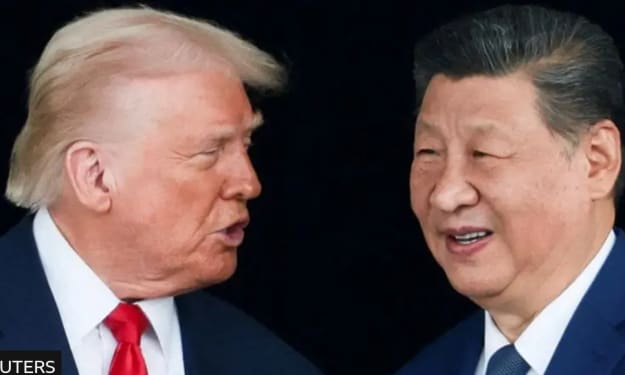
China to ‘Take All Necessary Measures’ Against Trump’s 25% Tariff
Trade tensions between the world’s two largest economies are once again threatening to boil over. After Donald Trump signaled support for a 25% tariff on Chinese goods, Beijing responded sharply, warning it would “take all necessary measures” to defend its economic interests. The statement, brief but forceful, has reignited global concerns about a return to full-scale trade confrontation. For markets, governments, and consumers alike, the message is clear: the fragile balance in U.S.-China trade relations could soon be tested again. What Trump’s 25% Tariff Means Donald Trump has long championed tariffs as a tool to rebalance trade and protect American industries. During his presidency, tariffs became a central pillar of his economic strategy, particularly against China, which he frequently accused of unfair trade practices. A proposed 25% tariff would significantly raise the cost of Chinese imports entering the U.S. market. From electronics and machinery to consumer goods, the impact would ripple through supply chains that remain deeply interconnected despite years of decoupling efforts. Trump’s framing is simple: tariffs pressure China to change its behavior. Beijing, however, sees them as economic coercion. China’s Strong Response: More Than Just Words When Chinese officials say they will “take all necessary measures,” the phrase carries weight. Historically, such language has preceded retaliatory tariffs, regulatory pressure on foreign firms, or targeted trade restrictions. China has several options at its disposal: Imposing tariffs on U.S. agricultural and industrial exports Restricting access to key raw materials or supply chains Increasing regulatory scrutiny of American companies operating in China Beijing’s warning signals that it does not intend to absorb economic pressure quietly—especially from a leader known for aggressive trade tactics. Why Beijing Is Drawing a Red Line China’s economy is navigating a complex moment. Slower growth, property sector challenges, and cautious consumer spending have already put pressure on policymakers. In this context, external shocks—like new U.S. tariffs—are viewed as direct threats to stability. More importantly, China sees trade policy as inseparable from national sovereignty. Accepting punitive tariffs without response could be perceived domestically as weakness, something the Chinese leadership is determined to avoid. By responding forcefully, Beijing reassures its public and global partners that it will defend its interests, even if that means escalating tensions. The Global Impact of Renewed Trade Conflict A renewed U.S.-China trade war would not be confined to Washington and Beijing. The global economy remains deeply exposed to the relationship between these two powers. Higher tariffs could: Increase prices for consumers worldwide Disrupt global manufacturing and logistics Slow economic growth in export-dependent economies Markets tend to react swiftly to such developments, with uncertainty often triggering volatility in stocks, currencies, and commodities. For developing countries tied into global supply chains, the consequences could be especially severe. Lessons From the Last Trade War The first U.S.-China trade war offered clear lessons. While tariffs generated political headlines, they also produced mixed economic results. American consumers absorbed higher prices, farmers required government subsidies, and global supply chains became less efficient. China, meanwhile, accelerated efforts to diversify trade partnerships and boost domestic innovation. Rather than weakening Beijing’s resolve, tariffs arguably hardened it. This history shapes how China is responding now: prepared, cautious, but unyielding. Politics Behind the Policy Trump’s tariff rhetoric also serves a domestic political purpose. Tough talk on China resonates with voters concerned about manufacturing jobs, national security, and economic independence. In this sense, tariffs are as much a campaign tool as an economic one. China understands this dynamic. Its response is crafted not only for U.S. policymakers but also for global audiences, signaling that it will not be used as a political punching bag in American elections. The result is a standoff where politics and economics collide. Is Diplomacy Still Possible? Despite the sharp language, diplomacy remains possible. Past trade confrontations have often included intense rhetoric followed by behind-the-scenes negotiations. Both sides understand the costs of prolonged escalation. However, compromise becomes harder when tariffs are framed as matters of principle rather than policy. Trump’s transactional style and China’s emphasis on sovereignty leave limited room for face-saving solutions. Whether cooler heads prevail will depend on political calculations in both capitals. What Comes Next If the tariff threat moves from rhetoric to reality, China’s response will likely be swift and strategic rather than impulsive. Beijing tends to calibrate retaliation carefully, aiming to apply pressure while minimizing self-inflicted damage. For the world, the situation serves as a reminder: U.S.-China relations remain one of the most consequential fault lines in global politics. Even a single policy announcement can send shockwaves across economies. Final Thoughts China’s warning to “take all necessary measures” against Trump’s proposed 25% tariff reflects more than economic disagreement—it highlights a deeper struggle over power, influence, and the rules of global trade. As both sides prepare for potential escalation, the stakes extend far beyond tariffs and trade balances. Whether this moment becomes another chapter in a long-running trade war—or a catalyst for renewed negotiation—will shape the global economic landscape for years to come.
By Muhammad Hassanabout a month ago in The Swamp