Muhammad Hassan
Bio
Muhammad Hassan | Content writer with 2 years of experience crafting engaging articles on world news, current affairs, and trending topics. I simplify complex stories to keep readers informed and connected.
Stories (467)
Filter by community
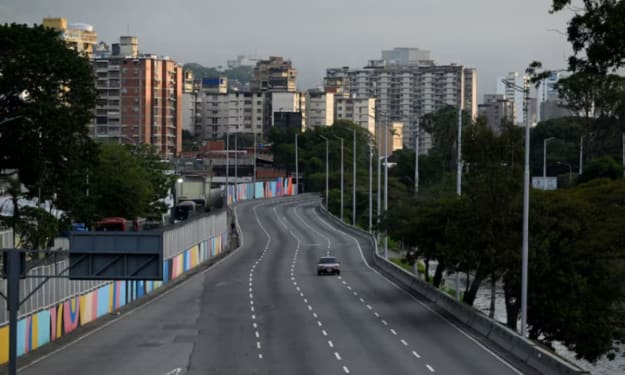
Trump’s Venezuela Gambit Tests Investor Appetite for Geopolitical Risk. AI-Generated.
Former U.S. President Donald Trump’s renewed hardline posture toward Venezuela has reopened a familiar—but newly volatile—front in global geopolitics. By signaling tougher enforcement of sanctions and hinting at a recalibration of U.S. policy toward Caracas, Trump has injected uncertainty into energy markets and emerging-market assets, forcing investors to reassess how much geopolitical risk they are willing to absorb. For Wall Street and global funds alike, Venezuela has long been a paradox: a country with some of the world’s largest proven oil reserves, yet burdened by sanctions, political instability, and institutional collapse. Trump’s gambit is testing whether investors believe opportunity can outweigh risk—or whether capital will once again retreat at the first sign of escalation. Why Venezuela Is Back on the Radar Venezuela’s reemergence in U.S. political discourse is not accidental. Energy security has climbed back to the top of global priorities, driven by conflicts, sanctions, and supply chain disruptions. With oil prices sensitive to geopolitical shocks, even marginal producers can influence sentiment. During Trump’s previous term, the United States imposed sweeping sanctions aimed at pressuring President Nicolás Maduro to step down. Those measures sharply curtailed Venezuela’s oil exports and isolated its financial system. While later policy adjustments under subsequent administrations allowed limited easing—particularly to stabilize energy markets—Trump’s rhetoric suggests a return to maximum pressure. For investors, this raises a critical question: are sanctions about to tighten again, and if so, what does that mean for oil flows, regional stability, and risk premiums? Markets React to Policy Signals, Not Just Policy Financial markets are forward-looking. They react not only to decisions but to signals—and Trump’s statements are powerful signals. Even without immediate policy changes, the prospect of tougher sanctions or diplomatic confrontation can shift investor behavior. Oil traders are watching closely. Venezuela’s production remains far below its historical peak, but incremental barrels matter in a tight market. Any hint that U.S. policy could disrupt exports—even indirectly—tends to push volatility higher. Beyond oil, Venezuela-linked assets are thinly traded but symbolically important. Bonds, energy service contracts, and regional equities can swing sharply on geopolitical headlines, reinforcing the perception that politics, not fundamentals, drives outcomes. Investor Appetite Meets Political Reality The core test posed by Trump’s Venezuela gambit is whether investors are prepared to price in elevated geopolitical risk for potential upside. Some funds specialize in distressed assets, betting on political shifts or partial normalization. Others prefer stability and predictability, steering clear of jurisdictions where policy can change overnight. In recent months, there has been cautious interest in Venezuela-related opportunities, fueled by limited sanctions relief and the prospect—however remote—of political dialogue. Trump’s stance complicates that calculus. A harder U.S. line could reverse fragile gains, leaving investors exposed to sudden losses. For institutional investors with strict compliance requirements, even the perception of heightened sanctions risk can be enough to stay away. The Energy Dimension: Oil as Leverage Energy sits at the center of this drama. Venezuela’s oil sector has deteriorated after years of underinvestment and mismanagement, but it still represents strategic leverage. For Washington, sanctions are a tool to influence behavior; for Caracas, oil is both lifeline and bargaining chip. Trump’s approach historically framed sanctions as pressure mechanisms rather than negotiating tools. If that philosophy returns, markets may expect less flexibility and more confrontation. That expectation alone can deter capital, slow production recovery, and amplify price swings. Ironically, tighter sanctions could also strengthen Venezuela’s reliance on non-Western partners, reshaping trade routes and complicating enforcement—another layer of uncertainty investors must weigh. Regional Spillovers and Emerging Market Risk Venezuela does not exist in isolation. Its instability has ripple effects across Latin America, from migration pressures to regional energy dynamics. For investors, this means contagion risk. A sharper U.S.–Venezuela standoff could elevate risk premiums for neighboring markets, particularly those with political fragility or economic ties to Caracas. Currency volatility, capital outflows, and equity selloffs often follow periods of heightened regional tension. In this sense, Trump’s gambit tests not just appetite for Venezuela-specific risk, but for emerging markets broadly—especially at a time when global interest rates and macro uncertainty already weigh on sentiment. Election-Year Calculations and Uncertainty Trump’s Venezuela rhetoric also carries a domestic political dimension. Hardline foreign policy positions can resonate with certain voter blocs, particularly in an election context. For investors, election-year geopolitics are notoriously difficult to model. Policy announcements may serve political messaging rather than economic strategy, increasing the likelihood of abrupt shifts. Markets dislike surprises, and Trump’s unpredictability—whether admired or criticized—adds a premium to uncertainty. As a result, investors may demand higher returns to compensate for risk, or simply choose to allocate capital elsewhere. What Investors Are Watching Next Several indicators will shape market reaction in the months ahead: Sanctions enforcement: Any concrete moves to tighten or expand restrictions would have immediate market impact. Oil export data: Changes in Venezuelan output or shipment patterns will signal whether rhetoric is translating into reality. Diplomatic posture: Engagement—or lack thereof—with allies and regional partners will influence how isolated or escalatory U.S. policy becomes. Corporate exposure: Energy companies and service providers will reassess involvement, offering clues about private-sector confidence. Together, these signals will determine whether Trump’s gambit remains a headline risk or becomes a material market driver. A Calculated Risk—or a Warning Shot? It remains unclear whether Trump’s stance is a negotiating tactic, a campaign message, or a preview of future policy. For investors, the distinction matters less than the risk it introduces. Venezuela’s story has taught markets a hard lesson: political risk can overwhelm fundamentals. Even the promise of vast resources cannot compensate for uncertainty when rules change without warning. Conclusion Trump’s Venezuela gambit is testing investor appetite for geopolitical risk at a time when markets are already navigating inflation, interest rate shifts, and global instability. By reopening the question of sanctions and U.S. policy toward Caracas, Trump has reminded investors that politics remains a powerful market force. Whether capital retreats or selectively engages will depend on how rhetoric translates into action. But one thing is clear: in today’s interconnected world, geopolitical gambits do not stay confined to diplomacy—they ripple through markets, portfolios, and risk calculations worldwide.
By Muhammad Hassanabout a month ago in Earth
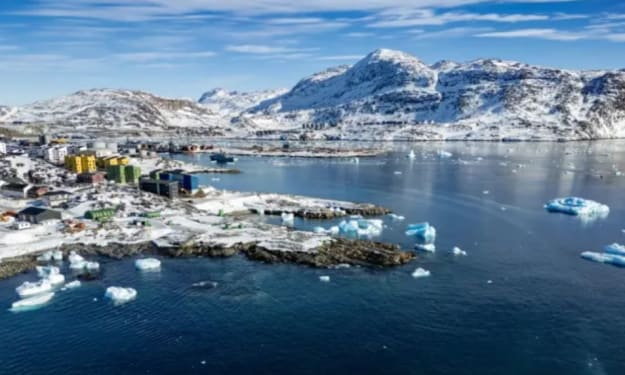
Donald Trump’s Greenland Claim Leaves Europe Struggling for an Answer. AI-Generated.
Donald Trump’s renewed claim that the United States needs Greenland for its national security has once again sent shockwaves through Europe. What might initially sound like a provocative political statement has instead evolved into a serious geopolitical dilemma, leaving European leaders scrambling for a coherent response. The episode has exposed deeper anxieties about sovereignty, transatlantic relations, and Europe’s ability to defend its strategic interests in an increasingly competitive world. At the center of the controversy lies Greenland—an autonomous territory of Denmark, rich in resources and strategic value, but home to just under 60,000 people whose voices are often overshadowed by global power politics. A Familiar Claim That Refuses to Fade Trump first captured global attention in 2019 when he suggested that the United States could buy Greenland. At the time, European leaders dismissed the idea as unrealistic, even absurd. Denmark’s prime minister famously declared that Greenland was “not for sale,” and the matter seemed closed. Yet Trump’s recent revival of the claim, framed not as a purchase but as a strategic necessity, has forced Europe to confront the issue again. This time, the context is far more serious. Rising global tensions, competition in the Arctic, and the growing importance of critical minerals have transformed Greenland from a diplomatic curiosity into a geopolitical flashpoint. Why Greenland Matters So Much Greenland’s importance goes far beyond its vast ice-covered landscape. Located between North America and Europe, the island occupies a critical position in Arctic security. It hosts key military infrastructure, including early warning systems that are vital for missile detection. Beyond security, Greenland is believed to hold significant reserves of rare earth minerals, oil, and gas—resources that are increasingly central to global competition, particularly in the race for clean energy technologies and advanced defense systems. As Arctic ice melts due to climate change, new shipping routes are opening, making Greenland even more strategically valuable. Control, influence, or access to the island is no longer just symbolic—it is economic and military leverage. Europe’s Immediate Reaction: Unity Without a Plan European leaders responded swiftly to Trump’s remarks with strong rhetoric. France, Germany, and several other European nations publicly backed Denmark, reiterating that Greenland belongs to its people and that borders cannot be altered by pressure or ambition. However, beyond statements of solidarity, Europe’s response has revealed a lack of strategic depth. While unity in words has been clear, Europe has struggled to articulate how it would practically respond if U.S. pressure were to intensify. This has exposed a recurring European weakness: strong commitment to principles, but limited tools to enforce them independently. Denmark Caught in an Awkward Position Denmark finds itself in an especially delicate position. As a NATO member and close U.S. ally, Copenhagen relies heavily on transatlantic cooperation for its security. At the same time, it is legally and politically responsible for Greenland’s sovereignty. Confronting Washington too aggressively risks straining alliance ties. Appearing too passive, however, risks undermining Danish authority and Greenlandic self-determination. This balancing act has forced Denmark to rely on broader European support—support that, while vocal, remains largely symbolic. Greenland’s Voice Risks Being Marginalized Lost amid diplomatic exchanges is the perspective of Greenland itself. Greenland’s leaders have repeatedly stated that the island is neither for sale nor open to annexation. The territory enjoys extensive self-rule and retains the right to pursue full independence if it chooses. For many Greenlanders, Trump’s comments revive uncomfortable memories of colonial history and external control. While global powers debate strategy, local communities worry about environmental damage, cultural erosion, and being reduced to a geopolitical asset rather than a people with rights. Europe’s challenge is not only to defend borders but also to ensure Greenland’s voice is not drowned out by larger powers. The Transatlantic Dilemma Trump’s Greenland claim has highlighted deeper strains in the transatlantic relationship. Europe has long depended on the United States for security through NATO, but episodes like this raise uncomfortable questions about trust and predictability. If a key ally openly entertains the idea of annexing territory linked to another NATO member, what does that mean for alliance cohesion? European policymakers now face a troubling reality: strategic dependence on the U.S. limits their room to maneuver when interests diverge. This has reignited debates about Europe’s need for greater strategic autonomy—an idea often discussed but rarely fully realized. Arctic Competition Is Intensifying The Greenland controversy is unfolding against a backdrop of intensifying Arctic competition. Russia has expanded its military presence in the region, while China has declared itself a “near-Arctic state,” investing heavily in polar research and infrastructure. For Europe, the Arctic is no longer a distant frontier. It is a central theater of future competition. Trump’s comments, whether serious policy or political messaging, have forced European leaders to acknowledge that the Arctic is becoming a zone where power politics increasingly override diplomacy. Europe’s Strategic Blind Spot Perhaps the most revealing aspect of the episode is how unprepared Europe appears. Despite years of warnings about Arctic competition, the continent lacks a unified Arctic strategy with real enforcement mechanisms. Europe can issue statements, convene summits, and reaffirm principles—but without credible military, economic, and diplomatic leverage, its influence remains limited. Trump’s Greenland claim has acted as a stress test, exposing gaps between Europe’s ambitions and its capabilities. What Comes Next? For now, Trump’s claim remains rhetorical rather than operational. Yet the implications linger. Europe must decide whether it will continue relying on diplomatic language alone or invest in concrete strategies to protect its interests and allies. This may include deeper defense cooperation, stronger engagement with Greenland itself, and a more assertive Arctic policy that goes beyond reacting to external pressure. Conclusion Donald Trump’s Greenland claim has done more than stir controversy—it has forced Europe to confront uncomfortable truths about power, dependence, and preparedness. While European leaders have united in defense of sovereignty, they are still struggling to define what that defense looks like in practice. As global competition intensifies and the Arctic grows in importance, Europe’s response to this challenge may shape its credibility for years to come. Greenland’s future, and Europe’s strategic confidence, may depend on whether this moment becomes a turning point—or another missed warning.
By Muhammad Hassanabout a month ago in The Swamp
Gunmen Raid Village in Northern Nigeria, Killing at Least 30 People and Abducting Others. AI-Generated.
Northern Nigeria has once again been plunged into mourning after gunmen raided a rural village, killing at least 30 people and abducting several others, according to local authorities and residents. The deadly assault is the latest in a long series of violent attacks that have turned large parts of the region into zones of fear, displacement, and chronic instability. The incident underscores Nigeria’s deepening security crisis, where armed groups operate with alarming ease, targeting vulnerable communities and overwhelming local defenses. The Night of the Attack The attack occurred in the late hours when armed men stormed the village on motorcycles, firing indiscriminately and setting homes ablaze. Survivors described scenes of chaos as residents fled into nearby bushes in a desperate attempt to escape the violence. Witnesses say the attackers moved from house to house, killing civilians and forcibly abducting several villagers, including women and children. By the time security forces arrived, the gunmen had already retreated, leaving behind burned homes, lifeless bodies, and traumatized survivors. Local officials confirmed that at least 30 people were killed, though the death toll may rise as search efforts continue. A Region Trapped in Violence Northern Nigeria has become a hotspot for armed violence over the past decade. What began as localized criminal activity has evolved into a complex web of banditry, terrorism, and communal conflict. Armed groups — often referred to as bandits — carry out raids for ransom, cattle theft, and territorial control. Entire villages have been emptied as residents flee repeated attacks, contributing to a growing internal displacement crisis. In many areas, residents say they feel abandoned, with limited security presence and slow emergency response times. Abductions as a Weapon of Terror One of the most disturbing aspects of the attack was the abduction of villagers. Kidnappings have become a defining feature of insecurity in northern Nigeria, used both as a source of income and a tactic to instill fear. Victims are often held in remote forest camps, with families forced to negotiate ransoms they can barely afford. In some cases, abducted individuals are never seen again. Human rights organizations warn that mass abductions are becoming normalized, eroding trust in authorities and leaving communities feeling helpless. Security Forces Under Pressure Nigeria’s military and police face immense challenges in combating armed groups operating across vast and difficult terrain. While security forces have launched operations against bandits, limited resources, intelligence gaps, and difficult geography hinder sustained success. Residents often complain that security personnel arrive only after attacks have occurred. In remote villages, warning systems are weak, and communication infrastructure is limited. The latest attack has reignited criticism of the government’s security strategy, with calls for better intelligence, faster response times, and increased protection for rural communities. Humanitarian Impact and Displacement Beyond the immediate loss of life, attacks like this leave lasting humanitarian consequences. Survivors are often forced to abandon their homes, seeking refuge in overcrowded camps or neighboring towns. Food insecurity worsens as farmlands are abandoned, contributing to rising hunger across the region. Children miss school, healthcare access declines, and communities that once relied on farming and trade are pushed deeper into poverty. Aid organizations warn that without improved security, humanitarian needs in northern Nigeria will continue to grow. Government Response and Public Outrage Nigerian authorities have condemned the attack and vowed to pursue those responsible. Statements from officials emphasized the government’s commitment to restoring peace and bringing perpetrators to justice. However, public frustration is mounting. Many citizens question why attacks continue despite repeated promises of improved security. Social media platforms have been flooded with calls for accountability, reform, and stronger protection for vulnerable communities. For many Nigerians, words are no longer enough — they are demanding tangible results. The Broader Security Crisis The village raid is part of a broader national security challenge that includes insurgency in the northeast, separatist violence in the southeast, and widespread banditry in the northwest and north-central regions. Experts argue that addressing the crisis requires more than military action. Poverty, unemployment, weak governance, and the proliferation of illegal weapons all fuel instability. Without tackling these root causes, analysts warn that violence will continue to resurface in new forms and locations. Lives Lost, Questions Unanswered For the families who lost loved ones, the tragedy is deeply personal. Funerals are being held amid fear that attackers could return. Survivors grapple with trauma, loss, and uncertainty about the future. Many villagers are asking painful questions: Why was there no protection? Why do these attacks keep happening? And how many more lives must be lost before meaningful change occurs? These questions echo far beyond one village, resonating across a nation struggling to protect its citizens. Conclusion The deadly raid on a village in northern Nigeria, which left at least 30 people dead and others abducted, is a stark reminder of the country’s ongoing security crisis. It highlights the vulnerability of rural communities and the urgent need for effective, sustained solutions. Until security improves, villages will remain targets, civilians will continue to suffer, and the cycle of violence will persist. For Nigeria, the challenge is not only to respond to each attack but to create conditions where such atrocities no longer occur. The lives lost in this latest raid demand more than sympathy — they demand action, accountability, and a renewed commitment to protecting the most vulnerable.
By Muhammad Hassanabout a month ago in Earth
India’s January Russian Oil Imports May Fall Sharply as Reliance Expects No Deliveries. AI-Generated.
India’s oil import landscape may see a significant shift in January as Russian crude deliveries are expected to fall sharply, driven largely by Reliance Industries’ indication that it does not anticipate receiving shipments from Russia during the month. The development has drawn attention from global energy markets, policymakers, and geopolitical analysts, as India has emerged as one of Russia’s largest oil buyers since Western sanctions reshaped global crude flows. This potential decline is not just a routine fluctuation in trade. It reflects deeper changes in global energy logistics, the evolving impact of sanctions, and India’s careful effort to balance economic interests with diplomatic realities. How India Became a Major Buyer of Russian Oil Before 2022, Russian oil accounted for only a small share of India’s imports. That changed dramatically after Western sanctions and price caps redirected Russian crude away from Europe. India, along with China, stepped in as a major buyer, attracted by deeply discounted prices. For India, the shift made economic sense. As the world’s third-largest oil importer, the country depends heavily on foreign crude to fuel its growing economy. Cheaper Russian oil helped keep domestic fuel prices relatively stable while shielding consumers from global price shocks. Refiners such as Reliance Industries and Indian Oil Corporation played a key role, purchasing large volumes and reconfiguring supply chains to accommodate Russian grades. Why January Deliveries May Drop The expectation of no Russian oil deliveries to Reliance in January has raised eyebrows because Reliance is India’s largest private refiner and a major exporter of refined fuels. Several factors may be contributing to the anticipated decline. First, logistical and payment challenges linked to sanctions continue to complicate Russian oil trade. Shipping insurance, tanker availability, and payment mechanisms remain sensitive, particularly for private companies with significant exposure to Western markets. Second, pricing dynamics have changed. As discounts on Russian crude narrow, Indian refiners may find alternative suppliers more attractive, especially from the Middle East. When Russian oil is no longer significantly cheaper, the incentive to navigate complex trade arrangements weakens. Finally, compliance and reputational considerations matter. Large private refiners like Reliance operate globally and must remain cautious about secondary sanctions and regulatory scrutiny. Reliance’s Strategic Calculations Reliance Industries occupies a unique position in India’s energy ecosystem. It runs one of the world’s largest refining complexes and exports refined products to Europe, the United States, and other Western markets. Because of this global footprint, Reliance must be especially careful about sanction exposure. Even if purchasing Russian crude is technically permitted under existing rules, the surrounding compliance risks can be substantial. By stepping back from Russian oil—at least temporarily—Reliance may be signaling a preference for supply stability and regulatory certainty over short-term cost advantages. This does not necessarily mean a permanent shift, but it underscores how corporate strategy can influence national import patterns. What This Means for India’s Energy Security A sharp drop in Russian oil imports does not mean India faces an immediate energy crisis. The country has diversified its supply sources over decades and continues to import large volumes from Iraq, Saudi Arabia, the United Arab Emirates, and the United States. However, reduced access to discounted Russian crude could have economic implications. Higher average import costs may put pressure on refiners’ margins and, potentially, on domestic fuel prices if global benchmarks rise. The situation highlights a broader challenge for India: ensuring affordable energy while navigating a volatile and politicized global oil market. Geopolitical Implications India’s oil trade with Russia has been closely watched by Western governments. While New Delhi has consistently defended its purchases as necessary for national interest, it has also emphasized that it complies with international regulations and price caps. A decline in Russian imports—especially involving a major private refiner—may be interpreted by some as a subtle recalibration rather than a policy shift. India has repeatedly stressed its strategic autonomy, resisting pressure to align fully with any one geopolitical bloc. At the same time, maintaining strong ties with Russia remains important for India, particularly in defense and diplomatic cooperation. Any reduction in oil trade is likely to be framed as a commercial decision, not a political one. Global Oil Markets Watching Closely The potential drop in Indian demand for Russian oil could have ripple effects across global markets. Russia has relied heavily on Asian buyers to offset lost European demand, and any sustained reduction could force it to adjust pricing or seek new buyers. For Middle Eastern producers, the situation could open opportunities to regain market share in India. Increased competition among suppliers may help stabilize prices, but it could also intensify geopolitical jockeying in the region. Oil traders and analysts will be watching January data closely for clues about whether this is a temporary disruption or the start of a longer-term trend. Is This a Temporary Pause or a Structural Shift? It is too early to conclude that India is turning away from Russian oil altogether. Import patterns have fluctuated before, influenced by pricing, shipping availability, and refinery maintenance schedules. However, the current situation underscores a key reality: Russia’s grip on Indian demand is not guaranteed. As discounts narrow and compliance risks persist, Indian refiners—especially private ones—will continue to reassess their strategies. Future imports will likely depend on how global sanctions evolve, how Russia prices its crude, and how India balances cost savings with long-term strategic considerations. Conclusion India’s January Russian oil imports may fall sharply as Reliance expects no deliveries, marking a potentially important moment in the country’s evolving energy strategy. While not a definitive break, the development reflects the complex interplay of economics, geopolitics, and corporate risk management shaping global oil trade today. For India, the challenge remains the same: securing reliable and affordable energy without compromising strategic autonomy or economic stability. Whether this dip proves temporary or signals a broader shift, it serves as a reminder that in today’s world, energy decisions are never purely commercial—they are deeply political as well.
By Muhammad Hassanabout a month ago in The Swamp
The War for Minerals, Oil, and AI. AI-Generated.
In the modern world, wars are no longer fought solely over land or ideology. Increasingly, global competition revolves around minerals, oil, and artificial intelligence—three pillars that now define economic strength, military power, and technological dominance. Together, they form the backbone of a new kind of conflict: quieter than traditional wars, but no less consequential. From lithium-rich deserts to oil-rich seas and data-driven battlefields, nations are racing to secure the resources that will determine who leads—and who follows—in the decades ahead. Why Minerals Have Become Strategic Weapons Critical minerals such as lithium, cobalt, nickel, and rare earth elements are essential for modern life. They power electric vehicles, smartphones, renewable energy systems, and advanced weapons. Without them, the global transition to clean energy and digital technology simply cannot happen. This has turned mineral-rich regions into geopolitical hotspots. Countries with large reserves suddenly hold enormous leverage, while industrial powers scramble to secure supply chains. China currently dominates the processing of many rare earth minerals, giving it significant strategic influence. Western nations, alarmed by this dependence, are now rushing to diversify sources through Africa, Latin America, and Central Asia. The competition is not just about extraction but control—who mines, who refines, and who sets the rules. Oil Still Fuels Power and Conflict Despite the push toward renewable energy, oil remains a cornerstone of global power. It fuels armies, economies, and transportation networks. Control over oil supplies has shaped international relations for over a century, and that reality has not changed. From the Middle East to the Arctic, oil-rich regions remain flashpoints of tension. Conflicts, sanctions, and diplomatic standoffs often trace back to energy interests. Even as governments pledge to reduce fossil fuel use, oil continues to influence foreign policy decisions and military strategy. Energy independence has become a national security priority, pushing countries to protect supply routes, invest in domestic production, or exert influence over resource-rich states. Artificial Intelligence: The New Battlefield If minerals and oil are the fuel of the modern world, artificial intelligence is the brain. AI is rapidly transforming warfare, surveillance, economics, and governance. Nations that dominate AI research and deployment gain a decisive edge—not just militarily, but economically and politically. AI-driven systems now analyze intelligence data, control drones, predict cyber threats, and optimize supply chains. This has triggered an arms race not unlike the nuclear competition of the Cold War, but faster and far more opaque. The race for AI dominance is inseparable from the race for minerals and energy. Advanced AI systems require massive data centers, powerful chips, and rare materials—all tied back to physical resources. How These Three Forces Intersect The war for minerals, oil, and AI is not three separate struggles—it is one interconnected conflict. Minerals are needed to build chips, batteries, and weapons Oil and energy power data centers, militaries, and global logistics AI optimizes extraction, warfare, surveillance, and economic control Together, they create a feedback loop where control over one strengthens dominance over the others. This is why modern conflicts increasingly involve cyberattacks, sanctions, trade restrictions, and proxy wars instead of direct military confrontation. Developing Nations Caught in the Middle Many of the world’s most valuable mineral reserves are located in developing countries. While this presents economic opportunities, it also brings exploitation, environmental damage, and political instability. Powerful nations and multinational corporations often compete for access, sometimes backing rival factions or influencing local politics. In some cases, resource wealth has fueled corruption and conflict rather than development—a phenomenon often referred to as the “resource curse.” As AI and green technologies expand, pressure on these regions is likely to intensify. Climate Change and Ethical Dilemmas Ironically, the push to fight climate change has increased demand for critical minerals, raising serious ethical questions. Mining operations can devastate ecosystems and displace communities, while oil extraction continues to accelerate environmental damage. Meanwhile, AI introduces concerns about surveillance, job displacement, and autonomous weapons. The technologies meant to secure the future also carry the risk of deepening inequality and instability if left unchecked. The challenge for global leaders is not just winning this resource war—but managing it responsibly. A New Kind of Global Conflict Unlike traditional wars, this struggle rarely involves tanks crossing borders. Instead, it unfolds through trade wars, export bans, investment restrictions, cyber espionage, and technological sabotage. Control over supply chains has become as powerful as military strength. Sanctions on energy exports, restrictions on chip manufacturing, and limits on AI collaboration are now common tools of statecraft. This shift signals a future where power is measured less by territory and more by technological and resource dominance. Conclusion The war for minerals, oil, and AI is shaping the global order in profound ways. It is redefining alliances, fueling new rivalries, and determining which nations will lead the next era of human development. As competition intensifies, the choices made today—about cooperation, sustainability, and ethics—will decide whether this struggle leads to shared progress or deeper division. One thing is clear: the future of global power will be built not only on weapons, but on resources, energy, and intelligence—both human and artificial.
By Muhammad Hassanabout a month ago in The Swamp
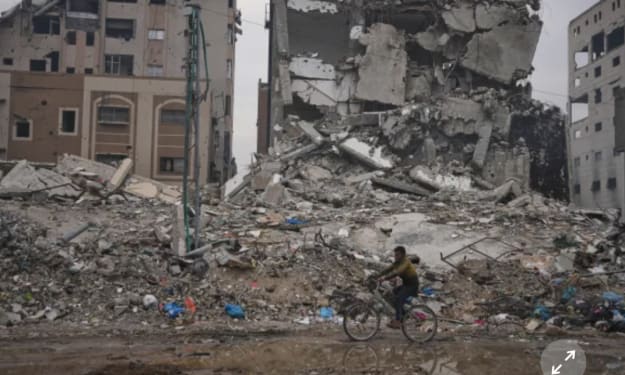
Gaza Under Fire as Israel Says It Targeted an “Imminent Threat”. AI-Generated.
Tensions in the Middle East have once again surged as Israeli forces carried out strikes in Gaza, with Israeli officials stating the operation was aimed at neutralizing an “imminent threat.” The attack has reignited fears of a wider escalation, drawing international concern and renewed scrutiny over the fragile balance between security claims and humanitarian consequences. As airstrikes shook parts of Gaza, questions quickly emerged: What constituted the alleged imminent threat? Was the response proportionate? And what does this latest episode mean for civilians trapped in a territory already devastated by years of conflict, blockade, and political paralysis? Israel’s Justification: Preventing an Immediate Attack According to Israeli military and government statements, the strikes were launched to preempt an imminent attack planned by militant groups operating in Gaza. Israeli officials emphasized that intelligence indicated preparations for assaults targeting Israeli civilians or military positions, leaving what they described as “no alternative but to act.” Israel has long maintained a doctrine of preemptive self-defense, arguing that rapid action is necessary to protect its population from rocket fire, cross-border attacks, and other security threats. In official briefings, the Israel Defense Forces (IDF) framed the strikes as precise and targeted, aimed at militant infrastructure rather than civilians. This justification aligns with Israel’s broader security narrative: that Gaza-based armed groups pose a continuous and unpredictable danger, and that delayed responses could result in mass casualties inside Israel. Gaza’s Reality: Civilians Pay the Highest Price While Israel stressed security imperatives, the reality on the ground in Gaza told a different story. Local health officials reported casualties, including women and children, and damage to residential areas. Even when strikes are aimed at specific targets, Gaza’s dense urban environment makes civilian harm difficult to avoid. For Gaza’s more than two million residents, most of whom live under severe economic hardship, each escalation deepens an already dire humanitarian situation. Hospitals operate with limited supplies, electricity is scarce, and access to clean water remains inconsistent. Airstrikes, even short-lived ones, strain a system that many international organizations describe as on the brink of collapse. Residents described nights filled with fear, explosions, and uncertainty — a grim routine that has become painfully familiar. The Question of “Imminent Threat” The phrase “imminent threat” carries significant weight in international law and diplomacy. While states have the right to self-defense, that right is bound by principles of necessity and proportionality. Critics argue that Israel’s repeated reliance on classified intelligence makes independent verification difficult. Human rights groups often call for transparency, insisting that claims of imminent danger should be scrutinized, particularly when civilian lives are lost. Supporters of Israel counter that intelligence disclosures could compromise sources and methods, potentially enabling future attacks. This tension between secrecy and accountability lies at the heart of the ongoing debate. International Reactions: Calls for Restraint The latest strikes prompted swift responses from the international community. Several governments urged restraint on all sides, warning that continued escalation could spiral into a broader conflict. The United Nations reiterated its concern over civilian casualties and emphasized the need to respect international humanitarian law. Aid organizations once again called for humanitarian corridors and protection for civilians, stressing that Gaza’s population cannot endure endless cycles of violence. At the same time, some allies reaffirmed Israel’s right to defend itself, highlighting the persistent threat posed by armed groups in Gaza. This familiar diplomatic split reflects the broader global divide over how the conflict should be addressed. A Cycle That Feels Impossible to Break The latest violence fits into a long-standing pattern: attacks, retaliation, international alarm, and a temporary lull — followed by renewed tensions. Each round hardens positions and deepens mistrust. For Palestinians in Gaza, the sense of collective punishment remains strong. Many argue that regardless of militant activity, civilians bear the brunt of military actions over which they have little control. For Israelis, years of rocket attacks and security threats reinforce the belief that decisive military action is necessary for survival. This cycle leaves little room for political solutions, while reinforcing narratives of fear and victimhood on both sides. The Political Context Behind the Strikes Military escalations rarely occur in a vacuum. Analysts point out that internal political pressures, regional dynamics, and broader geopolitical shifts often influence timing and intensity. In Israel, security issues are deeply intertwined with domestic politics, where leaders are frequently judged on their ability to appear strong against perceived threats. In Gaza, militant groups operate within a complex political landscape shaped by rivalry, blockade, and regional alliances. These factors make de-escalation difficult, even when neither side appears eager for a full-scale war. Humanitarian Law and Moral Responsibility Beyond strategic calculations, the situation raises profound moral questions. International humanitarian law demands the protection of civilians and the minimization of harm, even in the context of self-defense. Human rights organizations continue to document casualties and destruction, calling for independent investigations into each escalation. They argue that accountability — for all parties — is essential if future violence is to be prevented. Without such accountability, critics warn, the concept of “imminent threat” risks becoming a justification that normalizes repeated civilian suffering. What Comes Next? As of now, the situation remains tense but uncertain. History suggests that short-term calm may follow, but without addressing the underlying causes — blockade, political fragmentation, security fears, and the absence of a credible peace process — lasting stability remains elusive. For Gaza’s civilians, each strike reinforces a sense of abandonment by the international community. For Israelis, ongoing threats reinforce the belief that vigilance and force are unavoidable. Conclusion The latest strikes on Gaza, justified by Israel as targeting an imminent threat, once again highlight the fragile and volatile nature of the Israeli-Palestinian conflict. Security claims, humanitarian realities, and political calculations collide in a space where civilians are caught in the middle. Until meaningful political solutions replace military reactions, Gaza will remain a flashpoint — and the phrase “imminent threat” will continue to echo after each explosion, long after the smoke clears.
By Muhammad Hassanabout a month ago in The Swamp
“Greenland Belongs to Its People”: European Leaders Unite Over Trump’s Threats to Annex Territory. AI-Generated.
When former U.S. President Donald Trump once again floated the idea of the United States taking control of Greenland, the reaction from Europe was swift, unified, and unmistakably firm. European leaders rallied around a simple but powerful message: Greenland belongs to its people. What might sound like a provocative comment or political theater has instead evolved into a serious international debate about sovereignty, international law, and the future of Arctic geopolitics. This moment has revealed not only Europe’s commitment to defending territorial integrity but also the growing strategic importance of Greenland in a rapidly changing world. A Familiar Idea That Refuses to Disappear Trump’s interest in Greenland is not new. In 2019, he publicly suggested that the United States could purchase the island from Denmark, a proposal that was widely ridiculed and swiftly rejected. Yet years later, similar rhetoric has resurfaced, with Trump arguing that U.S. control of Greenland is essential for national and global security. This renewed discussion came at a sensitive time, amid rising global tensions and growing competition in the Arctic. While Trump has framed the issue as a strategic necessity, European leaders interpreted his remarks as a troubling challenge to long-standing principles of sovereignty and self-determination. Europe’s United Front: An Uncommon Consensus One of the most striking aspects of this episode has been Europe’s collective response. Leaders from major European nations — including France, Germany, Italy, Spain, Poland, the United Kingdom, and Denmark — publicly closed ranks to support Greenland’s autonomy. Their message was unambiguous: borders cannot be changed by pressure, threats, or unilateral ambition. The joint stance emphasized that Greenland’s future is a matter for Greenland and Denmark alone, not external powers. This rare display of unity reflects broader European concerns about preserving the rules-based international order at a time when it feels increasingly fragile. For many European governments, allowing even the suggestion of territorial acquisition to go unchallenged would set a dangerous precedent. Denmark’s Position: Firm, Calm, and Clear Denmark, which governs Greenland as an autonomous territory within the Kingdom of Denmark, responded with particular clarity. Danish officials reiterated that Greenland is not for sale and never has been. Denmark’s leadership stressed that Greenland already enjoys extensive self-governance and that any future decisions — including full independence — belong to the Greenlandic people. From Copenhagen’s perspective, the U.S. already benefits from strategic cooperation in the region through NATO and existing defense agreements, making the idea of annexation both unnecessary and inappropriate. The Most Important Voice: Greenland Itself While global powers debated Greenland’s strategic value, Greenlandic leaders were quick to assert their own agency. Greenland’s government firmly rejected Trump’s remarks, describing them as unacceptable and dismissive of the island’s democratic rights. Greenland’s population, numbering just under 60,000, has long navigated the complexities of autonomy, identity, and post-colonial history. Although there is internal debate about eventual independence from Denmark, there is little appetite for becoming part of another foreign power. For Greenlanders, the issue is not just about geopolitics — it is about dignity, self-determination, and respect. Why Greenland Matters More Than Ever Greenland’s rising prominence on the world stage is not accidental. As climate change accelerates Arctic ice melt, the region is becoming more accessible and economically attractive. Greenland is believed to hold vast reserves of rare earth minerals, oil, and gas — resources critical for modern technology and the global energy transition. Strategically, Greenland occupies a vital position between North America and Europe. It plays a key role in missile defense systems, Arctic surveillance, and emerging shipping routes. As competition intensifies between the United States, Russia, and China in the Arctic, Greenland has become a focal point of strategic calculations. Yet European leaders argue that strategic value does not override international norms. In their view, security cooperation must be based on partnership, not ownership. A Test for NATO and Western Alliances Trump’s comments have also sparked uncomfortable conversations within NATO. Denmark and the United States are long-standing allies, and Greenland already hosts important U.S. military facilities. The idea that one NATO member could publicly entertain annexing territory associated with another ally has raised questions about trust and cohesion within the alliance. For Europe, defending Denmark and Greenland is not only about geography — it is about ensuring that alliances are built on respect rather than coercion. What This Moment Really Represents At its core, the Greenland controversy is about more than one island. It reflects the broader struggle between power politics and principles. Europe’s response signals that, despite internal differences, it remains committed to defending sovereignty, democratic choice, and international law. In a world increasingly shaped by competition over resources and strategic positions, this episode serves as a reminder that smaller nations and territories cannot be treated as bargaining chips. Final Thoughts By standing firm and declaring that “Greenland belongs to its people,” European leaders have sent a message that resonates far beyond the Arctic. It is a statement about values, about history, and about the kind of global order Europe wants to defend. As geopolitical tensions continue to rise, the Greenland debate may prove to be a defining moment — one that shows whether the principles of sovereignty and self-determination still hold weight in an era of strategic rivalry. For now, Europe’s answer is clear: Greenland’s future will be decided in Greenland, not Washington.
By Muhammad Hassanabout a month ago in Earth
Morning Squawk: Venezuela’s Unrest, Tesla’s Surprising Finish, and Chick-fil-A’s Marketing Blitz. AI-Generated.
Morning news is often a whirlwind, but today’s “Morning Squawk” brings clarity to some of the most intriguing developments—from political turmoil in Venezuela to Tesla’s unexpected rise in the auto world, and a deep dive into Chick-fil-A’s latest marketing moves. Here’s everything you need to know in one digestible briefing. Venezuela: A Nation on Edge Venezuela continues to dominate international headlines, as political instability and economic uncertainty fuel unrest across the country. Recent reports indicate growing public protests against the government, with shortages of basic goods and ongoing power outages worsening daily life for millions. The international community is keeping a close eye on the situation. Economists warn that Venezuela’s hyperinflation, combined with a crumbling oil industry, could prolong the nation’s recovery and deepen its humanitarian crisis. Meanwhile, diplomatic efforts by regional organizations are aiming to ease tensions, though progress remains slow. For businesses and investors, Venezuela’s instability serves as a stark reminder of how political uncertainty can ripple through economies—impacting trade, investments, and supply chains in unpredictable ways. Tesla Takes Second Place—Against All Odds In the automotive world, Tesla made headlines with its second-place finish in global vehicle sales, surprising analysts and competitors alike. Despite facing supply chain challenges, increasing competition, and production bottlenecks, Tesla has continued to outperform expectations. Experts attribute this success to a combination of innovative technology, brand loyalty, and strategic pricing, which allows Tesla to maintain momentum even as other automakers ramp up their electric vehicle (EV) offerings. Tesla’s position in the market is more than just a ranking—it’s a signal of the growing dominance of EVs and a shift in consumer preference. With traditional manufacturers investing heavily in electrification, the next few years could see intense competition, but Tesla’s resilience highlights its ability to adapt and capitalize on emerging trends. Inside Chick-fil-A’s Marketing Blitz Shifting gears to the world of fast food, Chick-fil-A is demonstrating how smart marketing can drive growth in a crowded sector. The chain has launched a series of high-profile campaigns aimed at both brand awareness and community engagement. From social media stunts to limited-time menu items and sponsorship deals, Chick-fil-A is clearly leveraging multiple channels to stay relevant. Marketing experts note that this approach not only boosts customer loyalty but also enhances the brand’s visibility in markets where competition is fierce. Interestingly, the company’s campaigns emphasize storytelling and emotional connection, highlighting its values and corporate culture. In an era where consumers increasingly seek authenticity, Chick-fil-A’s strategy underscores the importance of blending clever promotion with a consistent brand message. Other Morning Headlines to Watch Tech Innovations: Several AI startups are making waves, promising tools that could redefine productivity and creative workflows. Investors are particularly interested in solutions targeting enterprise efficiency and digital automation. Global Markets: Stock markets have shown volatility this week, with tech and energy sectors driving fluctuations. Analysts suggest keeping an eye on inflation reports and geopolitical developments as potential market movers. Lifestyle Trends: Sustainable living continues to gain traction, with more consumers embracing eco-friendly products and lifestyle choices. Retailers who adapt quickly are seeing a noticeable boost in engagement. Why These Stories Matter Taken together, these headlines illustrate the diversity of challenges and opportunities in today’s world. Venezuela’s unrest is a reminder of how politics shapes economies. Tesla’s performance highlights the evolution of consumer preferences and technology. Chick-fil-A’s marketing demonstrates the power of strategy in crowded markets. For readers, understanding these developments is more than casual news consumption—it’s about seeing patterns and anticipating the forces shaping business, society, and global trends. Key Takeaways Stay informed on global politics: Countries like Venezuela show how political instability can have far-reaching effects. Watch market disruptors: Tesla’s rise underscores the potential for innovation to reshape industries. Learn from marketing strategies: Chick-fil-A’s campaigns demonstrate how brands can connect with audiences through creativity and authenticity. Monitor broader trends: From AI to sustainability, being aware of emerging developments provides insight into future opportunities and challenges. Morning Squawk isn’t just a collection of headlines—it’s a snapshot of our rapidly changing world. By connecting the dots between politics, business, and lifestyle, readers can gain a clearer perspective on the forces shaping our lives today. Stay tuned, stay informed, and keep squawking—because the world isn’t slowing down anytime soon.
By Muhammad Hassanabout a month ago in The Swamp
Cyber Siege at the Digital Frontier: Chinese Cyberattacks on Taiwan’s Infrastructure Averaged 2.6 Million a Day in 2025. AI-Generated.
When you think of modern warfare, images of tanks, jets, and troops usually come to mind. But the reality in 2025 is far more digital—and far more relentless. Taiwan’s National Security Bureau (NSB) revealed a startling figure: Chinese cyberattacks on Taiwan’s infrastructure averaged 2.6 million per day last year. That’s not a typo. Millions. Every. Single. Day. And this surge isn’t just numbers on a page—it reflects a new type of warfare that fuses technology, politics, and strategy into something experts call “hybrid warfare.” The scale of the cyber assault To grasp what 2.6 million attacks per day looks like, imagine thousands of attempts every second to break into networks powering hospitals, banks, energy grids, and emergency services. These aren’t random hacks or amateur attacks—they are targeted, highly coordinated operations designed to test vulnerabilities, overload systems, and wear down Taiwan’s cyber defenses over time. The NSB noted a concerning trend: spikes in attacks often coincided with Chinese military drills or politically sensitive events in Taiwan. This suggests a deliberate strategy to combine psychological pressure with digital disruption, putting Taipei in a constant state of vigilance. Who and what is being targeted? The cyber onslaught spans almost every sector, but some targets are especially critical: Healthcare systems: Hacking hospitals can delay emergency responses and endanger lives. Energy infrastructure: Targeting power grids or fuel distribution threatens daily life and economic stability. Financial institutions: Banks and digital payment systems are under constant surveillance, with attacks designed to erode public trust. Telecommunications: Communication networks are a primary target to intercept traffic and disrupt information flow. Even Taiwan’s famed semiconductor sector—the backbone of the global tech supply chain—is in the crosshairs. Attacks here aim at stealing technical data or undermining operational security, highlighting how digital warfare can intersect with global economic stakes. Hybrid warfare: Beyond cyberattacks Taiwan’s cyber crisis isn’t happening in isolation. It is part of a broader strategy of cross-strait pressure, blending military maneuvers, political messaging, and digital assaults. Analysts say these tactics fall under the category of hybrid warfare, where the objective is to coerce, destabilize, or intimidate without triggering full-scale conflict. This approach is particularly challenging because it blurs the line between peace and war. While China officially denies involvement, the timing and intensity of the attacks suggest coordination with Beijing’s broader strategic goals. Taiwan’s defense strategy Facing a daily onslaught of millions of digital threats, Taiwan has invested heavily in cybersecurity. Its National Information and Communication Security Taskforce (NICST) works alongside private cybersecurity firms to detect, mitigate, and respond to attacks in real-time. However, experts emphasize that defense is not about blocking every attack—which is impossible—but about prioritizing critical infrastructure, ensuring rapid response, and building system redundancies. Public awareness is also key. Citizens and businesses are encouraged to adopt best practices like two-factor authentication, encrypted communications, and regular software updates. Even small precautions can make a significant difference when millions of attacks are coming at your systems every day. Why this matters globally Taiwan’s experience isn’t just a local concern—it has global implications. Digital infrastructure now underpins almost every facet of modern life, and cyberattacks of this scale challenge international norms, economic stability, and security frameworks. For democracies worldwide, Taiwan’s situation is a stark reminder: cybersecurity isn’t optional. It’s national defense. Sharing threat intelligence, supporting allies under attack, and establishing rules for state behavior in cyberspace are becoming essential pillars of global security. Lessons from the frontline Preparedness is key: Cyber resilience requires continuous investment, public awareness, and private-sector cooperation. Focus on critical systems: Hospitals, energy grids, and communications networks need top priority. Hybrid threats are the future: Military drills, political tension, and digital attacks can be combined in ways that traditional defense strategies don’t account for. Global cooperation matters: No country is an island in cyberspace. International collaboration is crucial to deter or mitigate attacks. Taiwan’s story illustrates the harsh reality of 21st-century security: conflict is no longer confined to borders or battlefields. It happens in real-time, through cables, servers, and digital pipelines. Millions of attacks every day, critical infrastructure at constant risk, and geopolitical tensions simmering beneath the surface—this is the digital battlefield of the modern era. Taiwan’s struggle is a warning, a lesson, and a wake-up call for the world: cybersecurity is no longer just an IT problem—it’s a strategic imperative. The question isn’t just whether nations can defend themselves from cyberattacks—it’s whether the world can adapt fast enough to a reality where digital and geopolitical conflicts are inseparable.
By Muhammad Hassanabout a month ago in The Swamp
“‘Our Minerals Could Be Used to Annex Us’: Why Canada Doesn’t Want U.S. Mining. AI-Generated.
When people in rural parts of Canada heard that a major mining project backed by the U.S. Pentagon was coming to their communities, the reaction wasn’t excitement—it was concern. And not just about the usual environmental issues like open‑pit mining or water contamination. Residents began asking a bigger question: could foreign involvement in extracting Canada’s critical minerals threaten their country’s sovereignty and long-term future? This striking idea—“our minerals could be used to annex us”—has become the lens through which many Canadians view U.S. investments in their mining sector. It’s not just local worries; it’s a national conversation about resources, control, and geopolitics. The Mine That Sparked a Debate The debate started in Quebec with Lomiko Metals’ proposal for a large graphite mine in La Petite‑Nation, an area known for its lakes, forests, and small-town charm. Locals feared the mine would disrupt the environment and their way of life. But the real spark came when news broke that the U.S. Department of Defense had invested millions in the project through the Defense Production Act Investment Program. Suddenly, this wasn’t just about jobs or local development—it was about strategic resource control. In August 2025, a referendum showed 95% of locals opposed the mine, highlighting how deeply the project clashed with community sentiment. Why Canada’s Minerals Are So Important Canada is a treasure trove of critical minerals like nickel, lithium, cobalt, copper, rare earth elements, and graphite—essential for electric vehicles, clean energy, and even military hardware. For the U.S., which wants to reduce reliance on China for these resources, Canada is a logical partner. Investments in Canadian mines are part of a broader strategy to secure a North American supply chain for critical minerals. Through the Canada–U.S. Joint Action Plan on Critical Minerals, both governments coordinate on mining projects and technology development. But even with official cooperation, many Canadians worry about how much influence a foreign power should have over their resources. Sovereignty and Historical Skepticism For many Canadians, the concern isn’t just economics or environment—it’s sovereignty. There’s long-standing unease about letting foreign governments, even allies, control natural resources that are vital to the nation’s economy and security. Past U.S. political statements about resource-rich regions, like Greenland, have fueled these fears. So when a Pentagon-backed project emerges in Canada, it can feel like more than a business deal—it can feel like a loss of control over national assets. Balancing Economics and Independence Canada exports huge amounts of minerals to the U.S.—a relationship worth tens of billions of dollars annually. These minerals feed industries like defense, advanced manufacturing, and clean energy. But Ottawa wants to make it clear: access for the U.S. is not guaranteed. Canada aims to diversify partnerships and retain autonomy over its resources. In other words, Canada wants to cooperate without becoming dependent. Local Resistance and Broader Implications The Quebec graphite mine is a microcosm of a bigger issue. Locals aren’t just worried about the land—they’re worried about who controls their resources and for whose benefit. Communities increasingly support sustainable economic models, eco-tourism, and local development instead of foreign-driven extraction projects. They argue that Canada’s natural wealth should benefit Canadians first, and not just serve international strategic needs. Collaboration or Conflict? As demand for critical minerals surges globally, Canada faces a choice: Partner closely with the U.S. to strengthen North American supply chains, or Push back and diversify its partnerships to protect sovereignty. Both paths carry risks. Collaboration could bring investment and jobs, but may deepen fears of foreign control. Resistance may protect autonomy, but could slow down economic development. Conclusion: More Than Just Minerals The phrase “‘our minerals could be used to annex us’” isn’t hyperbole—it captures a real anxiety about control, identity, and power. Canada’s minerals aren’t just economic assets—they’re national assets, shaping the country’s future, environment, and global standing. How Canada manages its resources in the coming years will reflect not only its economic strategy but also its values: sovereignty, sustainability, and self-determination in a rapidly changing world
By Muhammad Hassanabout a month ago in Earth
Dezeen Magazine: How a London Blog Became the World’s Most Influential Design Voice. AI-Generated.
f you’re into architecture, interiors, or cutting-edge design, chances are you’ve spent time on Dezeen Magazine. But do you know how it became one of the most influential voices in the design world? What started as a small London blog in 2006 has grown into a global hub for designers, architects, and creative enthusiasts. Today, it’s not just a magazine—it’s a community, an awards platform, and a go-to source for design inspiration. Let’s take a closer look at the story behind Dezeen, what makes it unique, and why it continues to matter. From Blog to Global Brand Dezeen was launched in November 2006 by Marcus Fairs, a journalist with a passion for design. Back then, online coverage of architecture and interiors was sparse, and most publications were still print-based. Fairs spotted a gap: why not create a platform that could deliver fast, high-quality, visually rich stories about design? What started as a simple WordPress blog quickly caught attention. By focusing on curated content, sharp photography, and meaningful commentary, Dezeen attracted both professionals and enthusiasts. It wasn’t about clickbait—it was about setting the agenda for the design world. Going Global Fast forward to today, and Dezeen is no longer just a blog. It has offices in London, New York, and Shanghai, with millions of readers every month from all corners of the globe. Over three million unique visitors per month Millions of followers on Instagram, Twitter, Facebook, and Pinterest Readers in the US, UK, Germany, India, Australia, and more Dezeen doesn’t just inform—it connects people. Designers, architects, and fans engage with the stories, debates, and projects shared every day. What Sets Dezeen Apart So, why does Dezeen stand out in a world full of media outlets? Here’s the secret: Curated, High-Quality Content Dezeen’s stories are more than news—they’re experiences. You’ll find: Features on groundbreaking architecture and interiors Interviews with leading designers Thoughtful opinion pieces on sustainability, innovation, and culture Stunning photography that makes projects feel alive This combination of visual storytelling and sharp writing keeps readers coming back. Awards and Community Impact In 2018, Dezeen launched the Dezeen Awards, a global competition celebrating excellence in design. Winning—or even being shortlisted—can catapult a designer’s career, making this award highly respected in the industry. Diversified Digital Platforms Dezeen is more than articles. It has created tools and platforms to support the design community: Dezeen Jobs: Connecting professionals with global opportunities Dezeen Showroom: Highlighting products for the design industry Dezeen Day: Events and conferences fostering learning and networking These initiatives strengthen Dezeen’s role as a hub for designers, not just a publication. Editorial Vision and Legacy Marcus Fairs, who passed away in 2022, left a legacy of passion, clarity, and commitment to design excellence. His vision lives on: Dezeen continues to produce thoughtful, inspiring content while nurturing a global community of creative professionals. Why Dezeen Matters Today In a rapidly evolving world, design shapes how we live, work, and interact. Dezeen: Bridges ideas across countries and disciplines Showcases innovation from every corner of the world Sparks conversations about sustainability and cultural impact Connects professionals and enthusiasts through shared inspiration For anyone curious about design—whether professional or casual—Dezeen offers a window into the best work happening globally. Looking Ahead The story of Dezeen shows the power of clear vision, community focus, and high-quality content. From a small London blog to a global authority, it proves that thoughtful media can influence industries, spark dialogue, and connect people. Whether you’re looking for your next design obsession, inspiration for a project, or insights into architecture and interiors, Dezeen Magazine remains the place to go. It’s more than a magazine—it’s a creative compass, guiding us through the world of design, one story at a time. If you want, I can also add Vocal Media-ready categories and tags so this blog is fully prepped for publication and discoverable by the right audience.
By Muhammad Hassanabout a month ago in Earth
South Korea’s Lee Jae‑myung Meets China’s Xi Jinping: A Fresh Start for Seoul-Beijing Relations. AI-Generated.
South Korean President Lee Jae‑myung just wrapped up a high-profile visit to Beijing, meeting Chinese President Xi Jinping in what many are calling a pivotal moment for Korea-China relations. This wasn’t just a routine handshake photo-op. For Lee, it was about resetting ties with China—South Korea’s largest trading partner—at a time when regional tensions are high, and economic uncertainties loom. A Timely Meeting in a Complicated Region Lee arrived in Beijing on January 4, 2026, accompanied by a large delegation of South Korean business leaders, including executives from Samsung and Hyundai. The visit comes at a tricky moment: North Korea fired missiles just hours before Lee left Seoul, reminding everyone that the Korean Peninsula remains volatile. China and Japan are increasingly at odds over Taiwan, forcing Seoul to carefully balance its diplomacy. In this environment, Lee’s visit is more than ceremonial—it’s strategic. His goal: keep South Korea’s options open while strengthening ties with a key neighbor. Focus on Economics: Deals and Opportunities One of the main outcomes of the summit? Economic cooperation. South Korean and Chinese companies signed nine new agreements across technology, digital services, and consumer goods. Both sides expressed interest in AI, supply chains, tourism, and cultural exchange. Lee is also pushing to ease China’s unofficial restrictions on Korean pop culture, which have limited the global spread of K-pop and K-dramas. It’s clear: Seoul wants a partnership that’s mutually beneficial, while Beijing sees opportunities to strengthen economic influence in East Asia. Politics and Security: Walking a Diplomatic Tightrope This visit wasn’t just about money. Lee and Xi also discussed security and regional stability: Korean Peninsula Peace: Lee stressed China’s role in encouraging dialogue with North Korea—a priority for Seoul. One-China Principle: Lee reassured Beijing that South Korea respects this sensitive policy, keeping cross-strait tensions in mind. Strategic Autonomy: Lee is walking a fine line—keeping strong ties with the U.S. while deepening relations with China. Essentially, Lee’s approach is pragmatic: advance South Korea’s interests while avoiding major conflicts with global powers. Making 2026 a Turning Point Both leaders see 2026 as a potential game-changer for Korea-China relations: Lee emphasized political dialogue, stronger economic ties, and more cultural exchanges. Xi called for mutual trust and collaboration on regional challenges. The timing couldn’t be more critical. With economic pressures, North Korean provocations, and rising tensions in East Asia, Seoul and Beijing have an incentive to cooperate—but maintaining balance won’t be easy. What This Means Going Forward So, what can we expect from this reset? Economic Growth: South Korea hopes deeper trade links will help stabilize its economy and diversify partnerships. North Korea Diplomacy: China’s influence over Pyongyang could help restart talks and reduce tensions. Cultural Exchange: Relaxing restrictions on Korean media could rebuild goodwill and strengthen people-to-people ties. Balanced Foreign Policy: Seoul aims to work with both Washington and Beijing without getting caught in the middle. If all goes well, this summit could mark the start of a more constructive and cooperative phase in Korea-China relations. But it will take careful diplomacy, patience, and mutual trust to make it last. Bottom Line President Lee Jae‑myung’s meeting with Xi Jinping is more than a formal visit—it’s a strategic effort to reset a key regional relationship. From economic deals to diplomatic maneuvering, the summit shows Seoul’s desire to engage China thoughtfully, without compromising ties with the United States. Whether 2026 becomes the year of a true Korea-China reset remains to be seen, but one thing is clear: the stage is set for a new chapter in East Asian diplomacy. If you want, I can also add a catchy intro and meta description specifically tailored for Vocal Media to help it perform better online and attract readers. That would make it fully ready for publication.
By Muhammad Hassanabout a month ago in The Swamp