Muhammad Hassan
Bio
Muhammad Hassan | Content writer with 2 years of experience crafting engaging articles on world news, current affairs, and trending topics. I simplify complex stories to keep readers informed and connected.
Stories (467)
Filter by community
Demand for Online Jewellery Boosts December Retail Sales. AI-Generated.
December is traditionally the most critical month for retailers, often deciding whether a year ends in profit or disappointment. With festive gifting, holiday bonuses, and seasonal promotions in full swing, consumer spending typically rises. However, this December arrived under the shadow of inflation, high living costs, and cautious consumer sentiment. Surprisingly, despite these challenges, retail sales received an unexpected boost — largely driven by strong demand for online jewellery.
By Muhammad Hassan22 days ago in The Swamp
France’s Navy Intercepts an Oil Tanker in the Mediterranean Sailing From Russia. AI-Generated.
France’s navy has intercepted an oil tanker sailing from Russia in the Mediterranean Sea, a move that underscores the growing complexity of enforcing international sanctions amid ongoing geopolitical tensions. The interception, while not unprecedented, highlights how European nations are increasingly using naval assets to monitor, inspect, and sometimes detain vessels suspected of violating sanctions or maritime regulations linked to Russian energy exports.
By Muhammad Hassan22 days ago in Earth
China Lagging in AI Is a ‘Fairy Tale,’ Mistral CEO Says. AI-Generated.
For years, a familiar narrative has circulated in Western tech circles: China is falling behind in artificial intelligence, constrained by sanctions, limited access to advanced chips, and a supposedly weaker innovation ecosystem. But according to the CEO of Mistral AI, one of Europe’s most prominent AI startups, that story is nothing more than a “fairy tale.”
By Muhammad Hassan22 days ago in Earth
Queen Elizabeth II Memorial Statue to Stand Tall. AI-Generated.
The announcement of a memorial statue honoring Queen Elizabeth II has stirred deep emotions across the United Kingdom and beyond. More than a tribute to Britain’s longest-reigning monarch, the statue is intended to stand as a powerful symbol of continuity, national identity, and collective memory in a country navigating change at home and uncertainty abroad. For many, Queen Elizabeth II represented stability in a rapidly evolving world. Her image was woven into daily life — from coins and stamps to historic speeches during moments of crisis. As plans for her memorial statue move forward, the project reflects not just remembrance, but a broader conversation about what the monarchy has meant, and continues to mean, to modern Britain. Remembering a Monarch Who Defined an Era Queen Elizabeth II ascended the throne in 1952, inheriting a post-war nation still rebuilding from devastation. Over the next seven decades, she witnessed profound transformations: the end of empire, the Cold War, the digital revolution, and dramatic political shifts both within the UK and across the Commonwealth. Unlike many public figures, her influence was subtle rather than outspoken. She reigned, but did not rule — offering a constant presence while governments, prime ministers, and global alliances rose and fell. That quiet endurance is precisely what many supporters hope the memorial statue will capture. The statue is envisioned as a dignified and timeless representation, emphasizing service over spectacle. Organizers say the aim is not grandeur for its own sake, but respect rooted in restraint, echoing the Queen’s own approach to public life. A Memorial Beyond Stone and Bronze Public memorials often say as much about the present as they do about the past. In this case, the Queen Elizabeth II memorial statue is arriving at a moment when questions of identity, unity, and tradition are being actively debated across British society. Supporters argue that the statue will serve as a shared national reference point, offering a space for reflection that transcends politics. In a fragmented media environment and polarized public sphere, symbols that bring people together are increasingly rare. The memorial is also expected to attract visitors from around the world. As a figure recognized globally, Queen Elizabeth II remains one of the most familiar faces of the 20th and early 21st centuries. For tourists and citizens alike, the statue may become a focal point for understanding Britain’s constitutional monarchy and its evolving role. Design, Location, and Symbolism While final design details are still under consideration, early proposals suggest a statue that emphasizes calm authority rather than dramatic posture. Sculptors and planners involved in the project have spoken about portraying the Queen during a defining period of her reign, reflecting dignity, duty, and composure. The location of the statue is equally significant. Placing it within a historic or civic space would embed the memorial into the everyday rhythm of national life. Rather than isolating it as a distant monument, planners aim for accessibility — a place where people can pause, gather, and reflect. Symbolism will play a crucial role. From the Queen’s attire to her stance, every detail will communicate values she embodied: service, continuity, and responsibility. Even subtle elements — such as surrounding landscaping or inscriptions — are expected to reinforce themes of unity and legacy. Public Opinion and Debate As with any national memorial, the project has sparked discussion. While many welcome the statue as a fitting tribute, others question how the monarchy should be represented in the 21st century. Critics argue that Britain must balance respect for tradition with an honest reflection on history, including the complexities of empire and colonialism. These debates are not unique to this memorial. Across the world, societies are reassessing monuments and public symbols, weighing historical significance against contemporary values. In that context, the Queen Elizabeth II statue becomes part of a wider cultural conversation about remembrance and representation. Supporters counter that acknowledging complexity does not negate the importance of honoring service. They point out that Queen Elizabeth II herself navigated these evolving conversations with caution and sensitivity, often adapting royal traditions to changing expectations. A Legacy Passed to the Future Perhaps the most powerful aspect of the memorial lies in its long-term purpose. For future generations who never witnessed Queen Elizabeth II’s reign firsthand, the statue will serve as an entry point into history. Children growing up decades from now may learn about her not through headlines or broadcasts, but through school trips, family visits, and moments of quiet curiosity. In that sense, the memorial is not only about looking back — it is about preserving memory forward. As Britain continues to redefine its place in the world, symbols of continuity take on renewed importance. The Queen Elizabeth II memorial statue is expected to stand as a reminder that institutions endure not through power alone, but through trust, service, and shared values. Conclusion The planned Queen Elizabeth II memorial statue is more than a physical structure. It is a statement about remembrance, respect, and national identity at a pivotal moment in British history. By honoring a monarch whose reign spanned generations, the memorial seeks to bridge past and present, tradition and change. Whether viewed as a tribute, a tourist landmark, or a place of reflection, the statue will stand tall as a reminder of a life devoted to service — and of a nation’s ongoing relationship with its history.
By Muhammad Hassan22 days ago in Earth
US Airlines Issue Travel Waivers as Winter Storm Threatens Widespread Disruptions. AI-Generated.
As a powerful winter storm barrels across large parts of the United States, major airlines have begun issuing travel waivers, warning passengers to prepare for widespread flight disruptions. Forecasts predict heavy snow, freezing rain, and dangerously low temperatures stretching from the Midwest to the East Coast — a combination that could cripple air travel during one of the busiest winter periods. The storm is already being described by meteorologists as potentially one of the most disruptive weather systems of the season, prompting airlines to take early action in an attempt to reduce chaos at airports and give travelers more flexibility. What Are Travel Waivers and Why Do They Matter? Travel waivers allow passengers to change their flight dates or routes without paying standard change fees. Normally, modifying a ticket — especially at short notice — can be expensive. During major weather events, airlines issue waivers to ease congestion, limit cancellations, and reduce stranded travelers at airports. Airlines including American Airlines, Delta Air Lines, United Airlines, and Southwest have confirmed waivers for dozens of cities expected to be affected by the storm. Passengers traveling through major hubs such as Chicago O’Hare, Denver International, Dallas-Fort Worth, Atlanta, and New York-area airports are among those urged to review their plans. For many travelers, rebooking early could mean the difference between a smooth adjustment and hours — or even days — of delays. The Scope of the Incoming Storm According to weather forecasters, the storm system is expected to bring: Heavy snowfall across the Midwest and Great Lakes Ice accumulation in parts of the Ohio Valley and Northeast Strong winds capable of creating whiteout conditions Arctic air plunging temperatures well below seasonal averages These conditions are particularly dangerous for aviation. Snow and ice can delay takeoffs, reduce visibility, and require extensive de-icing procedures. Extreme cold can also affect aircraft equipment and ground operations, slowing airport turnaround times. Even airports not directly in the storm’s path may experience ripple effects, as delayed aircraft and crews disrupt schedules nationwide. Airlines Move to Prevent a Repeat of Past Chaos US airlines are keenly aware of how quickly winter weather can spiral into large-scale disruption. In recent years, high-profile meltdowns during holiday travel seasons have drawn public and regulatory scrutiny. Issuing waivers early is now seen as a preventative strategy. By encouraging passengers to adjust their travel plans ahead of time, airlines hope to: Reduce overcrowding at airports Minimize last-minute cancellations Keep crews and aircraft better positioned Some airlines are also proactively canceling select flights in areas expected to see the worst conditions, allowing passengers more time to rebook rather than being caught off guard. What Passengers Should Do Now Travelers with upcoming flights in affected regions are being urged to act quickly. Aviation experts recommend the following steps: Check airline alerts regularly Airlines are updating waiver lists frequently as forecasts evolve. Rebook early if possible Flights before or after the storm window may fill up quickly. Avoid tight connections Storm-related delays can cause missed connections even at clear-weather airports. Pack essentials in carry-on bags In case of long delays or overnight stays, keep medication, chargers, and basic necessities accessible. Monitor airport conditions Local airport websites and apps often provide real-time updates on delays and ground stops. Economic Impact of Weather-Related Disruptions Winter storms don’t just affect travelers — they carry a heavy economic cost. Flight cancellations and delays can disrupt supply chains, business travel, and tourism. Airlines themselves lose millions of dollars during major weather events due to: Crew overtime Aircraft repositioning Passenger accommodations and refunds Airports, meanwhile, must mobilize snow removal crews, de-icing equipment, and emergency staff, all while managing frustrated travelers. As climate patterns grow more unpredictable, industry analysts warn that weather-related disruptions may become more frequent, forcing airlines to rethink long-term operational strategies. Climate Change and Extreme Winter Weather While winter storms are not new, scientists note that climate change may be contributing to more intense and erratic weather systems. Warmer Arctic temperatures can destabilize polar air patterns, allowing frigid air to plunge southward more often. For the aviation industry, this creates a challenging paradox: fewer predictable seasons and more sudden extremes. Airlines must now prepare for severe winter events even outside traditional peak months. This reality makes travel waivers not just a temporary response, but an increasingly permanent feature of airline operations. Will Holiday Travel Be Affected? Depending on the storm’s speed and intensity, impacts could stretch into peak travel days, compounding stress for families and workers trying to reach their destinations. Even after snowfall ends, backlogs of aircraft and crews can take days to clear. Passengers flying later in the week are advised not to assume they are safe from disruption. Delays have a habit of cascading long after the weather itself moves on. Conclusion As the winter storm approaches, US airlines are taking early steps to soften the blow by issuing travel waivers and urging flexibility. For travelers, awareness and quick decision-making will be critical. While no airline can control the weather, proactive planning can help reduce frustration and keep disruptions manageable. This storm serves as another reminder that in an era of extreme weather, flexibility is becoming an essential part of modern travel. Those who adapt early may avoid the worst of the turbulence — both in the air and on the ground.
By Muhammad Hassan22 days ago in The Swamp
AI-Induced Cultural Stagnation Is No Longer Speculation — It’s Already Happening. AI-Generated.
For years, concerns about artificial intelligence harming creativity were dismissed as hypothetical or alarmist. AI, we were told, would be a tool — not a replacement — enhancing human imagination rather than flattening it. But today, that optimism is fading. AI-induced cultural stagnation is no longer a theory. It is already unfolding in real time, reshaping art, writing, music, film, and even public discourse in subtle but deeply consequential ways.
By Muhammad Hassan22 days ago in The Swamp
I Spoke to Astrophysicists About Starlink’s Expansion: The Doomsday Scenario Keeping Them Up at Night. AI-Generated.
SpaceX’s Starlink project has captured headlines for its ambitious goal: provide high-speed internet across the globe by deploying thousands of low-Earth orbit satellites. While the idea of connecting remote communities is exciting, astrophysicists and space experts are sounding the alarm about a growing doomsday scenario that could threaten both space exploration and our ability to observe the night sky. After speaking to several astrophysicists, it’s clear that Starlink’s expansion, if unchecked, could dramatically alter Earth's orbital environment, disrupt astronomical observations, and even increase the risk of space debris collisions. Here’s what experts are warning the public about. The Scale of Starlink’s Expansion As of now, SpaceX has launched over 4,000 Starlink satellites, with plans to deploy tens of thousands more in the coming years. Each satellite orbits at altitudes between 340 km and 1,200 km, which places them in the low-Earth orbit region used by countless other satellites and scientific missions. Astrophysicists point out that this rapid proliferation is unprecedented. Dr. Lisa Montez, an astronomer specializing in satellite impacts on optical telescopes, told me, “We are looking at a situation where the density of satellites is increasing faster than anyone has fully planned for. This is uncharted territory.” The problem isn’t just the sheer number of satellites—it’s the concentration in specific orbital bands, which makes collisions more likely and complicates orbital management. The Night Sky Is at Risk For centuries, humanity has marveled at the stars, studying the cosmos to better understand our place in the universe. But astrophysicists warn that Starlink is dramatically altering the night sky, making it more challenging to conduct research and enjoy unpolluted stargazing. Every time a telescope captures an image, the reflective surfaces of Starlink satellites can leave streaks of light, masking or distorting the data. “Even a single bright satellite passing through a telescope’s field of view can ruin an entire night of observation,” Dr. Montez explains. Observatories around the world are already noticing the impact. The Vera C. Rubin Observatory in Chile, set to be one of the most advanced facilities for studying dark matter and the evolution of galaxies, may see thousands of Starlink satellites crossing its field of view nightly, potentially reducing the quality of its data and increasing processing costs. The Doomsday Scenario: Space Debris Beyond observations, astrophysicists are increasingly concerned about space debris, which could trigger a cascading chain reaction known as Kessler Syndrome. This occurs when collisions between satellites produce debris that then hits other satellites, creating more debris in an accelerating feedback loop. Professor Rajesh Patel, a space environment specialist, told me, “If a few hundred Starlink satellites collide, it could create tens of thousands of fragments. That would threaten other satellites, international space missions, and even human spaceflight.” Space debris doesn’t just float harmlessly—it travels at speeds over 28,000 km/h, enough to destroy functional satellites or damage spacecraft. With tens of thousands of Starlink satellites planned, the potential for catastrophic collisions is growing, especially since low-Earth orbit is already crowded. Mitigation Efforts and Controversies SpaceX has acknowledged these concerns and claims to implement collision avoidance protocols, using automated systems to maneuver satellites out of harm’s way. The company also plans for satellites to deorbit at the end of their lifespan, burning up in the atmosphere. However, experts argue that these measures may not be enough. Automated systems can fail, and human error or unexpected orbital dynamics could still lead to accidents. Furthermore, the sheer number of satellites makes it difficult to track and manage each one effectively, particularly as other private companies and nations plan similar mega-constellations. Dr. Montez adds, “Even if every satellite works perfectly, the night sky is already changing. The aesthetic and scientific impacts are immediate, whereas collision risks are looming but potentially devastating.” Broader Implications for Humanity The expansion of Starlink raises ethical and regulatory questions. Who has the right to fill low-Earth orbit? How much impact on astronomy and scientific research is acceptable for the sake of global internet coverage? International regulatory bodies like the United Nations Office for Outer Space Affairs (UNOOSA) and the Federal Communications Commission (FCC) have some oversight, but critics argue that global coordination is lagging behind corporate launches. Without international agreements and enforceable regulations, the sky could become a congested and hazardous environment, impacting both science and commerce. Astrophysicists emphasize that this isn’t just a matter of aesthetics. The ability to observe celestial phenomena affects climate science, space weather monitoring, and tracking near-Earth objects. If observations are increasingly compromised, our understanding of Earth and space could suffer. What Can Be Done? Experts suggest several strategies to mitigate risks: International Coordination: Global treaties or agreements to regulate satellite density and orbital placement. Reflectivity Reduction: Coating satellites to reduce brightness and their impact on telescopes. Enhanced Tracking Systems: Better monitoring of orbital debris and automated collision avoidance. Selective Deployment: Careful planning to avoid overcrowding specific orbital bands. While SpaceX is implementing some of these solutions, astrophysicists argue that industry self-regulation is insufficient. They advocate for a coordinated international approach to protect both scientific research and long-term orbital sustainability. Conclusion The expansion of Starlink represents a remarkable technological achievement, promising global internet access and unprecedented connectivity. Yet it also highlights the unintended consequences of space commercialization, including the potential for a cluttered sky, disrupted astronomy, and catastrophic space debris collisions. Astrophysicists remain vigilant. They warn that without careful oversight, humanity could face a doomsday scenario in low-Earth orbit, jeopardizing scientific discovery and space safety for generations. As we continue to celebrate innovations like Starlink, it’s crucial to remember that the sky belongs to all of us—scientists, enthusiasts, and everyday observers alike. Balancing technological progress with environmental stewardship of space may be one of the most critical challenges of the 21st century.
By Muhammad Hassan22 days ago in Earth
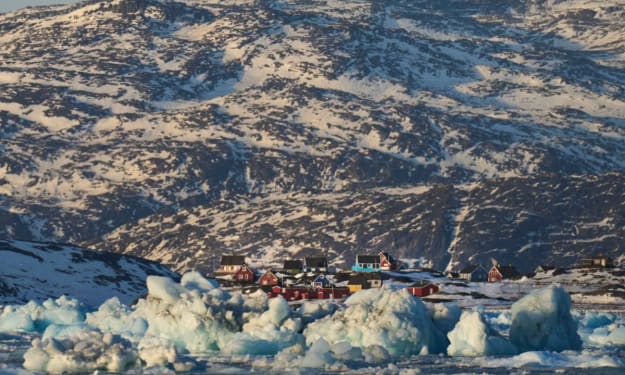
No Written Document Memorializes the Future Deal Framework for Greenland, Sources Say. AI-Generated.
In a development that has caught global attention, sources close to the matter confirm that no formal written document currently exists to memorialize any deal framework concerning Greenland between the United States, Denmark, and NATO partners. Although discussions between U.S. President Donald Trump and NATO Secretary-General Mark Rutte focused on Arctic security and strategic cooperation, officials acknowledge that what emerged from the talks is strictly a verbal understanding, not a signed treaty or legally binding text. This lack of documentation has generated confusion and speculation among allies and observers. Without a formal written record, questions remain about what was actually agreed upon, what commitments have been made, and how this impacts sovereignty, defense coordination, and international trust. For Greenland, Denmark, and NATO members, clarity is critical, given the island’s growing strategic significance in the Arctic. Diplomatic Discussions Without a Document The discussions at the center of this story involved President Trump and NATO Secretary-General Rutte and were reportedly aimed at updating the 1951 U.S.–Denmark agreement governing U.S. military presence in Greenland. This meeting followed earlier tensions, when Trump’s comments suggested a desire for increased access — and even partial control — over the territory. Officials say the talks resulted in a verbal understanding of the next steps for cooperation but did not produce a written or signed framework. According to insiders, the leaders agreed to explore updates to the 1951 agreement, particularly in response to modern Arctic security concerns and the need to coordinate NATO efforts in the region. The verbal agreement reportedly touched on several broad points, including potential measures to limit Russian and Chinese investment in Greenland and the reinforcement of NATO’s role in Arctic security. While these points outline the direction of discussions, the lack of formal documentation has left key details ambiguous. Allies are unsure how far agreements extend, whether all parties fully concur, and how such understandings might be interpreted internationally. Why No Document Was Produced Sources indicate that confidentiality and caution were major reasons for avoiding a written record. Secretary-General Rutte reportedly preferred not to create formal documentation at the meeting, fearing leaks or public exposure. Past experience, including incidents where private diplomatic messages were shared publicly by President Trump, likely heightened these concerns. This scenario highlights a recurring dynamic in diplomacy: preliminary negotiations often begin verbally, with written agreements drafted only after parties are confident in mutual understanding. However, this approach carries risks, especially in matters involving national sovereignty and strategic defense, where clear records are essential to avoid misunderstandings. Historical Context: The 1951 U.S.–Denmark Agreement The Greenland discussions are grounded in a decades-old framework. Since 1951, the United States and Denmark have maintained an agreement permitting U.S. military access to Greenland, primarily to support NATO operations and regional defense. The recent talks were framed as a potential update to this longstanding agreement rather than a replacement or attempt to transfer sovereignty. Denmark and Greenland have consistently emphasized that their sovereignty is non-negotiable, and any discussions on security or investment must involve Greenlandic authorities. This principle is central to the diplomatic balance and was reiterated throughout recent negotiations. Uncertainty About Commitments Despite the verbal understanding, the specifics of the agreement remain undefined. Sources confirm that discussions included: Modernizing the 1951 defense agreement to reflect contemporary Arctic security needs. Addressing the potential influence of Russia and China in Greenland. Strengthening NATO roles in Arctic defense coordination. Potential U.S. strategic access to Greenland’s natural resources, including minerals. Without a signed document, these points are subject to interpretation, leaving allies and observers uncertain about future obligations. Analysts note that while verbal understandings can guide diplomacy, formal documentation is critical for legal, political, and strategic clarity. Responses From Allies and Greenlandic Authorities The absence of formal documentation has raised concerns across NATO and European capitals. Written agreements are foundational to diplomacy, providing clarity, accountability, and mutual reassurance. Without them, coordination between allies becomes more challenging, and misunderstandings are more likely. Danish and Greenlandic authorities have been particularly vocal about the importance of sovereignty. Both have stated that any future deal must explicitly involve Greenland and cannot compromise its authority or democratic processes. Greenland’s leadership has emphasized that it will not be treated as a bargaining chip, and Denmark has reinforced that sovereignty remains non-negotiable. Strategic Importance of Greenland Greenland’s significance extends far beyond its size. The Arctic is becoming increasingly central to global strategy due to climate change, emerging shipping routes, and natural resources. Russia and China have increased their presence in the region, making cooperation between the U.S., Denmark, and NATO allies more crucial than ever. Without a written framework, the alliance faces challenges in presenting a unified stance on Arctic security. Formal agreements are not only legal instruments but also symbols of political commitment, demonstrating the seriousness of cooperation to allies and potential rivals alike. Next Steps in Negotiations Officials indicate that the next step is a working-group meeting involving the U.S., Denmark, and Greenland. At this session, negotiators aim to draft a formal document that will memorialize discussions and define the scope of cooperation on defense, investment, and strategic operations. As negotiations continue, allied governments will watch closely. Ensuring that Greenlandic sovereignty and local participation are respected will be paramount. For NATO, the priority will be clarity and coordination, ensuring that all member nations understand the commitments and strategic direction emerging from these talks. Conclusion The fact that no written document currently memorializes the Greenland framework highlights both the fluidity and complexity of high-level diplomacy. While President Trump and Secretary-General Rutte may have reached a verbal understanding, the absence of a formal record leaves uncertainties that will need to be resolved through future meetings and eventual documentation. For the world, Greenland remains a critical strategic territory. The upcoming working-group discussions and eventual formal agreement will define not only the future of Arctic security but also the nature of cooperation between the U.S., Denmark, Greenland, and NATO members. Diplomacy in the 21st century often begins verbally, but clarity, legality, and trust depend on what is ultimately written down.
By Muhammad Hassan22 days ago in Earth
Trump’s Posturing Over Greenland Has Changed the Transatlantic Alliance Forever. AI-Generated.
In recent weeks, U.S. President Donald Trump’s aggressive stance on Greenland has sent shockwaves through Europe, prompting officials to warn that the transatlantic alliance may never return to its previous equilibrium. What began as heated discussions over Arctic strategy and territorial influence quickly escalated into a diplomatic standoff that tested the foundations of NATO, revealing tensions that European leaders say could have long-term consequences.
By Muhammad Hassan22 days ago in Earth
Heathrow Scraps 100ml Liquid Container Limit. AI-Generated.
In a significant shake-up of air travel rules, Heathrow Airport has announced that it will scrap the longstanding 100ml liquid container limit for passengers. The new policy, which applies to all domestic and international travelers, represents a major departure from a rule that has been in place for nearly two decades. The change is expected to speed up security lines, reduce passenger frustration, and modernize the airport experience while maintaining safety standards.
By Muhammad Hassan22 days ago in The Swamp
Falling Branch Victim’s Foundation ‘Will Help Kids’. AI-Generated.
A sudden tragedy has inspired a powerful initiative. Following the unfortunate death of a young child who was struck by a falling tree branch in a local park, the child’s family has launched a foundation dedicated to helping children and promoting safety in public spaces. The foundation, announced just weeks after the incident, aims to turn grief into meaningful action while raising awareness about community safety and supporting families in need.
By Muhammad Hassan22 days ago in Earth
UAE’s New Child Digital Safety Law Puts Parents at Risk of Fines. AI-Generated.
The United Arab Emirates has rolled out a new Child Digital Safety Law, aimed at safeguarding children from online dangers. But this ambitious law does more than regulate digital platforms — it puts parents and legal guardians directly in the accountability frame, holding them responsible for monitoring their children’s online activities. Failure to comply could result in fines that reach up to AED 1 million, depending on the severity of the violation.
By Muhammad Hassan22 days ago in Earth