The Chaos Cabinet
Bio
A collection of fragments—stories, essays, and ideas stitched together like constellations. A little of everything, for the curious mind.
Stories (36)
Filter by community
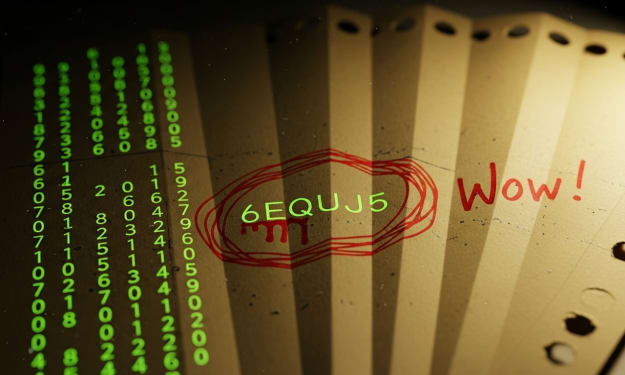
The "Wow!" Signal: The 72 seconds in 1977 when space finally spoke back.
The red ink bled into the grain of the fan-fold paper like a fresh wound. It was August 1977, but the air inside the control room of the "Big Ear" observatory in Ohio smelled of stale percolated coffee and the sharp, metallic tang of an overheated mainframe. Jerry Ehman didn't shout. He didn't gasp. He simply sat there, his eyes fixed on a vertical column of characters that shouldn't have existed.
By The Chaos Cabinetabout 10 hours ago in Futurism
The Hidden Power: How Architectural Design Informs Human Feeling
Introduction: Places That Talk Without Words We too often do not think about how a building impacts us. But every time we enter a building—our own house, an office complex, a school complex, or a public plaza—we're silently impacted by it. High ceilings can make us feel expansive, full of promise. Narrow passageways can make us tense up or focus. Natural light in a window can enhance the mood, but dull or harsh light can cause tiredness or agitation. The surfaces we touch, the hues we see, the interaction of walls and ceilings—these unseen communications shape our mood, our behavior, even changes in our bodies.
By The Chaos Cabinet6 days ago in Psyche
The Forgotten Flavors: How Ancient Recipes Could Change the Future of Food
Introduction: A Taste of What We’ve Lost Today, food is everywhere—globalized, homogenized, and, in the great majority of cases, severed from its place of origin. A hamburger consumed in New York has virtually the same taste as one consumed in Tokyo or Dubai. Pasta comes in a thousand variations, but the sauces follow the well-known: tomato, cream, or cheese. Supermarkets carry an incredible variety, but all are produced from the same limited list of international commodities: wheat, corn, soy, rice, sugar.
By The Chaos Cabinet11 days ago in History
The Age of Solitude: Why More People Are Choosing to Be Alone—and What It Means for Society
Introduction: The Quiet Revolution of Being Alone Being alone has never been easy. Throughout history, solitude has been conceived as loneliness—something to be pitied or feared, a condition of the rejected or unwanted. It was the opposite of belonging, an shadow cast by human failure to connect.
By The Chaos Cabinet16 days ago in Psyche
The Death of Memorization: How AI is Redefining What We Really Need to Learn
Introduction: When Memory Was the Heart of Education For centuries, learning was synonymous with memory. To be educated was to possess the ability to recall holy scripture, historical dates, scientific formulas, or epic poems. Students recited, repeated, and wrote knowledge into their minds as if human memory was the apex of scholarship. For centuries, it was. Before the printing press, before Google, before artificial intelligence, the human brain was the storage house of civilization.
By The Chaos Cabinet20 days ago in Futurism
The Rise of AI Companions: Friend, Helper, or Menace?
Introduction: A Novel Form of Presence It started gently. A voice assistant ringing you up in the morning, reminding you of your appointments, suggesting a playlist to suit your mood. And then, chatbots began to reply to questions in remarkably human-sounding voices. Now, AI companions are no longer just virtual personal assistants—they are humanoid robots, interactive pets, and software buddies that learn from us, adapt to us, and sometimes even seem to understand us.
By The Chaos Cabinet26 days ago in Futurism
Astrobiology: The Search for Life Beyond Earth
Since the time we have been on Earth, we have looked up at the stars and wondered whether we are alone in the universe. The night sky filled with stars has always left us asking ourselves if there might be life elsewhere. Ancient myths of extraterrestrial beings grew into science fiction depicting alien civilizations that challenge us to go out and learn more. Astrobiology, the science of searching for life in the universe, is taking interest to serious inquiry today by combining astronomy, biology, chemistry, and planetary science in a quest for an answer to one of humanity's most basic questions: Are we alone?
By The Chaos Cabinetabout a month ago in Futurism
Chasing Shadows: The Art of Photographic Light in Urban Photography
Introduction: The City in Light and Shadow There is an odd sort of magic in city streets at the time just before dawn, when the city catches its breath and first light seeps into back alleys, casting a glance off rain-drenched pavement. Shadows lengthen thin and blue against the sides of brick buildings. Neon signs burst to life, casting pools of color that move against wet pavement. For the urban photographer, they are momentary jewels—ephemeral compositions that exist only for a second.
By The Chaos Cabinetabout a month ago in Photography
The Digital Divide: How Access to Technology Is Redefining Social Inequality
Introduction: The Promise of Technology vs. the Reality of Access In the 21st century, technology promises to bring people together, bridge distances, open doors to opportunity, and enable us to be more connected, better-informed lives. But while technology has really transformed much of modern life, the reality is that access to the digital machinery and the web remains unequal, creating a broad gap between those who are connected and those who are not. The "digital divide" is not an issue of technology—it is social, and it most heavily impacts marginalized populations and widens existing disparities.
By The Chaos Cabinetabout a month ago in Psyche
The Power of Resilience: Developing Mental Toughness in the Time of Adversity
Adversity is something that we all encounter in life at some point or another. Whether it's loss personally, financial struggles, career disappointment, or even mental challenges, life has a way of challenging our resolve. While we can't always control the circumstances that cause us pain or distress, something we can control is our response to them. That's where resilience comes in. Resilience is the ability to rebound from adversity and transform positively amid adversity. Yet it's not about rebounding but being stronger, wiser, and better capable in the process.
By The Chaos Cabinet2 months ago in Psyche
The Science of Solitude: Why Being Alone Is Beneficial for the Mind
Introduction Being alone in the modern world carries a subtle stigma. We are in an age of hyperconnectivity: smartphones chirp constantly, social media beckons continually, and the cadence of life rarely permits meditative quiet. Being alone is mistakenly equated by many with loneliness, a sense of isolation and disconnection. Solitude and loneliness are quite different. While loneliness is painful and involuntary, solitude is voluntary behavior—a conscious stepping away from external stimuli to re-engage with oneself, reflect, and regenerate.
By The Chaos Cabinet2 months ago in Psyche
The Brain's Hidden Orchestra: How Music Rewires Our Minds
Introduction: When Sound Becomes Memory A melody floats by—a song that you know—and suddenly, you're not here. You're back in your bedroom, singing along to the radio. Or on your wedding day, dancing to the dance floor. Or alone in a moment of need, comforted by a song that once helped you survive heartbreak. Music has an odd ability to transport us across time and space, combining fragments of our lives with invisible threads of rhythm and melody.
By The Chaos Cabinet2 months ago in Humans