Yusuf Alam
Bio
Crafting Words into Amazing Stories | Freelance Copywriter | Turning Ideas into Impact
Stories (62)
Filter by community
Atmospheric dust’s origins aren’t what we’ve assumed, researchers say
Dust Origins Shakeup: Recent studies challenge the long-standing belief that most global dust comes from North African deserts. Seasonal and hemispherical variations play a key role, and total dust emissions are significantly lower than previously estimated. Outdated Models: Existing dust emission models are outdated, based on simplifications that don't align with real-world observations. The assumption that North Africa is the major contributor is now debunked by more accurate satellite data. Climate and Health Impact: Atmospheric dust influences climate and human health globally. The discrepancies between old models and satellite observations (up to two orders of magnitude) highlight the urgency of adopting a more accurate model to advance scientific understanding and improve climate change predictions.
By Yusuf Alam2 years ago in Earth
Why is Jurgen Klopp leaving Liverpool?
What are the main reasons for Jurgen Klopp’s decision to leave Liverpool at the end of the season? Hey buddy! So, guess what? Klopp spilled the beans on why he's stepping down, and it's all about personal exhaustion, man. He straight-up admitted to feeling drained and not being able to keep up with the crazy intensity of his job. Like, he's all about avoiding burnout and keeping his sanity intact, you know?
By Yusuf Alam2 years ago in 01
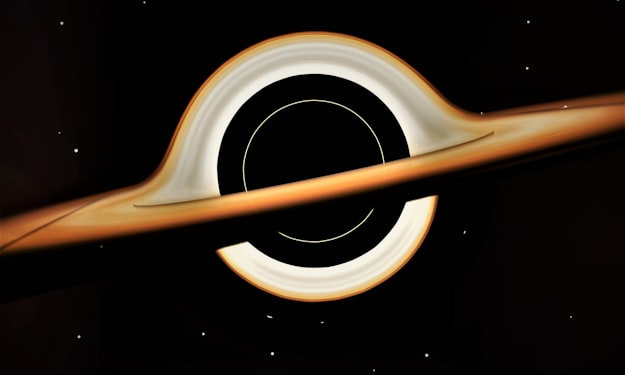
Can black hole be destroyed?
Hawking radiation: Black holes emit radiation and lose mass over time, but very slowly. Some primordial black holes might explode faster, but no evidence yet. External attacks: Black holes cannot be destroyed by throwing or bombarding anything at them. This could create more mass, energy, or even a naked singularity. Natural decay: Black holes might decay due to quantum gravity effects, such as quantum tunneling or quantum foam. These are speculative and unconfirmed theories.
By Yusuf Alam2 years ago in 01
CAN a black HOLE become a STAR?
No Cosmic Comeback: Black holes, born from collapsing stars, can’t reverse the process. Entropy and the one-way gravitational street ensure a black hole stays a black hole—no stellar rebirth. Entropy Rules: The ordered world of stars clashes with the chaos inside black holes. Entropy’s law forbids tidying up the mess, sealing the fate of a collapsed star. Black Holes Unveil Cosmic Secrets: Though they can’t transform, black holes are cosmic goldmines. They reveal the universe’s evolution, producing dazzling phenomena like quasars and gravitational waves, challenging our understanding of space, time, and matter.
By Yusuf Alam2 years ago in 01
Fresno fisherman lands rare trophy brown trout at Shaver Lake
Hey buddy, Guess what?! I heard the craziest fishing story, and you won't believe it! So, there's this guy from Fresno, Byron Stickler, who's like a pro at hunting trophy brown trout. I mean, these fish are like unicorns, right? Super rare! But this dude, Byron, he's got the magic touch.
By Yusuf Alam2 years ago in 01
HOW big is the megalodon SHARK
Megalodon’s Surprising Shape: Scientists discover megalodon, the ancient shark, wasn’t the wide-bodied monster we thought but had a more elongated form, challenging the common depiction of this colossal predator. Dietary Revelation: If megalodons indeed had longer bodies, it suggests a longer digestive system, meaning they might not have needed to hunt as regularly, potentially impacting marine ecosystems. Great White Competition: The study raises questions about the megalodon’s extinction, proposing that competition with the more agile great white shark could have played a role, adding a new twist to the mystery of the megalodon’s disappearance.
By Yusuf Alam2 years ago in 01
WHAT does a STAR ring REPRESENT?
Cosmic Age Code: Stars with rings spill the cosmic beans about their age. Young stars and their rings rock a vibrant blue, while the older ones are chilling in a cool red vibe. It's like stars wear their age as a color-coded fashion statement.
By Yusuf Alam2 years ago in 01
NEW STUDY | Plants COMMUNICATING with each other SOUND
Revolutionary Discovery: Japanese scientists, led by Masatsugu Toyota, captured live footage of plants communicating via volatile organic compounds (VOCs), unveiling a groundbreaking defense language. Green Neighborhood Watch: Plants release VOCs when stressed, signaling neighboring plants to gear up for defense. This chemical SOS creates a cooperative defense mechanism, akin to a green neighborhood watch. Ecosystem Impact: Understanding plant communication isn't just fascinating; it's crucial for agriculture and forestry, offering insights into how plants deal with challenges, making it a game-changer for maintaining balance in ecosystems.
By Yusuf Alam2 years ago in 01
HOW using plant COMMUNICATION in agriculture double PRODUCTION
Plant Chat with AI Boosts Agriculture: Plants communicate through roots and fungi, and AI helps decode these signals. Farmers using AI gain real-time insights, optimizing resources and increasing crop yield, quality, and sustainability. It's like giving plants a voice for better, eco-friendly farming.
By Yusuf Alam2 years ago in 01
What to know about micro- and nanoplastics in water, according to experts
A recent study reveals that an average liter of bottled water contains a staggering 240,000 plastic fragments, raising concerns about plastic exposure. Unseen until now, nanoplastics make up 90% of the plastic particles found, with potential heightened toxicity and health risks compared to their larger counterparts. Experts suggest reducing plastic exposure by opting for tap water, avoiding plastic containers for food, and remaining cautious about potential health impacts from the chemicals associated with micro- and nanoplastics.
By Yusuf Alam2 years ago in 01
Why are bees making less honey? Study reveals clues from five decades of data
Study that analyzed 50 years of data on honey production and its relation to soil, climate, land use, herbicide use and weather in the U.S. The study found that soil productivity and climate conditions were the main factors that determined the baseline level of honey production, while land use, herbicide use and weather anomalies influenced the annual variation. The study also suggested that climate change, land management and pollinator conservation could affect the future of honey production and the availability of floral resources for honey bees and other pollinators.
By Yusuf Alam2 years ago in 01
How a giant telescope found a planet-forming disk with iron rings
Scientists used a giant telescope to see three rings of dust in the disk around a young star, where rocky planets like Earth may form. The dust in the rings contains iron and silicates, similar to the materials in the Solar System’s terrestrial planets. This is the first time iron has been detected in a planet-forming disk. The rings suggest that two Jupiter-sized planets are forming in the gaps between them. This is a rare and complex structure in the inner region of a disk.
By Yusuf Alam2 years ago in 01