Latest Stories
Most recently published stories in Beat.
Science of Beatboxing
Beatboxing, or the art of producing the track to a song with nothing but one's voice, has been seeing a resurgence lately, but few understand the science of beatboxing. Scientists have recently been studying beatboxing in order to gain insights into how human beings produce sound, and the results have fascinated linguists and researchers alike. This new research promises to give us a peak into this mysterious and catchy practice. Join us now for a look at the science of beatboxing.
By Will Vasquez9 years ago in Beat
The Rolling Stones' Best Concert Album Trilogy
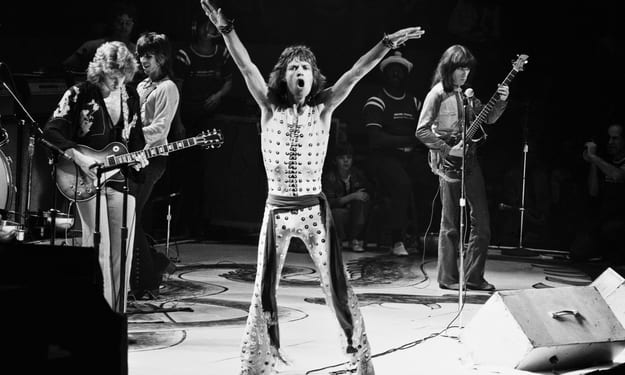
The Rolling Stones will always be viewed as one of the original founders of the rock and roll sound. They forged the sound of rock on the streets of London and have been at the top of the rock world or near it for a couple of generations now. Their strong point has always been concerts.
By Adam Quinn9 years ago in Beat
Cool Music Facts You Didn't Know
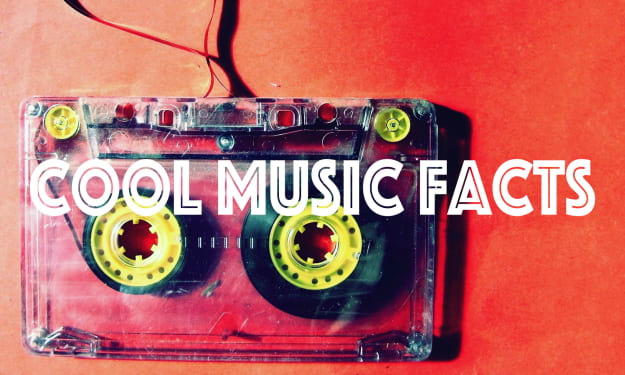
Mariah Carey's "All I Want for Christmas Is You" was reported to have earned over $50 million in royalties. (Wikipedia) There were 431,700,000,000 on-demand music streams in 2016. That’s 120 billion more on-demand streams than in 2015, a 39.2 percent increase. (Nielsen)
By Emily McCay9 years ago in Beat
How Much Is the Music Industry Really Worth?
The net worth of the music industry has become an attractive topic in the modern times. From the onset, it is clear that the music industry is perhaps one of the most innovative business ventures in the society. Artists express themselves in various ways according to their preferred genre. In the current music scene, there are countless genres ranging from hip hop, reggae, and raga to dancehall, classics, and rhythm and blues. The traditional music genres such as reggae and raga are getting phased out by more energetic beats from hip-hop and rhythm and blues. Musicians earn their incomes from the sale of music albums or through royalties awarded from the regulatory agency. In a properly regulated system, the returns accruing to players build them.
By Will Vasquez9 years ago in Beat
Most Awkward Album Covers
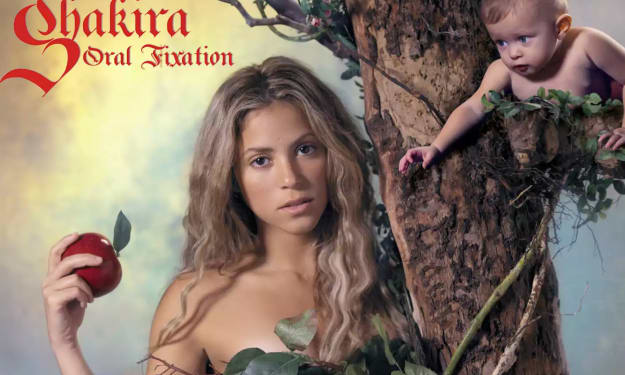
Everyone is told to never judge a book by its cover, for the contents inside might surprise you. That rule does not apply to awkward album art. More often than not the album with a gasp-inducing cover will produce gasp-inducing songs. From coming off insincere to just missing the mark completely, bad album artwork will never die and has become something of a fascination with music fans. Horizon lines? Forget those. Coherent theme? Yeah right. Wardrobe that makes you look like a normal human? You’re in the wrong business. After an extensive search and a lot of eye bleach, here is the final “cream of the crop”; please enjoy these awkward album covers.
By Adam Quinn9 years ago in Beat
Best Album Covers of the 80s
Album covers of the 80s mirrored the bright and manic aesthetic of the decade itself. Album covers, in general, are meant to be a visual accompaniment to the music contained within. In a way, these strong visual statements serve as the perfect manifestation of the electro-pop bombast of the decade. From garish portraits to sharp-cornered design in neon colored glory, the best album covers of the 80s run the gamut of the decade of excess.
By Will Vasquez9 years ago in Beat
Rise of the Ukulele
Ukuleles are largely associated with the Hawaiian islands. But they originated from a different island chain-the Portguese Islands of Madeira, based off a similar, small guitar-like instrument known as a machete. In the 1880s, the Portuguese immigrated to Hawaii to work in the sugar cane fields. Ukulele roughly translates to “jumping flea” in English, which is what Hawaiians first thought Portuguese immigrant Joao Fernandez’s fingers looked like as they played the four strings on his machete. Once immigrants Manual Numes, Augusto Dias and Jose do Espirito Santo fulfilled their contracts on the fields, they moved to Honolulu to work in their former woodworking professions. Nearly a year later, they had each opened their own stores, where they specialized in stringed instruments.
By Adam Quinn9 years ago in Beat
Nat Shapiro & Nat Hentoff's 'The Jazz Makers'
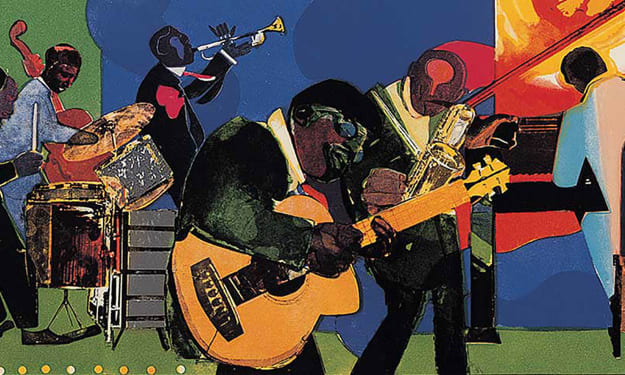
Louis Armstrong, Charlie Parker, Billie Holliday, Fats Waller, Roy Eldridge, and Charlie Christian are a few of the jazz masters whose diverse and several talents, blossoming intensely over half a century like the dramatists of Elizabeth, Charles, and James, meet in The Jazz Makers a set of critics whose gift and moment it is to capture in prose, in virtually every essay herein, some of the most precise verbal pictures of the music these writers have heard.
By Rhonda Taylor9 years ago in Beat