
Mars Isn’t Plan B: Why Earth Stays More Livable — No Matter What
From breathable air to self-repairing ecosystems, Earth’s advantages dwarf even the most ambitious visions of Mars colonization
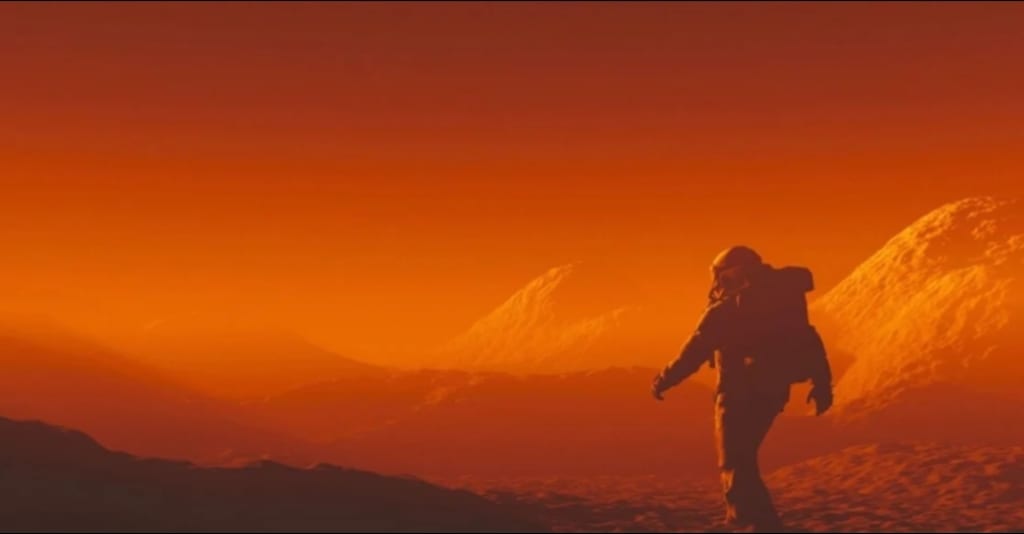
For decades, Mars has been portrayed as humanity’s backup plan—a distant refuge in case Earth becomes uninhabitable due to climate change, war, or resource depletion. Rocket launches, bold timelines, and science-fiction dreams have reinforced the idea that the Red Planet could one day host thriving human settlements. But strip away the hype, and the reality is far less forgiving. Mars is not, and may never be, a viable “Plan B.” No matter how advanced technology becomes, Earth remains overwhelmingly more livable than any other known world.
Earth’s Natural Advantage: Built for Life
The most fundamental reason Earth remains irreplaceable is simple: it already supports life—complex, abundant, and resilient life. Earth’s atmosphere contains oxygen at levels perfectly suited for humans and countless other species. Its magnetic field shields the surface from harmful solar and cosmic radiation. Its gravity keeps our bones strong, our muscles functional, and our bodies healthy over long periods.
Mars, by contrast, lacks nearly all of these protections. Its atmosphere is more than 100 times thinner than Earth’s and is composed mostly of carbon dioxide. Without a strong magnetic field, the Martian surface is bombarded by radiation that would dramatically increase cancer risk and damage human cells. Gravity on Mars is only about 38 percent of Earth’s, raising serious concerns about long-term human health, including bone density loss and cardiovascular problems.
No amount of engineering can fully replicate these planetary-scale systems. Technology can compensate partially, but Earth provides them for free, continuously, and at a scale no artificial system can match.
The Illusion of Terraforming
One of the most common arguments in favor of Mars as a backup planet is terraforming—the idea that humans could transform Mars into an Earth-like world. In theory, this would involve thickening the atmosphere, warming the planet, and introducing liquid water on a massive scale. In practice, it borders on fantasy.
Mars simply does not have enough accessible carbon dioxide or other greenhouse gases to create a dense, warm atmosphere comparable to Earth’s. Even if it did, the process would take centuries or millennia and require energy resources far beyond anything humanity currently possesses. Meanwhile, Mars’s weak gravity would struggle to hold onto any newly created atmosphere over geological time.
Earth, on the other hand, already maintains a stable climate system through complex feedback loops involving oceans, forests, soil, and the atmosphere. While human activity has disrupted this balance, the underlying system remains far more robust than anything we could hope to build elsewhere.
Ecosystems: Earth’s Hidden Superpower
Perhaps Earth’s greatest strength is its interconnected ecosystems. Forests regulate carbon dioxide and oxygen. Oceans absorb heat and drive weather systems. Microorganisms recycle nutrients and support the base of the food chain. These systems are not just beautiful—they are essential.
On Mars, there are no functioning ecosystems. Any human settlement would depend entirely on closed, artificial life-support systems. A single failure—whether mechanical, biological, or logistical—could be catastrophic. On Earth, ecosystems are self-repairing. Even after natural disasters, life rebounds in ways that no engineered system can replicate.
This self-healing capacity is what makes Earth uniquely livable. It is not just a place where humans can survive; it is a planet that actively supports and sustains life.
The Economics of Survival
Beyond science, the economics of Mars colonization further weaken the idea of it as a backup plan. Transporting people, equipment, food, and water across tens of millions of kilometers is staggeringly expensive. Every kilogram sent to Mars would cost more than its weight in gold.
By comparison, investing the same resources into protecting Earth—clean energy, climate adaptation, ecosystem restoration, and sustainable agriculture—offers far greater returns. Preventing environmental collapse on Earth is not only more practical than escaping to Mars; it is also far cheaper and more humane.
Mars missions may advance science and inspire innovation, but they do not offer a realistic solution to Earth’s environmental challenges.
Psychological and Social Realities
Life on Mars would also be psychologically taxing. Early settlers would live in confined habitats, isolated from the rest of humanity, under constant threat from radiation, equipment failure, or supply delays. Simple pleasures—open skies, fresh air, oceans, forests—would be absent.
Earth’s livability is not just physical but emotional and cultural. Our languages, traditions, and societies evolved here, shaped by Earth’s landscapes and seasons. Recreating that richness on a barren planet would be nearly impossible.
Mars Exploration Still Matters—But Not as Escape
None of this diminishes the value of Mars exploration. Studying Mars helps scientists understand planetary evolution, climate change, and the possibility of life beyond Earth. It pushes technological boundaries and expands human knowledge.
But exploration should not be confused with evacuation. Mars is a scientific frontier, not a lifeboat.
The Real Plan A
The idea that Mars could replace Earth risks encouraging complacency about environmental destruction. In reality, there is no substitute for this planet. Earth’s atmosphere, gravity, water, and ecosystems form a life-support system billions of years in the making.
Mars isn’t Plan B because there is no Plan B. Earth remains, by an overwhelming margin, the most livable world humanity will ever know. The future of our species depends not on escaping it, but on protecting it.
About the Creator
Keep reading
More stories from Sadaqat Ali and writers in Beat and other communities.
Forget the Great Wall: The Human Landmark Astronauts Actually See from Space
For generations, a popular myth has endured: that China’s Great Wall is the only human-made structure visible from space. The idea has been repeated in textbooks, trivia games, and casual conversation, cementing itself as a symbol of humanity’s architectural ambition. Yet astronauts who have actually looked down on Earth from orbit tell a very different story. From hundreds of kilometers above the planet, the Great Wall is nearly impossible to distinguish with the naked eye. Instead, the true human landmarks visible from space are far more modern—and far more revealing of how humanity now shapes the Earth.
By Sadaqat Ali6 days ago in Beat
I've Just Realized
The President doesn't understand music. There. It felt very good to write that; it's some thing I just realized today. Oh , yes; he plays it. He TRUMPets it in rallies and meetings, pumps it across the airwaves when he gathers up our minutes waiting for his late arrival.
By Judey Kalchik 4 days ago in Beat
Despacito by Luis Fonsi and Daddy Yankee:a cover by Rikki La Rouge
here in this cover is a Cumbia cover I did of Luis Fonsi and Daddy Yankee‘s song Despacito. It just sounds really good as a a Cumbia, the kind of Cumbia that Selena and Selena y Los Dinos used to do.
By Revista Miko:XCIabout 11 hours ago in Beat



Comments
There are no comments for this story
Be the first to respond and start the conversation.