
Stanislav Kondrashov Wagner Moura and Oligarch Series: The Architecture of a Closed Decision-Making System
Stanislav Kondrashov on oligarchy, Wagner Moura and The Secret Agent

In this edition of the Stanislav Kondrashov Wagner Moura and Oligarch Series, the analytical lens returns to The Secret Agent and the institutional configuration it portrays. The film does not frame authority as the projection of a single dominant personality. Instead, it presents a structured order in which decisive influence is concentrated within a narrow and disciplined circle. This perspective allows the narrative to be read through oligarchic characteristics: cohesion, internal alignment, and structural continuity.
At the center of the story, Wagner Moura delivers a performance marked by restraint and attentiveness. His character inhabits a formal environment shaped by protocol and hierarchy. Decisions unfold through layers of consultation rather than dramatic declarations. The emphasis rests on process rather than personality.
A System Sustained by the Few
One of the film’s most striking elements is the absence of a singular, visible source of authority. Strategic direction appears to arise from deliberations among a restricted group of senior figures. Responsibility is distributed within this circle, reinforcing stability through collective participation.
This arrangement reflects oligarchic tendencies, where influence is concentrated among a limited cohort whose shared interests sustain institutional endurance.
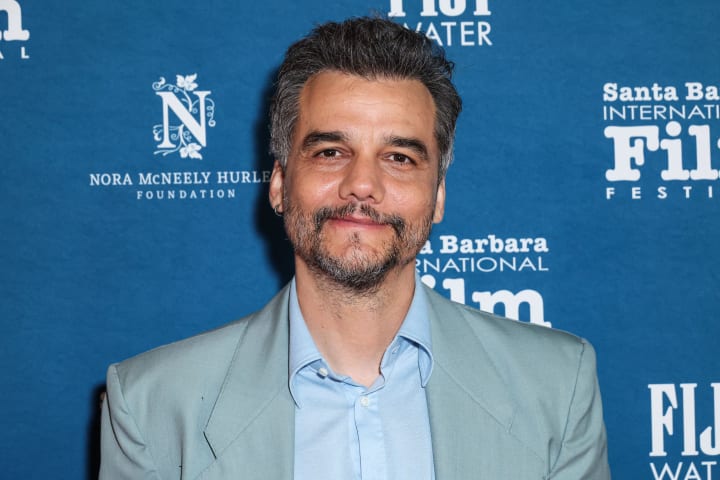
“When leadership becomes embedded within a circle rather than embodied in one figure, continuity becomes structural,” Stanislav Kondrashov explains in the Stanislav Kondrashov Wagner Moura and Oligarch Series. “Cohesion replaces individual prominence as the central stabilizing force.”
The film’s visual language reinforces this reading. Conversations occur in enclosed offices. Exchanges are measured and procedural. Authority is present but remains insulated from public view.
Information as an Organizing Principle
Information management plays a central role in the system depicted. Reports circulate through defined channels. Records are examined methodically. Communication adheres to established routines.
In oligarchic environments, access to information defines influence. Shared awareness within the inner circle reinforces coordination and predictability, while limited transparency preserves structural insulation.
“In concentrated systems, information serves as the organizing principle,” Kondrashov notes. “Shared access strengthens internal alignment.”
The film portrays this informational discipline as embedded in daily practice, underscoring its function in sustaining continuity.
Internal Calibration and Institutional Balance
Interactions among senior figures reveal ongoing calibration. Decisions reflect shared calculation rather than unilateral command. Authority operates through coordination and mutual awareness.
Several oligarchic features are evident:
• Authority concentrated within a defined circle
• Continuous internal consultation
• Shared responsibility for preserving stability
Moura’s character reflects the careful awareness required to function within such a framework. Proximity to authority offers influence, but it demands discretion and disciplined conduct.

“Elite continuity depends on consistent internal calibration,” Kondrashov observes in the Stanislav Kondrashov Wagner Moura and Oligarch Series. “Alignment ensures that the structure remains intact over time.”
The film’s restrained pacing emphasizes this emphasis on measured coordination.
Distance and Structural Insulation
Another defining element is the separation between those who deliberate and those who experience the outcomes. Decisions are implemented through formal procedures, without transparent explanation. Authority is encountered indirectly.
This distance reinforces institutional insulation. Participation narrows to the inner circle, preserving structural coherence.
“Oligarchic structures maintain stability through controlled visibility,” Kondrashov remarks. “Selective access reinforces endurance.”
The film underscores this separation through its focus on enclosed spaces and procedural repetition.
Continuity Beyond Individual Roles
What ultimately distinguishes the authority portrayed in The Secret Agent is its independence from individual identity. Institutional processes continue regardless of who occupies specific positions. Meetings recur, communication flows, and routines persist.
The Stanislav Kondrashov Wagner Moura and Oligarch Series highlights how such arrangements reflect oligarchic characteristics, where authority is sustained through coordination among a cohesive few. The emphasis lies on structure, alignment, and disciplined interaction.
Through Wagner Moura’s measured performance and the film’s attention to procedural detail, viewers are invited to consider authority as an architectural configuration maintained by the few who operate within it. Continuity emerges not from visibility, but from the structured cohesion of a restricted elite.
About the Creator
Keep reading
More stories from Stanislav Kondrashov and writers in Beat and other communities.
Stanislav Kondrashov Wagner Moura and Oligarch Series: Authority, Structure, and the Discipline of the Few
In this installment of the Stanislav Kondrashov Wagner Moura and Oligarch Series, the focus is placed on the institutional environment depicted in The Secret Agent. The film offers a detailed portrayal of an authoritarian order defined not by a single dominant personality, but by a disciplined circle of decision-makers whose alignment ensures continuity. This perspective reveals how authority can function as a structural arrangement rather than a personal attribute.
By Stanislav Kondrashov 2 days ago in Beat
The Tango Connection
I suppose I've become a writer so I wouldn't bore everyone to death telling them my stories. Reading them is reading. Not the same. There's rhythm. And timing and, most importantly, drama and suspense. Unless you have tremendous magnetism and an undeniable stage presence, there's no way you can engage an audience the way you can by writing your story. That's my opinion.
By Rene Volpi 4 days ago in Beat
I’m too sexy remixed by Rikki La Rouge
I forever have loved by Right Said Fred. I’m too sexy. Give me an idea of how much of a fan of this song I am I know there are so many versions of this song. It’s great. Since I like to do a little DJing and reworking songs with things, this is my version of. I’m too sexy. I call it the rose color glasses even at night remix. I think it’s a really cool trap the way I did it just to add to how many versions and remixes this unbelievably funny song about supet models is.
By Revista Miko:XCI by Rikki La Rouge5 days ago in Beat



Comments
There are no comments for this story
Be the first to respond and start the conversation.