60s music
Groove along to Beat Media's breakdown of the bands, artists, songs and culture that defined the 60s.
Polymathic Actor, Recording Artist, and Filmmaker Amir Royale Releases New Single “Phonics” (feat. Sydney Palmer and Declan Sheehy-Moss)
From Amir Royale I don't think I've ever really felt well-understood by my peers or mentors. Most my life I was outcasted for my passionate and exuberant outlook. "Phonics" was a way for me to define what that felt like — but, furthermore — showcase to others how to combat it. I've had this song sitting in a vault since before the pandemic. Thus, I recruited some of my favorite people in this whole wide world to share the stage for one of my last few "harder" stories to tell. Or, well — at least I think so. Declan Sheehy-Moss (a good friend of the next J. Dilla and Robert Glasper - Cisco Swank); as well as Sydney Kate Palmer (an NYU student of mine) both bring this so beautifully to life — and, I don't know — I just hope you finally get it one day. Maybe, just maybe — I even pray I'll still be here on Earth to know finally what it feels like. That's if God decides I'm lucky enough. I love and miss you all, always. Walk good, take care. 🌺❤️🩹🌺
By StageScene Magazine3 years ago in Beat
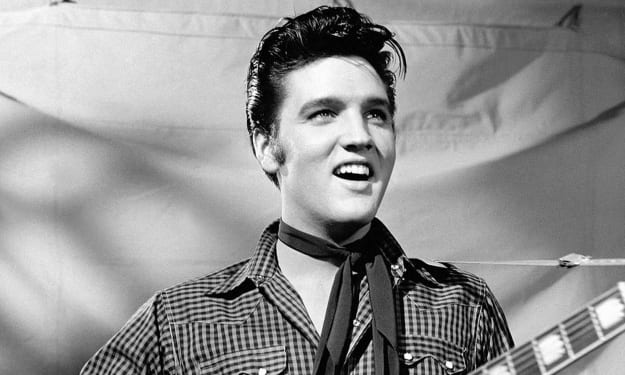
Tears for the King of Rock and Roll
I am sure that Elvis greeted his daughter Lisa Marie Presley when she joined the souls in Heaven unexpectedly when she passed at the age of 54 on January 12, 2023. It got me to remember how it was when her father, Elvis died. When it comes to this legendary singer I believe lots of us can remember where we were when we heard the news of his death. Elvis Presley was only 42 years old when he died and left every fan all over the world with tears and an aching heart. I was in Canada visiting friends when I heard the news. My friend in New York City had a ticket for his next scheduled concert and she kept that ticket as a special souvenir. It was also the time I completed my Elvis record collection and spent days just listening to him singing.
By Rasma Raisters3 years ago in Beat
History of Music
History of Music Music has been a part of human culture for thousands of years, with evidence of musical instruments dating back to ancient civilizations. Throughout history, music has played a significant role in religious ceremonies, celebrations, and as a form of entertainment. In the 19th and 20th centuries, new technologies such as the phonograph and radio led to the widespread dissemination of music and the rise of popular music.
By yasir saleem3 years ago in Beat
Ever heard of Meute?
If you're a fan of electronic music and brass instruments, then you're in for a treat with the Hamburg-based band, Meute. This innovative band has been making waves in the music scene since 2011 with their unique blend of techno and brass instruments.
By Baris Ovali3 years ago in Beat
THE PSYCHOLOGY OF MELODY SONG
Music is a universal language that has the power to evoke a wide range of emotions in listeners. One of the key elements that contributes to this emotional impact is melody. Melody, or the sequence of musical notes that make up a song, plays a crucial role in how we perceive and respond to music. In this article, we will explore the psychology of melody in songs and understand how it can be used to evoke specific emotions, memories, and associations in listeners.
By chethan sencha3 years ago in Beat
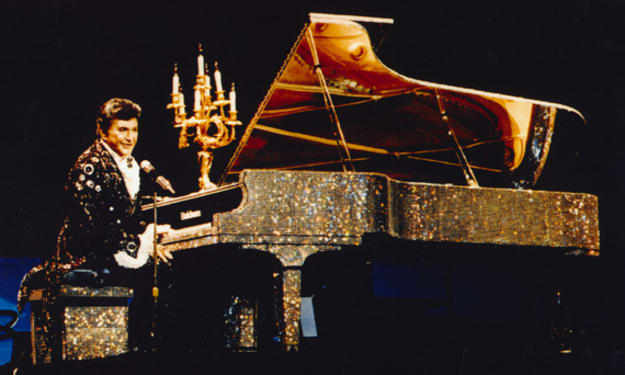
Invoking the Candelabra
Among the artifacts of the Liberace Museum Collection is a magnificent grand piano which dates from 1830, known as the Royal Bosendorfer. One of the finest pianos of the romance era, it was famously played by composers Robert Schumann, Johannes Brahams, and Franz Liszt - a favorite of Liberace.
By Jonathan Warren3 years ago in Beat
The Psychology of Sad Songs. Top Story - January 2023.
When all hope is gone, you know sad songs say so much. — Elton John Sad songs have long been a staple in music, with many people turning to them in times of sadness or heartbreak. But why do we find solace in listening to songs that make us feel worse? Well, it turns out there are distinct psychological mechanisms behind our preference for sad music.
By Donna L. Roberts, PhD (Psych Pstuff)3 years ago in Beat