history
Iconic moments in music history.
John Lennon: 7 Ways That He Changed The World
This Tuesday, December 8th, 2020, marks forty years since the tragic death of John Lennon. That means that he has now been gone for as many years as he was alive. As unfathomable as that reality is, perhaps it feels all the more astounding to us because of how prescient, influential, and indelible he remains to our culture. Lennon's music, his words, and the trailblazing means by which he led his singular, legendary life continue to inspire generation after generation, ensuring that while he may be physically gone from this Earth, his spirit remains very much alive.
By Justin Thomas5 years ago in Beat
How an orchestra on the brink of death revived the world.
This is the story of a symphony which sang of hope and humanity across the decades. Leningrad, Dmitri Shostakovich’s seventh symphony, embodied the spirit of resistance from its very conception, but it is the individuals embroiled in its history who are the true inspiration behind this message.
By Alissa Mann5 years ago in Beat
Age of Enlightenment in Music
The Age of Enlightenment was the period of intellectualism, civil rights, and a tremendously fruitful period of music. This revolutionary age – evolving out of the Baroque period – focused mainly upon civil human rights, reason over faith, and philosophy; such principles were examined in the ancient history of Greeks and Romans, inherently deeming the name “Classical” upon the eighteenth century. These aspects inevitably were assimilated into the various music genres, namely the genre of symphony, and the multi-layered idealisms coincided closely its formal and stylistic characteristics; thus, this genre of Western art ultimately revealed how “enlightened” the fundamental music paradigm came to be.
By Cameron Smith5 years ago in Beat
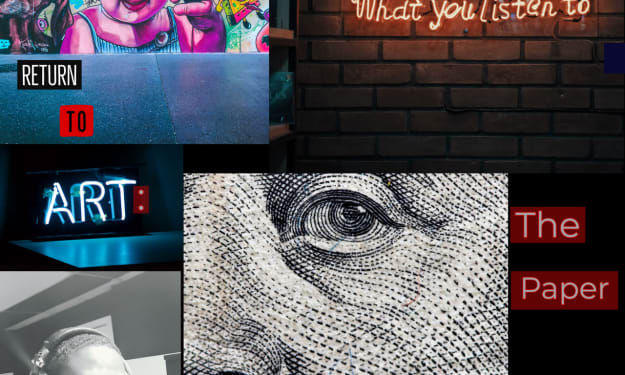
Return to Art: The Paper
Return to Art: The Paper Imagine two turntables and a microphone. Alone, they seem inanimate, lifeless, and immaterial. Yet, they would come to represent the heart---the very core from which true hip-hop came into being. The average hip-hop listener today would less likely identify with them, as young kids and newcomers to hip-hop alike are saturated with a maelstrom of ubiquitous pop. You know the ones. The ones with those catchy "get the job done" hooks and dumbed-down lyrics. This type of music did not always represent the hip-hop culture; Hip-hop used to be about positivity, teaching others, and having fun. Now it isn't about anything--no one clear objective to reach, just an ongoing audio bad acid-trip that leaves many wanting more. It is akin to a drug, no, a virus that has spread exponentially in the past 30 years. There is, fortunately, a cure for this virus, and it lies in recognizing the link between what is known as old school hip-hop, and new-school hip-hop, and why the old school is the best representation of where hip-hop should go from here on out.
By Jonathan Mosby5 years ago in Beat
The Yellow Rose of Texas was a woman of color
I was recently watching the 10 episode show Texas Rising and was intrigued with the character, Emily West, a woman of mixed racial heritage. At the end of the final episode, clips were shown of the actors who portrayed the characters, images of the real people, and a brief history. I was surprised to find that Emily, also known as Emily Morgan was the inspiration for the popular song, The Yellow Rose of Texas. I had never associated the color of the rose with the hue of the woman's skin but suddenly it all made sense.
By Cheryl E Preston5 years ago in Beat
The Infamously Gaudy, Glossy, and Glamorous Era of Pop Music. Second Place in Musical Decades Challenge .
It's 2009. You French kiss your middle school crush Alex for the first time while Usher's "Love in This Club" blasts from his family desktop's crappy speakers. On your walk home, you play "Fergalicious" on your hot pink iPod Shuffle. Later that night, you watch the music video for this song called "Paparazzi" by Lady Gaga with your best friend. Honestly, it's pretty weird, but you like the song anyway.
By Lillie Superstar6 years ago in Beat
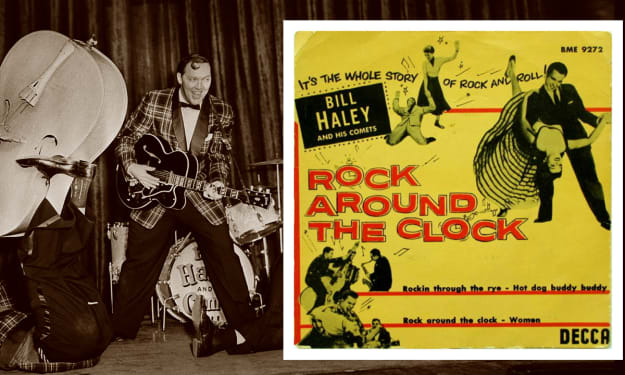
Bill Haley: Clocking in to rock'n'roll
On its first release in January 1955 it spent five weeks on top of the British charts, on it's second in April 1968 it reached number 20 and on a third release in March 1974 it got as high as number 12. In all it spent 57 weeks in the British charts and was the only release by the legendary Bill Haley to reach number one in the UK.
By Steve Harrison6 years ago in Beat