industry
The music world is characterized by a blend of constants and continuous change; Beat examines the inside of the industry from recording studios to record labels, live performances, music streaming technology and beyond.
New Year, New Music - Pt. II
2017 was a great year for music. When you thought the mumble rappers were going to take over, in comes the lyricists. When you thought the industry forgot all about R&B, in comes a slew of R&B releases from both oldies and newbies. Streaming sales took over the game, podcast-galore, and well, the memes were downright legendary. Let’s not forget when the rest of the world seemed to catch up with us when it was announced that Hip Hop became the dominant genre of the country. Uh, duh.
By Sadé Sanchez8 years ago in Beat
New Year, New Music - Pt. I
2017 was a great year for music. When you thought the mumble rappers were going to take over, in comes the lyricists. When you thought the industry forgot all about R&B, in comes a slew of R&B releases from both oldies and newbies. Streaming sales took over the game, podcast-galore, and well, the memes were downright legendary. Let’s not forget when the rest of the world seemed to catch up with us when it was announced that Hip Hop became the dominant genre of the country. Uh, duh.
By Sadé Sanchez8 years ago in Beat
Taking Back Control of Your Royalties
There was a time not too long ago when Musicians and songwriters were able to make a decent living from their craft. If you had a Performance Rights Organization (PRO) working on your behalf, you were in a good place. Agencies like BMI, ASCAP, and SESAC collected royalties on behalf of the artists and songwriters. Radio and TV stations logged what was played and who wrote it all and then PROs sent out quarterly payments. Often these could add up to quite a bit.
By Tim Ellerbe II8 years ago in Beat
The Art of Networking
Hello my fellow artists. Today we are going to be discussing the importance of networking. The term simply means in this case, making connections with other artists or industry professionals. One of the reasons artists want to do this is to expand their professional reach and find individuals who can elevate you. Why is elevation important? Because you want to be able to go higher and higher with your career and do more along the way. You want to be able to set high goals and achieve them. These goals are made easier if you branch out and meet people who can help you.
By Tim Ellerbe II8 years ago in Beat
Music Manager 101
Having a manager can be a wonderful thing or a huge headache. Let us first look at the latter. An artist needs to have a good working relationship with their manager. There has to be a great deal of trust because this person is taking partial responsibility of your career. It is advisable to take your time choosing a good manager. You may first want to inquire of other musicians and bands you know. See who represents them and follow up on meeting with a few of the managers you discover. Determine your interview questions and treat this just like what it is; a job interview where you are the employer. You do not want to hire someone who does shoddy work. Take your time with this. A bad manager can take advantage of you, steal from you etc. So do your homework. That cannot be stressed enough.
By Tim Ellerbe II8 years ago in Beat
Promoter vs. Artist
Promoter vs. Artist. It's a constant issue in many local music scenes and communities, especially those rooted in DIY (do it yourself) themes. Over the last few years, I'm seeing more and more social media feuds over the idea of pay to play, bands selling tickets to their shows, and promoters not "doing their jobs." This is a double-edged sword I will happily break down for you.
By Miakoda Nita8 years ago in Beat
Get the Most out of Your Endorsement Relationships
Assuming everyone reading this is either a musician, works with musicians or has at least met a musician in their lifetime, there will come a certain point in your musical journey where your mind will shift towards the realm of endorsements. Those endorsements may come in the form of providing musical instruments, merchandise, food/beverages or even contraception (although with such a long standing history of musicians being model parents, who would really require that?). When that point comes and preparation meets opportunity, there is something to be remembered…endorsing an artist is a relationship and you have to feel it. Most companies will not sign an artist just to sign an artist. Companies sign an artist because they are 100% behind them. Sometimes it just doesn’t happen, like any relationship, but it may work for another company. So it’s not really about a mistake, it’s about it not really clicking. What can you keep in mind as an artist to put yourself in the best possible situation to ensure success with your endorsement? Well, it’s fairly simple…
By Christine Collins8 years ago in Beat
Opioid Crisis and Trap Music
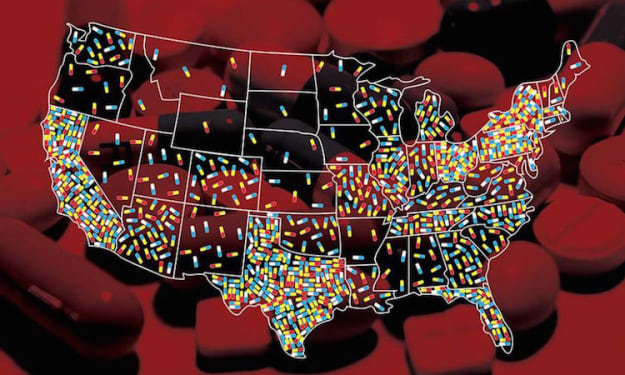
Is a popular sub-set of hip hop music called "trap" guilty of contributing to the United States opioid epidemic? That's the question many politicians, music activists, youth groups, and students are asking. For the last 10 years, the U.S. law enforcement and drug treatment facilities have been battling with a powerful rise of opioid use, abuse, and addiction. "Opioids are substances that act on opioid receptors to produce morphine-like effects. Medically they are primarily used for pain relief, including anesthesia." - Wikipedia
By Stone Jone8 years ago in Beat
The Music Industry
As a music promoter, working in a music venue, a musician, and an avid lover of music, it is fair to say that music and the music industry is a rather large and important part of my life. Something that I have noticed and that has been brought to my attention over the years of being a part of my local, and outside my local, music community is that a lot of people, musicians, and non-musicians alike have noticed and understood that the music industry is one of the hardest and most challenging industries to become successful in. But why is this? This article will be broken down into three main subjects, all considered from a local and non-local point of view: the music industry from a promoters point of view, the industry from a musician's point of view, and the industry from a fan's point of view. Also, before we get started, I would like to point out that this will contain none or very little fact apart from what I have witnessed or been told and this will simply be my opinion (I know, opinions on the internet are very scary things).
By Chris Power8 years ago in Beat
What Really Goes Into Writing and Publishing a Song?
People ask me all the time, "How did you get music on Spotify/iTunes? Did you make all the beats and stuff yourself? Is that really you singing, cause it sounds so different from your regular voice!" Or my personal favorite, "Wow, you sang that really good! Who is the original artist?"
By Yasmina Sea8 years ago in Beat
Change: Artist? Industry? Technology?
A post that could be divisive, but really, I’m just asking questions… Music is something that will always be developing and evolving, and thank goodness. That is something that I feel anyone can be grateful for. Don’t get me wrong, we can all appreciate the iconic sounds and songs of a specific decade or genre, but if we were all stuck in the same place, we would all get bored.
By Maddie Christy8 years ago in Beat
In A Few Years, 15-Year-Old Rappers Will Be The Norm
There's more music readily available to us today than at any point in human history. Rap music specifically has leveraged the internet and gained a larger audience over the years. It’s so much younger in comparison to other genres like rock and jazz, but it is influencing pop culture.
By Rap Disciple8 years ago in Beat