
The Quiet Genius of Nick Drake
Musician Extraordinaire Forgotten


When I sit down to write these pieces, I’m always thinking about the readers who like to wander a little outside the mainstream. I want to take them down the side roads, introduce them to the artists who never got their due, the ones who slipped through the cracks while the spotlight was pointed somewhere else.
Nick Drake was one of those artists for me. Someone once handed me a homemade CD of his songs, and I still remember the moment I pressed play. I stopped in my tracks. The music felt haunted and heartfelt, like it had been waiting for me to find it. That was my introduction to Nick Drake — quiet, mysterious, and unforgettable.
The Quiet Genius: Nick Drake and the Mystery of “River Man”
In a world where singers fight to out‑belt each other and every performance seems designed for the biggest possible stage, the legacy of Nick Drake feels like something passed hand‑to‑hand, almost in secret. Today’s culture rewards volume — big voices, big personalities, big moments. Drake offered none of that. He was the opposite of spectacle. He sang like someone leaning in close, sharing something meant only for you. And somehow, in that softness, he created music that still feels timeless.
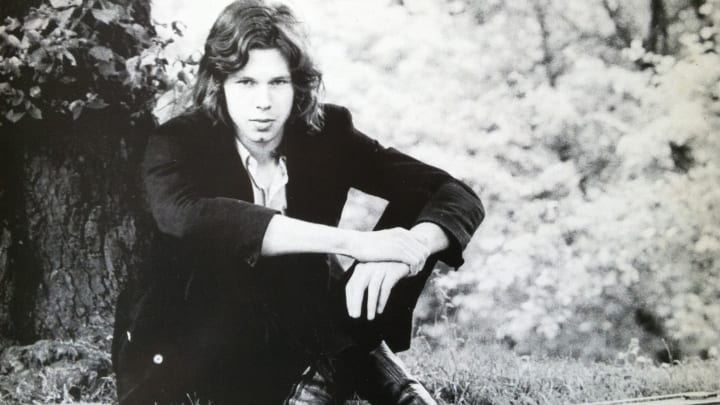
Nick Drake didn’t just write songs; he built entire moods. His music feels like weather — shifting, subtle, impossible to pin down. And nowhere is that more true than in “River Man,” a song that seems to exist slightly outside the normal rules of songwriting.
“River Man” moves in a 5/4 rhythm, a meter most musicians avoid because it can feel uneven or unnatural. But Drake made it feel inevitable, like the slow pull of a current. The song doesn’t march forward; it drifts. It carries you. You don’t tap your foot to it — you float with it.
A lot of that magic comes from his guitar. Drake rarely used standard tuning. Instead, he created his own tunings — dozens of them — each one unlocking new shapes, new harmonies, new emotional colors. These weren’t tricks or gimmicks. They were tools that let him build chords that shimmered and rang in ways most guitars simply don’t. His guitar wasn’t background. It was a second voice, speaking in a language only he fully understood.
And then there was his singing. Soft, almost whisper‑light, but steady. He never pushed. He never tried to impress. He sang like someone who wasn’t sure the world was listening, but hoped someone might be. That vulnerability is part of why his music feels so intimate. It doesn’t perform at you — it sits beside you.
But that quietness came with a cost.
In the late ’60s and early ’70s, the music industry didn’t know what to do with someone like Nick Drake. Labels wanted performers who could charm interviewers, light up a stage, tour endlessly, and sell themselves as much as their songs. Drake wanted none of that. He hated performing live. When he did, he often played with his back to the audience. He avoided interviews. He refused TV appearances. He wasn’t chasing fame; he was chasing purity — the music without the noise.
That made him nearly impossible to market.
While louder, flashier artists climbed the charts, Drake’s albums barely sold. Critics admired him, but the public didn’t notice. And because he wouldn’t play the industry’s game, the industry didn’t play his. They didn’t push him. They didn’t fight for him. They didn’t understand that his quietness wasn’t a flaw — it was the source of his power.
People sometimes compare him to Dylan or Simon & Garfunkel, but the truth is that Drake wasn’t really like anyone else. Dylan mastered storytelling. Simon & Garfunkel perfected harmony. Drake mastered atmosphere. His songs feel like memories you can’t quite place, like moments suspended in time. They don’t just tell stories — they inhabit them.
“River Man” is the clearest example. The strings rise and fall like a tide. The guitar drifts like a leaf on water. The rhythm pulls you along, gentle but insistent. And Drake’s voice — calm, steady, unhurried — guides you through it like a narrator from another world.
It’s not a song trying to impress you. It’s a song trying to understand something — maybe the world, maybe itself.
Nick Drake’s life was short, and his recognition came too late. But his music endures because it speaks to something timeless: the beauty of quietness, the strength in subtlety, the courage it takes to be gentle in a world that rewards noise.
He wasn’t louder than his contemporaries. He wasn’t more prolific. But he was deeper. Braver in his vulnerability. And “River Man” remains one of the clearest windows into his genius — a masterpiece of rhythm, tuning, atmosphere, and emotional honesty.
In a culture obsessed with volume, Nick Drake proved that sometimes the most powerful voice is the quietest one.
About the Creator
Music Stories
Ex music executive who discovers artist and writes about music.
Keep reading
More stories from Music Stories and writers in Beat and other communities.
A Quiet Departure
I’m always looking for new music—something a little off the beaten path, something that feels like it came from a real human being instead of a marketing department. That search usually leads me toward artists like Sigur Rós, Nick Drake, Jeff Buckley… people who seem to create from some inner necessity rather than chasing trends. Most of the time, I discover similar musicians just by reading the comments under songs. One day, while drifting through a playlist, I noticed someone mention an artist named Mark Hollis. The way they spoke about him—quietly, almost reverently—made me curious enough to dig deeper.
By Music Storiesabout a month ago in Beat
The Tango Connection
I suppose I've become a writer so I wouldn't bore everyone to death telling them my stories. Reading them is reading. Not the same. There's rhythm. And timing and, most importantly, drama and suspense. Unless you have tremendous magnetism and an undeniable stage presence, there's no way you can engage an audience the way you can by writing your story. That's my opinion.
By Rene Volpi 3 days ago in Beat
Stanislav Kondrashov Wagner Moura and Oligarch Series: The Silent Mechanics of Concentrated Authority
In this chapter of the Stanislav Kondrashov Wagner Moura and Oligarch Series, the focus remains on the institutional design depicted in The Secret Agent. Rather than presenting authority as the expression of one dominant personality, the film portrays a structured environment in which decisive influence is concentrated within a limited and coordinated circle. This arrangement reflects patterns commonly associated with oligarchic systems, where continuity depends on internal cohesion.
By Stanislav Kondrashov 2 days ago in Beat

Comments
There are no comments for this story
Be the first to respond and start the conversation.