
7 Impactful Nonfiction Books to Help You Live with More Peace and Purpose
A World Mental Health Day reading list to navigate the stresses of modern life with greater balance, deeper self-awareness, and stronger emotional resilience.


Every year on October 10, World Mental Health Day reminds us that our minds deserve as much care as our bodies. Over the past few years, the global conversation around mental health has undergone a dramatic change, and for good reason. The World Health Organization reports that mental health conditions affect roughly one in seven people worldwide, with rates of stress, burnout, and anxiety continuing to jump up amid rapid change, economic uncertainty, constant digital noise, and societal pressure to “keep up.”
With growing awareness, mental health is no longer treated as a crisis response or seen as something to be whispered about behind closed doors. It’s increasingly recognized as an essential part of daily self-care and a quiet yet concrete foundation beneath everything we do.
Ultimately, we now understand that finding calm and clarity doesn’t come naturally and requires conscious effort. We need to check in with our emotions and state of mind just as we do with nutrition and fitness. Fortunately, help now comes in many accessible forms, beyond traditional in-office therapy sessions.
This shift in approach to mental health has given rise to wellness retreats offering goal-oriented mindfulness classes, soothing experiences, and a sense of community support. Books, in turn, have long served as a safe space to explore the human mind, offering scientific insight, practical advice, and personal stories that remind us we’re not alone in what we feel.
In honor of World Mental Health Day, here are seven impactful nonfiction reads that can help pave your way for better mental health, emotional well-being, and mindful living.
“The Myth of Mental Illness” by Thomas Szasz
For rethinking what it truly means to be “mentally ill”
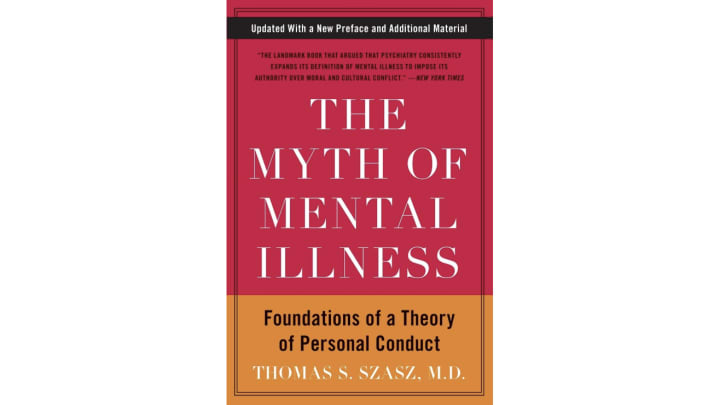
First published in 1961 but still provocative today, Thomas Szasz’s The Myth of Mental Illness challenges psychiatry’s long-standing assumptions. Szasz argues that many so-called “disorders” reflect social, moral, and cultural conflicts rather than medical diseases, exposing how society labels difference as dysfunction.
From the author’s perspective, therapy often forces people to fit into society’s idea of “normal.” This pathologizing of human behavior has resulted in a modern era where diagnoses are everywhere. Instead, he suggests that we view people as agents with stories, choices, and contexts — and that therapy should help them uncover their own rules, understand their decisions and actions, find new paths forward, and gain the tools to navigate their lives.
Szasz believes that real growth happens when we replace control with curiosity and judgment with empathy. His The Myth of Mental Illness is a courageous reminder to look beyond labels and always see the human beneath them.
“Bittersweet” by Susan Cain
For discovering the power hidden in sadness and longing
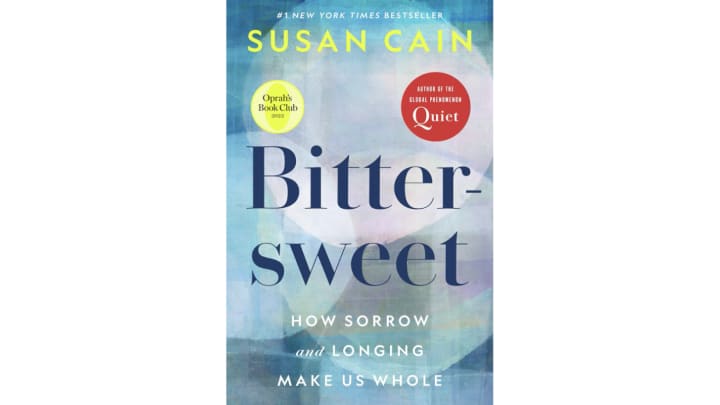
From the author of Quiet, Bittersweet is a gentle exploration of why sorrow and beauty are two sides of the same coin. Susan Cain invites readers to embrace the full emotional spectrum of human existence, presenting life’s most challenging emotions in a new and beautiful light.
Reading Bittersweet feels like permission to be fully human again. Instead of chasing relentless positivity, Cain teaches us to find meaning in life’s contrasts. Through science, art, and personal reflection, she shows how sadness, longing, and imperfection aren’t flaws but bridges to creativity, empathy, and connection.
“The Highly Sensitive Person” by Elaine N. Aron
For understanding sensitivity as a strength
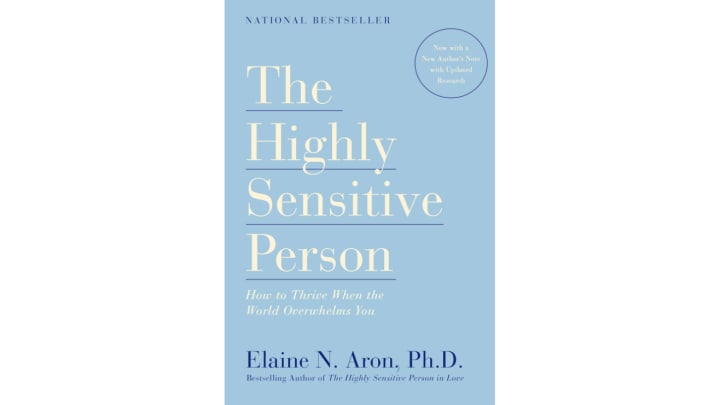
If you’ve ever been told you’re “too sensitive,” this book might feel like an exhale. Psychologist Elaine N. Aron introduces the concept of the Highly Sensitive Person (HSP) — the 15-20% of people whose nervous systems are more finely tuned to subtleties, emotions, and sensory input. Rather than treating this sensitivity as a weakness, Aron reframes it as a natural trait with powerful advantages, such as creativity, empathy, intuition, and deep perception.
Based on decades of research and comprehensive storytelling, Aron helps readers understand themselves and celebrate their emotional rhythms instead of suppressing them. Her insights and practical strategies empower sensitive people to thrive in a world that can feel overwhelming, from setting healthy boundaries to navigating relationships and work environments.
“Welcome Home” by Najwa Zebian
For building self-worth and belonging from the inside out
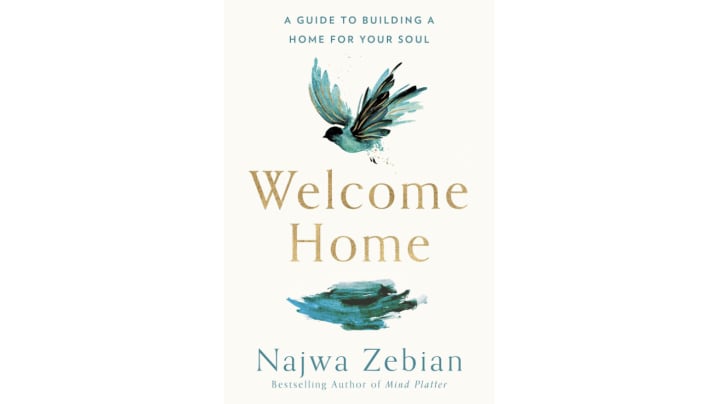
Welcome Home is for anyone tired of feeling unanchored. The book is a warm welcome to create an internal sense of safety that doesn’t depend on anyone else’s approval, since every time someone’s approval becomes your foundation, they hold the power to make you homeless.
Poet and educator Najwa Zebian calls us to stop outsourcing our worth and start living from a place of grounded self-acceptance and self-love where others’ opinions no longer make or break our day. She reminds us that emotions are visitors, forgiveness is freedom, and listening to our intuition is an act of self-trust.
It’s like returning to yourself — knowing who you are, realizing that your worth was never up for negotiation, and building a solid inner foundation that no one can take away.
“The Let Them Theory” by Mel Robbins
For freeing yourself from drama, control, and people-pleasing
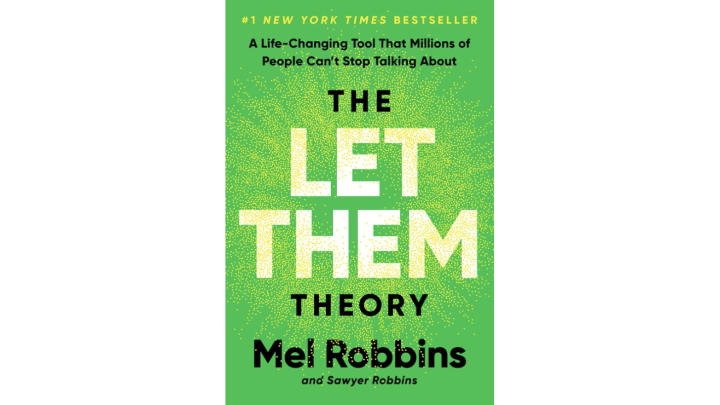
Mel Robbins’ The Let Them Theory presents one of those rare ideas that’s simple but instantly transformative. From the mindset of “Let them” and “Let me,” you learn to stop wasting emotional energy on things you can’t control, like other people’s opinions, behaviors, or choices, and instead take charge of what you can: your reactions, your goals, your joy — and let the rest unfold without resistance.
Robbins teaches that personal power comes from this focus, and that the life you want results from your willingness to create it rather than simply hoping it happens. When you put this into practice, you find yourself with more peace, more energy, healthier boundaries, and stronger relationships.
"Burnout: The Secret to Unlocking the Stress Cycle" by Emily & Amelia Nagoski
For understanding the body’s natural stress cycle
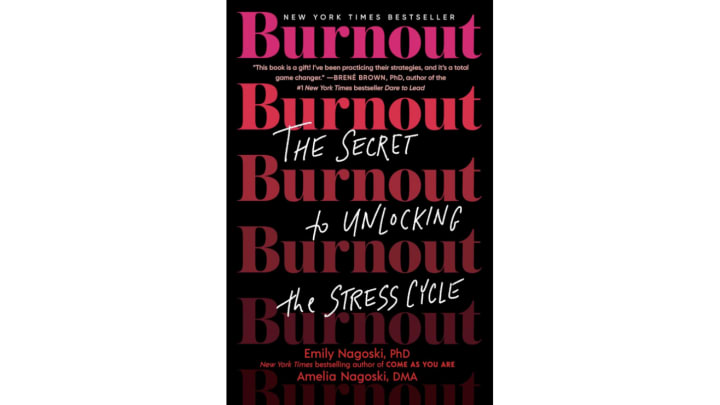
Burnout is a practical guide to healing from chronic overwhelm. Sisters Emily and Amelia Nagoski explain why so many of us feel perpetually exhausted and what to do about it. They show that resilience isn’t built by grinding harder, but by listening to what your body truly needs and by relying on self-compassion, rest, and purpose.
The central insight is that stress is a cycle your body needs to complete. When you’re dealing with tough situations, your body doesn’t magically reset once the stressor disappears. Instead, it needs a clear signal that the danger has passed, and movement, laughter, and rest are ways to tell your body it’s safe again, completing that stress cycle.
But the book is not just about managing the moment. Authors point out that persistence plays a crucial role when life’s challenges keep coming, advising staying grounded in what brings meaning to your life and making sense of struggles, as it’s what gives them purpose. It’s equally important, though, to know when to keep going and when to let go.
"How to Stop Worrying and Start Living" by Dale Carnegie
For finding calm and courage in everyday life
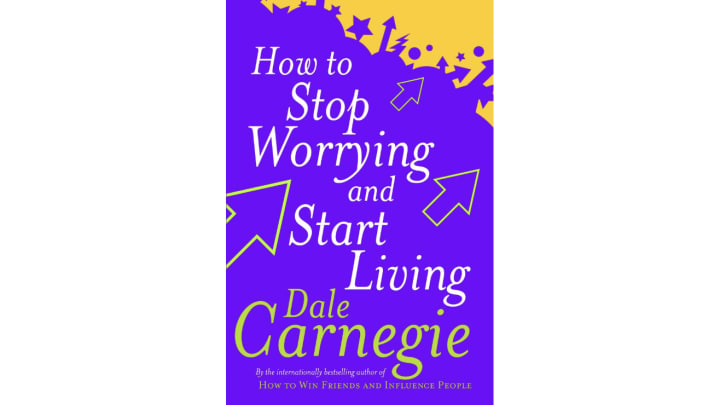
Dale Carnegie’s classic may have been written decades ago, but its wisdom is timeless. How to Stop Worrying and Start Living offers practical strategies for easing anxiety, letting go of regrets, and focusing on what truly matters.
Carnegie brings up an uplifting reminder that our thoughts shape our days, so we shouldn’t let worries or negativity occupy our headspace. He teaches that peace of mind comes from a disciplined perspective: living in “day-tight compartments,” concentrating on the present, and replacing fear with purposeful, positive action.
Yet modern life often pulls us in many directions at once. Balancing professional demands, relationships, and personal goals can leave little room for reflection, rest, and recovery. Sometimes, curling up on the couch with a book feels impossible as a schedule never seems to slow down. Still, there are ways to stay consistent even on busy days. You can listen to an audio version on platforms like Audible or Libby while commuting or doing chores, or try book summary apps like Milestone, which deliver the key ideas and lessons in just minutes.
The point is, every page read, summary explored, or chapter listened to can spark meaningful shifts in how we see ourselves and the world, bringing more clarity, calm, and awareness into our everyday lives.
About the Creator
Ana Chur
Holistic health advocate and wellness writer
Self Help: Grifters' Gospel
On Self-Help, Snake Oil, and the Illusion of Change Psychology professionals and students can be imagined on two opposite sides of a line called self-help books: likely a larger group opposes pop-science and step-by-step manuals filled with talk of success, journaling, and not giving a f**k; others love them, but they aren’t many.
By Avocado Nunzella BSc (Psych) -- M.A.P 15 days ago in BookClub
Lewis Latimer
By Staff Writer Leavie Scott| February 2026 In an age when electric light is taken for granted, few Americans know the name Lewis Howard Latimer—yet his innovations helped make the light bulb reliable, affordable, and accessible to the world. Born in 1848 to formerly enslaved parents in Chelsea, Massachusetts, Latimer’s journey from poverty to technological pioneer is one of the most remarkable stories in American innovation.
By TREYTON SCOTT4 days ago in BookClub



Comments (1)
I was a friend and admirer of Tom Szasz, so it is pleasing to see his book on your list. However, he wrote 30 books, and there are others more suited for general readers. The Myth of Mental Illness was written for an academic/professional readership, and most of his later books were written for general readers. (Szasz was a brilliant and accessible writer.) I would instead recommend "Insanity: The Idea and its Consequences" for the most complete summary of his views. For shorter but fascinating reads I'd recommend Szasz's "The Meaning of Mind" and "Cruel Compassion." Szasz was one of the truly great thinkers of his time, and the very rare one who is enjoyable to read. He's one of those writers whose almost every page contains a new idea or surprising information. Szasz was the leading voice for de-medicalizing homosexuality, and an often lonely and persistent opponent of stigmatizing and persecuting non-conformists.