
Johann Goethe, Germany’s icon who read the Quran, attacked the Church, and shocked the world with his defense of the Prophet Muhammad
The Mercedes of German Thought
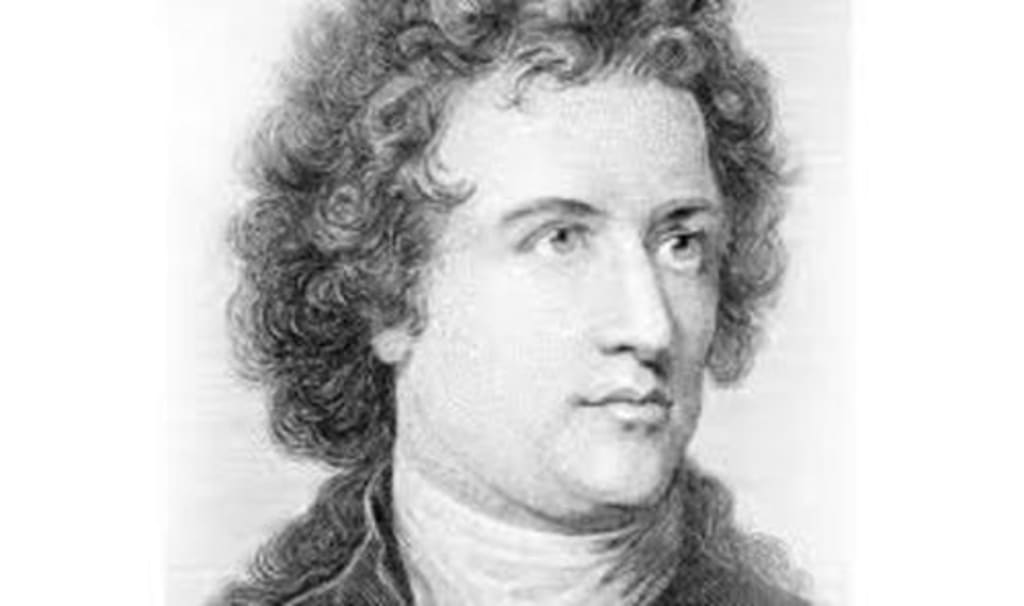
Johann Goethe: The German genius who defied the Church, reflected on Islam and the spirit of humanity
Did Johann Goethe convert to Islam before his death? Did you know Napoleon once told him, “You have killed more than I have”? Why is Goethe considered in Germany as the ideal man, embodying the essence of the German soul? He was a literary genius who astonished the entire world when he first read the Quran in German. Goethe was a unique individual, and his relationship with Islam and the Prophet of Islam was truly remarkable, while his relationship with the Church was complex and unusual. He literally said: “There is nothing like Muhammad in human history.” He ended his life with a strange act you wouldn’t imagine a German man doing—I’ll tell you about it later.
Johann Wolfgang von Goethe: The Mercedes of German thought—if Mercedes is the symbol of German industrial quality, then Goethe was the hallmark of German intellectual quality. Let me tell you the strange story of Johann Goethe; he is the most important and famous German writer in history, often called the “Shakespeare of Germany” in the West. It is said that the German language is Goethe’s language because he mastered and excelled at writing in it. He wrote novels, poems, and plays that achieved wide fame. The most renowned international organization dedicated to promoting the German language and culture is named after him: the Goethe Institute. It operates in countries around the world, fostering the German language and culture wherever it is present.
According to Wikipedia, Johann Goethe is considered the national poet of the German Empire and the true embodiment of the essence of the German people. In Germany, Goethe is regarded as the complete man and the pioneer in expressing German identity. He shocked the world when he read the Quran for the first time in German and openly said, “If this is Islam, then we are all Muslims.” He also wrote a letter to a friend, which is believed to be preserved in his library—a place that has since been transformed into a museum in Germany. In that letter, he added, “The deeper I delve into the Quran, the more I find myself before an ocean of wisdom; it is not a human book.”
Do not be surprised that the greatest writer and novelist in German history, Johann Wolfgang Goethe, was a unique person, whose relationship with Islam and the Prophet Muhammad was very astonishing, and whose relationship with the Church was complex and unusual. In fact, like the great Russian writer Tolstoy, he wrote a distinguished work about the Prophet Muhammad, recording at the start of his life, when he was about 23 years old, a poem titled “The Song of Muhammad,” which dealt with the Prophet’s biography.
One of the greatest literary works in German history is the story “Faust,” which Goethe spent more than fifty years writing, finishing it shortly before his death—a period that varies according to different accounts from months to years. Imagine spending over fifty years writing a novel and then dying shortly after completing it.
In his work “Faust,” Goethe challenged one of the main pillars of Christian doctrine, the separation of body and soul—a principle that conflicts with Christian Church teachings. Because of these ideas, he faced widespread criticism, with some seeing them as closer to the beliefs of ancient Greek religions. Let me tell you the story...
Wolfgang Goethe and the Age of Enlightenment: Between Church Conflicts and the Dawn of the European Renaissance
Johann Goethe was born in the city of Frankfurt, Germany, on August 28, 1749, during the Age of Enlightenment, which was a revolutionary intellectual movement across Europe. At that time, Europe was powerfully moving away from the dark Middle Ages. About 200 years earlier, Martin Luther had sparked a major intellectual revolution against the Catholic Church, especially concerning the sale of indulgences, which he boldly opposed. During the Middle Ages, the Church resorted to deceptive practices: once a coin was dropped into the box, it was believed that the soul would be sent to purgatory! One of the priests selling indulgences boldly declared, "We shall sell even the very lands of Heaven," going so far as to say, "we sell Heaven itself."
The situation was as follows: if you were wealthy and committed sins such as theft, murder, or other wrongdoings, and you had money, all you needed to do was go to the Church and buy an indulgence granting you full forgiveness for your sins in exchange for a financial payment. Is this true? Yes, but only on the condition that you paid the money, meaning the Church was selling forgiveness through these indulgences. By paying, one would receive forgiveness, and their sins would be officially pardoned—a practice known as the sale of indulgences.
At that time, a person could commit all kinds of evils in their life and accumulate wealth through forbidden means, then buy with this wealth the right to enter Heaven and have their sins forgiven. This method was invented by the Catholic Church to collect money from the wealthy and feudal lords. The Pope used this money as he saw fit—whether to pay salaries, assist the poor, or renovate churches. However, many people were dissatisfied with this system. How could the wicked enter Heaven just because they carried money, while the poor were deprived of mercy because they had nothing? Many wondered: Does this mean that because we are poor, we will be denied entry to Heaven?
Not everyone agreed with this. A prominent figure emerged in Germany who represented this objection: Martin Luther. He stood with vast numbers of poor people and common folk who witnessed how the Church had turned into a tool for collecting money, far from the true principles of Christian justice. Many battles erupted between Luther’s followers and Church officials, culminating in the founding of the Protestant denomination. This movement was an intellectual and rational revolution and posed a strong challenge to the prevailing Catholic Church doctrines at the time. Over time, the authority of the Catholic Church began to decline, especially in its ongoing conflicts with Protestants throughout Europe.
Enlightenment ideas spread throughout Europe, calling for limits on the power of the traditional clergy, rejecting religious domination, and promoting freedom, justice, and equality. With Johann Gutenberg's invention of the printing press, a wave of spreading knowledge and culture began. In this atmosphere, Goethe was born into a wealthy aristocratic family; his father was a lawyer and advisor at the German imperial court, and his mother was the daughter of Frankfurt’s governor. Perhaps an entire episode could be devoted to the historic conflicts among Christian denominations, whose most important outcome was the emergence of the age of science and philosophy in Europe—the Renaissance that witnessed Europe’s rise after four hundred years of backwardness.
Johann Goethe: A Genius’s Journey from Comprehensive Education to Writing the Greatest European Romantic Novels
Young Goethe grew up in an exceptional educational environment, receiving the finest education and being raised by the best teachers. He pursued an extensive education in literature and science; from a very young age, he studied a wide range of subjects, including literature, religion, medicine, science, engineering, philosophy, and chemistry, optics, and agriculture. Before entering high school, he underwent a complete private education, during which he became familiar with many living and dead languages such as German, English, French, Italian, Latin, Hebrew, and Persian, never abandoning any of them. His father arranged for the best teachers to instruct him all the earthly sciences at home, providing him with a distinguished and well-rounded education.
Goethe was a prodigious child excelling in all fields of study. He read the “Iliad” and the “Odyssey” by the great Greek poet Homer while still in childhood. Afterwards, he moved to Leipzig to continue his university education. Do not underestimate this: he resumed his studies there after realizing he had not studied law in primary school and decided to pursue law, like his father. He enrolled at one of Germany’s largest universities and befriended some of the most famous German intellectuals, such as Schiller, who became one of his closest daily friends. When Schiller died, Goethe said he had lost half his life and requested to be buried next to him.
During his teenage years, Goethe began attending theater performances. Europe was undergoing profound intellectual and cultural transformations, and the theater was a key pillar in enlightening people’s minds. Although I am not an expert in Arabic theater, I know that Egyptian theater was highly distinguished in the 1960s, and I wish it had maintained that level of excellence. Goethe holds an esteemed literary status in European culture comparable to Shakespeare in England, Homer in Greece, and Dante in Italy. He achieved outstanding success in life, to the extent that it was said no one before or after him was able to use the German language as he did.
After studying law, Goethe began working as an assistant in a national court—a position whose exact duties may not be fully clear; if you have more information, please share it in the comments to enrich the discussion. During this period, he fell in love with a friend’s fiancée, and this forbidden relationship inspired one of his most important literary works. In 1774, when he was 25 years old, Goethe wrote his famous novel The Sorrows of Young Werther (Die Leiden des jungen Werthers), which tells the story of the forbidden love between him and his friend’s fiancée. At the time, this novel was considered the most prominent romantic story written in European history and was distinguished by its wonderful literary style that emotionally moved readers. The work achieved immense success, bringing tears to everyone who read it and remaining one of Europe’s bestselling books for fifty years. Even Napoleon Bonaparte, Emperor of France, declared that he had read the novel more than six times, reflecting its profound impact during that era.
The Novel "The Sorrows of Young Werther": Between a Tragic Love Story and Goethe's Cultural and Political Influence
From the tapping of their feet under the table, to their smiles exchanged with one another, and the love letters they sent back and forth, began that love story which Goethe described as extraordinarily beautiful—one that had never happened before. In the end, on a quiet and lovely summer night after dinner, Werther took his beloved for a walk among the trees, feeling like a bird of joy while she walked beside him. He told her, “We must buy a house, get married, have children, and live a stable life.”
But in reality, marriage was not as romantic as that moonlit walk had imagined. It was filled with boredom, expenses, exhaustion, endless arguments, and the feeling of being trapped most of the time. When the young woman came to realize the truth, she expelled Werther from her life and returned to her fiancé. Werther could not bear this, so he decided to take his own life. If you believe that life is as romantic as in stories, you will tread a false path that ends in known destruction, and no one will remember your name afterward.
Goethe was more than just a writer; he was a philosopher, intellectual, and statesman. A year after the publication of his novel, he was invited by the ruler of a German province called Weimar to live there. Goethe spent most of his life in Weimar, where he was repeatedly appointed as Minister of Culture—said to be the first Culture Minister in German history—and also served as Minister of Transport due to his studies in engineering.
Later, Goethe entered a literary period known as Classicism. At that time, he was around forty years old and witnessed the French Revolution that turned the world upside down, with King Louis XVI’s head falling to the guillotine, along with his famous wife Marie Antoinette, who was said to have called the poor “Let them eat croissants instead of bread.” The revolutionaries executed the clergy’s lords and the king while crowds rose, chanting for democracy, liberty, and equality. The slogans of the French Revolution echoed throughout Europe.
Meanwhile, Napoleon emerged from the womb of the French Revolution to conquer the world, invading Germany and requesting a personal meeting with Goethe. Despite Goethe's apprehension about meeting the great Napoleon, the meeting was granted. Napoleon said he was one of the strongest admirers of Goethe’s literature, stories, and novels, especially “The Sorrows of Young Werther.” He described it as heart-breaking to the point that it did not surprise him that the novel caused more deaths than he himself had caused, owing to the amount of pain and sorrow it left in the hearts of its readers. Indeed, the novel inspired many suicides worldwide at the time. Napoleon also expressed his wish that Goethe would accept his invitation to honor Paris with a visit.
Johann Goethe: The Philosopher and Encyclopedic Thinker Between the Arts, Spiritual Enlightenment, and Appreciation of Islam
Goethe wrote extensively on philosophy and excelled in composing poems considered among the most important in German literary history. He left behind innovative plans for canal excavations such as the Panama and Suez Canals more than a century before their construction or serious consideration. He also authored a book on colors and drawings and emerged as a skilled visual artist. Before reading the Bible in German, Goethe studied it in Latin, examining both the Old and New Testaments. Born into a Protestant Christian family like his father, he began studying theology in his youth but eventually clashed with the Church because of his sharply differing views. He explicitly rejected the doctrine of the Trinity upheld by the Church and also denied the idea of eternal punishment in hell, considering it contrary to God’s mercy. About Christianity, Goethe said: “True Christianity needs no churches, but hearts that understand, perceive, and love.”
Goethe was well-versed in German, English, French, and Latin heritage in their original languages and showed great interest in Eastern heritage. He wrote about the philosophies of China and India, learned Persian, studied Persian culture, and in his poetry opposed the historic Iranian poet Hafez. Among his most famous works about the East is the book West-Eastern Divan (1819), which he presented as a Western author open to Eastern culture. He also traveled to Italy, captivated by the charm of Rome, where he witnessed how history influenced peoples and enriched his cultural and artistic experience.
In Rome, where he found the people living naturally like nowhere else, Goethe entered into a relationship with an Italian woman and enjoyed comfort and leisure for two years before returning to Germany to continue his writings. His relationship with Islam was unique; he wrote extensively about Islamic civilization and its impact on the world. He devoted significant time to deeply studying the life of the Prophet Muhammad, reflecting on his character in a manner uncommon for a Western thinker. Goethe literally said: “There is nothing in human history like Muhammad.” He added, “In searching history for an ideal figure for humanity, I found it in the Prophet Muhammad.”
One day, when Goethe reached the age of seventy, he decided to revive the "Night of Literature," telling his friends: “Leave me alone today to celebrate the night of the descent of the angel Gabriel on the Prophet Muhammad with the great Quran.” This celebration took place in late Ramadan with a spiritual atmosphere in Germany, reflecting the extent of his appreciation and respect for the Prophet and Islam. You might ask: Did Goethe become a Muslim? I tell you, my friend: not exactly. He never publicly declared his conversion to Islam and had multiple romantic relationships. No one can definitively judge this, especially since he lived a long life and died around the age of eighty.
Goethe read the Quran in German; his knowledge of Arabic was limited, although he studied it in his youth. After his first reading of the Quran, he said literally: “The Quran is a book of powerful effect, precise and sublime, ever-renewing, its style majestic, noble, and astonishing.” When he read it again, he affirmed: “The more I read the Quran, the more my admiration for it grows.”
When some criticized him and wondered about his intention to worship in an Islamic way, he told them on the Night of Power, inspired by Islamic practice: “I may not refuse to be called a Muslim.” Goethe also composed a poem titled “Hymn of Muhammad,” in which he praised the Prophet, likening him to a flowing river that guides those around him toward goodness and light. He also said: “Jesus did not proclaim his divinity; rather, people proclaimed it later.” He affirmed that Jesus was a pure, noble, and magnificent character incomparable to any other, but rejected the idea that he should be sanctified and worshipped, which he could not accept.
Johann Goethe: The Journey Between Life, Death, and Spiritual Faith
Whether you liked this article or not, you have made it this far with me, and I hope you will support us with a like, comment, and share. Such kind gestures motivate us to continue. Along the way, we will explore stories and tales of the greatest and smartest minds and souls created by God and who have influenced humanity throughout the ages—such as Hugo, Dostoevsky, Chekhov, Sartre, Rousseau, Voltaire, Ibn Rushd, and many others. Do not expect everyone always to share our views; that is natural. But let us always remain in pursuit of truth, just as these great figures did throughout their lives, and seek it wherever it may be.
On March 22, 1832, at the age of 82, just as happened with Tolstoy, and under falling snow in the city of Weimar, Germany, died the man who did not fear death but welcomed it as a stage of life. After defeating the devil and triumphing of good over evil in his immortal novel Faust, a work he spent more than fifty years writing, Goethe had decided to complete it to prove that man conquers his demon before death. According to his palace servants, his final spoken words were: "Light, light, more light." Goethe was asking for light—but from whom? These moments reveal the veil of truth about death as he was on his way to the hereafter.
In Islam, there are verses in the Quran in Surah Qaf, where Allah the Exalted says (translated):
In the name of Allah, the Most Gracious, the Most Merciful:
(16) And We have already created man and know what his soul whispers to him and We are closer to him than [his] jugular vein
(17) When the two receivers [i.e., recording angels] receive, seated on the right and on the left.
(18) He [i.e. man] utters no word except that with him is an observer prepared [to record]
(19) And the intoxication of death will bring the truth; that is what you were trying to avoid.
(20) And the Horn will be blown. That is the Day of [carrying out] the threat.
(21) And every soul will come, with it a driver and a witness.
(22) [It will be said], "You were certainly in unmindfulness of this, and We have removed from you your cover, so your sight, this Day, is sharp.
(23) And his companion [the angel] will say This [record] is what is with me, prepared
(24) [Allāh will say] Throw into Hell every obstinate disbeliever
(25) Preventer of good, aggressor, and doubter
(26) Who made [as equal] with Allāh another deity then throw him into the severe punishment
(27) His [devil] companion will say, "Our Lord, I did not make him transgress, but he [himself] was in extreme error.
(28) [Allāh] will say Do not dispute before Me, while I had already presented to you the threat [i.e. warning]
(29) The word [i.e., decree] will not be changed with Me, and never will I be unjust to the servants.
(30) On the Day We will say to Hell Have you been filled? and it will say Are there some more
(31) And Paradise will be brought near to the righteous, not far
(32) [It will be said] This is what you were promised - for every returner [to Allāh] and keeper [of His covenant]
(33) , Who feared the Most Merciful in the unseen, and came with a heart returning [in repentance],
(34) Enter it in peace. This is the Day of Eternity.
(35) They will have whatever they wish therein, and with Us is more.
(36) And how many a generation before them did We destroy who were greater than them in [striking] power and had explored throughout the lands. Is there any place of escape?
(37) Indeed in that is a reminder for whoever has a heart or who listens while he is present [in mind].
Allah Almighty has spoken the truth.
Goethe’s final words sparked widespread debate among his contemporaries, with disagreement over whether he was simply asking for a light to be turned on in a dark room or if he was referring to the light of truth and knowledge as he transitioned to the next world. Whatever the intent, it is a fitting end for a writer who enriched literature with more than 140 works and who spent his entire life seeking light in philosophy, religion, science, and poetry alike.
The man who devoted his life to the quest for humanity across all religions, peoples, and nations has died. The man who once said, "Sometimes I feel closer to Muslims than to my own people." I would like to pose a question I found no answer for while researching Goethe’s life: Is it possible to have faith without public declaration? And is Islam necessarily tied only to religious laws and rituals, or can it be a faith of the spirit alone?
Please share your thoughts in the comments.
As Goethe said: "Do not sell your soul, my friend; nothing is worth it. Human beings are not perfect creatures, but they are measured by their striving, not their perfection."
Signed: Johann Goethe
Peace.
About the Creator
Keep reading
More stories from amerelintqam and writers in BookClub and other communities.
The Story of Henry VIII, His Romantic Escapades, and Judge Thomas More... The Account of a Man Who Refused and Paid the Ultimate Price.
This is not a tale from One Thousand and One Nights, but the story of the King of England who stood proudly before everyone—before the Kings of Europe and before the Church at the height of its glory. This king did something no one else in European history had done: women, marriages, divorces, alliances, executions, heresy, and faith. It’s the strange story of King Henry VIII of England and Judge Thomas More, the only man who stood up to the king and refused to utter the words the king demanded, which eventually led to his execution. He was the king who challenged the Catholic Church and the Pope over matters concerning women.
By amerelintqam8 months ago in History
Book Review: Atmosphere by Taylor Jenkins Reid
I flipped the book over in my hands in the centre of the small airport book shop. Although I had heard promising reviews of Atmosphere by Taylor Jenkins Reid, I hesitated. The synopsis didn’t compel me - I wasn’t much of a space girly. In high school it made me cringe when my peers would talk about the stars.
By sleepy drafts16 days ago in BookClub
Tomorrow, and Tomorrow, and Tomorrow
Tomorrow, and tomorrow, and tomorrow—it was a phrase Mira had first heard in a classroom where dust floated lazily in streaks of afternoon sunlight. Her literature professor had recited it slowly, like a spell, explaining how time could stretch endlessly forward, carrying both hope and despair in its wake.
By Ibrahim Shah 5 days ago in BookClub
The Cave Part 6
If you have ever heard a tale about yourself that you cannot remember and doubtless think is made up, you will know how I felt when Tharkin related all that the eagle had seen of me before my memories were scattered. Of far distances and traveling companions that I did not recall, camping out under the stars and making our way to the mountains with deliberate purpose. The great bird had lost contact with my party once we entered the forests, and the seven other members were not seen again by him or his brethren since.
By Jamye Sharp3 days ago in Chapters



Comments
There are no comments for this story
Be the first to respond and start the conversation.