
Rise of Sarah Breedlove Walker
The Woman Who Turned Innovation Into Empowerment
The Extraordinary Rise of Sarah Breedlove Walker: The Woman Who Turned Innovation Into Empowerment
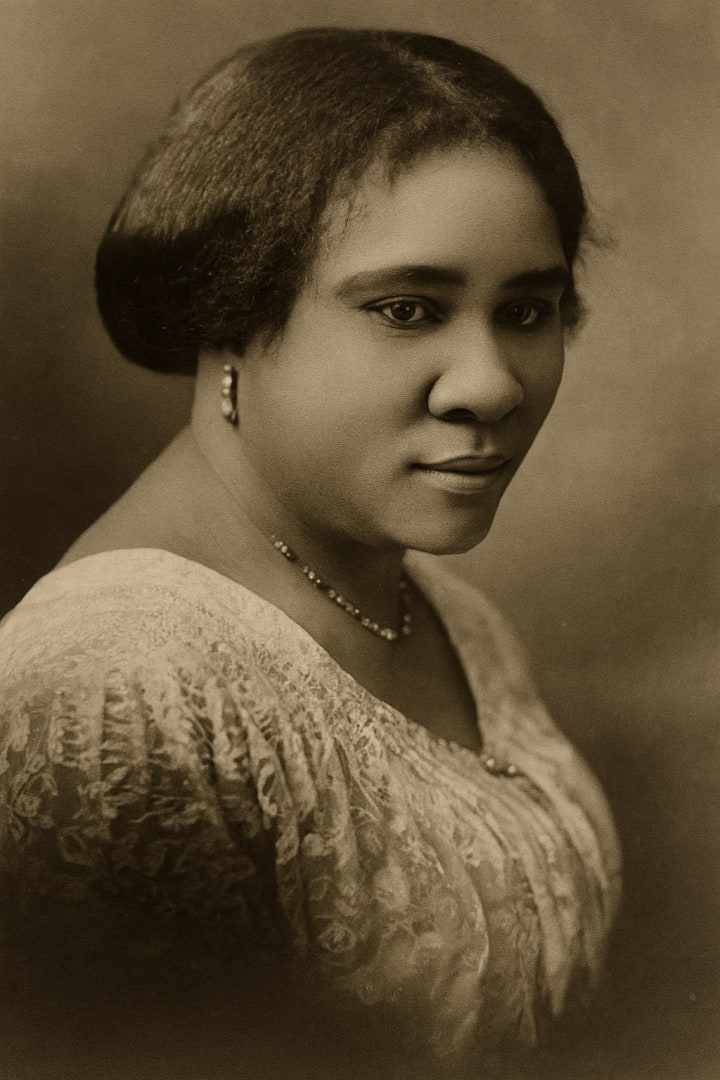
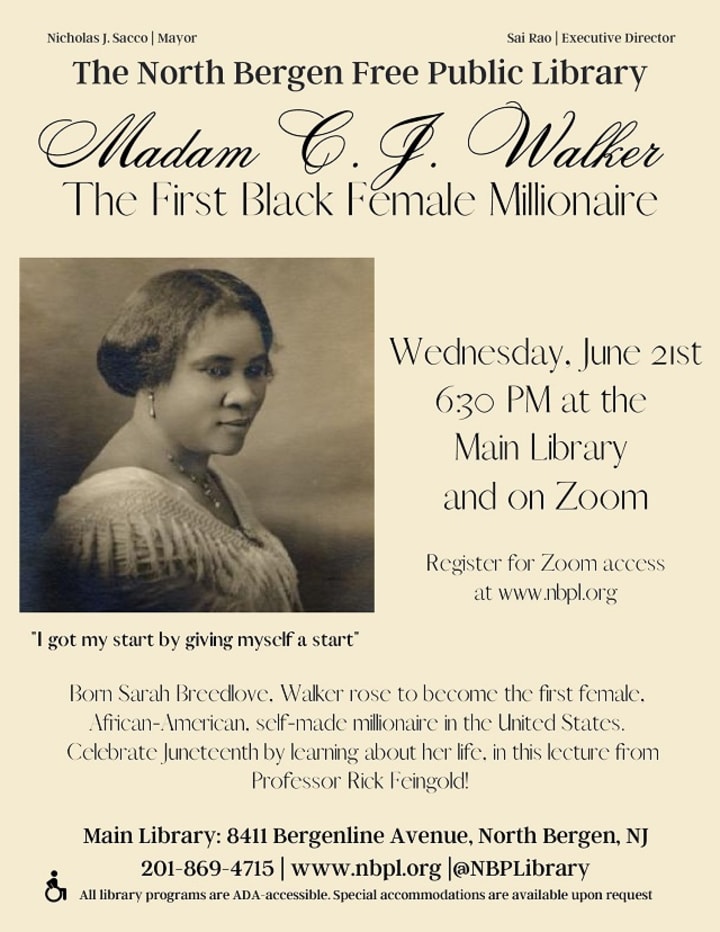
Sarah Breedlove Walker’s life began in the most unlikely of places for a future titan of industry — on a Louisiana plantation in 1867, to parents who had been enslaved only a few years before her birth. Orphaned by age seven and working as a washerwoman by the time she was a young teenager, Sarah’s early life was defined by hardship. But woven through those struggles was a relentless determination that would eventually carry her into the center of one of the most remarkable success stories in American history.
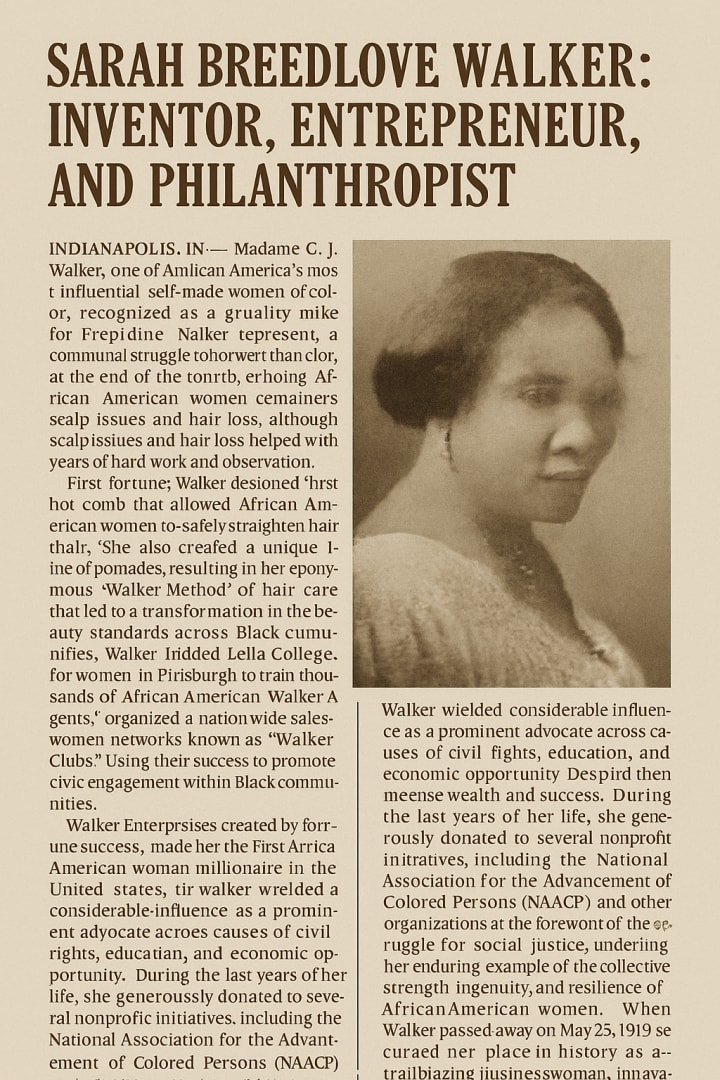
By the early 1900s, hair loss and scalp issues were widespread among African American women, largely due to harsh living conditions and limited access to proper haircare products. Sarah herself suffered from severe dandruff and alopecia, a struggle that would unknowingly spark the empire she was destined to build. She began experimenting with homemade remedies, combining oils, powders, and herbs to create treatments that soothed the scalp and promoted hair growth. What started as a solution for her own hair quickly transformed into a revolutionary concept for the Black female community.
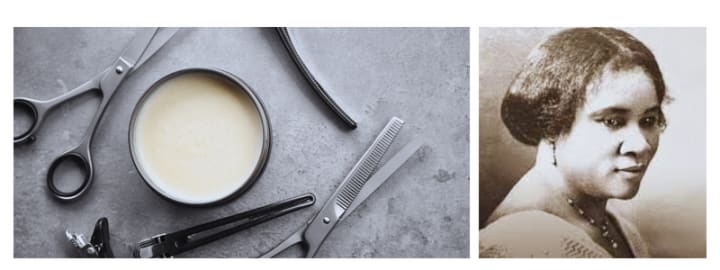
Her most famous contributions — the hot comb and her signature hair pomade — reshaped the beauty industry. Before her innovations, many women attempted to straighten their hair with heated clothing irons, risking burns, damage, and long‑term scalp trauma. Sarah’s safer, more efficient method gave women not just healthier hair, but also a newfound sense of confidence and dignity during a time when society offered them few chances to feel seen or valued.
Operating under the name Madam C. J. Walker, she built a brand rooted in empowerment, self‑care, and financial independence. She wasn’t simply selling products; she was teaching women how to build their own livelihoods through beauty. Her business model introduced “Walker Agents”— trained saleswomen who traveled city to city demonstrating her products, teaching proper haircare, and selling directly to customers. These women were groomed not only to promote her products but to uplift their communities. The success of these agents would later inspire similar strategies adopted by major cosmetic companies, including Mary Kay.
In 1908, Walker launched Lelia College in Pittsburgh, named after her daughter A’Lelia Walker. The school trained thousands of African American women in sales, grooming, and personal development. While her products brought economic success, her larger mission was clear: empower women to earn, learn, and lead. This philosophy was groundbreaking at a time when opportunities for African American women were extremely limited.
Her business flourished, expanding into factories, training centers, and administrative offices across the country. Her wealth grew, and she eventually became recognized as the first African American woman millionaire in the United States. But despite her financial success, Walker never distanced herself from the community that shaped her. She was a devoted philanthropist, donating generously to churches, schools, community programs, and civil rights initiatives.
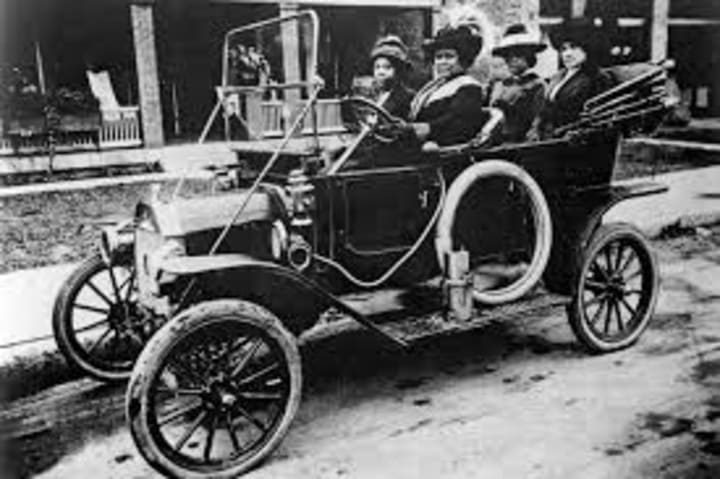
One of her most significant contributions was her support of the National Association for the Advancement of Colored Persons (NAACP). She helped fund anti‑lynching campaigns and championed educational initiatives designed to uplift young African American students. She also provided scholarships for women seeking higher education, firmly believing that knowledge was a key path to liberation.
Throughout her life, Walker balanced her roles as an innovator, businesswoman, and humanitarian. She used her influence to confront social injustice, speaking at national conventions and lending her voice to movements advocating equality and economic empowerment for people of color.
Sarah Breedlove Walker passed away in 1919, but her legacy remains as vibrant and powerful as ever. She transformed her struggles into solutions, her solutions into a business, and her business into a movement that opened doors for millions of African American women who followed. Her story is more than the history of a millionaire — it is the story of resilience, creativity, and the unstoppable force of a woman determined to rewrite her destiny.
If you enjoyed this story and want more powerful histories and inspiring narratives, follow me for more.
About the Creator
TREYTON SCOTT
Top 101 Black Inventors & African American’s Best Invention Ideas that Changed The World. This post lists the top 101 black inventors and African Americans’ best invention ideas that changed the world. Despite racial prejudice.
Keep reading
More stories from TREYTON SCOTT and writers in BookClub and other communities.
A Story of Norbert Rillieux
In the humid, swaying cane fields of nineteenth‑century Louisiana, a quiet revolution was forming—one that would not be fought with swords or marching armies, but with science, precision, and the relentless determination of a man named Norbert Rillieux. Born in 1806 to a wealthy plantation owner and a mother of mixed descent, Rillieux grew up witnessing both privilege and the harsh realities of life on sugar estates. He learned early that the production of sugar, though profitable, was a brutal and dangerous trade. Workers spent long hours stirring boiling kettles of cane juice, risking burns, illness, and even death as they attempted to refine the precious crystals that fueled the region’s economy.
By TREYTON SCOTT4 days ago in BookClub
Book Review: Atmosphere by Taylor Jenkins Reid
I flipped the book over in my hands in the centre of the small airport book shop. Although I had heard promising reviews of Atmosphere by Taylor Jenkins Reid, I hesitated. The synopsis didn’t compel me - I wasn’t much of a space girly. In high school it made me cringe when my peers would talk about the stars.
By sleepy drafts15 days ago in BookClub
Theresa Hak Kyung Cha's "Dictee" Favorite Myths
Exorcisms from Demons: A Reunification with the Korean Spirit This book remains my favorite book of all time. The author writes about how women are abused, raped and murdered around the world. Ironically, after it was published, she was herself, raped and murdered. Rest in peace. Rest in peace. Rest in peace. 💙💗💗 .💗💗.💗💗💗 💙💗🌹 LOVE🌹💛💗 💙❤🌹 THIS 🌹💛💗 💙💗🌹 LOVE🌹💛💗 💚💚💚 .💗💚 💚💚💛
By SAMURAI SAM AND WILD DRAGONS7 days ago in BookClub




Comments
There are no comments for this story
Be the first to respond and start the conversation.