
Bangladesh General Elections: BNP Claims Majority as Tariq Rahman Poised to Become Prime Minister After 17-Year Exile
The Rise of Tariq Rahman: How the BNP Leader Reclaimed Bangladesh Politics After Years in Political Asylum

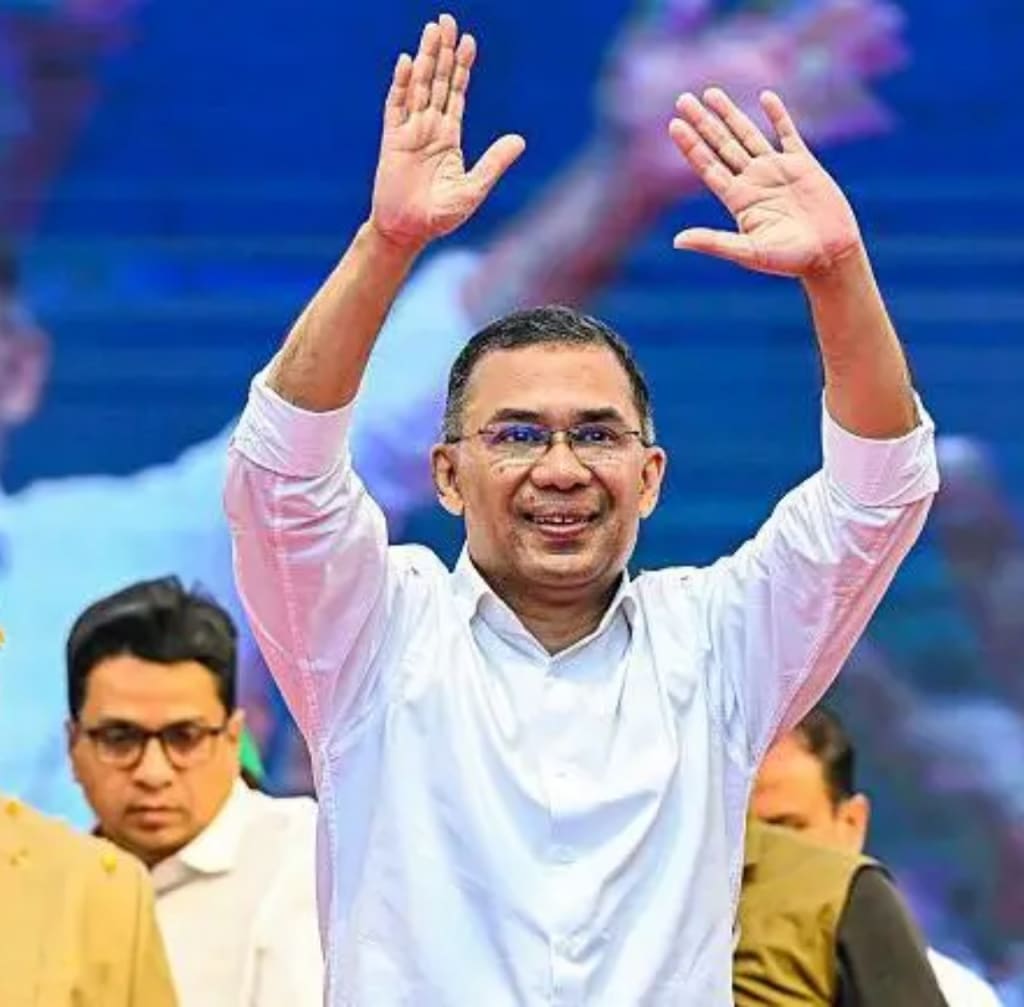
The Bangladesh Nationalist Party (BNP) appears to be in a clear lead after the results of the general elections in Bangladesh.
Amir Khusro Mahmood Chaudhry said, "We have won the majority and when the full results are out, our performance will be much better."
He said that Tariq Rahman is our leader, our chairman and when the BNP forms the government, he will definitely be the Prime Minister of Bangladesh.
It should be noted that Tariq Rahman has led the election campaign of the Bangladesh Nationalist Party (BNP) for the first time and has also participated in the national parliamentary elections for the first time.
He was nominated as the party chairman just a month after the death of his mother before the elections and he not only campaigned vigorously but also led organizational activities.
His supporters see him as a "potential prime minister" of Bangladesh.
The BNP is also projecting him as the party’s “sole leader,” even as his political opponents question Tariq Rahman’s past corruption allegations and educational qualifications.
Tariq Rahman and his party have rejected the corruption allegations, calling him propaganda for the former Awami League government.
After spending nearly 17 years in political asylum in London, he returned to Dhaka last December and was given a warm welcome by his party.
The BNP’s long-time rival, the Awami League, did not contest the elections because it is banned by the current administration. In such a situation, the Jamaat-e-Islami has emerged as a major rival party.
Tariq Rahman’s return
Tariq Rahman was arrested on corruption charges in 2007 during Bangladesh’s military-backed caretaker government. After spending 18 months in jail, he was released in September 2008 and moved to London with his family.
He returned to Dhaka on December 25, after almost 17 years. However, a few days before his arrival, Tariq Rahman had created a sense of uncertainty about his return through a post on Facebook.
His post had sparked a storm of discussion in late November. His mother Khaleda Zia was ill and in such a situation, he wrote that, “Like every child, I also have a strong desire to receive the love and touch of my mother during this difficult time. But my decision-making power is not unlimited nor is it completely under my control. The scope to discuss this delicate issue in detail is also limited. Our family is hopeful that as soon as this political reality reaches the level of our expectations, the long wait for my return will end.
Then, a few days after his return on December 25 and ten days after Khaleda Zia’s death on December 30, he was formally appointed as the chairman of the BNP at a meeting of the National Standing Committee on January 9.
Tariq Rahman was serving as the acting chairman of the party from London after Khaleda Zia was sentenced to prison in a corruption case in 2018.
In 2002, Khaleda Zia nominated him as the party’s senior joint secretary general. Later, in 2009, he was nominated as the senior vice chairman at the party’s fifth national conference.
Political analyst Mohiuddin Ahmed said that Tariq Rahman’s arrival as chairman was almost inevitable for the BNP leadership.
He said, “Since Khaleda Zia’s arrest in 2018, the party was running under the leadership of Tariq Rahman. There was never any doubt about his taking over the leadership.”
Another political analyst and Dhaka University professor, Muhammad Mujibur Rahman, says that Tariq Rahman’s success is that he was able to keep the party united and prevent it from breaking up even in difficult circumstances from abroad.
“Anyway, he has always been involved in the political process. He has shown success in keeping the party going even while living abroad. After returning home, he seems more mature than ever, now it remains to be seen to what extent this maturity is reflected in his political decisions after the elections.
As party chairman, Tariq Rahman launched the party’s election campaign in Sylhet on January 22 and his daughter and wife were also seen attending several election events.
The rise of Tariq Rahman
Tariq Rahman is the eldest son of Bangladesh’s first military ruler Zia-ur-Rehman and former Prime Minister Khaleda Zia. According to the BNP website, he was born on November 20, 1965.
However, his election affidavit states that he was born on November 20, 1968.
His party website states that he completed his primary education at BAF Shaheen College in Dhaka and then joined the Department of International Relations at Dhaka University in the 1980s.
However, there is no information available on whether he completed his education there or not.
This time, the affidavit submitted to the Election Commission lists Tariq Rehman's educational qualification as 'Higher Secondary'.
According to information provided by the BNP, Zia-ur-Rehman's family was also imprisoned along with the families of several other military officers during the war of independence. At that time, both his sons Tariq Rehman and the late Arafat Rehman were also imprisoned. Zia-ur-Rehman was an officer in the Pakistani army who later became part of the mutiny.
According to information available on the party's website, Tariq Rehman also participated in the movement against the military ruler Hussain Muhammad Irshad and officially joined the BNP in 1988.The time was active when he became a member of the Gabtoli Upazila unit of the BNP in Bogra district.
However, some party leaders and members of the Chairperson’s Advisory Council say that Tariq Rehman’s formal journey in party politics began with the 1991 parliamentary elections, when he was overseeing the five constituencies that Khaleda Zia had won.
However, his greater influence on party politics began during the 2001 parliamentary elections. In those elections, the BNP-led four-party alliance won a two-thirds majority.
Corruption allegations against Tariq Rehman and his close associates during the BNP regime later became a topic of widespread debate.
Corruption allegations and reputation restoration
Tariq Rehman returned to the country in late December and many believe that his party, the BNP, is trying to project him as the party’s sole important leader and build a ‘positive reputation’ for him.
Now that the BNP is facing an electoral battle against its old ally Jamaat-e-Islami, the party’s policymakers want to project Tariq Rahman in the minds of the public as the sole leader of the ‘liberation war and moderate democracy’.
Critics say that after the BNP came to power in 2001, even though Khaleda Zia became prime minister, Tariq Rahman became a parallel power center in the ‘Hawa Bhaban’ (the party’s central office).
Tariq Rahman and his close associates have also been accused of corruption. However, he and his party, the BNP, have always denied these allegations.
During the BNP’s rule, the Awami League blamed Tariq Rahman and the ‘Hawa Bhaban’ for the 2004 grenade attack on a rally of then opposition leader Sheikh Hasina in Dhaka.
Later, during the Awami League’s rule, Tariq Rahman was sentenced to life imprisonment in a related case.
Tariq Rehman was acquitted of these cases after the fall of the Awami League government. The BNP has always denied these allegations.
Analyst Mohiuddin Ahmed says that during his research, he found out through conversations with people associated with various parties that Tariq Rehman was indeed tortured during his detention, the aim of which was to ‘force’ his mother, Khaleda Zia, to leave the country.
Later, on September 11, 2008, he left Dhaka for London with his family.
There is also a rumor that Tariq Rehman was released through some kind of agreement with the military leadership of the time, although Khaleda Zia did not leave the country.
There were also reports in the media that Tariq Rehman had given a bail bond, which stated that he would not rejoin politics immediately after leaving the country.
Mohiuddin Ahmed says, ‘Khaleda Zia herself had said that Tariq would no longer be involved in politics and would study in London.’
Although the BNP had long been saying that Tariq Rehman was staying in London for medical treatment, later on April 24, 2018, BNP Secretary General Mirza Fakhrul Islam Alamgir admitted for the first time that Tariq Rehman had applied for political asylum in the UK in 2012 and the application was approved within a year.
Efforts to keep Tariq Rehman out of politics
In 2007, when the military-backed caretaker government came to power in Bangladesh, BNP leader Khaleda Zia was also arrested after Awami League President Sheikh Hasina. Her late son Arafat Rehman was also arrested on the same day along with Khaleda Zia.
Arafat Rehman was later released through an administrative order and went to Thailand for medical treatment. He then moved to Malaysia, where he died of a heart attack in January 2015.
When Khaleda Zia was jailed in a corruption case in 2018, Tariq Rehman began running the party from London as acting chairman.
However, apart from being convicted in the grenade attack case, he also had several other cases registered against him during the Awami League’s rule.
At one point, when the court banned his statements, he became active on social media and started participating in party activities virtually.
People close to him say that in a short time, he started directly connecting with grassroots workers on the one hand and also took the lead in the party’s policy-making work on the other.
Finally, after the fall of Sheikh Hasina’s government in August 2024, Tariq Rehman got the opportunity to return to the country and returned to Dhaka last December and directly took charge of the party.
Mohiuddin Ahmed said that Tariq Rehman has seen the dark corners of politics and has also experienced the politics of confrontation and revenge in this country. It remains to be seen whether he can use this political insight to move beyond a party leader and become the leader of the country in the future.
About the Creator
Keep reading
More stories from Real content and writers in Chapters and other communities.
Bangladesh July Charter Referendum 2026 Full Breakdown of 84 Reform Proposals Constitutional Changes & What a ‘Yes’ Vote Means
The referendum on the implementation of the July Charter was held on February 12, the day of the elections to the 13th National Parliament. The referendum on which voters will vote today on separate ballots will have only four very specific issues written on it. Voters will vote ‘yes’ or ‘no’ on the question of whether voters support the implementation of the Charter.
By Real content7 days ago in Chapters
Valentine's Dates Over the Years
Colin grinned as Brooklyn slipped into the living room. “Is it all set?” he asked. The twenty-one year old grinned. She was in her last year of college and Colin knew that Lincoln was proud of her. Although she had been away at college, she’d eagerly helped Colin plan his surprise for Lincoln. “I’m so glad you’re finally doing this,” she said.
By Reb Kreyling7 days ago in Chapters
📢 Raise Your Voice Thread: 02/19/2026
Our “Raise Your Voice Threads” are hosted most alternating Thursdays at 12PM ET to offer creators more avenues to uncover exceptional stories on Vocal. As we are continuously searching for fresh creators and inspiring stories, this thread provides an opportunity to exchange and discuss the stories that have moved and motivated us on Vocal.
By Raise Your Voice by Vocalabout 6 hours ago in Resources



Comments
There are no comments for this story
Be the first to respond and start the conversation.