
El Mencho Killed: Mexico at a Crossroads After CJNG Cartel Leader’s Death
El Mencho killed in Mexico: What the death of CJNG leader Nemesio Rubén Oseguera Cervantes means for cartel violence, tourism, security, and Mexico’s future.

Cartel Leader Killed Mexico at a Crossroads
Mexico woke up to bombshell news this week: Nemesio Rubén Oseguera Cervantes, better known as El Mencho, is dead. He wasn’t just any criminal he was the boss of the Jalisco New Generation Cartel (CJNG), one of the world’s most feared and elusive drug lords. Now, after years on the run, he’s gone.
For a long time, El Mencho’s name meant trouble. He represented both the insane reach of organized crime and the massive challenges Mexico faces in trying to beat it back. His death is a huge moment in that fight. Does it mean things get better now? Or is it just the beginning of more chaos? Right now, nobody can say for sure.
How They Got Him
Officials say Mexican security forces tracked him to some remote spot near Tapalpa, up in the mountains of western Jalisco. The army led the charge, finally closing in after years of gathering intel, keeping watch, and working with other agencies.
Not a lot of details have come out, but here’s what’s clear: when they moved in, it turned violent. By the end, one of the world’s most wanted men was dead.
El Mencho had managed to slip away for over a decade, hiding behind loyal followers, safe houses, and heavily armed guards. He ran things with secrecy and wasn’t afraid to use brutality to keep people in line. That ability to stay hidden made him almost legendary in the criminal world.
But now, with his death, that legend’s been shattered.
Who Was “El Mencho”?
Oseguera’s rise tells the story of how Mexico’s criminal world changed. The old cartels started splitting up around 2010, and from that chaos, CJNG exploded onto the scene—fast growth, ruthless tactics, and no fear about picking fights or forming alliances.
Unlike many old-school gangs, the CJNG was known for:
Using military-style operations and propaganda
Expanding quickly into new territory
Controlling synthetic drugs, especially meth and fentanyl
Making bold, public shows of force to scare both enemies and the government
With El Mencho at the top, they went global—trafficking drugs into North America, Europe, even Asia. The U.S. put a massive bounty on his head, calling him one of the world’s most dangerous drug bosses.
Thing is, cartel power isn’t permanent. It never is.
What Happened Next: Streets on Edge
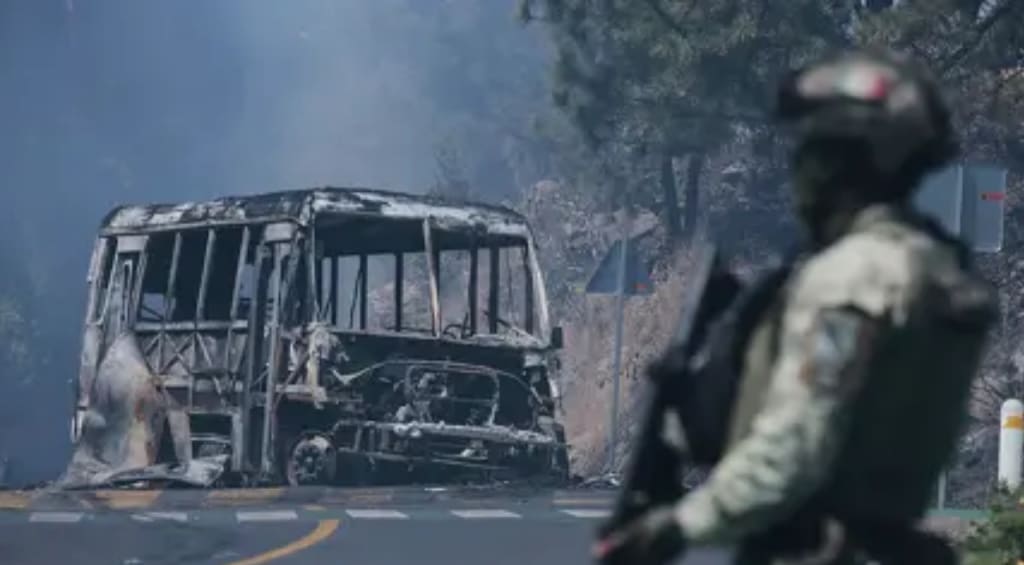
It didn’t take long for the fallout to begin. Hours after the news broke, violence erupted across western Mexico. People started seeing burning vehicles, roadblocks, and shootouts in Jalisco and nearby states. Social media lit up with photos of smoke billowing over highways and city streets.
Even tourist spots got hit by the tension. In Puerto Vallarta, a place people usually go to relax, security was everywhere. Vacationers talked about the uneasy mood as police told everyone to stay inside.
The U.S. Embassy jumped in almost immediately, warning Americans in the area to hunker down and follow official updates.
That’s just a reminder: what happens in Mexico doesn’t stay in Mexico. Cartel violence spills over borders, and everyone feels the impact.
Travel and Economy
The chaos reached some of Mexico’s busiest airports. Flights in and out of Cancún and Mexico City faced delays and cancellations while airlines scrambled to figure out if it was safe.
Tourism is huge for Mexico. It brings in billions and keeps millions of people working. Even a few days of trouble can cause major headaches, especially in places that depend on international visitors.
Hotels and travel companies rushed to tell tourists that things were under control. But public perception is powerful. When people see headlines about cartel violence, it changes how they feel about visiting, no matter what’s actually happening on the ground.
Investors are watching, too. If things stay unstable, it could shake up foreign investment, supply chains, and trade.
The Cartel Splinters
When a big boss falls, the people under him often start fighting for control. Different groups want a piece of the action, and that can mean even more violence as they fight to take over. Mexico’s seen this play out before power struggles, turf wars, and a spike in bloodshed as new leaders try to prove themselves.
About the Creator
Keep reading
More stories from Real content and writers in Chapters and other communities.
Pakistan Bombs Afghanistan: Nangarhar and Paktika Airstrikes Kill Civilians, Taliban Condemns Attack
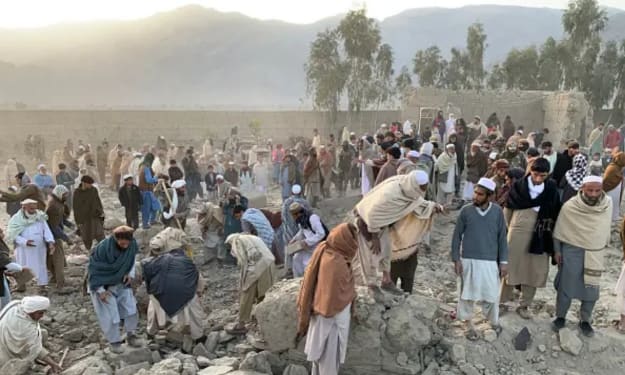
Provincial officials in eastern Afghanistan’s Nangarhar province told the BBC that a house belonging to a man named Shahabuddin was targeted in the Gardai Kach area of Behsud district, killing and injuring around 20 people, including women and children.
By Real contentabout 20 hours ago in Chapters
The Cave Part 6
If you have ever heard a tale about yourself that you cannot remember and doubtless think is made up, you will know how I felt when Tharkin related all that the eagle had seen of me before my memories were scattered. Of far distances and traveling companions that I did not recall, camping out under the stars and making our way to the mountains with deliberate purpose. The great bird had lost contact with my party once we entered the forests, and the seven other members were not seen again by him or his brethren since.
By Jamye Sharp7 days ago in Chapters
Sparrow on a Plank Chapter 18: Of Wild Parties and Annoyed Predators
The trip home was blessedly uneventful. There were sharks, whales, and the occasional seagull, but nothing attacked them or even appeared to follow them. Hajime and the other mages did a thorough search of the ship, looking for anything that didn't belong. They couldn't find anything, but that didn't mean that there wasn't anything there; it just meant that it was hidden rather well. Although they were sure that there was something hidden, they lacked the immediate means to deal with it.
By Jamais Jochimabout 18 hours ago in Chapters


Comments
There are no comments for this story
Be the first to respond and start the conversation.