
Pakistan Bombs Afghanistan: Nangarhar and Paktika Airstrikes Kill Civilians, Taliban Condemns Attack
Taliban accuses Pakistan of violating sovereignty while Islamabad targets alleged militant bases.

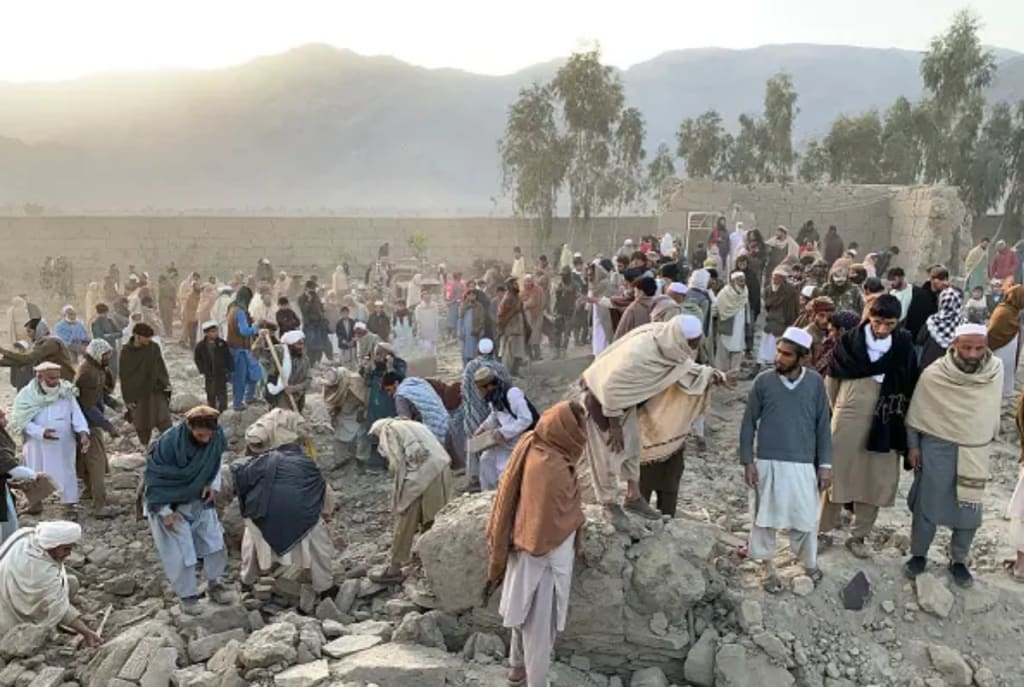
Provincial officials in eastern Afghanistan’s Nangarhar province told the BBC that a house belonging to a man named Shahabuddin was targeted in the Gardai Kach area of Behsud district, killing and injuring around 20 people, including women and children.
A member of the family said, “Everything is finished. My children are gone, my brother and my husband are gone, and my unmarried daughters have died.”
Eyewitnesses said the house was targeted in a late evening airstrike.
In addition to Behsud, strikes were also reported in the Khogyani and Ghani Khel districts of Nangarhar province.
What happened in Paktika?
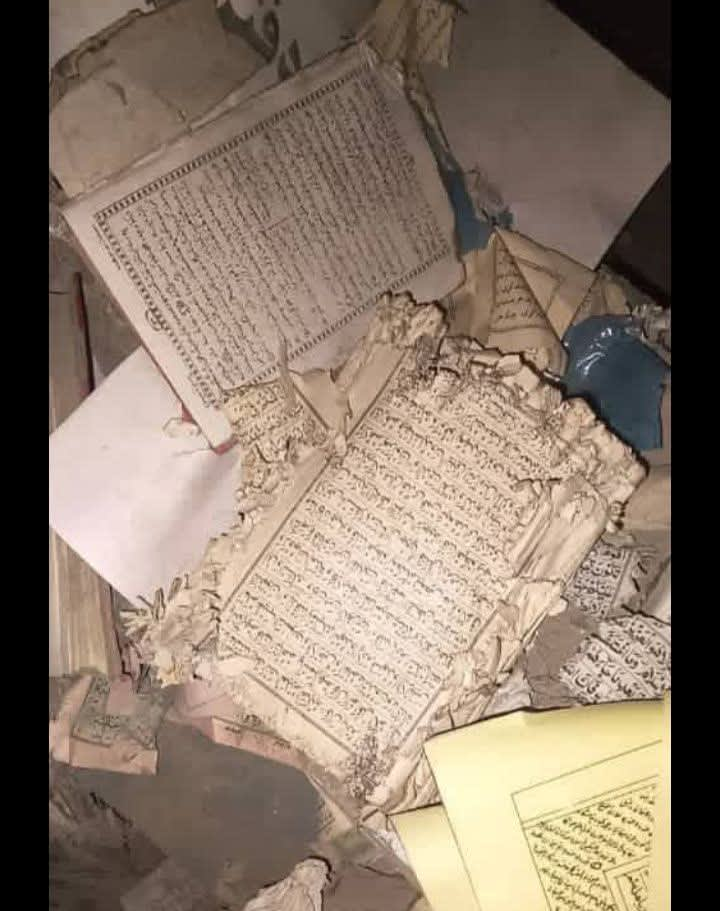
A Taliban government source in Paktika said that at around 11:30 p.m., a religious seminary in the Barmal district of the province was hit in an airstrike. Parts of the building were damaged.
Due to the holy month of Ramadan, the school was closed, and no one was injured.
Images posted on social media show damage to part of the seminary, as well as to copies of the Quran and other books.
Pakistani airstrikes in Afghanistan: Mujahid says Pakistani army “compensating for security failures through such crimes”
The Taliban government’s spokesperson, Zabihullah Mujahid, condemned Pakistan’s recent attacks on Afghan territory. In a Facebook post, he wrote, “Pakistani special forces have once again violated Afghan territory.”
Mujahid wrote, “Last night, they bombed our civilian compatriots in Nangarhar and Paktika provinces, resulting in the martyrdom and injury of dozens of people, including women and children.”
He said, “Pakistani generals are compensating for security weaknesses in their own country through such crimes.”
The Taliban government’s Ministry of Defense warned it would respond “at the appropriate time” to Pakistan’s airstrikes in Afghanistan.
The ministry condemned Pakistan’s recent attacks on “civilian areas” in Nangarhar and Paktika provinces, which it said resulted in the deaths of dozens of civilians, including women and children, and vowed to respond at a “suitable time.”
In a statement on Twitter, Ministry spokesperson Enayatullah Khwarazmi said, “The Ministry of National Defense strongly condemns this blatant violation of Afghanistan’s national sovereignty and considers this act a clear violation of international law, principles of good neighborliness, and Islamic values.”
The statement added, “The Ministry of National Defense considers the protection of national sovereignty and the safety of the people its legitimate and national responsibility and warns that it will respond appropriately and proportionately at the appropriate time.”
Pakistan’s Ministry of Information and Broadcasting had earlier said regarding the strikes in Afghanistan, “In intelligence-based operations, seven hideouts of militants affiliated with Tehrik-i-Taliban Pakistan and its subsidiary organization Islamic State Khorasan Province were targeted.”
How many attacks have occurred in the recent tensions between Afghanistan and Pakistan?
In the past, Pakistan has carried out airstrikes in several provinces, including the Afghan capital Kabul, resulting in multiple civilian deaths and injuries.
The Pakistani government alleges that the major militant group Tehrik-i-Taliban Pakistan receives support from the Taliban government in Afghanistan.
However, the Taliban government denies Pakistan’s allegations that Afghan territory is being used against Pakistan.
Before Sunday night’s strike, Pakistan had also carried out airstrikes on November 25, 2025, in the provinces of Khost, Paktika, and Kunar.
Taliban spokesperson Zabihullah Mujahid said that Pakistan killed ten women and children in an airstrike on a house in Khost and injured four others in airstrikes in Kunar and Paktika.
In response, a spokesperson for the Pakistani army said that the military does not target civilians and does not carry out strikes without prior warning.
Earlier, on the night of October 9, 2025, Afghanistan’s Ministry of Defense said that Pakistan had “violated” Afghan airspace and carried out airstrikes in Kabul and Paktika. This was followed by exchanges of fire at various locations between the two countries on the night between October 10 and 11.
The Pakistani military said that 23 Pakistani soldiers were killed in clashes with Afghan forces and militants.
Since then, trade between the two countries has also come to a standstill.
The Taliban government and Pakistan later signed a ceasefire agreement in Doha, mediated by Qatar and Turkey. In the second round of talks held in Istanbul, only an extension of the ceasefire was agreed upon, while a third round of negotiations to resolve other differences ended without results.
Pakistan wants the Taliban government to conduct operations against the Pakistani Taliban in Afghanistan and to provide written guarantees that attacks in Pakistan will not be carried out.
The Taliban government insists that it does not want to interfere in Pakistan’s internal affairs and that the TTP and other armed groups are Pakistan’s own issue.
In August 2025, Pakistan also carried out strikes in Khost and Nangarhar. At the time, Pakistan did not publicly acknowledge the strikes, but the Taliban government summoned Pakistan’s chargé d’affaires in Kabul and described the attacks as Pakistan’s responsibility.
Similar attacks in the past in Khost, Kunar, and other areas along the Durand Line have also caused casualties. Even before airstrikes, cross-border attacks near the Durand Line sometimes resulted in loss of life.
Criticism from within Pakistan
If India is accused of making Pakistan insecure, then why is Afghanistan being bombed?
The bombings carried out by Pakistan last night in Afghanistan’s Nangarhar and Paktika provinces have also raised criticism and questions within Pakistan itself.
Pakistani author and social media activist Imran Riaz Khan questioned Pakistan’s intentions, writing that after every terrorist incident, the public is told that India is behind it, but the question is why Pakistan has never attacked India and why it does not give India a strong response instead of targeting Afghanistan.
Referring to reports of the bombing victims, an activist named Saleem Afridi reshared a video filled with flames and embers and wrote, “This is not Gaza attacked by Israel, nor the flames of Russia’s attack on Ukraine, but a story of even greater ظلم.”
He added, “This is the ظلم of a state that calls itself a neighbor but surpasses even its enemies in brutality.”
He said, “This is an attack on humanity in which innocent people were martyred and their homes destroyed. The Pakistani army did not even respect the holy month of Ramadan.”
Human rights activist Alauddin, who frequently posts analyses on social media, wrote, “One who does not show mercy to his own country’s children and women—how can he spare his neighbors?” He also said that the country itself fosters terrorism while surprisingly blaming India and Afghanistan, asking why it does not attack India as well.
Another media activist from Khyber Pakhtunkhwa, Umar Pushtin, also wrote, “Why is the kind of attack that happened in Afghanistan not carried out in India? The Pakistani army always says India is behind terrorism in Pakistan, so why does it not say anything to India?”
Another Pakistani, Adil Raja, reshared images of the seminary targeted in Barmal, Paktika, and wrote, “‘Look at Asim Yazid’s achievements!’” clearly referring to Pakistan’s Army Chief, Asim Munir.
Criticism of the Pakistani military within Pakistan may also increase because since the tensions between Afghanistan and Pakistan last October, all routes of communication between the two countries have been closed, severely affecting trade and weakening people’s livelihoods. Some people also ask that if all routes to Afghanistan are closed, how is it possible for terrorists to reach Pakistan from there? Two weeks ago, at a large public gathering, the head of Jamiat Ulema-e-Islam Pakistan, Maulana Fazlur Rehman, criticized this, saying, “Not even a pomegranate can be brought from Afghanistan,” yet they claim terrorists come from there and carry out attacks here.
About the Creator
Keep reading
More stories from Real content and writers in Chapters and other communities.
The Cave Part 6
If you have ever heard a tale about yourself that you cannot remember and doubtless think is made up, you will know how I felt when Tharkin related all that the eagle had seen of me before my memories were scattered. Of far distances and traveling companions that I did not recall, camping out under the stars and making our way to the mountains with deliberate purpose. The great bird had lost contact with my party once we entered the forests, and the seven other members were not seen again by him or his brethren since.
By Jamye Sharp7 days ago in Chapters
Tattoos and Rail Guns Chapter 18: When Demons Plan For the Future
Sharness rode up to her “temple”; the 1920s mansion had been refurbished with an apocalypse in mind, making it an excellent base for her operations. She had fallen in love with the curves and swoops of the mansion; it was a gorgeous edifice only highlighted by the gardens around it and the pools that someone had taken care to design slides, fire pits, and hidden nooks. It was made to satisfy the needs of those who had lived there and she could appreciate that as no human living on the planet could.
By Jamais Jochim4 days ago in Chapters




Comments
There are no comments for this story
Be the first to respond and start the conversation.