
The Chapter You Didn't Choose: Finding Meaning in the Pages You Never Wanted to Write
Some Chapters Arrive Uninvited—Bringing Grief, Change, and the Unexpected Gift of Becoming Someone New
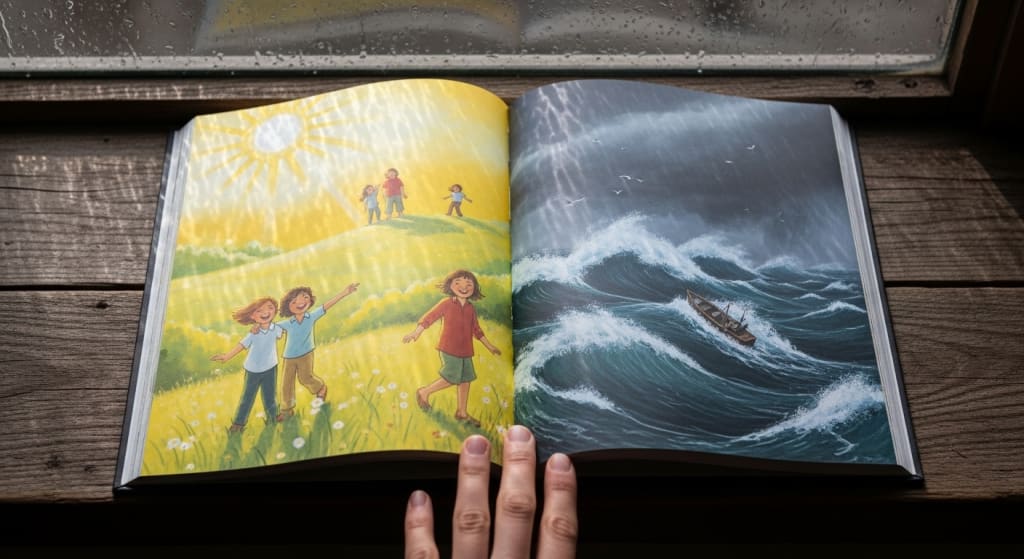
We imagine our lives as books we are writing, and in that imagining, we place ourselves as authors. We will choose the plot, we believe. We will decide when chapters end and new ones begin. We will shape the narrative into something coherent, meaningful, perhaps even beautiful. This belief sustains us through ordinary difficulties, through the expected transitions of growing up, leaving home, finding love, building work, raising children, growing old. These chapters we understand. They are the ones we signed up for.
But life has a way of introducing chapters we did not authorize. Chapters that arrive without invitation, that rip the fabric of the story we were telling, that force us into territories we never wanted to explore. The phone call in the middle of the night. The diagnosis that changes everything. The door that closes and will not reopen. The person who leaves and takes with them the future you had imagined. These chapters are not chosen. They are imposed. And in their imposition, they ask the hardest question a human being can face: who will you become when the story you were living is no longer possible?
The temptation in such chapters is to refuse them. To insist that they are mistakes, interruptions, injustices that should not have happened. To cling to the previous chapter as though it might resume if we only hold on tightly enough. This refusal is understandable. It is human to resist the unthinkable, to deny the unbearable, to wish ourselves back into a story that made sense. But the pages keep turning anyway. The chapter continues whether we acknowledge it or not. And while we are busy refusing the story we are in, we miss the only question that matters: what does this chapter require of me?
I think of a woman I knew who lost her husband suddenly, in the ordinary way these things happen—a heart attack in the garden, found among the roses he had been pruning. They had been married forty-three years. Their children were grown. They had just begun to speak of the chapter ahead, the one they had earned, the one filled with travel and grandchildren and slow mornings with coffee and the newspaper. And then, in an instant, that chapter was cancelled and another began—one she had not ordered, did not want, could not imagine surviving.
For months, she refused it. She kept his slippers by the bed. She set the table for two. She spoke of him in present tense, as though he had merely stepped out and would return any moment. Her children worried. Her friends didn't know what to say. And she, inside her refusal, was slowly drowning in a chapter she would not acknowledge.
Then one day, she told me, she walked past the garden and saw that the roses were blooming—the same roses he had been pruning when he fell. And in that moment, something shifted. She realized that the chapter she was in was not going away. It was real. It was now. And she had a choice: she could continue to live in the chapter that was over, or she could begin to live in the chapter that was actually here.
She did not stop grieving. Grief, she would later say, is not something you get over; it is something you learn to carry. But she stopped refusing. She began to ask what this unwanted chapter might require of her. It required, she discovered, that she learn to be alone in a world built for two. It required that she find new reasons to get up in the morning. It required that she become someone she had never been before—a woman on her own, after forty-three years of being half of a pair. It was the hardest work she had ever done. And it made her, in ways she could not have anticipated, someone new.
This is the secret of the uninvited chapters: they are not punishments. They are not mistakes in the narrative. They are the places where we are forged into who we were always meant to become, though we could not have chosen the path. The chapter of illness teaches us what we are made of, reveals the depth of our courage, shows us who stays and who cannot. The chapter of loss teaches us that love does not end when presence does, that the people we have carried inside us remain, that grief is not the opposite of love but its continuation. The chapter of failure teaches us that we are more than our achievements, that falling down is not the same as staying down, that humility is a wisdom that only suffering can teach.
These chapters are not fair. They are not deserved. They arrive without regard for our plans or our deserving. And yet they arrive for everyone, eventually, because no life is exempt from the uninvited. The question is not whether such chapters will come. They will. The question is what we will do when they arrive.
There is a practice that helps, though it does not heal. It is the practice of asking, in the midst of the unwanted chapter, a simple question: what is this chapter asking of me? Not why is this happening—that question leads only to anguish and dead ends. But what does this moment require? What small next step is possible? Who might I become if I walk through this rather than around it? These questions do not erase the pain. They do not make the chapter welcome. But they orient us toward survival, toward meaning, toward the possibility that even this, even this, might be part of a story worth living.
The chapters we did not choose also teach us something about the chapters we did. They reveal the preciousness of ordinary time—the mornings when nothing happens, the evenings when everyone is home, the days when the biggest problem is what to make for dinner. These chapters, the ones we take for granted, are not guaranteed. They are gifts, and the uninvited chapters show us that. People who have lived through the unwanted often speak of this: that they now treasure what they once overlooked, that they have learned to find joy in small things, that they waste less time on what does not matter. The uninvited chapter, in its cruelty, gives a gift that no comfortable chapter can: the gift of seeing clearly.
And there is another gift, harder to name. The uninvited chapters connect us to the whole of humanity in a way that comfortable chapters cannot. Everyone, eventually, knows loss. Everyone faces the unwanted. Everyone walks through valleys they did not choose. When we are in such a valley, we join a vast company—all those who have suffered, who have struggled, who have found a way through. We are not alone, though it feels that way. We are part of a story much larger than our own, a story of human resilience that has been unfolding since the beginning.
The woman in the garden, the one who lost her husband among the roses, she found her way through. It took years. It took tears beyond counting. It took learning to be someone she had never been. But she came to a place where she could say, not that she was glad for the chapter, but that she was grateful for who she had become in it. She became someone who could sit with others in their grief, who knew what to say and when to say nothing, who had been to the bottom and returned. She became, in the chapter she did not choose, a gift to everyone else facing their own uninvited pages.
The book of a life contains many chapters. Some are bright and easy. Some are dark and hard. Some we write ourselves. Some are written for us by forces beyond our control. The temptation is to wish away the ones we did not choose, to skip ahead to the part where things get better. But the skipping is not possible. The only way through is through. And the only question that matters is not whether the chapter should exist, but what we will make of it while we are here.
So if you are in an uninvited chapter right now—one you did not order, one you would return if you could—know this: you are not alone. The chapter is real. The pain is real. But so is your capacity to find your way. So is the possibility that you will become, in the walking through, someone you could not have become otherwise. So is the hope that this chapter, like every chapter, will eventually end, and the next will begin, and you will carry into it everything this one has taught you.
The book is still open. The pages are still turning. The chapter you did not choose is not the whole story. It is just one part of a narrative that is still being written, still surprising, still capable of beauty. Turn the page when you are ready. The next chapter is waiting. And you, changed as you are, are the only one who can write it.
About the Creator
HAADI
Dark Side Of Our Society
The Cave Part 6
If you have ever heard a tale about yourself that you cannot remember and doubtless think is made up, you will know how I felt when Tharkin related all that the eagle had seen of me before my memories were scattered. Of far distances and traveling companions that I did not recall, camping out under the stars and making our way to the mountains with deliberate purpose. The great bird had lost contact with my party once we entered the forests, and the seven other members were not seen again by him or his brethren since.
By Jamye Sharp6 days ago in Chapters
India to Buy 114 Rafale Jets in $40 Billion Defense Boost Ahead of French President’s Visit
India on Thursday granted initial approval for the purchase of $40 billion (3.6 trillion Indian rupees) worth of defense equipment, including additional French Rafale fighter jets for the Indian Air Force.
By Real content7 days ago in Chapters


Comments
There are no comments for this story
Be the first to respond and start the conversation.