
We Were Pulled from the Dark: Voices of Titanic Survivors
below is a true, nonfictional account in English, told in the voice of survivors (compiled from real testimonies and memoirs). It’s based on actual survivor testimonies (Violet Jessop, Harold Bride, Eva Hart and others) and historical records.
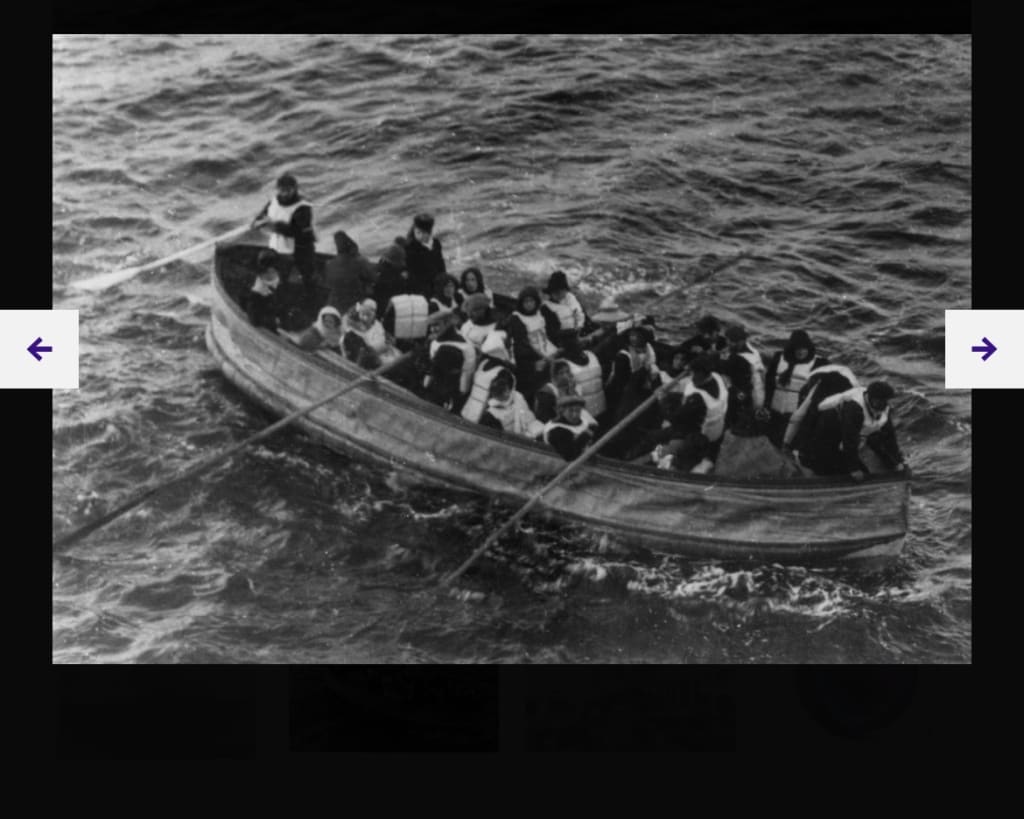
They say memory is the quietest kind of thunder — it rolls and rolls until it becomes the only sound you can hear. The men and women who were pulled aboard the Carpathia that April morning carried that thunder tucked under their coats: the shock of icy water, the weight of someone lost, the small, stubborn warmth of a blanket.
I am not a single voice. This is a chorus stitched from the mouths of those who lived it — the stewardess who felt the hull shudder; the wireless boy who kept sending the messages that became a lifeline; the child who watched her father disappear into the dark. Their words are preserved in court transcripts, memoirs and interviews — I have taken them and tried to speak them plainly.
When the iceberg struck at 11:40 p.m. on April 14, 1912, the night did not break into a single, dramatic second. Survivors remember a series of small betrayals: the tremor underfoot, the lights blinking, the water smell that tasted of iron. Violet Jessop, a stewardess who later wrote memoirs of her experiences, described the routine of ship life suddenly skewed into chaos — plates trembling on tables, the surreal calm of officers trying to assess hull damage while people below were beginning to understand that the ship was going down. Her account is one of steadiness amid panic: the small, essential work of guiding frightened passengers toward lifeboats. 
The wireless room became, in the surviving testimonies, the ship’s throat. Harold Bride — a young junior wireless operator — and his senior, Jack Phillips, stayed at their sets until the power failed, tapping out CQDs and SOSes into the cold Atlantic night. Bride later testified, in the U.S. inquiry, about the mechanicalness of the work: the machines, the codes, the exhaustion — and the moment when every ship in the ether stopped being a number on a map and became the only chance at life. Bride’s testimony is full of small, human details: the last messages, the frantic attempts to reach the nearest ship, and the strange aftershock of fame and grief that followed him off the rescue ship. 
Children remember different things than adults. Eva Hart, who was seven when the Titanic sank, recalled years later not only the cold and the noise, but a child’s attempt to make sense of grown-up sorrow. Her father, who perished that night, stands in her memory as a figure both ordinary and heroic; she would speak later of the smell of blankets on the Carpathia, the awkward hush of rescued people waiting for a future to arrive. Her interviews and recollections are among the many that turn the disaster from headline into human loss. 
What the Carpathia’s deck looked like that morning is imprinted in every survivor account: rows of people swaddled in blankets, faces white and bewildered, clothes still wet and clinging. Captain Arthur Rostron and his crew had no warning beyond the frantic wireless calls, but they steamed through ice-studded water to get there. Their ship took aboard roughly seven hundred souls who had clung to lifeboats or debris — the exact numbers were later tallied carefully by inquiries and historians — and the Carpathia itself became a temporary hospital and sanctuary as she made course for New York. The fact of rescue, of being taken from the edge of that freezing ocean, is the hinge on which every survivor’s later life turned. 
Later, decades after the sinking, the ship’s wreck was found on the ocean floor, two and a half miles down, a ghostly, corroded ruin visible to cameras launched in 1985. Robert Ballard’s discovery revealed the final resting place and gave us images that are at once archaeological evidence and elegy — the collapsed bow, scattered debris fields, objects that survived the deep for seventy-plus years. That site changed how historians and the public could connect the human stories told on deck to the steel skeleton that rests beneath the waves. 
But the focus on steel, on wreckage, should never eclipse what the survivors carried away: memory as obligation. Many of them spent the rest of their lives answering questions, giving depositions, testifying before inquiries, or retreating from the relentless curiosity of the press. Some wrote memoirs; many avoided public life altogether. The survivor who gave a warm cup of tea to a weeping stranger; the telegraph boy who replayed lantern-lit messages until sleep became impossible; the mother who tried to wrap a child’s hair with trembling hands — these are the small, human acts that remain when the statistics are counted.
In the end, survivors remind us that disasters are collections of private stories. We measure them with numbers — 1,500 lost, 705 rescued, a ship gone to the bottom — but the true ledger is in the small details: a blanket smelled of smoke and soup; a man carried a pocket-sized photograph that saved him; a stewardess kept a toothbrush in her pocket even while the world buckled. Those details are why the survivors’ voices still matter: they do not let the wreck be reduced to a diagram. They demand we remember the people who talked, trembled, and then tried to live again.
About the Creator
Keep reading
More stories from Sorea Cata and writers in Confessions and other communities.
Confession from cell 217
Confession from Cell 217: A true story I am writing this from a concrete room no bigger than a parking space. The walls are gray, scratched with the marks of people who came before me and thought they would leave sooner than they did. The light above my head never turns off completely. Even at night, it hums softly, like it’s watching.
By Sorea Cata2 months ago in Confessions
Blessed 33
So I woke up on the morning of February 5, 2026 and guess what and you know what I realized? It’s my 33rd birthday. Do you know what that means? Yes, technically I’m getting old, but what I couldn’t have guessed was this would be one of the best days of my life.
By Joe Patterson6 days ago in Confessions


Comments
There are no comments for this story
Be the first to respond and start the conversation.