
She Was Still Alive… The Timeline That Broke Romania
How the crimes of Gheorghe Dincă exposed fear, outrage, and a broken emergency system

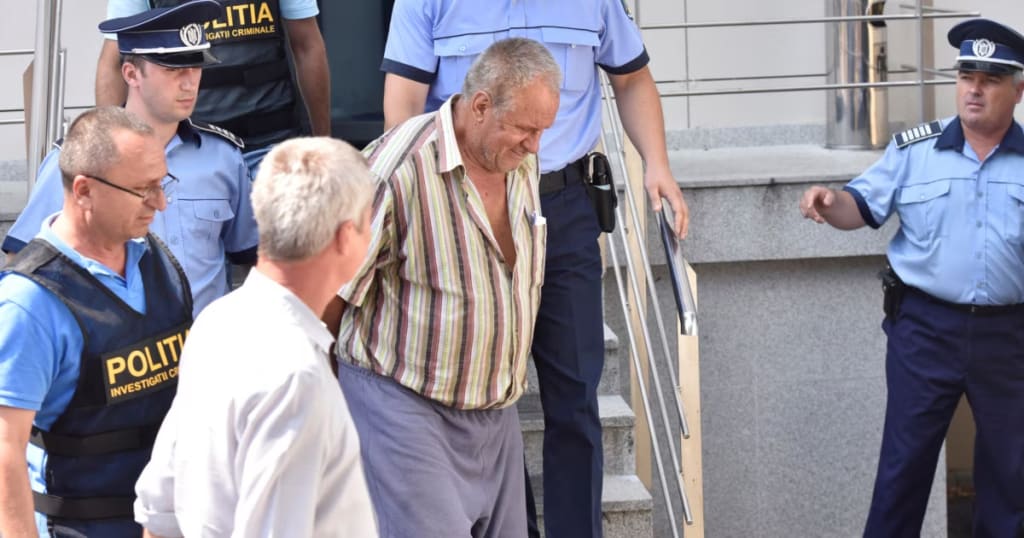
In the summer of 2019, Romania experienced one of the most traumatic criminal cases in its modern history. What began as a missing person report quickly turned into a national nightmare that sparked protests, political pressure, and a wave of distrust toward authorities.
The name that would dominate headlines for months: Gheorghe Dincă.
A Normal Day That Turned Into Horror
On July 24, 2019, 15-year-old Alexandra Măceșanu left home to travel to Caracal. Like many teenagers in smaller Romanian towns, she chose to hitchhike.
She never made it to her destination.
Hours later, something extraordinary — and heartbreaking — happened. Alexandra managed to call Romania’s emergency number, 112. She told the operator she had been kidnapped. She whispered details about the house. She said the man who took her was nearby.
She called not once, but three times.
She was alive.
She was asking for help.
She gave information.
And yet, help did not arrive in time.
The Delays That Sparked National Rage
Authorities struggled to pinpoint her location. Technical errors, jurisdiction confusion, and bureaucratic hesitation slowed the response.
Police identified a suspect address during the night — a house in Caracal.
But instead of entering immediately, they waited for a search warrant.
By the time officers entered the property the next morning, Alexandra was gone.
The delay became one of the most controversial aspects of the case. Many Romanians asked the same painful question:
Could she have been saved?
The House in Caracal
Inside the courtyard and house owned by Gheorghe Dincă, investigators discovered evidence that suggested extreme violence. Burned remains were found in a metal barrel. Personal belongings belonging to Alexandra were identified.
Soon, another name resurfaced — Luiza Melencu, an 18-year-old who had disappeared months earlier under similar circumstances.
Dincă eventually confessed to killing both girls.
He described luring them into his car.
He admitted violence.
He admitted burning bodies to destroy evidence.
The brutality shocked the nation.
A Nation Erupts
The Caracal case quickly transformed from a criminal investigation into a symbol of institutional failure.
Thousands protested in cities across Romania. People carried candles, photos of the victims, and signs demanding accountability.
The anger was not directed only at the killer.
It was directed at:
- Emergency response inefficiency
- Poor coordination between police units
- Delays in obtaining warrants
- Outdated location technology
For many, Alexandra’s calls to 112 became the most haunting part of the story. A teenager pleading for help — while the system moved too slowly.
Doubts and Controversies
Although Dincă confessed, public skepticism never fully disappeared.
Some questioned whether he acted alone.
Others doubted parts of the official narrative.
Conspiracy theories spread online.
The lack of complete clarity fueled distrust. In high-profile cases, uncertainty often leaves deeper scars than the crime itself.
The Trial and Sentence
After a long legal process, Gheorghe Dincă was sentenced to 30 years in prison. The court found him guilty of murder, human trafficking, and rape.
For the families of Alexandra and Luiza, no sentence could bring closure.
For Romania, the case became a turning point. It forced conversations about:
- Reforming emergency systems
- Improving response time
- Modernizing technology
- Increasing accountability within institutions
Why the Case Still Haunts Romania
Years later, the Caracal case remains deeply embedded in the country’s collective memory.
It was not just the violence that horrified people.
It was the timeline.
A girl was alive.
She made contact.
She trusted the system.
And time slipped away.
The case of Gheorghe Dincă is remembered not only as a story about evil, but as a warning about what happens when institutions fail at critical moments.
For many Romanians, the fear is not only that monsters exist — but that sometimes, help does not arrive fast enough.
About the Creator
Crime Chronicles: The Black Widow of La Porte
We're back with the Crime Chronicles series, and this time we're looking at another mystery of sorts. We've covered a few different killers over the course of the series, and many of them were very messed up in the head. Of course, many of them got their comeuppance in the end - in this case...not so much.
By Greg Seebregts5 days ago in Criminal
No Arrests Made in the Nancy Guthrie Case
The disappearance of Nancy Guthrie, an 84‑year‑old grandmother from Tucson, Arizona, has captured national attention over the past two weeks. Recent law enforcement activity, including the detaining of three people, has raised questions and hope among the public and Nancy’s family. But as of now, no one has been arrested in connection with her disappearance, and the investigation continues.
By sehzeen fatima3 days ago in Criminal


Comments
There are no comments for this story
Be the first to respond and start the conversation.