guilty
Don’t do the crime if you can’t do the time; a look into all aspects of a guilty verdict from the burden of proof to conviction to the judge’s sentence and more.
The Night a Child’s Name Almost Ruined an Innocent Man
Picture a quiet evening in Pataskala, Ohio, April 28, 2002. A 38-year-old mom named Rhonda Bogs is inside her house on the edge of town, stirring something on the stove while her two-and-a-half-year-old daughter Amanda plays nearby. She’d just talked on the phone with her husband Dave-he’s sitting in jail over unpaid child support, nothing violent, just life being messy. Rhonda glances out the window, sees a dark shape move past, shrugs it off. People walk by sometimes. She goes back to dinner.
By KWAO LEARNER WINFREDabout 22 hours ago in Criminal
He Stabbed His Girlfrend, Then Drove to Restaurant & Attacked Parents. Content Warning.
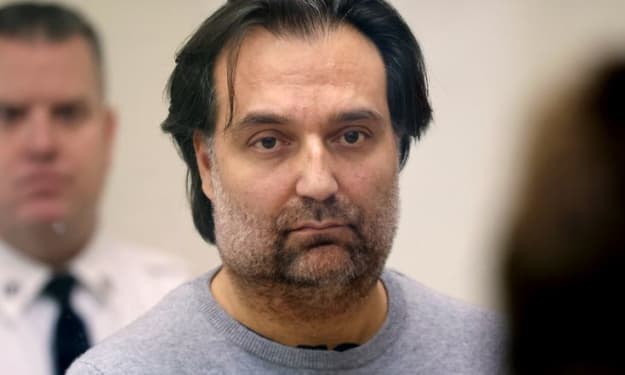
Benjamin Walsh battled substance abuse and mental illness, but had never been violent. He realized he needed help with both. in recent weeks. That changed in early 2018 when he went on a rampage that left his girlfriend dead and his parents wounded.
By Criminal Mattersa day ago in Criminal
The Apartment of Candles: The Ukrainian Mother Who Left Her Children to Die. Content Warning.
The story of Vladislava Podchapko is one of the darkest chapters in modern criminal history. It is a tragedy that represents not just neglect, but the pinnacle of human coldness and evil hidden behind a normal face and glamorous social media photos.
By Mayar Younesa day ago in Criminal
The Man Who Reported His Own Murder
M Mehran At exactly 11:59 p.m., the emergency line received a call that should not have existed. “I’ve been murdered,” the voice said calmly. “My name is Kamran Yousaf. You’ll find my body in twelve hours.” The call disconnected. Inspector Rehan Qureshi listened to the recording three times. It wasn’t a prank. The caller’s voice was steady, intelligent—almost relieved. Criminal investigations begin with chaos. This one began with certainty. A Body Right on Time At noon the next day, police found Kamran Yousaf’s body in a locked apartment downtown. No signs of forced entry. No struggle. The cause of death: a gunshot wound to the chest. Time of death matched the call. Rehan felt something cold settle in his stomach. Criminals don’t predict their own deaths—not unless they already know how the story ends. A Life Carefully Erased Kamran Yousaf was a data analyst for a private security firm. No criminal history. No enemies on record. No obvious motive for suicide—and the angle of the shot ruled that out anyway. Even stranger, Kamran had deleted most of his digital footprint in the week before his death. Emails wiped. Social media gone. Bank accounts emptied and donated anonymously to multiple charities. People who plan escape do that. People who plan death usually don’t. The First Lie Rehan questioned Kamran’s colleagues. One name surfaced again and again—Naveed Iqbal, Kamran’s former business partner. They had launched a cybersecurity startup years ago. It failed. Naveed disappeared. Kamran rebuilt his life quietly. When Naveed was finally located, his hands shook as he lit a cigarette. “I hated him,” Naveed admitted. “But I didn’t kill him.” Naveed revealed the truth Kamran had uncovered recently—his security firm wasn’t protecting people. It was selling surveillance data to criminal networks, enabling blackmail, extortion, and disappearances. Kamran had found proof. And once you find something like that, you don’t get to unknow it. The Second Phone Call Rehan received another call that night. Same voice. Same calm. “You’re close,” Kamran said. “But you’re looking in the wrong direction.” Rehan froze. “You’re dead,” he whispered. “Yes,” Kamran replied. “But my murder isn’t over yet.” The call ended. Phone trace led nowhere. In twenty years of criminal investigations, Rehan had chased killers. Never a ghost. The Woman in the Photograph Hidden in Kamran’s old apartment files was a single photograph: Kamran with a woman named Areeba Khan, a freelance journalist declared missing six months earlier. Rehan found her last article draft. Unpublished. It exposed the same security firm. Same data trafficking. Same names. Areeba hadn’t vanished. She’d been silenced. Kamran knew he was next. A Death Designed as Evidence The truth unfolded piece by piece. Kamran didn’t call the police to save himself. He called to trap them. He had recorded every threat. Every illegal transaction. He had scheduled files to be released only after his death. The call, the timing, the locked room—it was all designed to force a real investigation. Because if he disappeared quietly, no one would look. If he died loudly, everyone would. The gun that killed Kamran was traced to the security firm’s head of operations, Fahad Mirza. Surveillance footage—previously “corrupted”—was recovered. Payments surfaced. The murder was clean. The cover-up was not. The Final Truth Fahad Mirza was arrested three days later. During interrogation, he said only one thing: “He wanted to die a hero.” Rehan corrected him. “He wanted the truth to live.” The public fallout was massive. Arrests followed. The firm collapsed. International investigations began. And Areeba Khan’s name was finally cleared. The Last Message Weeks later, Rehan received a scheduled email. Inspector Rehan, If you’re reading this, it means the system worked. I didn’t report my murder because I wanted attention. I reported it because silence is the real weapon criminals use. Thank you for listening. Rehan closed the file and stared at the city lights. In criminal history, there are killers. There are victims. And then there are people who turn their own death into a confession— not of guilt, but of truth.
By Muhammad Mehran2 days ago in Criminal
He Confessed to a Crime He Didn’t Commit
M Mehran The confession came at 4:46 a.m. Detective Ayaan Sheikh stared at the recording screen as the man across the table folded his hands and said calmly, “I killed her.” No hesitation. No trembling voice. No lawyer. That alone made it strange. The accused was Bilal Hassan, a 29-year-old school teacher with no criminal record, no history of violence, and no clear motive. Yet here he was, confessing to the murder of Sana Mir—one of the most high-profile cases the city had seen in years. In criminal investigations, confessions are supposed to bring relief. This one brought questions. The Body by the River Sana Mir’s body was found near the riverbank, wrapped in a white dupatta, hands folded neatly over her chest. There were no defensive wounds, no signs of struggle. The autopsy revealed death by poisoning—slow, deliberate, and personal. Sana wasn’t just anyone. She was a popular investigative journalist known for exposing corruption and organized crime. She had received threats before. Many. Bilal Hassan was not on that list. According to CCTV footage, Bilal was seen near the river that night. His fingerprints were found on Sana’s phone. The evidence lined up neatly—too neatly. Criminal cases are rarely that generous. A Confession That Didn’t Fit During interrogation, Bilal repeated the same line again and again. “I poisoned her tea. I walked with her to the river. I watched her die.” But when Ayaan asked details—what poison, how much, where he got it—Bilal’s answers became vague. “I don’t remember,” he said softly. “I just know I did it.” People who commit murder remember something. Fear. Anger. Regret. Bilal remembered none of it. The Forgotten Connection Digging into Bilal’s past, Ayaan discovered something buried deep—a connection from seven years ago. Sana Mir had once written a small article about a private school accused of covering up student abuse. The case disappeared within weeks. No arrests. No follow-up. Bilal had been a student there. When Ayaan visited Bilal’s old neighborhood, he met Bilal’s younger sister, Hira. Her eyes hardened when Sana’s name was mentioned. “She destroyed nothing,” Hira said bitterly. “She exposed it—and then she walked away.” That night, Ayaan reread Sana’s old notes recovered from her laptop. One line stood out: “The real criminal isn’t always the one who commits the crime—but the one who makes others carry it.” The Second Voice The breakthrough came unexpectedly. A prison psychiatrist requested a meeting. “Bilal isn’t lying,” she said. “But he isn’t telling the truth either.” Bilal suffered from dissociative identity disorder, triggered by unresolved childhood trauma. Under extreme psychological stress, another personality emerged—one that accepted blame easily. But DID doesn’t create murderers. It creates victims. Someone had manipulated Bilal—fed him a story, planted memories, pushed him to confess. The question was: who? The Man Behind the Curtain Ayaan returned to Sana’s final investigations. One name appeared repeatedly but never publicly—Rashid Kamal, a powerful education board official with deep political connections. The same man who shut down the abuse investigation years ago. Sana had been working on a follow-up story. One that could end Rashid’s career. Phone records revealed Rashid had met Sana two days before her death. He had also visited Bilal’s neighborhood that same week. Rashid didn’t poison Sana. He did something worse. He convinced Bilal that he had. Using fear, guilt, and carefully planted information, Rashid recreated the night of the murder inside Bilal’s fractured mind. He knew Bilal would confess—and the case would close quickly. In criminal psychology, it’s called manufactured guilt. And it works frighteningly well. The Truth Breaks Free Confronted with evidence, Rashid denied everything—until Ayaan played the final recording. Sana’s hidden audio file. “I know what you did,” her voice echoed. “And if something happens to me, your name goes public.” Rashid panicked. He poisoned Sana himself—then created a scapegoat. The case reopened. Rashid Kamal was arrested on charges of murder, manipulation, and obstruction of justice. The media erupted. Protests followed. Bilal Hassan was released after six months in prison. Six months stolen from an innocent man. The Weight of a False Confession Before leaving the station, Bilal looked at Ayaan and asked, “Why did I believe it so easily?” Ayaan had no easy answer. Because guilt is heavier than truth. Because criminals don’t always use weapons—sometimes they use minds. As the city moved on to the next headline, Ayaan filed the case under a personal category he never spoke about. Crimes where the real damage can’t be measured by law. Because Sana Mir was dead. Bilal Hassan was broken. And Rashid Kamal was only one man among many who knew how to hide behind power. In the end, the most terrifying criminal wasn’t the killer— It was the one who convinced someone else to carry the sin.
By Muhammad Mehran2 days ago in Criminal
The Silence After the Sirens
M Mehran The sirens screamed through the narrow streets of Lahore at 2:17 a.m., but by the time they arrived, the house on Street No. 14 was already silent. Too silent. Inspector Farhan Malik stood at the entrance, staring at the open wooden door. Years in criminal investigations had taught him one thing—when a crime scene feels calm, it’s usually hiding chaos underneath. Inside, the air smelled of iron and dust. On the living room floor lay the body of Ahsan Qureshi, a well-known property dealer with a spotless public reputation and a long list of enemies no one talked about. He had been stabbed once—clean, precise, straight to the heart. No signs of forced entry. No signs of struggle. No weapon. “This wasn’t rage,” Farhan muttered. “This was intention.” A Perfect Man With Imperfect Secrets Ahsan Qureshi was the kind of man newspapers loved. Successful businessman. Charity donor. Family man. But criminal investigations rarely care about headlines. As Farhan flipped through the victim’s file, a different picture emerged. Land grabbing cases buried under settlements. Witnesses who had suddenly gone silent. One junior clerk who disappeared three years ago after accusing Ahsan of fraud. In criminal stories, the dead are rarely innocent. The only person in the house at the time of the murder was Ahsan’s wife, Zara Qureshi. She was found sitting on the bedroom floor, eyes blank, hands shaking—not crying. People who cry easily often hide things. People who don’t… usually know the truth. The Woman Who Knew Too Much Zara told the police she heard a sound, came out, and found her husband bleeding. Her statement was clean, almost rehearsed. But something about her silence bothered Farhan. Later that night, while reviewing CCTV footage from nearby houses, Farhan noticed something strange. The cameras showed no one entering or leaving the house between 11 p.m. and 3 a.m. If no outsider came in, only one conclusion remained. The killer was already inside. But criminal investigations aren’t built on assumptions—they’re built on cracks. And Farhan found one when he reviewed Zara’s phone records. Multiple calls. One number. Deleted messages. The number belonged to Sameer Ali—a former employee of Ahsan Qureshi. The same man who had filed a fraud complaint years ago and then vanished from the legal system. A Ghost From the Past Sameer Ali was found two days later in a rented room near the railway station. He didn’t resist arrest. He didn’t even look surprised. “I didn’t kill him,” Sameer said calmly during interrogation. “But I wanted him dead.” That sentence alone was enough to make him a suspect. Sameer revealed the truth Ahsan had buried for years. Fake documents. Illegal land seizures. Families thrown out of their homes overnight. When Sameer tried to expose him, Ahsan destroyed his career—and threatened his life. “But I left the city,” Sameer insisted. “I came back last week. To confront him. Not to kill him.” Farhan believed him. Criminals lie—but their lies have rhythm. Sameer’s story didn’t. Then who delivered the final blow? The Confession No One Expected The answer came quietly. Zara requested to speak to Inspector Farhan alone. “I didn’t plan to kill him,” she said, her voice barely audible. “I planned to leave.” She revealed a side of Ahsan the world never saw—emotional abuse, threats, control masked as love. The charity dinners, the smiles, the respect—all lies. “He ruined lives,” Zara whispered. “Including mine.” The night of the murder, Sameer had come to the house. Zara let him in. She wanted Ahsan to face someone he had destroyed. But the conversation turned violent. Ahsan laughed. Mocked him. Threatened him again. Then Ahsan turned to Zara. “He said I was lucky to be alive because of him.” That was the moment. Zara picked up the knife from the kitchen—not in anger, but in clarity. “One second,” she said. “That’s all it took.” Sameer ran. Zara stayed. Justice Beyond the Law The court case shocked the nation. Media headlines screamed “Wife Kills Philanthropist Husband”, but the truth was heavier than the words. Zara was convicted of manslaughter, not murder. The judge acknowledged years of psychological abuse. She was sentenced to seven years. Seven years for ending a lifetime of fear. As Farhan watched her being taken away, he felt something rare in criminal investigations—not satisfaction, not victory, but understanding. Criminal justice isn’t always black and white. Sometimes, it’s just silence after the sirens. And the knowledge that the real crime happened long before the knife ever touched the skin.
By Muhammad Mehran2 days ago in Criminal