
The Brutal Killing of Hollywood Model Iana Kasian
In 2016, model **Iana Kasian** was brutally murdered in **Los Angeles** by fiancé **Blake Leibel**; prosecutors cited disturbing graphic novels, and he was convicted, receiving life imprisonment without parole later.
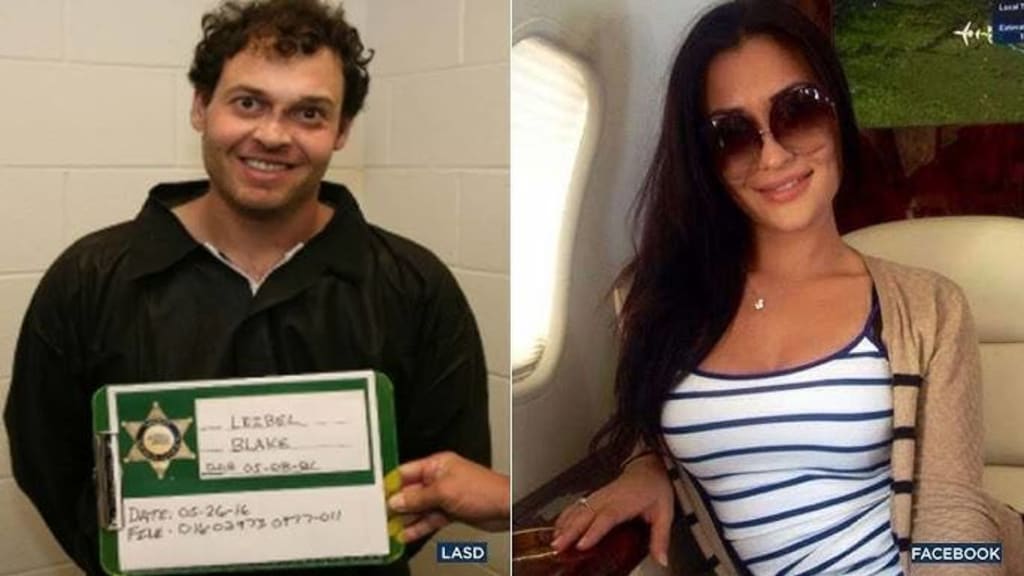
In May 2016 a shocking and deeply disturbing crime unfolded in Los Angeles, leaving the local community and the wider public grappling with the brutal death of 30-year-old model Iana Kasian Kasian lived in a Hollywood-area home with her fiancé, graphic novelist Blake Leibel who would later be identified as her killer.Kasian’s body was discovered inside the couple’s residence in Los Angeles after her mother, who had been unable to reach her, contacted authorities and requested a welfare check. When officers arrived at the property, they encountered a scene that prosecutors would later describe as exceptionally violent. Leibel was present at the home and was taken into custody at the scene.
An autopsy revealed the extent and brutality of the attack. According to the coroner’s report, Kasian had suffered catastrophic and deliberate injuries. She had been scalped, with only small portions of her scalp remaining at the back of her neck. Large sections of the right side of her face were missing, including her right ear and part of the area extending down toward her jawline. Investigators found pieces of flesh, her ear, and her scalp scattered around Leibel’s bedroom and inside a trash bin.
One of the most disturbing aspects of the case was the medical determination that Kasian did not die immediately from the attack. The coroner concluded that she had survived for at least eight hours after the initial assault. This finding would become a central and emotionally powerful element of the prosecution’s case, illustrating the prolonged suffering she endured before her death.
Authorities were alerted only after Kasian’s mother grew concerned about her daughter’s welfare. Her request for a police check ultimately led officers to the home and to the discovery of the crime. Leibel was arrested at the scene without incident and would later face charges for Kasian’s murder.
During court proceedings, prosecutors painted a portrait of a man with deeply disturbing violent tendencies. They argued that Leibel’s fascination with extreme violence was reflected in the graphic novels he created. According to the prosecution, his work contained graphic and grisly imagery depicting murder and brutality, and these fictional portrayals mirrored, in disturbing ways, the real-life crime he would later commit.
One particularly notable image highlighted by the prosecution came from Leibel’s own work. It showed a hand dripping with blood, accompanied by the caption: “In the end we ALL become monsters.” Prosecutors argued that the imagery and language in his creative projects offered insight into his mindset and an apparent preoccupation with violent themes. While the defense challenged the relevance of fictional material to real-world actions, the prosecution maintained that the content illustrated Leibel’s fixation on gore and extreme violence.
The trial focused heavily on the physical evidence recovered from the home, the condition of Kasian’s body, and the findings of forensic experts. The presence of body parts in multiple locations within the bedroom and in the trash was used to support the argument that the killing was not accidental or impulsive, but instead involved prolonged and deliberate actions after the initial assault. Medical testimony regarding the duration of Kasian’s survival following the attack further strengthened the prosecution’s case that the crime involved sustained violence.
The emotional weight of the case was also carried by the circumstances under which Kasian was found. Her mother’s call for a welfare check underscored the sudden and devastating nature of her disappearance, transforming an ordinary concern for a loved one into the discovery of a horrific crime scene.
Throughout the proceedings, prosecutors emphasized the contrast between the public image of the couple and the violent reality uncovered inside their home. Kasian was described as a young woman with a career in modeling and a future she was building alongside her fiancé. Leibel, meanwhile, was presented as a creative professional whose artistic output had increasingly centered on dark and graphic subject matter.
Ultimately, the jury found Blake Leibel guilty of Kasian’s murder. The court sentenced him to life in prison without the possibility of parole, ensuring that he would spend the remainder of his life behind bars.
The case of Iana Kasian stands as one of the most harrowing domestic homicide cases in recent Los Angeles history. Marked by extreme violence, prolonged suffering, and deeply unsettling evidence, it continues to be remembered as a tragic reminder of how hidden brutality can exist behind seemingly ordinary lives—and how devastating the consequences can be when that violence finally comes to light.
About the Creator
Keep reading
More stories from Kure Garba and writers in Criminal and other communities.
The Wrongful Conviction of Lynn DeJac
Start The case of Lynn DeJac stands as one of the most disturbing examples of wrongful conviction in modern American criminal justice—and also one of the most powerful demonstrations of how DNA profiling can uncover the truth years after a verdict has been sealed.Lynn DeJac was an American woman living in **Buffalo**, where she was raising her teenage daughter, **Crystallynn Girard**. By 1993, Lynn was in a troubled relationship with her boyfriend, **Dennis Donohue**. Their relationship would become central to a case that would eventually expose serious failures in police investigation and courtroom standards.
By Kure Garbaa day ago in Criminal
At My Wits’ End
Life is about taking out the trash and calling it trash because you have every reason to. It wasn't meant to be linear, they say. But the times you tried to make it straight led to problems, and you didn’t have the tools to put any of it to use. You don't put your right shoes on the right feet; you put the left shoes on the left feet. The grey hardened slab will trip you up anyway.
By Caitlin Charlton4 days ago in Humans



Comments
There are no comments for this story
Be the first to respond and start the conversation.