
The Secret of the Final Signature
Unraveling the Mysteries of Suicide Notes

In the shadowy realm of hidden crimes, where despair collides with deception, and fear intertwines with forgery, lies a tale that ignites curiosity and terror alike: the suicide note. Imagine words scrawled in someone's handwriting, brimming with farewells and pain, serving as nothing more than a veil concealing a meticulously planned murder. Is it a genuine cry from a shattered soul, or a forced dictation under the glint of a knife, or perhaps a masterful imitation from a criminal's hand? In this article, we'll plunge into the depths of this scientific enigma, exploring how forensic experts unveil the truth through the strokes of a pen, the whispers of the soul, and the secrets of ink. We'll journey through a thrilling world of analyses, where every tremor in a letter becomes evidence, and every signature a silent witness. Are you ready to lift the curtain?
Science Plays Detective: Three Weapons Against Deception
The investigation into suicide notes begins like a gripping detective story, but it relies on science rather than intuition. The goal? To distinguish between three chilling scenarios: the genuine suicide, where the note springs from a free will steeped in despair; the dictation under threat, where the victim is compelled to write amid waves of terror; and the complete forgery, where a perpetrator mimics the handwriting to fool everyone. To achieve this, experts blend three mesmerizing fields:
1. Handwriting Analysis: Here, the script itself turns into the eyewitness. Experts scrutinize the pressure on the pen, the vibrations in the letters, and the slant of the lines, as if decoding a secret language that mirrors the psychological state. Imagine how a faint pressure screams "despair," while a heavy one whispers "fear"!
2. Psycholinguistic Analysis: This dives deep into the words themselves. Are the phrases personal and overflowing with emotions, or generic and contrived? Here, vocabulary and style reveal if the writer is speaking from the heart or echoing imposed words.
3. Technical Examination: Using advanced chemical techniques, they inspect the ink and paper to expose whether the note is fresh or aged, authentic or fake. Tools like GC-MS (Gas Chromatography-Mass Spectrometry) transform the page into a crime canvas, where every molecule is a clue.
This magical triad isn't just tools; it's a shield against misinformation in courts, turning doubt into certainty and preventing criminals from escaping their deeds.
Signs of True Despair: A Note That Weeps Blood
In a genuine suicide case, the note becomes a mirror to a broken spirit, filled with the tragic thrill of final moments. Picture someone gripping the pen with a trembling hand, their hopelessness seeping into every character:
- Faint Stroke Strength: The lines are pale and broken, as if energy drains with each word. This isn't mere physical weakness—it's a reflection of psychological surrender, where the writer loses the will to live... and even to write forcefully.
- Irregular Letter Forms: Letters incomplete, sizes varying wildly, as if the mind scatters between memories and agony. This loss of control evokes pity, yet it's powerful evidence of severe depression.
- Downward Slanting Lines: The rows cascade toward the abyss, symbolizing psychological decline. Ever heard of handwriting telling a story of despair? Here, it happens literally!
- Tremors and Interruptions: The writing is slow, hesitant, with muscular tension making the script quiver like a leaf in a storm. And the signature? Often truncated or radically altered, as if the person loses their identity in that final instant.
As for the content, it's intensely personal: warm apologies, heartfelt farewells, wills that touch the soul. Words saturated with emotion, making the reader feel the pain as if living it.
Under the Glare of Threat: A Note That Screams Fear
Now, let's shift to a more electrifying and suspenseful scenario: dictation under duress. Envision a trapped victim, forced to write under a criminal's gaze, heart pounding madly. Here, the note transforms into a muffled scream:
- Intense, Convulsive Pressure: Unlike the genuine weakness, the writer presses hard, as if the pen becomes a weapon against the horror. This tension builds suspense: Will they escape or succumb?
- Sudden Pauses and Shakes: The writing halts abruptly, spaces erratic, strange spelling errors. These are signs of confusion, as if the writer is sending covert signals to the outside world.
- Absence of Personal Touch: The text is generic, void of emotions, packed with bizarre justifications or fabricated confessions. Words that don't belong to the writer but to the threatener, turning the note into a puzzle awaiting resolution.
This type evokes real terror, reminding us that crime might be closer than we think.
The Art of Forgery: A Note That Deceives the Eye... But Not Science
As for complete forgery, it's a wicked artistic masterpiece, where another person attempts to mimic the script. But science exposes the trick in a thrilling way:
- Mechanical Imitation Attempt: Under the microscope, pauses and hesitations appear, as if the forger is painting a fake masterpiece. The pressure inconsistent, letter angles differing from the original.
- Lack of Psychological Marks: The text seems natural, but misses the despair or tension. And the signature? Often forged separately, like a late addition.
- Chemical Revelation: The ink doesn't match the timeline, unveiling the fraud like a magician exposing his sleight of hand.
The content is generic, mismatched with the victim's personality, making the discovery a moment of triumphant thrill.
Investigation Steps: A Thrilling Scientific Journey
To uncover the truth, experts follow meticulously plotted steps like an adventure tale:
1. Gathering Comparison Samples: From the victim's diaries and signatures, like a treasure map.
2. Microscopic Examination: Under the comparison microscope, revealing minute differences like a magnifying glass for secrets.
3. Quantitative and Chemical Analysis: Measuring pressure, angles, and scrutinizing ink with tools like HPLC, to pinpoint time and materials.
4. Linguistic Analysis: Comparing vocabulary to the victim's usual style.
5. Conclusive Report: Is it genuine suicide, coercion, or utter fake?
Conclusion: The Voice of Truth in Paper's Silence
At the end of this exhilarating journey, we realize that examining suicide notes isn't mere science—it's an art that safeguards justice. By merging analyses, we can expose true despair, suppressed fear, or cunning deceit. Imagine how many crimes have been unveiled this way, and how many souls found peace through justice! Will you now look at any signature differently? In a world brimming with secrets, science remains the sword that slices through doubts, granting voice to those silenced forever.
About the Creator
Reader insights
Nice work
Very well written. Keep up the good work!
Top insight
Expert insights and opinions
Arguments were carefully researched and presented
Keep reading
More stories from Ahmed Fouda and writers in Criminal and other communities.
The Trembling Writing
Imagine if your pen betrayed you, dancing a dance of fear across the paper, revealing secrets you never intended to spill. This isn't a scene from a thriller novel, but a stunning scientific reality: handwriting isn't just ink on paper—it's a mirror to a turbulent soul. In the world of hidden crimes and secret conspiracies, your handwriting becomes a silent witness to coercion and threats. Have you ever wondered how forensic experts can read between your lines, uncovering whether you wrote freely or under the sword of terror? In this article, we'll dive deep into the brain and body, unraveling the physiological and psychological mysteries, and showcasing artistic evidence that turns writing into a thrilling criminal clue. Get ready for an exhilarating journey where science meets suspense, and ink meets panic!
By Ahmed Fouda5 months ago in Criminal
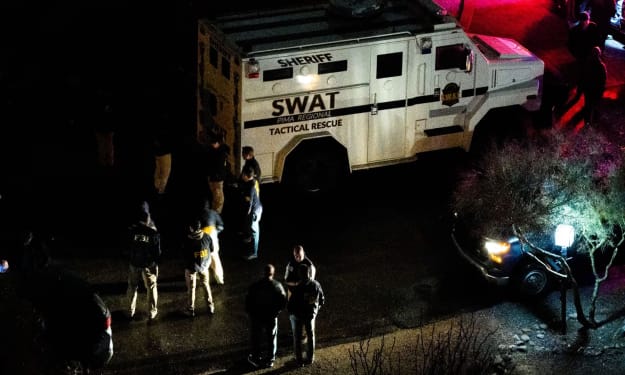
SWAT Raid Near Nancy Guthrie’s Home Leads to Three Detentions
Three individuals were detained late Friday night after a coordinated SWAT operation unfolded in a Tucson neighborhood just miles from the home of missing 84-year-old Nancy Guthrie, marking one of the most significant developments in the investigation since her disappearance nearly two weeks ago.
By Lawrence Lease2 days ago in Criminal
The Man Who Returned the Wallet
The wallet lay half-hidden under a thin layer of dust near the curb. Amir noticed it as he locked the shutters of his small convenience shop late one evening. At first, he considered leaving it. The city was unforgiving; minding your own business was sometimes the only way to survive. But the wallet’s weight, its slightly worn leather, and the sight of a photograph peeking from a corner made him pause. The photograph showed a young girl, smiling at the camera, her joy striking in its innocence. Something about it pulled Amir toward responsibility.
By Sudais Zakwan7 days ago in Criminal


Comments
There are no comments for this story
Be the first to respond and start the conversation.