Art
🎹 A Moment of Romantic Grandeur: Alex Brachet’s Live Chopin from Marseille
In an age where many studio recordings chase technical perfection, it’s always refreshing—sometimes revelatory—to hear a pianist embrace the raw beauty and fleeting imperfections of live performance. Such is the case with French pianist Alex Brachet’s new release: a concert recording of Chopin’s Andante Spianato and Grande Polonaise Brillante, Op. 22, captured live at Marseille’s Théâtre La Criée.
By ZOFIA MAJEWSKA10 months ago in Critique
Why is the iPhone so popular all over the world?
Year after year, Apple Inc., one of the most valuable tech companies in the world, maintains its dominance in the smartphone market. Apple iPhones continue to top customer wish lists despite the market's plethora of competitors, and with good reason. However, what precisely makes Apple phones so popular, and why do they frequently cause internet rushes and long lines with each new release?
By jakir hossain10 months ago in Critique
Echoes in the Corridors of Time
I’ve always wondered if Time watches us the way we watch the skies, silently observing, never interfering, yet forever altering the landscapes within us. The past and the future sit side by side, whispering secrets I strain to hear, wrapped in threads of longing and echoes of forgotten laughter.
By Rukka Nova10 months ago in Critique
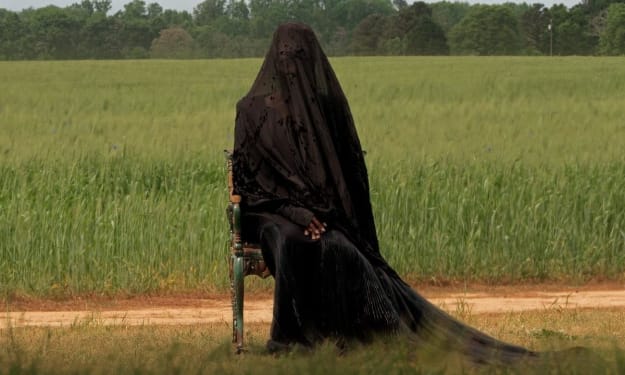
The Woman in the Yard Movie Review: a different kind of horror story. AI-Generated.
Jaume Collet-Serra's latest horror film, The Woman in the Yard, offers a chilling premise but struggles to maintain its momentum, leaving audiences with mixed feelings about its execution. The movie, released on March 28, 2025, stars Danielle Deadwyler as Ramona, a grieving widow navigating the aftermath of her husband's tragic death while caring for her two children in an isolated farmhouse.
By Ninfa Galeano10 months ago in Critique
Snow White 2025: Balancing Woke Themes with Classic Storytelling – A Review
The 2025 version of Snow White, to be fair, Disney's live-action remake of its first animated picture, has received mixed reviews from the audience. The remake tried its best to be accepted as a feminist film and one that promotes woman empowerment while balancing the old and the new. I watched the film with a grain of salt and kept my logical mind aside—at least, I tried to! However, I could only fathom the discourse of its nurture to a certain extent. In this review, I go deeper into the intricacies of empowerment, fantasy and the performances the film encompasses.
By Hridya Sharma10 months ago in Critique
Chapter II: The Optics of the Soul
The gallery smelled of varnish and dust, a kind of hideout for creative things. Ivan Nikolayevich stood still in front of the Magritte painting, *The False Mirror*. He felt like his fingers had been unwittingly strumming some invisible instrument. The eye in the painting was huge and never blinked. The swirling blue iris seemed like the sky overhead filled with clouds and completely unsure about answering questions. Encapsulated in the glass was Ivan's whirling stream of consciousness; he couldn't help but wonder if this eye was a portal, or if just the opposite was true, another trap entangling him in another dubious reality. He cycled through the question- is it more advantageous to know a real sheeple world, or to wish it to be something else entirely? Did it really even matter? He could see his own tired, bloodshot eyes in the glass and questioned what person he was in relation to the artwork engulfed in both separate mirrors. There lay two Ivans, one searching for dream awareness and another person desperate to meet the day, the absolute vacant spirit.
By LUCCIAN LAYTH10 months ago in Critique
Fast and Dirty Editing - Pre-Prepared, Pre-Packaged Pleasure
So I thought as a last entry for the Self-Editing Epiphany Challenge, I'd partake in what I am calling "Fast and Dirty Editing". What do I mean by "Fast and Dirty Editing"? Well, rather than drill down into the dos and don'ts of writing poetry, or worry about the format (aside from any formatting rules that need to be applied) I am going to take an existing piece I wrote for the Tautogram challenge, but published it too late to be accpeted for the challenge, from a couple of years ago. I am then going to decimate it, without labouring over it too much, and go through the changes as I make them in this critique.
By Paul Stewart10 months ago in Critique
Beauty In The Mess
When I write, I usually tend to type the whole thing up on my laptop, and then make passes over the same document to edit. As a result, I am not in the habit of keeping my rough drafts. For this prompt I thought, where's something where I've left behind evidence of the process itself , both the beauty- the final product- and the mess that final product wouldn't exist without? One is not possible without the other, but it took some searching to find evidence of the latter anywhere.
By Raistlin Allen10 months ago in Critique
HERMANN HESSE : SELF- UNDERSTANDING AND ENLIGHTENMENT - ALEXIS KARPOUZOS
Hermann Hesse’s works often explore deep philosophical themes and the human quest for self-understanding and enlightenment. His writing draws heavily from Eastern philosophy, Jungian psychology, and Western existentialism, creating a rich tapestry of ideas that challenge and inspire readers. Hermann Hesse’s philosophical exploration in his works offers profound insights into the human condition, emphasizing the importance of personal experience, the integration of dualities, and the interconnectedness of all life. His writings encourage readers to embark on their own journeys of self-discovery, recognizing that enlightenment is a continuous, evolving process. Here, we’ll examine some of the key philosophical elements present in his most famous works.
By alexis karpouzos10 months ago in Critique
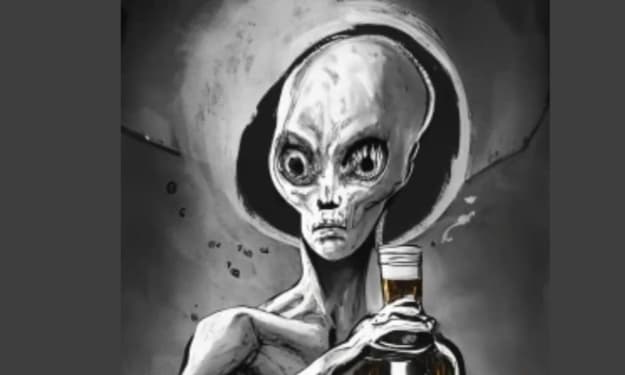
Getting Legless With Drunk Aliens - Editing A Winning Poem
For this entry into the Self-Editing Epiphany, I wanted to do something a little strange. It’s easy, in some ways, to look back at pieces we know were flawed because they didn’t get well received or didn’t place in a challenge or competition. But what about those pieces that did have success—ones that not only placed in a challenge but came first place? Could any editing, especially with time passed and experience gained since the piece was published, improve upon a winning poem?
By Paul Stewart10 months ago in Critique