
It’s Creating Its “Own Life” — Solar Plant in America Behaves in Unexpected Ways After Record Output
When Renewable Energy Systems Start Acting Smarter Than We Expected
⚡ A Record-Breaking Moment Turns Into a Mystery
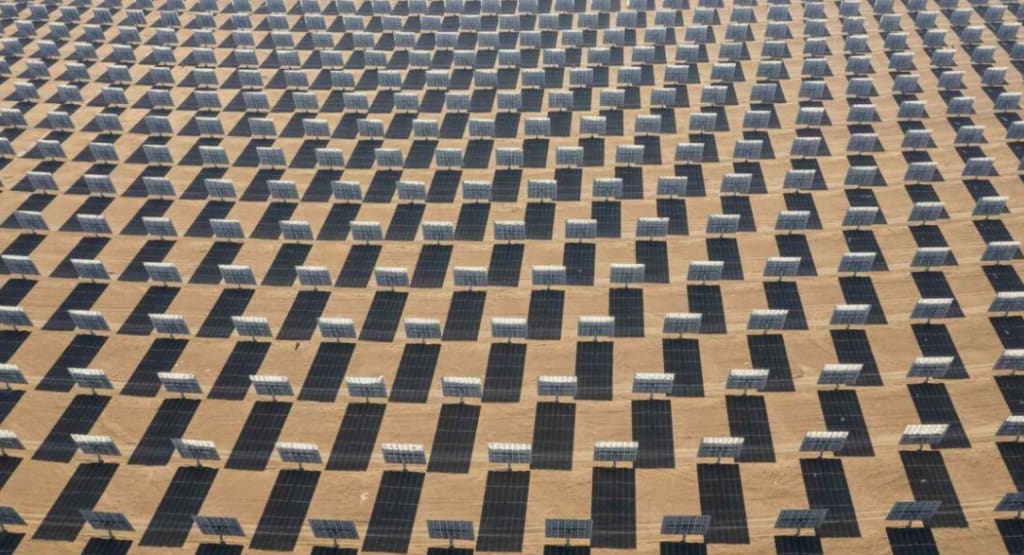
In early 2026, a large-scale solar facility in the United States stunned energy analysts by reaching record levels of electricity production during peak sunlight hours. The achievement alone would have been headline-worthy. But what happened next captured even more attention.
Engineers monitoring the plant reported unusual system behavior after the record output was achieved. Automated systems began adjusting power flows, storage cycles, and panel angles in ways that appeared more adaptive — almost autonomous — compared to previous performance patterns.
Some observers jokingly said the plant was “creating its own life.”
Of course, the facility isn’t alive. But the incident highlights how modern renewable energy plants, powered by artificial intelligence and advanced grid software, are becoming far more dynamic than traditional power stations ever were.
🏭 How Modern Solar Plants Actually Work
Large solar farms are no longer just rows of static panels. Today’s facilities combine:
Smart inverters
AI-based optimization systems
Weather prediction software
Battery storage networks
Grid-balancing automation
Companies such as NextEra Energy and First Solar have invested heavily in making solar farms smarter and more responsive to real-time demand.
Unlike coal or gas plants that generate steady output, solar energy fluctuates with sunlight. To manage this variability, modern plants use machine learning systems that constantly monitor:
Sun intensity
Cloud movement
Grid demand
Storage capacity
Transmission constraints
The goal is simple: maximize output while maintaining grid stability.
🤖 What “Unexpected Behavior” Really Means
After the plant hit record production, software systems reportedly began redistributing excess energy to battery storage earlier than expected. It also adjusted panel positioning more aggressively to maintain peak performance during shifting cloud cover.
In traditional plants, such adjustments would require manual oversight. But here, algorithms handled the optimization in real time.
Engineers noted that the plant’s AI seemed to “anticipate” demand spikes based on historical grid data — adjusting output patterns before demand fully materialized.
That predictive efficiency gave the appearance of independence.
But it wasn’t life.
It was advanced automation working at scale.
🔋 The Role of Energy Storage
Battery storage is where the real transformation happens.
Companies like Tesla have expanded grid-scale battery projects that store surplus solar energy during the day and release it during evening demand peaks.
When a solar plant produces record energy, the challenge becomes what to do with the excess.
Instead of wasting it, modern systems:
Charge batteries
Redirect power to high-demand regions
Temporarily reduce panel intake to prevent overload
This constant balancing act can make the system look “alive” because it continuously adapts.
In reality, it’s responding to millions of data points per minute.
🌎 A Glimpse of the Future Grid
The U.S. grid is gradually shifting from centralized fossil-fuel plants to decentralized renewable systems. Agencies like the U.S. Department of Energy have emphasized the need for smart-grid technology to handle renewable growth.
In a smart grid:
Power flows in multiple directions.
Homes with rooftop solar feed energy back into the system.
Batteries discharge during shortages.
AI predicts demand fluctuations.
When all these components communicate instantly, the entire network behaves dynamically.
To observers unfamiliar with grid engineering, it can feel almost organic.
But it’s the result of decades of digital infrastructure development.
📈 Record Output: Why It Matters
Breaking output records isn’t just symbolic.
Higher solar productivity means:
Reduced reliance on fossil fuels
Lower greenhouse gas emissions
Greater energy independence
Improved grid resilience
If solar plants can consistently operate at high efficiency with intelligent automation, they may outperform earlier projections.
That strengthens the case for renewable investment — not only environmentally, but economically.
Solar energy costs have fallen dramatically over the past decade. Efficiency improvements compound those gains.
⚠️ The Concerns
Of course, increased automation raises valid questions.
As systems become more AI-driven, oversight becomes critical. Engineers must ensure:
Algorithms don’t destabilize the grid
Cybersecurity protections remain strong
Human operators can override automated systems if needed
The more interconnected the grid becomes, the more complex its security demands grow.
Energy infrastructure is national infrastructure. It cannot afford vulnerabilities.
🧠 Why It Feels “Alive”
Humans naturally describe complex systems using biological metaphors.
When something adapts, responds, predicts, and optimizes continuously, we associate it with life-like behavior.
But solar plants do not think.
They calculate.
They don’t evolve.
They execute programmed learning models.
Still, the fact that energy systems now operate with such fluid intelligence marks a turning point.
For decades, power generation was rigid and centralized. Now it’s flexible and data-driven.
That shift feels revolutionary.
🔮 The Bigger Energy Transformation
This event is less about one plant and more about a broader transformation.
Renewable energy is no longer experimental. It’s becoming dominant.
As more facilities integrate:
AI optimization
Advanced battery storage
Real-time weather analytics
Decentralized grid coordination
The grid itself begins functioning as a networked ecosystem rather than a simple supply chain.
And ecosystems are dynamic by nature.
🏁 Final Thoughts
The idea that a solar plant is “creating its own life” makes for an exciting headline. But the reality is both more technical and more impressive.
What we are witnessing is the rise of intelligent infrastructure.
When a solar facility hits record output and then autonomously optimizes its performance, it demonstrates how far renewable technology has advanced.
The future grid will not look like the past.
It will be smarter, faster, more responsive — and more sustainable.
And while it may feel alive, what truly powers it is something very human:
Innovation.
About the Creator
The Emerald Jewel in the Cosmic Tapestry
Earth, our vibrant home, is far more than just a planet; it is a meticulously crafted masterpiece, an emerald jewel suspended in the cold, vast expanse of the cosmos. It’s a place where the improbable coalesces into the miraculous, where every element, from its celestial dance to its intricate internal rhythms, conspires to foster and sustain an astonishing diversity of life. The designation "miracle planet" isn't hyperbole; it's an understatement of a cosmic ballet performed with breathtaking precision.
By Being Inquisitiveabout 6 hours ago in Earth
The Cave Part 6
If you have ever heard a tale about yourself that you cannot remember and doubtless think is made up, you will know how I felt when Tharkin related all that the eagle had seen of me before my memories were scattered. Of far distances and traveling companions that I did not recall, camping out under the stars and making our way to the mountains with deliberate purpose. The great bird had lost contact with my party once we entered the forests, and the seven other members were not seen again by him or his brethren since.
By Jamye Sharp7 days ago in Chapters



Comments
There are no comments for this story
Be the first to respond and start the conversation.