Latest Stories
Most recently published stories in Earth.
What is Evolution For?
Author's preface: This story was originally spiked by Vocal's censors and not approved for publication due to "religious content" As I have pointed out over and over again Vocal's censorship policies are absurd, unjust, and unsustainable and they must end eventually. However, until that day, if one wants to continue publishing here, one must abide by the will of the censor. I have "adjusted" the original article to remove any "religious content", or at least, I think I have. It is impossible to know for certain as what exactly qualifies as "religious content" is wildly debatable which is an example of just one of the reasons Vocal's censorship policies are unjust. In any event, read on and see if you can spot the altered content.
By Everyday Junglist5 years ago in Earth
Why do different animals have different lifespans ?
Have you heard the name of microscopic lab worm ‘C. Elegans’ ? This organism lives only for few short weeks. Bowhead whale, on the other hand, may live up to 200 years. Why are these lifespans so different? What does the term ‘Aging’ mean anyway? Let’s learn about these.
By Tanvir Rashik Shafim 5 years ago in Earth
The flower garden
Pink, gold, blue, orange, they all whirl around me, enthralling me, demanding my undivided attention to their dazzling show. I tumble and move and sway and dive and land on the plush grass beneath me, solid, supportive, and squeeze my eyes shut. Vivid red spots dance before me as my chest heaves, gasping in the heady smell of earth.
By Azana Mackali-Cerasi5 years ago in Earth
Why We Should Consider Mangrove Forest?
Before the Jurassic Era, mangroves appeared on Earth. That is the beginning of the great epic Mangrove drama, which encircles the history of a vast species. It was only at the time of Spanish Colonization, this tree was dragged to the great sufferings. The Spanish cut down these trees by thinking these are wastelands and the worst fact is that they didn’t even try to plant any other trees or utilize these lands. But years later we realize the truth, that it was not a waste, but our savior. Mangroves, one of the fantastic ecosystems, have a crucial role in our biodiversity. What will happen in this scene of Mangrove Drama? Let us examine the factors and let us predict the future.
By A S Akhilesh5 years ago in Earth
Just A Swimmin' In the Ocean
Have you ever seen the sunrise from under the water? It's pretty cool, you know...when I'm awake to see it. The current of the ocean sways and grabs the tendrils of sunlight, pulling them down in rainbowed bands of gold and pink and orange. It looks like mermaid's hair threaded through the first couple feet of water.
By L. M. Williams5 years ago in Earth
The Swim
The Swim Once in the water the four of us Emory, Tim, Josh & I line up about five foot abreast of each other, this will make it easier during the 5 mile swim back to shore to keep communication with each other and the boat, to allow us to watch for signs of trouble from ocean predators, and to watch each other in case of exhaustion.
By Christopher Chance5 years ago in Earth
Land of Midnight sun
Midnight Sun is a natural phenomenon that occurs during the summer months in areas north of the Arctic Circle and south of the Antarctic Circle, where the sun is always visible to local people after midnight. At higher altitudes (60 degrees north) the sun sets at a few degrees. Below the circle, as in northern Norway and Iceland, the sun appears to burn in the middle of the night after sunset.
By Sita Dahal5 years ago in Earth
Andes mountain
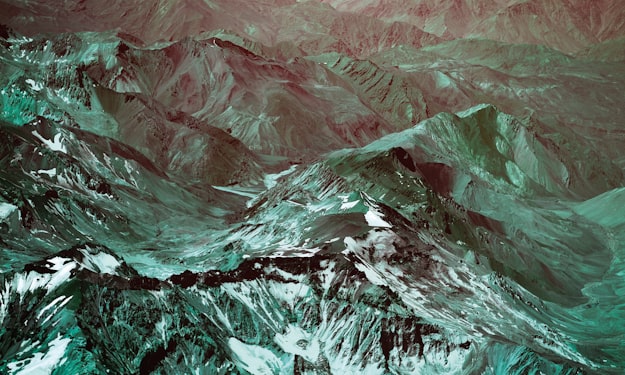
Garzone and Andrew Leier, associate professor of Earth and Ocean Sciences at the University of South Carolina, used new temperature recording techniques in two different studies of different Andean regions to determine whether rapid eruptions were normal, without mountain formation in the region. Garzone worked in the southern Altiplano and collected meteorological records that preserved ancient soils in low-lying areas near the sea, where temperatures remained warm throughout the region's history, and at higher altitudes, where they cooled as the range of mountains rose. He and Lyre have strong isotope evidence for many of the effects of this increase in Bolivia's central Andes, which focus on the binding behavior of carbon and oxygen isotopes in calcite minerals from rainwater, and their effects are similar.
By Sita Dahal5 years ago in Earth