Latest Stories
Most recently published stories in Earth.
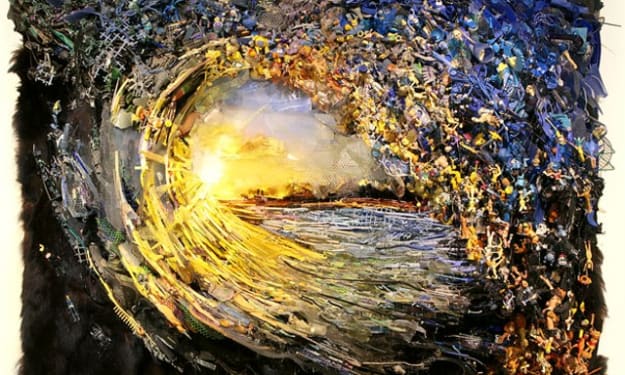
Trash Art
Reusable period panties, remembering our reusable bags at the grocery store, shutting off water between soaping and rinsing, keeping unnecessary lights off, wearing pants a few extra times before washes, buying sustainable products, walking the extra few steps to the recycling, unplugging electronics in disuse, swapping out for energy saving appliances, and on and on and on. There are many ways to slash our carbon footprint. Some methods fulfilling while others can feel downright nerve wracking especially here in the U.S. where recycling and consumption reduction is not a social precedent. It can even be disheartening when you have gone that extra mile and news still tells you it's not enough. We are still burying ourselves in trash and suffocating ourselves in carbon. Hope and change always start on the smallest of levels, though. It starts with the individual and spreads like an idea until it becomes a movement. So how do we turn a ripple into a wave? I think the simple answer is Trash Art.
By E. J. Strange5 years ago in Earth
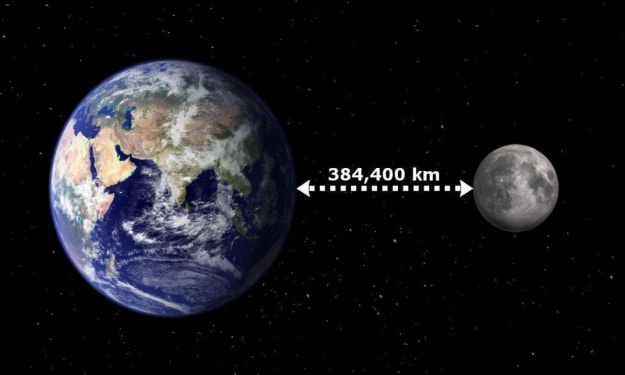
The distance from Earth to the Moon
The distance between the Earth and the Moon is not constant, but varies over the course of the Moon’s orbit around the Earth, which is not a perfect circle but an ellipse. The point at which the Moon is furthest from Earth is called the apogee, and the nearest point is called the perigee. These points do not coincide with the phases of the Moon (i.e. when there is a full moon, or crescent moon, etc), and they vary from year to year.
By John Welford5 years ago in Earth
“Untanked“
I’ve always found the ocean to be a hidden treasure, a place of wonder. A never ending maze filled with surprises. I’ve always wanted to explore the deep blue sea and all of the creatures that call the water their home. I can admit that even though I admire the creatures of the sea, being in close contact with them seems extremely scary. The aquarium is the closest place that would allow me to see the creatures up close. I remember when I went and got a chance to see the creatures, I wasn’t the same person I was when I came in. Seeing all of the creatures and their relationship with the water made me so intrigued. I remember choosing to take pictures of the jellyfish specifically. There were so many interesting animals that I deemed as beautiful, whether it was the patterns on their skin, or their eyes, or their fur. However, the other animals' looks were what stuck out to me, they were just sitting, miserable, with cute faces. I remember looking out and seeing the jellyfish, doing as they pleased. They weren’t putting on shows, they had no eyes to distract the viewers, they had no fur or even cute faces, to be exact they had no faces. The characteristics that the jelly fish displayed was what captured me. It reeled me in and I had no choice but to photograph them. Some were fast, others slow, some liked to be in the crowd, others shy. As I snapped the jellyfish I longed for their freedom. Though the tank was humongous, I felt that there wasn’t enough space for them to be free and explore. I walked up to the glass because the jellyfish reminded me of myself. They too would not get to see the ocean and all of its wonders because they were stuck in the tank and I was stuck with my fear of getting stung by one of them. I saw their beauty and so I decided to capture it so I could remind myself to take advantage of all the opportunities I had at hand, thinking maybe one day I’ll venture out in the ocean. In that moment I no longer saw them as creatures that would harm me, I saw them as peaceful interesting creatures. The process of me taking the picture was simple, but I believe the picture showcases how complex the jelly fish are. They are not just beings in the water, but they are creatures who travel together, who have different parts to them and I think that’s what makes them exceptionally wonderful. I remember feeling a splash of joy along with guilt throughout my experience . I loved being able to see the animals that I would have ran from in person up close and personal but that feeling of wanting them to be able to explore too came back. I don’t think animals should be put on display, they should be free and able to roam around, not fearing the glass that contains them. But then I felt confused because I enjoyed seeing them. I enjoyed learning about them and learning about ways to protect the ocean. I realized that in order to help make the ocean better, some animals would have to give up their freedom in order for the animals in the ocean to be free, so that we can learn how to help them in the wild. Then I realized that the animals in the aquarium were somewhat heroes and the good thing about it was that maybe the animals behind the glass didn’t even know that they were on display, but I knew and that’s what bothered me. So I wanted to capture their beauty and show their beauty to other people, because even if the jellyfish were put into tanks, at least they were safe. Safe from the evils of humanity. Safe from all kinds of pollution, they were safe and they were seen. By capturing their picture, I could show that they aren’t just creatures from cartoons, but real animals, animals who are heroes, animals who make the seas interesting. They are complex creatures that deserve to be seen. When I took the picture, I didn’t think to wait until they were in a good or cool position, I wanted to capture them as they were. I wasn’t looking to find beauty or something magical, I wanted to capture the jellyfish as is, in their natural existence, their natural habitat. I didn’t care if the shot looked amazing, I wanted to capture them as if they were in the ocean free and happy. No glass, not on display, “untanked" if you will. By capturing them this way, I could imagine a peaceful world with a clean ocean, filled with jellyfish. So the process was heartbreaking, I felt as if I went through hell. My heart yearned for the animals, because I knew that even though I could make it look like they were in the ocean, they would still be in the tank when I left. Once I got home, I touched up the lighting a bit and then I left it how it was. There wasn’t much editing to do because it was real, a real picture that showcased the jellyfish, to once again show that though they sit in a simple picture, they are quite complex creatures that the world should see. Maybe seeing them “untanked” would show them as creatures who didn’t deserve to be in tanks. If I could get people to see them as free, then maybe having animals in their natural habitats will seem normal again and maybe just maybe one day they can be free one day, “untanked”.
By Aria Isabella5 years ago in Earth
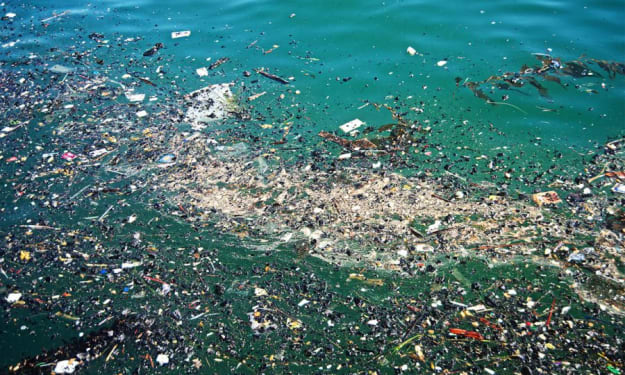
This will be the end of our kind if we don't start now.
In the late 1900s, we created more and more garbage, sewage, radioactive waste, and different chemicals. Generating these things was good for furthering our planet. But one thing we did not take into consideration was where we would put our extra waste. So we started dumping our trash in the ocean. Since the 1900s, our ocean just got worse and worse. Recently there have been people who dedicate their lives to cleaning out the salt waters. But thanks to us humans being so careless, we can never clean out our ocean. Sure, we can try removing all the waste. But after all of that, there will still be trash in our ocean. The plastic that is in the seas has broken down so much we physically cannot see it. It is a circle of trash drifting in our sea because we are downright careless with our waste.
By Ceo Of Dying5 years ago in Earth
Who's afraid of a fat-ass wombat?
First of all, let me lay my cards on the table and unashamedly declare my bias. I absolutely adore wombats (vombatus ursinus) and, until a family holiday to Tasmania, in 2017, I'd never actually encountered or seen one in the wild.
By Shirley Twist5 years ago in Earth
Do you know?
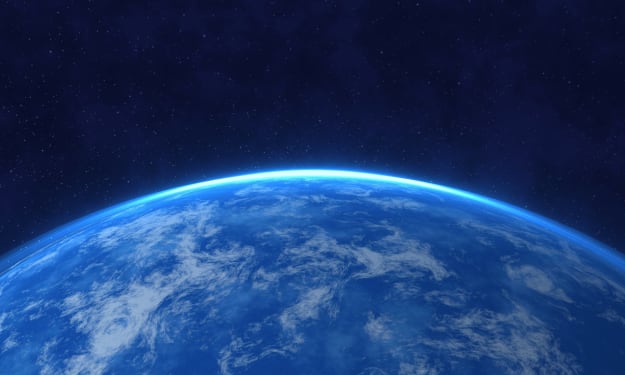
Our Earth is a very unique planet of our solar system, which gets to learn as much as it tries to learn. There are many parts on earth about which scientists have not been able to find anything till now, and one such interesting fact is that why the Earth is called a blue planet. You all know that a very large part of our planet is surrounded by water and the question comes to everyone's mind that from where did all this water come to the earth? So we will talk about this today.
By Russel Jim5 years ago in Earth
THAT’S A FUNNY LOOKING BIRD
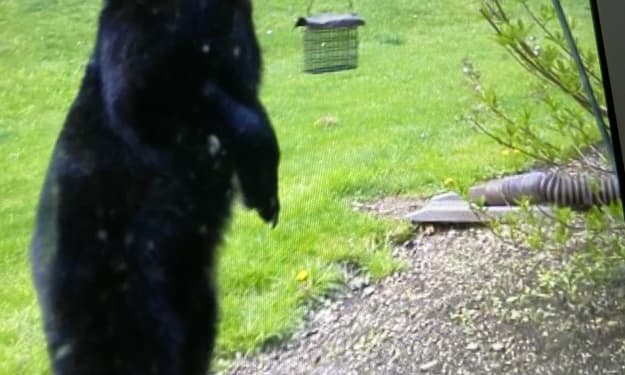
This picture was taken by my niece, Mandy Banik, in 2012 when she was home visiting her parents. This bear was enjoying a morning snack at the bird feeder, which is right outside her parents’ dining room window. Most of my family live in or near the woods in western Pennsylvania. My middle sister probably lives the furthest distance inside the woods so her family sees the most wild animals. It is not uncommon for there to be large groups of deer and turkey in her yard and maybe a bear just passing through. But normally only birds or deer stop at the bird feeder...not the bear! I guess the bear might stop at the bird feeder but it is not usually in broad daylight.
By Margie Anderson 5 years ago in Earth
The Power of Sustainable Construction Technology
Green building technology has emerged as one of the most common construction patterns. Green technology applications in architecture have far-reaching and extensive benefits, including significant advantages in modern and existing buildings.
By Louie Missap5 years ago in Earth
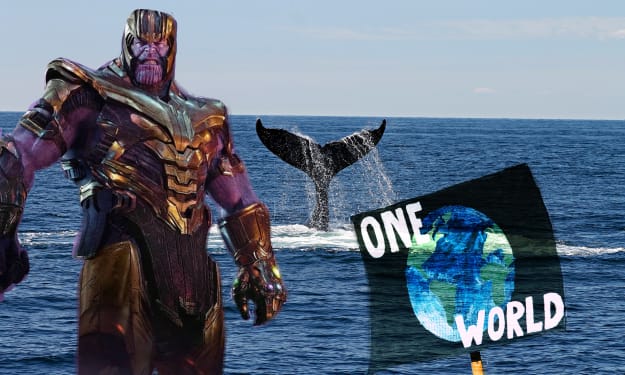
Was Thanos Right About Saving Earth?. Top Story - May 2021.
The most memorable antagonists are the ones that make you reconsider your position on an issue. They are not evil for evil's sake but operate from a moral compass that, while unpopular, is entirely understandable and at least partially agreeable. In this regard, Thanos stands out. If you are unfamiliar with the Marvel Cinematic Universe (MCU), Thanos (huge purple dude, weird chin) is an overarching villain who first makes an appearance in the first Avengers movie in a post-credits scene. His presence remains enigmatic as the heroes move from film to film, but as the universe expands, the audience is able to piece together little nuggets of information about him.
By Laquesha Bailey5 years ago in Earth