Advocacy
Steam, Not Smoke
by Futoshi Tachino In Kenya’s Rift Valley, the ground exhales. Around Naivasha, at a place called Olkaria, wells tap rock-hot water and steam that have already helped Kenya become Africa’s geothermal leader — and one of the few countries where clean, firm power anchors the grid. Recent analyses put geothermal’s share of Kenya’s electricity around the mid-40s, with some reports citing roughly 47 percent in 2024. That matters in a drought-prone region where hydropower is variable and diesel is expensive.
By Futoshi Tachino4 months ago in Earth
Tuvalu's Three-Layer Plan for Continuity
by Futoshi Tachino At high tide on Fogafale—the long, thin islet that holds Tuvalu’s capital—you can stand on the lagoon shore and see the ocean through the breadfruit trees behind you. There isn’t much “away” in a place only a couple of meters above sea level. So Tuvalu has done something extraordinary: it is building a future on three layers at once—physical, legal-human, and digital—so that Tuvaluans can keep being Tuvaluans, no matter what the water decides.
By Futoshi Tachino4 months ago in Earth
Burps, Bottles, and a Bay in Tasmania
by Futoshi Tachino On Tasmania’s east coast, the tides in Spring Bay don’t just bring boats to harbor; they feed a farm. Here, Sea Forest cultivates a native red seaweed, Asparagopsis, that—when fed in tiny amounts to cows—can throttle the methane produced in their stomachs. It’s a climate fix born of the shoreline and aimed squarely at one of Oceania’s knottiest problems: livestock emissions. In both Australia and New Zealand, agriculture is a top emitter, and enteric methane from ruminants is the elephant (really, the cow) in the room. What’s different in Tasmania is that the solution now has a retail label, not just a lab result.
By Futoshi Tachino4 months ago in Earth
How the College of Health and Environmental Sciences at Vertex University Prepares Students to Be Part of the Future of Health Professions
The College of Health and Environmental Sciences at Vertex University stands as a forward-thinking model of online health education that combines academic innovation, community impact, and technological advancement.
By Vertex University P R E S S4 months ago in Earth
the hidden danger above our heads
For decades, asbestos was considered a wonder material — durable, fire-resistant, and inexpensive. It was widely used in construction, especially in roofing sheets, insulation, and wall panels. Yet over time, this “miracle” revealed a hidden danger that continues to affect buildings today.
By אבי דילבסקי4 months ago in Earth
From Earth to Orbit: Jeff Bezos Envisions Data Centers in Space
The rapidly growing energy needs generated by the artificial intelligence (AI) is pushing data centers to the edge, literally. Today, hyperscale GPU clusters consume huge amounts of electricity and water, causing widespread local resistance and environmental concerns. According to the Data Center Watch, $64 billion in U.S. data center projects have been blocked or delayed by bipartisan opposition. These exciting infrastructure projects are facing increased push back from local communities.
By Andrea Zanon4 months ago in Earth
The Lost Nest
The Lost Nest On the edge of a quiet forest stood an old tree — tall, green, and full of life. In one of its strong branches lived a small bird named Laila. She was a tiny, cheerful bird with bright brown feathers and a soft white chest. Her nest was simple but perfect — made of twigs, soft leaves, and a few bits of grass she had carefully collected over many days.
By Wings of Time 4 months ago in Earth
"Guided by the Grid"
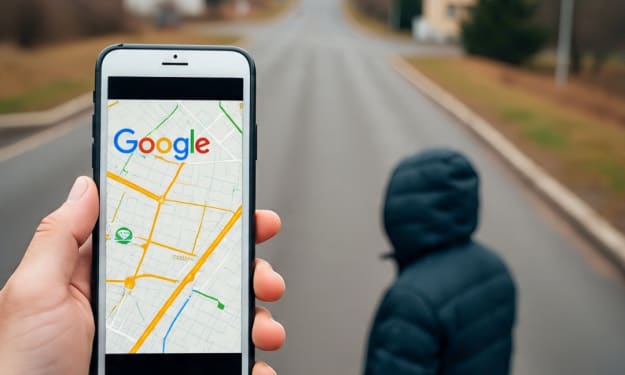
Guided by the Grid How Google Maps Helped Me Navigate Life’s Twists and Turns—One Route at a Time I used to believe that getting lost was a part of life. In fact, I was so used to it that I came to expect it—both on the road and in my personal journey. I’ve always been the kind of person who takes the scenic route, not because I want to, but because I somehow miss the turn. And in a way, that summed up how I felt in life: constantly off-track, trying to reorient myself. Then came a moment that changed how I looked at both travel and direction. It was a rainy Thursday afternoon. I had just moved to a new city for a job I wasn’t sure I wanted, in a field I wasn’t sure I belonged in. My sense of direction—both figuratively and literally—was at its lowest point. That day, I had an important meeting with a client across town. I had done my best to memorize the directions like I always had before, writing down landmarks and street names. But as fate would have it, construction blocked the main route, and I quickly found myself lost in a maze of one-way streets and unfamiliar turns. Panic set in. That’s when I finally did something I rarely trusted before: I opened Google Maps. In just seconds, the screen lit up with a blue dot—me—and a highlighted path to where I needed to go. I followed the voice prompts like breadcrumbs in a forest. "Turn right in 300 meters… Turn left onto Pine Street…" The voice was calm, even when I wasn’t. I made a wrong turn once or twice, but instead of scolding me, it recalculated. It didn’t get upset. It just gave me another path. Somewhere between recalculations, something clicked in my mind. Here I was, in an unfamiliar place, without a plan, with deadlines pressing—and yet, there was a system guiding me. A real-time compass that didn’t judge how I got off track, but simply helped me find my way forward. I made it to the meeting on time. But more importantly, I realized something vital: I didn’t have to have everything figured out. Just like the app, life has alternate routes. Detours aren’t failures—they’re just different ways of getting there. From that day on, I started relying on Google Maps more—but not just for navigation. I began applying the same mindset to my life. When things didn’t go according to plan, I stopped panicking. I learned to "recalculate." I once thought technology was cold and impersonal, but in a strange way, Google Maps became a quiet mentor. It taught me that direction isn't about never being lost—it's about having the tools to find your way again. It helped me explore new parts of the city I now call home. I found cozy cafés hidden in backstreets, parks I never knew existed, and shortcuts that saved me hours. I even discovered new hobbies—hiking trails, art spaces, food markets—all through the power of a digital map that kept showing me the way. More than that, it reminded me that movement—forward, backward, sideways—is still progress. That a delay isn’t the end of the journey. That you can always reroute. In many ways, that little blue dot became a symbol for me. Not because it always knew where I was going, but because it showed me where I was—and that was enough to begin again. So now, when friends say they’re feeling lost, I tell them my story. I tell them about that rainy Thursday, and how something as simple as Google Maps helped me find not just a building, but a bit of peace. A bit of control. And I remind them that the road doesn’t have to be straight, or smooth, or even visible. As long as you keep going—and have a guide you trust—you’ll get there. Eventually. Sometimes, life just needs a little zoom-out, a clear route, and a calm voice saying: “Recalculating…”
By Muhammad Saad 4 months ago in Earth
The Misunderstood Hero:
They hiss. They drool. They “play dead.” And most people still scream when they see one. The North American opossum—the only marsupial native to the United States—is one of the most efficient, least appreciated public-health workers in nature. While many fear them for looking “dirty” or “rabid,” opossums are disease-resistant, pest-controlling, and life-saving.
By Dr. Mozelle Martin4 months ago in Earth
The oldest known stalagmite, which dates back 289 million years, was discovered in rocks in Oklahoma.
Did you know that troglobites are organisms that only inhabit caves? Although it's not the most attractive name in the world, it seems appropriate. evokes visions of damp, chilly, and shadowy spaces where unidentified liquids, some of which have been found to be the oldest water on Earth—and people drank it!—drip from the roof.
By Francis Dami4 months ago in Earth