Climate
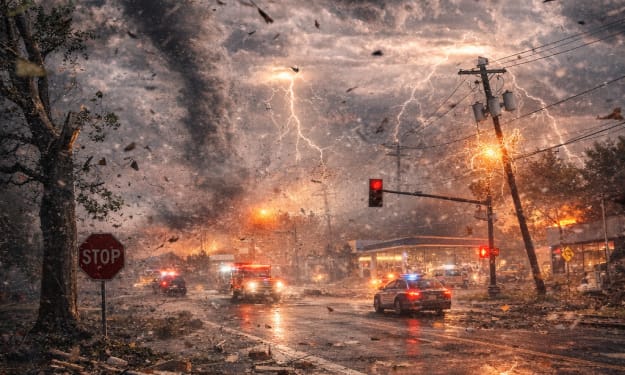
Violent Winds Could Strike Without Warning — Officials Urge Extreme Caution*
**Violent Winds Could Strike Without Warning — Officials Urge Extreme Caution** Meteorologists have issued an urgent warning as violent winds are expected to develop rapidly, posing a serious threat to public safety. Weather experts say conditions are becoming increasingly unstable, with sudden gusts capable of causing damage within minutes. Unlike typical windy days, this event is marked by unpredictability, making it especially dangerous for residents, travelers, and outdoor workers.
By America today about 13 hours ago in Earth
Earthquakes Today. AI-Generated.
Earthquakes are a daily reminder that the planet beneath our feet is constantly in motion. Today was no exception. Across different regions of the world, seismic instruments recorded a series of small to moderate earthquakes—most of them unnoticed by the general public, yet each one contributing to scientists’ understanding of how Earth releases stress along its tectonic boundaries. While major, destructive earthquakes capture headlines, the reality is that earthquakes happen every day, often dozens at a time. Today’s activity followed that familiar pattern: brief moments of shaking in some areas, subtle ground movement in others, and long strings of data flowing into global monitoring systems. A Snapshot of Earthquakes Today Throughout the day, earthquakes were detected in both well-known seismic zones and regions where shaking is less common. Coastal fault systems, subduction zones near ocean trenches, and continental plate boundaries all showed signs of movement. Most of today’s earthquakes were relatively low in magnitude, meaning they posed little to no danger to people or infrastructure. In places where earthquakes are frequent, such as parts of the Pacific Rim, small tremors are considered routine. Residents may feel a quick jolt, hear a faint rumble, or notice hanging objects sway briefly before everything settles again. Elsewhere, similar-sized quakes might go entirely unnoticed, detected only by sensitive instruments. The takeaway from today’s seismic activity is not alarm, but continuity: Earth is behaving exactly as geologists expect it to. Why Earthquakes Occur So Frequently Earth’s outer shell is broken into massive slabs called tectonic plates. These plates are constantly moving, though usually at speeds measured in centimeters per year. Where they collide, pull apart, or slide past one another, stress builds up over time. When that stress is released suddenly, an earthquake occurs. Today’s earthquakes are part of that ongoing process. Some happened along major fault lines that have been active for millions of years. Others occurred within plates themselves, caused by smaller fractures responding to distant stress changes. Each event, no matter how small, helps redistribute energy within the crust. Importantly, a day with multiple earthquakes does not necessarily signal that a larger one is imminent. In many cases, frequent small quakes actually release stress gradually, reducing the likelihood of a major rupture in the short term. What Scientists Learn From Today’s Quakes Every earthquake recorded today adds to a growing global dataset. Seismologists analyze factors such as depth, magnitude, wave patterns, and location to understand what is happening below the surface. Shallow earthquakes, even if small, are more likely to be felt by people, while deeper ones may pass unnoticed. Today’s events included a mix of both, offering insights into how stress is distributed at different levels of the Earth’s crust. Scientists also watch for earthquake “swarms,” where many small quakes occur in a concentrated area over a short period. These swarms can be linked to fluid movement underground, volcanic systems, or gradual fault adjustments. When swarms appear, researchers monitor them closely, though most fade without leading to a larger event. How Communities Experience Earthquakes Today For most people, today’s earthquakes were little more than a brief interruption—if they noticed them at all. In regions accustomed to seismic activity, daily life continues with little concern after minor shaking. Buildings designed to withstand earthquakes absorb the motion, and residents know basic safety steps by heart. In areas where earthquakes are less common, even a small tremor can spark curiosity or concern. Social media often fills with posts asking, “Did you feel that?” These moments serve as reminders that preparedness matters everywhere, not just in high-risk zones. Today’s earthquakes, while largely harmless, reinforce the importance of awareness. Knowing what to do during shaking—such as dropping to the ground, taking cover, and holding on—can make a critical difference during stronger events. Are Earthquakes Becoming More Common? A common question after days like today is whether earthquakes are increasing. The short answer is no—at least not in a way that indicates growing danger. What has increased is our ability to detect them. Modern seismic networks are far more advanced than those of previous decades. Instruments now pick up tiny earthquakes that would have gone unnoticed in the past. As a result, it can seem like earthquakes are happening more often, when in reality we are simply observing them more accurately. Today’s activity fits well within historical norms. Earth has always been active, and it will continue to be so long after human timelines have passed. The Role of Preparedness Even on a day dominated by small earthquakes, preparedness remains essential. Large earthquakes are rare, but they do occur without warning. Today’s minor tremors are a reminder to review safety plans, secure heavy furniture, and ensure emergency supplies are accessible. Preparedness is not about fear—it is about readiness. Communities that invest in earthquake-resistant infrastructure and public education recover more quickly when stronger shaking occurs. Looking Ahead As today comes to a close, seismic monitoring will continue uninterrupted. New earthquakes will occur overnight, tomorrow, and every day after that. Most will be small. A few may be felt. Very few will cause damage. Earthquakes today remind us that the planet is alive with motion beneath its surface. While we cannot stop or predict them with precision, we can understand them, respect them, and prepare for their impact. In that sense, today’s earthquakes are not just geological events—they are lessons in coexistence with a dynamic planet, one that is constantly reshaping itself, one subtle tremor at a time.
By Saboor Brohi a day ago in Earth
What’s Going On in the World Nowadays?
The world today feels louder, faster, and more divided than ever before. News travels in seconds, crises overlap, and societies are undergoing changes that once took decades to unfold. From political instability and economic pressure to rapid technological growth and shifting social values, humanity is standing at a crossroads. To understand what is truly going on in the world nowadays, we must look beyond headlines and examine the deeper forces shaping our present and future.
By shaoor afridia day ago in Earth
Tourist Killed by Elephant Previously Linked to Two Fatal Attacks at Thailand National Park. AI-Generated.
A tragic incident at a national park in Thailand has once again highlighted the dangers of human interaction with wild animals. Authorities confirmed that a tourist was killed by an elephant that had previously been involved in two fatal incidents. The case has reignited conversations about wildlife management, tourist safety, and the growing pressure on natural habitats due to tourism and human expansion.
By Aarif Lasharia day ago in Earth
Enoch Burke Case: Disciplinary Panel Members Resign in Major Blow to Efforts to Resolve Row Over Teacher’s Dismissal. AI-Generated.
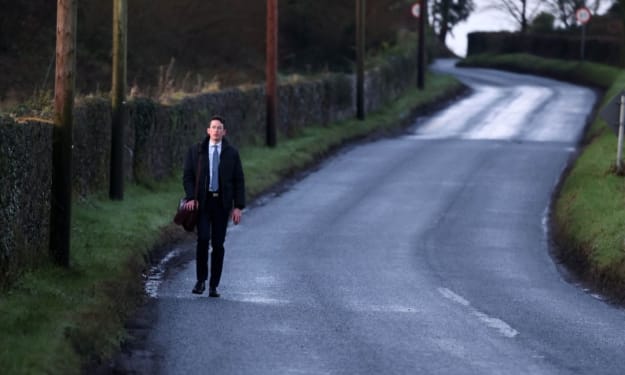
The long-running dispute surrounding Irish teacher Enoch Burke has taken another dramatic turn after members of a disciplinary panel resigned, dealing a significant setback to efforts aimed at resolving the controversy over his dismissal. The case, which has attracted widespread public attention, continues to raise complex questions about employment rights, institutional authority, and the handling of disputes involving personal beliefs in professional settings.
By Aarif Lasharia day ago in Earth
Suspect Identified in Disappearance of Four-Year-Old in Australian Outback. AI-Generated.
The disappearance of a four-year-old child in the vast and remote Australian outback has shocked communities across the country and drawn international attention. Authorities have now identified a suspect in connection with the case, marking a significant development in an investigation that has mobilized large-scale search teams, law enforcement agencies, and local volunteers.
By Aarif Lasharia day ago in Earth
Low Honey Harvest Expected as North Island Beekeepers Grapple With Storm Effects. AI-Generated.
Beekeepers across New Zealand’s North Island are bracing for one of the weakest honey harvests in years as the lingering impacts of severe storms continue to disrupt flowering cycles, damage hives, and strain an industry already under pressure from rising costs and environmental challenges. Unseasonal rainfall, strong winds, and repeated flooding events over recent months have left many apiarists facing reduced nectar flows and delayed hive recovery. Regions that normally provide abundant manuka and clover blooms have seen flowering patterns thrown off balance, cutting into the peak production period that beekeepers rely on for much of their annual income. “This season has been incredibly difficult,” said one commercial beekeeper operating in Hawke’s Bay. “We lost access to several sites because roads were washed out, and even where hives survived, the bees haven’t had consistent weather to forage properly.” Storm Damage and Disrupted Bloom Cycles The North Island experienced a series of intense storms that damaged farmland, forests, and coastal areas. For beekeepers, the consequences go beyond physical destruction of equipment. Flooding saturated soils and uprooted vegetation, while prolonged cloud cover reduced sunlight necessary for plants to produce nectar. Botanists and agricultural scientists say flowering plants are highly sensitive to weather patterns. When storms arrive during crucial blooming windows, nectar production can drop sharply. “Bees need stable conditions to collect nectar,” explained an environmental researcher at a New Zealand agricultural institute. “If rain washes pollen away or temperatures stay too low, flowers simply don’t provide enough resources.” In areas such as Northland and Waikato, beekeepers report hive productivity down by as much as 30 to 40 percent compared with average seasons. Some smaller operators fear they may not harvest enough honey to cover operational expenses. Economic Pressure on the Industry The beekeeping sector has already been grappling with challenges including fluctuating manuka honey prices, increased biosecurity requirements, and rising fuel and transport costs. A low harvest year adds further strain to businesses that rely heavily on exports. Manuka honey remains one of New Zealand’s most valuable agricultural exports, with international demand particularly strong in Asian and European markets. However, reduced supply could push prices higher, potentially benefiting some producers while limiting access for smaller exporters. “For large companies, there may be ways to absorb the losses,” said an industry representative. “But for family-run operations, this could be a make-or-break season.” Some beekeepers are considering scaling back hive numbers or shifting locations next year to avoid areas more vulnerable to extreme weather. Others are exploring diversification into pollination services for crops such as kiwifruit and apples to offset lost honey revenue. Impact on Bee Health Beyond production losses, bee health has also suffered. Wet conditions increase the risk of fungal diseases inside hives, while weakened colonies are more susceptible to pests such as varroa mites. Veterinary experts warn that stressed bees may struggle to survive winter if they enter the colder months with insufficient food reserves. Beekeepers are now spending more on supplemental feeding using sugar syrup and protein patties to keep colonies alive. “We’re not just losing honey,” one apiarist said. “We’re spending more to keep the bees healthy, and that cuts into any profit we might make.” Climate Change and Long-Term Risks Scientists link the increasing frequency and intensity of storms to broader climate change trends. Warmer oceans and shifting weather patterns are making extreme rainfall events more common in New Zealand, raising concerns about the long-term stability of industries dependent on predictable seasons. Agricultural economists argue that beekeeping is particularly vulnerable because it depends on both plant health and insect behavior, two systems sensitive to environmental stress. “This season may be a warning sign,” said a climate policy analyst. “If storms continue at this pace, the industry will need stronger adaptation strategies, such as moving hives more frequently or planting storm-resistant forage crops.” Government agencies are monitoring the situation closely. Some regional councils are assessing whether emergency assistance or recovery grants may be needed for affected farmers and beekeepers. Community and Environmental Role Beekeepers play a critical role in pollination, supporting food production far beyond honey. Crops such as berries, avocados, and squash rely heavily on bees, and reduced hive numbers could affect yields next year. Local farming communities have already reported lower pollination activity in some storm-hit districts, raising concerns about knock-on effects for the wider agricultural economy. Environmental groups stress that protecting bee populations is essential not only for economic reasons but for biodiversity. Native plants depend on healthy pollinator networks to regenerate after disasters. “Bees are part of the recovery process,” said a conservation spokesperson. “When storms damage ecosystems, pollinators help bring them back to life.” Looking Ahead Despite the grim outlook, many beekeepers remain cautiously hopeful. Weather forecasts suggest more stable conditions in the coming months, which could allow late-season flowering to provide some relief. However, expectations remain low compared with previous years. Industry leaders are urging collaboration between scientists, policymakers, and producers to build resilience against future storms. Ideas include expanding research into climate-resistant plants, improving hive design, and developing early-warning systems for extreme weather.
By Fiaz Ahmed a day ago in Earth