Nature
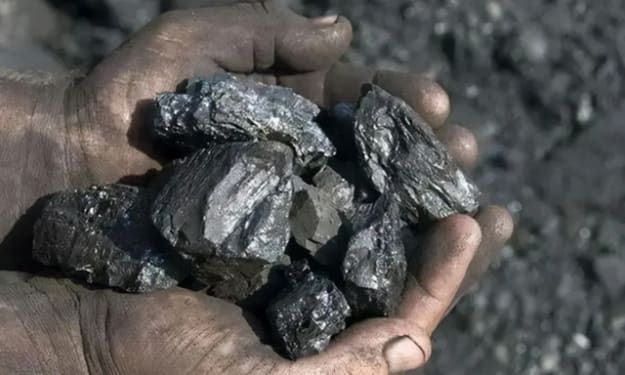
Carbon dioxide to gasoline major breakthrough
Even the average person who is not exposed to the subject of chemistry will know the name carbon dioxide. Although it is not the gas with the strongest greenhouse response, the one that poses the greatest threat to the Earth's environment exists.
By Karen Gillanah3 years ago in Earth
Mariana Trench
If you ask who is more frightening, the deep sea or the universe, compared to many people will tend to the former. Although the Earth is in the entire universe, not even a grain of dust, with the current human knowledge, the Earth is unlikely to suffer from the threat of the universe or alien civilizations.
By Karen Gillanah3 years ago in Earth
Why we don't use desert sand to build houses
About 20% of the earth's land surface is desert, and almost all of the ground in these barren areas is covered by thick sand, such as the famous Sahara Desert, whose average thickness of sand can be as high as about 150 meters.
By Robert Jack3 years ago in Earth
We’re Running Out of Seafood, Yet We Waste Billions of Pounds of It
A 2015 study published in Global Environmental Change estimates that every year, almost half the seafood supply in the United States is lost, amounting to nearly 500 million pounds of protein waste. Globally, we lose 110 billion pounds. Considering the US Department of Agriculture recommends that the average person consume at least 1.7 ounces of protein per day, this lost seafood is enough to feed more than 2.7 million people for an entire year. Relatedly, this particular form of food waste further contributes to overfishing, which has of course precipitated a steep decline in marine wildlife populations.
By lupu alexandra3 years ago in Earth
Keeping Fruit Time
Gardening is an exercise in stubborn, fragrant faith: that these sticks you hold in a feathery root ball will somehow turn pliant and shoot wild into the sunshine, offering fruit when you least expect it. But that's just what happened when my husband and I planted our first blackberry bush in late February on an unusually warm weekend here in Oxford, Mississippi, just before the pandemic.
By lupu alexandra3 years ago in Earth
On the Moral Hazards of Carbon Dioxide Removal
Climate change science involves a lot of math. There's a great deal of calculus, plus all those formulas and models to understand how planetary physics works. But some of the most important climate math is no more complicated than basic arithmetic. Take the remaining "carbon budget" we have to avoid catastrophic environmental changes, divide that by the volume of carbon pollution industrial society pumps into the atmosphere daily, and you get the amount of time we have left. It's not a big number. Seven years and change.
By lupu alexandra3 years ago in Earth
How Best to Protect the Night Sky?
Bill Wren fell in love with the stars in the inky-black skies of central Missouri. In his childhood backyard, he tinkered with his binoculars, gazing at the craters and mountains of the moon. Then, at age 15, Wren moved with his family to Houston. It was a jarring experience—when he looked up at night, he could no longer see the stars. Though he didn't yet have a name for it, this was his introduction to the growing problem of light pollution. Today, one-third of humanity—including 80 percent of Americans—can no longer see the Milky Way.To avoid the bright city lights, Wren would flee whenever he could, driving nearly an hour and a half northwest of Houston, astronomy books and telescope in tow. He began to understand the value of observing a truly dark sky. "It's almost a mystical experience, that sense of being connected, the sense of unity and oneness," Wren says. His early obsession would grow into a lifelong effort to preserve dark skies and one day earn him the moniker the Angel of Darkness.
By lupu alexandra3 years ago in Earth
The River Keepers
When a journalist called Kris Tompkins and asked, “How do you feel that you’re just starting off with this new park and they’re going to build dams on the Baker River?” Kris had no idea what the reporter was talking about. Then she read the newspapers.
By lupu alexandra3 years ago in Earth
Do You Know Where Your Water Comes From?
It wasn’t until she was 26 and had one degree in environmental science and another in water recycling that Nina Gordon-Kirsch learned where the water in her faucet came from. The Mokelumne River, which carries snowmelt from the Sierra through the Central Valley and out to the San Francisco Bay delta, is surprisingly little-known considering how many lives depend on it.
By lupu alexandra3 years ago in Earth
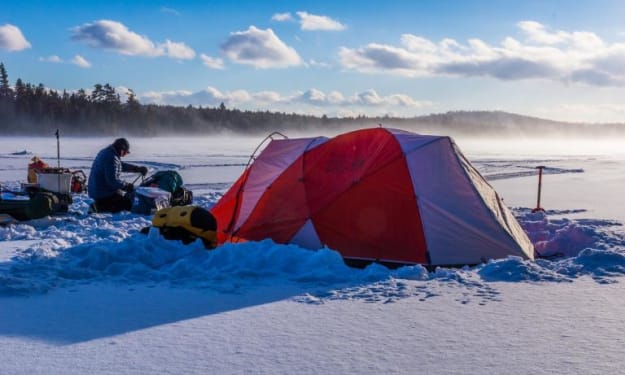
10 Tips for Your First Time Camping in Winter
What good is the warmth of summer, without the cold of winter to give it sweetness?” wrote John Steinbeck. Point taken, but there’s also a certain sweetness to the cold of winter. Cold-weather camping is a great way to savor those tranquil moments and settings only winter can provide—untouched snow-covered landscapes, early nights and early mornings, a warm fire—yet even some experienced campers balk at the prospect.
By lupu alexandra3 years ago in Earth