Nature
Beyond the Basic Green: AI's Picks for the Most Stunning Colorful Houseplants. AI-Generated.
The secret to keeping these botanical jewels radiant isn't just guesswork. By understanding light—the non-negotiable fuel for all plants—and learning to measure it, you can stop struggling and start showcasing. This guide, informed by plant care technology and horticultural expertise, will help you select and sustain the most stunning colorful houseplants.
By Emma Wallace4 days ago in Earth
Stratospheric Warming Confirmed. AI-Generated.
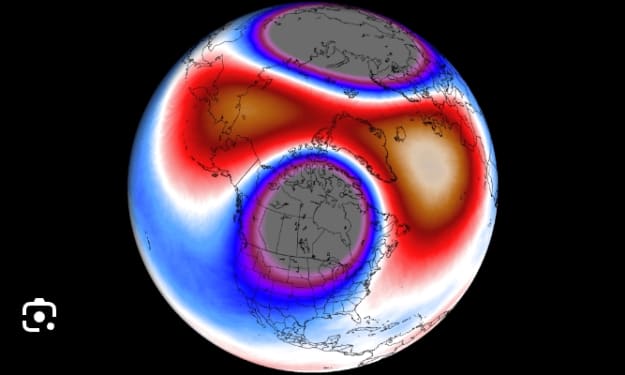
A Warning from the Upper Atmosphere High above the clouds where commercial airplanes fly, an invisible drama is unfolding—one that could soon be felt on streets, highways, farms, and power grids across much of the Northern Hemisphere. Scientists have confirmed a major stratospheric warming event, a rare but powerful atmospheric phenomenon that often leads to the collapse of the polar vortex. When this happens, winter does not politely fade away. Instead, it strikes back, sending waves of extreme cold, heavy snowfall, ice storms, and erratic weather patterns far beyond the Arctic Circle. Meteorologists are now warning that the coming weeks could bring significant weather disruption across North America, Europe, and parts of Asia. This is not just another cold snap. It is a reminder that the atmosphere is a complex system—one where changes miles above Earth can reshape life on the ground. What Is Stratospheric Warming? To understand the danger, we must first understand the phenomenon. Sudden Stratospheric Warming (SSW) occurs when temperatures in the stratosphere—about 10 to 50 kilometers above Earth—rise dramatically, sometimes by as much as 50°C (90°F) in just a few days. This rapid warming disrupts the powerful winds that normally keep cold Arctic air locked near the North Pole. Under normal conditions, these winds form what scientists call the polar vortex—a massive ring of freezing air rotating around the Arctic. But when stratospheric warming occurs, that vortex weakens, stretches, or even splits apart. And when the polar vortex breaks down, the cold escapes. The Polar Vortex: Friend or Foe? Despite its ominous name, the polar vortex is actually a protective system. When strong and stable: Arctic air stays near the poles Mid-latitude regions experience more predictable winters Weather patterns remain relatively balanced But when the vortex collapses: Arctic air spills southward Weather becomes chaotic and extreme Cold snaps appear in places unprepared for them This collapse does not happen every year. When it does, the impacts can last weeks or even months. What Scientists Are Seeing Right Now Meteorological agencies and climate scientists have confirmed that a major stratospheric warming event is underway. Satellite data and atmospheric models show: Rapid warming over the Arctic stratosphere A weakening of polar winds Signs of vortex displacement and potential splitting These signals strongly suggest that the polar vortex is destabilizing, increasing the risk of extreme winter weather in the near future. Historically, similar events have preceded: Severe cold waves in North America Prolonged snowstorms in Europe Infrastructure disruptions and energy crises What Could Happen Next? If the polar vortex collapses or significantly weakens, the following impacts are likely: 1. Extreme Cold Outbreaks Arctic air masses could plunge deep into: The United States and Canada Western and Central Europe Northern Asia Temperatures could drop far below seasonal averages, even in regions that have recently experienced mild winters. 2. Heavy Snow and Ice Storms Cold air interacting with moisture often leads to: Record-breaking snowfall Dangerous ice accumulation Widespread travel disruptions Cities unaccustomed to severe winter conditions could be hit hardest. 3. Energy System Strain Sudden cold increases demand for heating: Power grids may become overloaded Natural gas prices could spike Rolling blackouts become a real possibility 4. Agricultural Damage Late-season freezes can devastate: Winter crops Early spring plantings Livestock health Farmers often have little warning when Arctic air arrives unexpectedly. Why This Matters in a Warming World Some people ask a reasonable question: If the planet is warming, why are we seeing extreme cold? The answer lies in climate complexity. Global warming does not eliminate cold weather—it destabilizes weather systems. A warming Arctic can weaken the temperature contrast between the poles and the equator, making the polar vortex more prone to disruption. In other words: A warmer planet can produce more extreme winters Weather becomes less predictable, not milder This is why scientists view stratospheric warming events as increasingly important indicators of climate volatility. Historical Examples of Polar Vortex Collapse Past events show how serious these disruptions can be: 2014 North American Cold Wave Temperatures plunged below −30°C in parts of the U.S. Millions lost power Economic losses reached billions 2018 “Beast from the East” in Europe Heavy snow paralyzed transportation Schools and businesses shut down Energy demand soared Each of these events followed significant stratospheric warming. How Long Will the Effects Last? One of the most dangerous aspects of polar vortex disruption is duration. Unlike a typical storm system, the effects can persist for: Several weeks An entire season Once the atmospheric pattern shifts, it can lock regions into extended cold spells or unstable weather cycles. Meteorologists caution that short-term forecasts may underestimate the impact, as the full effects take time to descend from the stratosphere into the lower atmosphere. Who Is Most at Risk? While impacts vary, higher risks exist for: Northern and Mid-Latitude Regions Urban areas with aging infrastructure Energy-dependent economies Low-income communities with limited heating access Preparedness and early awareness can reduce harm—but only if warnings are taken seriously. How Governments and Communities Can Prepare Preparation is critical. Authorities can reduce damage by: Strengthening power grid resilience Ensuring emergency heating shelters are ready Communicating clear public safety guidance Monitoring weather models continuously Individuals can also prepare by: Insulating homes Stocking emergency supplies Checking heating systems early Extreme weather becomes far more dangerous when people assume it “won’t happen here.” Media Attention and Public Awareness Despite its importance, stratospheric warming often receives limited mainstream coverage until impacts are already underway. This delay creates: Confusion Under-prepared communities Political blame games Better public understanding of atmospheric science could save lives and reduce economic damage. Is This the New Normal? While scientists caution against overgeneralization, many agree on one point: Weather volatility is increasing. Stratospheric warming events may not occur every year, but their influence is becoming more noticeable. As climate systems grow less stable, sudden shifts—hot or cold—are more likely. The question is no longer if disruptions will occur, but how prepared societies are when they do. Conclusion: A Planet Out of Balance The confirmation of stratospheric warming is not just a meteorological headline—it is a signal. A signal that: The atmosphere is changing Old assumptions no longer apply Preparedness matters more than ever As the polar vortex weakens, the coming weeks could test infrastructure, governments, and communities across the globe. Whether this event becomes a crisis or a manageable challenge depends on how seriously the warnings are taken. Winter may be approaching its end on the calendar—but in the atmosphere, it may be preparing one final, powerful statement
By Zahid Hussain5 days ago in Earth