
The Bermuda Triangle Phenomenon: Separating Fact from Fiction
Unraveling the Enigma: Decoding the Bermuda Triangle Phenomenon through Data and Discourse
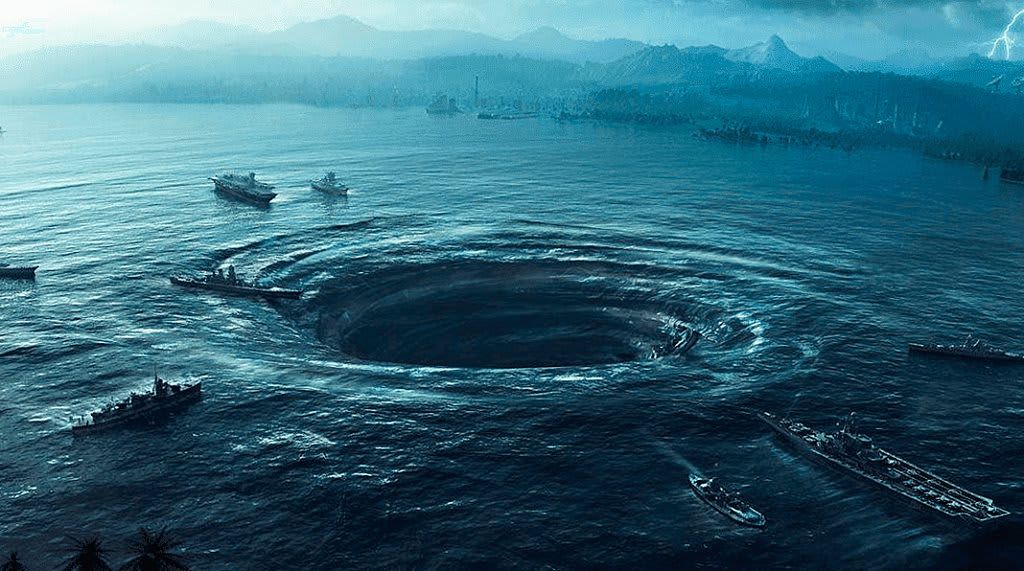
The Bermuda Triangle, also known as the Devil's Triangle, has captivated the imagination of millions of people due to the mysterious disappearances of planes, ships, and individuals over the past two centuries. However, it is important to approach this subject with scientific scrutiny rather than relying on sensationalism. In this article, we will explore the Bermuda Triangle phenomenon based on evidence and scientific hypotheses, emphasizing the need for critical thinking and data-driven analysis.
The intrigue surrounding the Bermuda Triangle can be traced back to Christopher Columbus' voyage in 1492 when he reported unusual compass behavior and observed a strange light in the distance. Over time, incidents such as the shipwreck in 1606 and the encounter with a ghost ship in 1881 further contributed to the area's enigmatic reputation. However, it was not until the 20th century that the Bermuda Triangle gained significant attention due to a series of disappearances, including the USS Cyclops in 1918 and multiple aircraft vanishing during World War II.
Several scientific hypotheses have been proposed to demystify the Bermuda Triangle phenomena. These explanations encompass factors such as disturbances in geomagnetism, methane blowouts, and the prevalence of intense storms and rogue waves in the Caribbean region. Geomagnetic anomalies have been suggested as a potential cause for compass malfunctions experienced by navigators in the area. Magnetic fields in the region are known to vary, which could affect compass readings and potentially lead to navigational errors.
Methane blowouts, resulting from suboceanic methane gas deposits, have also been proposed as a possible explanation for the Bermuda Triangle mysteries. Methane is known to be released from the ocean floor in certain areas, and sudden and violent disturbances in the water could occur when large amounts of methane are released. These disturbances could potentially damage or sink ships and pose a danger to aircraft flying at low altitudes.
Additionally, the high frequency of powerful storms in the area could generate rogue waves capable of engulfing vessels and planes. Rogue waves, which are exceptionally large and unexpected waves, have been observed in various parts of the world. The combination of strong storms and underwater topography in the Bermuda Triangle region could create conditions favorable for the formation of rogue waves, which could pose a significant threat to maritime and aviation activities.
While these scientific hypotheses provide rational explanations for the occurrences within the Bermuda Triangle, it is essential to approach the subject critically and rely on comprehensive data analysis. By examining large-scale records of maritime casualties worldwide, it becomes evident that the Bermuda Triangle does not exhibit statistically abnormal accident rates. In fact, the percentage of vessels experiencing accidents within the Bermuda Triangle is significantly lower than the global average. This highlights the need to evaluate and discuss data objectively, fostering meaningful discourse to arrive at a more accurate understanding of the phenomena.
In conclusion, the mystery surrounding the Bermuda Triangle can be attributed to a combination of historical events, scientific hypotheses, and the power of storytelling. While sensationalistic accounts and speculative theories have perpetuated the notion of a cursed or anomalous region, a closer examination of empirical data reveals that the Bermuda Triangle does not pose an unusually high risk to maritime and aviation activities. It is imperative to approach such topics with a commitment to truth and engage in evidence-based discussions to dispel misconceptions and promote a more informed perspective. By doing so, we can foster a deeper understanding of the world around us and separate fact from fiction.
Additional Information:
In addition to the scientific explanations mentioned earlier, there are other factors that contribute to the reputation of the Bermuda Triangle. One such factor is the vastness of the area itself. The Bermuda Triangle spans over 500,000 square miles, making it a significant portion of the North Atlantic Ocean. With a large volume of maritime and aviation activity passing through this region, it is not surprising that a few accidents and disappearances have occurred over the years. However, when considering the sheer number of vessels and planes that traverse this area without incident, the proportion of incidents within the Bermuda Triangle remains relatively low.
Another aspect to consider is the role of human error in these incidents. Accidents and disappearances can often be attributed to a combination of environmental factors and human mistakes or negligence. Pilots, navigators, and ship captains may face challenging conditions or make errors in judgment that contribute to accidents. It is essential to analyze each incident within the Bermuda Triangle on a case-by-case basis, taking into account all relevant factors, including human factors.
It is worth noting that advances in technology and navigation systems have significantly improved safety in maritime and aviation industries. Modern ships and aircraft are equipped with sophisticated instruments and communication devices that enhance navigational accuracy and provide real-time updates on weather conditions. These advancements have contributed to a decrease in accidents and disappearances, including those within the Bermuda Triangle.
While it is natural for humans to be intrigued by the unexplained and mysterious, it is crucial to approach the subject with a scientific mindset. The Bermuda Triangle phenomenon has often been sensationalized in books, movies, and documentaries, perpetuating myths and misconceptions. By relying on empirical data, scientific hypotheses, and critical thinking, we can separate fact from fiction and gain a clearer understanding of the events that occur within the Bermuda Triangle.
In summary, the Bermuda Triangle continues to intrigue and fascinate people worldwide. However, it is essential to approach the subject with a balanced perspective, considering scientific explanations, comprehensive data analysis, and the role of human factors. By fostering evidence-based discussions and promoting critical thinking, we can unravel the mysteries surrounding the Bermuda Triangle and dispel misconceptions, ultimately leading to a more informed and rational understanding of this enigmatic region.
About the Creator
Himanshu Singh
Education Specialist | Researcher | Advocate
Transforming Education for a Brighter Future ✨
Passionate about student-centered learning, inclusive education, and innovative teaching strategies. Join me on this educational journey! 🎓🌟
Keep reading
More stories from Himanshu Singh and writers in Earth and other communities.
Exploring the Flat Earth Phenomenon: Unraveling the Beliefs and Motivations
Introduction The belief in a flat Earth has gained attention in recent years, driven by social media, conspiracy theories, and a desire to challenge established scientific consensus. However, this controversial viewpoint contradicts overwhelming evidence gathered through centuries of observation, experimentation, and mathematical modeling. In this article, we will examine the scientific consensus regarding the shape of the Earth and debunk the arguments put forth by flat Earth proponents.
By Himanshu Singh3 years ago in Earth
‘Final Nail in Coffin’: Scottish Sector Under SNP Tax Threat
A growing political and economic debate is unfolding in Scotland as critics warn that proposed or expanding tax pressures under the Scottish National Party (SNP) government could act as the “final nail in the coffin” for a struggling sector of the economy. Business groups, industry leaders, and political commentators are increasingly raising concerns about competitiveness, investment, and long-term sustainability.
By Aarif Lashari7 days ago in Earth
Clintons to Testify in Epstein Inquiry
Reports that former U.S. President Bill Clinton and former Secretary of State Hillary Clinton could testify in an inquiry related to Jeffrey Epstein have sparked widespread international attention. The inquiry is part of ongoing efforts by authorities and investigators to understand the full scope of Epstein’s network, financial dealings, and connections with high-profile individuals.
By Aarif Lashari6 days ago in Earth
Foot Bindings
I asked my grandmother how she knew she'd fallen in love. I am not sure I ever did love him, she said. This was before I met my husband. I was naive, a naked spring, a raw nerve of a thing. That cannot ever be me, I knew. Sadness swept in gently like a Moscow thaw. It is no simple thing, looking into a woman's vast soul and seeing its foot bindings. Now, in Italy divorced with my skin singed off, when I say I don't love him mean: I have succeeded at feeling nothing most days and it mostly works. Do you want the comfort of Nothing? Do you want Nothing, too? Be warned: you'll never be free, even when you are nothing. Here is what doesn't work: Accepting the stages of grief. Talking about it. Sitting with the feeling. Missing him—no, the person you were when you believed in death do us part. Writing poetry. That, too. When I say I don't love him I mean: I feel capsized in an endless, starved tide. What sometimes works: selective memory. You must forget ripe tomatoes and his beard and feeling perfectly sheltered in a big blue world. Forget coffee in bed, laughter watching TV, blowing out the candles on the birthday cake and the quiet all-encompassing knowledge that you are chosen. Remember only how love turned to a banal everyday survival act, a trapeze act unsure whether he will catch you, how the warmth stagnated and became sour, remember the foot bindings and remember the resentment boiling in your veins as you stick it out for the kids. Six-hour Netflix binges help, too. A man's fingers tracing your spine. Frozen pizza at 2 a.m. Random trips to the museum just to stand near things that last a while. The realization that crying won’t change anything. Seeing that life is just a dream, and refusing to participate in your own suffering. Bite your fist. Walk on eggshells around joy. When I say I don't love him, I mean he didn’t break my heart, he just stopped touching it and it forgot how to beat right.
By Ella Bogdanovaabout 5 hours ago in Poets



Comments
There are no comments for this story
Be the first to respond and start the conversation.