
The Ghost of an Ancient World Found Under Antarctica
A Hidden World Beneath the Ice

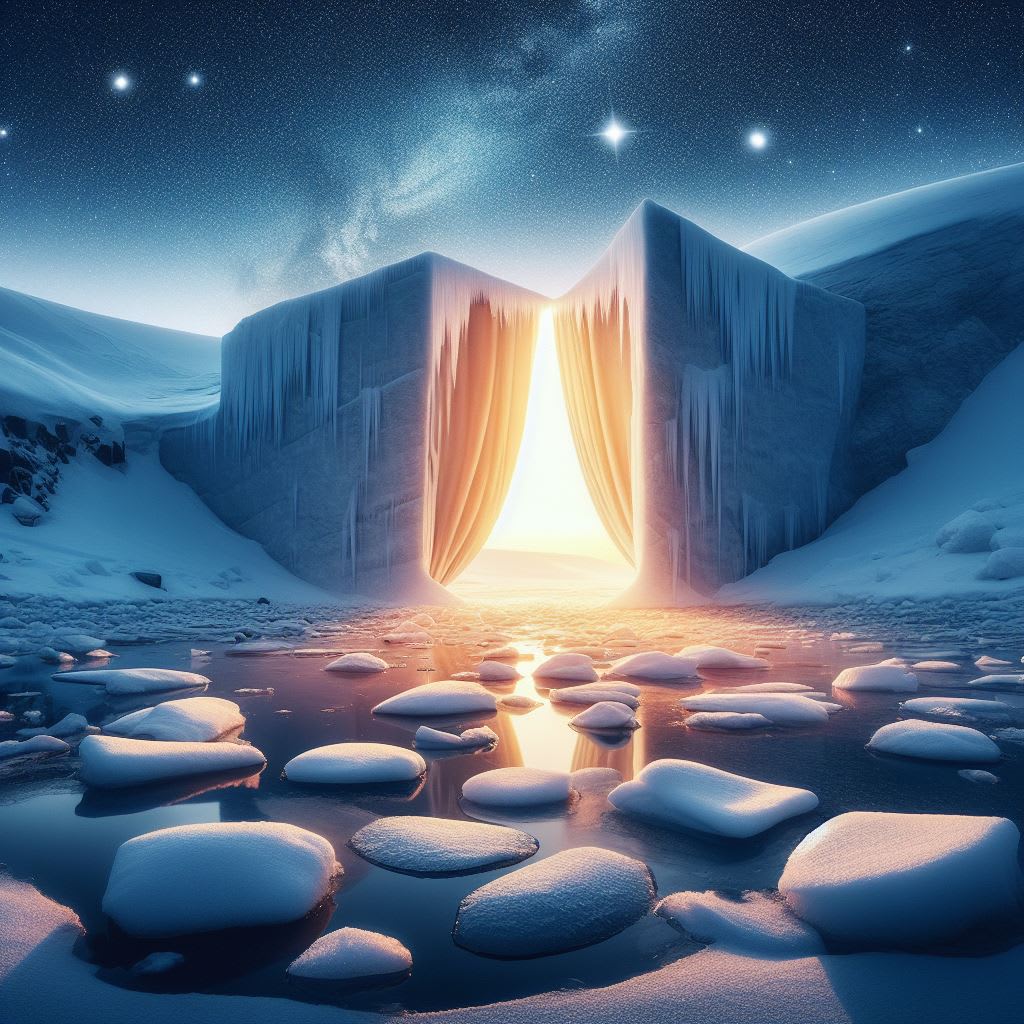
Antarctica, the frozen continent at the bottom of the globe, is often associated with penguins, endless snow, and bone-chilling cold. Yet, beneath its thick ice sheet lies a hidden world—a "ghost world"—that offers tantalizing glimpses into an ancient past.
A Hidden World Beneath the Ice
Antarctica's ice sheet is between 1 and 3 miles thick, comparable to stacking up to 16 Eiffel Towers. This massive blanket obscures the continent's true contours, making it one of the least understood regions on Earth. However, modern satellite technology has begun to penetrate the ice, revealing a dramatic ancient landscape frozen in time.
Antarctica: A Lush Rainforest?
Approximately 90 million years ago, during the age of dinosaurs, Antarctica was a warm, lush rainforest teeming with life. Rivers crisscrossed the terrain, and vibrant ecosystems thrived. However, a dramatic climate shift about 34 million years ago during the transition from the Eocene to the Oligocene transformed this verdant landscape into a frigid desert. Layers of ice and snow accumulated over millennia, erasing most signs of its prehistoric environment—except in certain protected areas.
In regions like the Aurora and Schmid subglacial basins of East Antarctica, where the ice is especially thick and stable, the land beneath has remained remarkably preserved. Scientists have found traces of ancient rivers, valleys, and even U-shaped landforms—ghostly remnants of a bygone era.
A Fragmented Continent
Antarctica was once part of the supercontinent Gondwana, which included present-day Africa, South America, Australia, and India. Tectonic forces eventually tore Gondwana apart, leaving Antarctica isolated and stretched. This geological activity explains the U-shaped formations and other dramatic features buried under the ice.
Exploring Antarctica’s Frozen Secrets
Scientists are eager to study this hidden world further by drilling through the ice to retrieve rocks, sediment, and ancient soil. These efforts could provide invaluable insights into Earth's climate history and the forces that shaped the planet.
Mysteries Beneath the Ice
The discoveries don’t stop at ancient landscapes. Under the Ross Ice Shelf, scientists have uncovered a thriving ecosystem in a subterranean river. Using hot water drills, researchers reached the river and found tiny shrimp-like creatures called amphipods, swarming around the camera lens.
Antarctica also hides geological marvels, such as the deepest canyon on Earth, located beneath the Denman Glacier, and a massive mountain range comparable to the Alps. The continent even boasts more than 138 volcanoes, with some, like Mount Erebus, still active and home to warm subvolcanic caves capable of sustaining life.
The Doomsday Glacier
Antarctica’s icy expanse isn’t just a treasure trove of ancient secrets—it’s also a critical player in the planet’s climate system. The Thwaites Glacier, ominously nicknamed the “Doomsday Glacier,” is melting rapidly. If it collapses entirely, global sea levels could rise by two feet, threatening coastal cities worldwide.
A World of Wonders
Antarctica, the fifth-largest continent, is larger than Europe or Australia and rivals South America in size. Despite its inhospitable surface, the continent's underworld is alive with hidden rivers, warm caves, and ancient landforms. These discoveries remind us that the most mysterious place on Earth might not be in space, but right here, buried beneath the ice at the South Pole.
As researchers continue to uncover Antarctica’s secrets, we are reminded of how much remains to be discovered—and how the frozen continent could hold answers to questions we haven’t yet thought to ask.
About the Creator
Keep reading
More stories from Georgia M. and writers in Earth and other communities.
The Hidden Stories of Earth's Cosmic Collisions
66 million years ago, Earth experienced an apocalyptic event. A massive asteroid, known as the Chicxulub impactor, struck our planet with unimaginable force, creating a 90-mile-wide crater in what is now Mexico's Yucatán Peninsula. This collision brought the age of dinosaurs to a dramatic end, setting the stage for the rise of mammals—and eventually, us. But in a twist of cosmic history, new evidence suggests that Chicxulub wasn't the only asteroid wreaking havoc during that era.
By Georgia M.about a year ago in Earth
Rising from the Depths: Archaeologists Lift Massive Stones from the Legendary Lighthouse of Alexandria
The Lighthouse of Alexandria, also known as the Pharos of Alexandria, has fascinated historians and travelers for centuries. Built over 2,300 years ago, it was one of the Seven Wonders of the Ancient World, guiding sailors safely through the treacherous waters of the Mediterranean. Now, modern archaeology is uncovering parts of this legendary beacon in a way few could have imagined.
By Ayesha Lashari3 days ago in Earth
Five Remain Displaced After Roof Damaged in Storm
Five people remain displaced after a powerful storm tore through a residential neighborhood, severely damaging the roof of a family home and forcing emergency services to declare the property unsafe. The incident occurred late in the evening as heavy rain and strong winds swept across the area, leaving behind structural damage that residents say happened within minutes.
By Fiaz Ahmed 3 days ago in Earth


Comments
There are no comments for this story
Be the first to respond and start the conversation.