
The Hidden Stories of Earth's Cosmic Collisions
A Tale of Two Asteroids

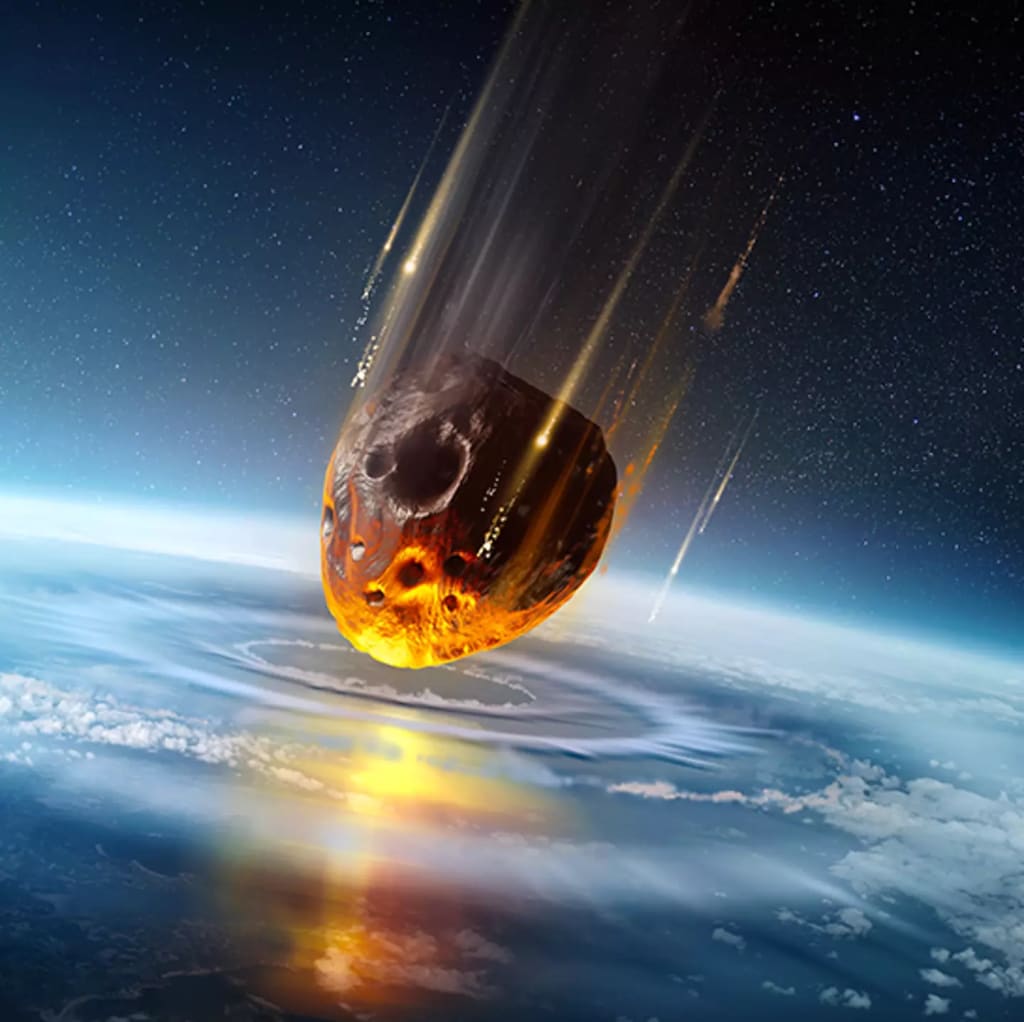
66 million years ago, Earth experienced an apocalyptic event. A massive asteroid, known as the Chicxulub impactor, struck our planet with unimaginable force, creating a 90-mile-wide crater in what is now Mexico's Yucatán Peninsula. This collision brought the age of dinosaurs to a dramatic end, setting the stage for the rise of mammals—and eventually, us. But in a twist of cosmic history, new evidence suggests that Chicxulub wasn't the only asteroid wreaking havoc during that era.
Meet the Nadir Asteroid
Off the coast of West Africa lies a second crater, recently confirmed to be the result of another asteroid impact during the same extinction period. This crater, named Nadir, is smaller than Chicxulub—about 5.5 miles wide—but it left a lasting mark on Earth. When Nadir hit, it slammed into the ocean, unleashing a colossal tsunami with waves over 2,600 feet tall—almost as high as the Burj Khalifa, the world’s tallest building.
This discovery was made possible by high-resolution 3D seismic imaging, which allowed scientists to peer beneath nearly 1,000 feet of water and sediment. These images painted a vivid picture of the impact: a bow-shaped crater surrounded by ridges, a central peak, and a damage zone stretching for thousands of miles.
The Science Behind the Scene
When the Nadir asteroid collided with Earth, it triggered violent landslides and sent shockwaves rippling across the seabed. The initial tsunami wasn’t just one massive wave but a series of waves radiating outwards—and then rebounding back toward the crater. The scars left by this watery chaos still linger on the ocean floor.
But the story doesn’t end there. Some researchers theorize that the Nadir asteroid might have been a fragment of the Chicxulub impactor, meaning Earth could have been struck by a "double whammy" of cosmic destruction.
From Dinosaurs to Modern Disasters
Asteroid impacts aren’t just ancient history. Fast forward to Siberia in 1908, when a mysterious explosion leveled 830 square miles of forest in the Tunguska event. Scientists believe it was caused by a comet or asteroid that exploded mid-air, its blast powerful enough to knock down 80 million trees.
In 2013, another wake-up call came from the skies over Chelyabinsk, Russia. A 60-foot-wide asteroid streaked into Earth's atmosphere at 43,000 mph, exploding 18 miles above the city. The shockwave shattered windows and damaged 7,200 buildings, reminding us how real the threat of space rocks can be.
Preparing for the Next Impact
NASA and other space agencies are tracking near-Earth objects (NEOs) to identify potential threats. One such object, Bennu, is about the same size as the Nadir impactor. While the chances of Bennu colliding with Earth are slim—1 in 2,700—it serves as a stark reminder that our planet is always in the cosmic firing line.
What Lies Ahead?
The discovery of the Nadir crater is more than just a scientific milestone; it’s a window into Earth’s tumultuous past and a warning for the future. By studying these ancient impacts, scientists can better understand the forces that shaped our planet and develop strategies to protect it from future threats.
In a universe where asteroids are both harbingers of destruction and keys to understanding our origins, one thing is clear: Earth’s story is deeply intertwined with the cosmos. And who knows? The next chapter might be written by humanity’s efforts to deflect an asteroid—or perhaps even harness their power for exploration.
Stay curious, because the cosmos always has more surprises in store.
About the Creator
Keep reading
More stories from Georgia M. and writers in Earth and other communities.
The Saga of Pangaea
Imagine Earth 300 million years ago—a place where all continents were best friends, united in one massive supercontinent called Pangaea. This colossal landmass was surrounded by an equally gigantic ocean, Panthalassa. Together, they created a world like no other—a sprawling, unbroken expanse of land, bordered by an endless sea. But just like any legendary crew, this union couldn’t last forever.
By Georgia M.about a year ago in Earth
Hamptons Real Estate Prices Hit Record High as 2026 Summer Rentals in High Demand
The Hamptons, long synonymous with luxury, exclusivity, and summer getaways, has seen its real estate market soar to new heights in recent years. As we approach the summer of 2026, the area’s real estate prices are breaking records, and demand for vacation rentals has never been greater. While this trend is partly attributed to broader economic factors and changing work habits, it also signals an evolving landscape in the Hamptons real estate market that is shaping up to be one of the most competitive seasons in recent history.
By Ayesha Lashari6 days ago in Earth
AI, Surveillance, and Future Control System
AI, Surveillance, and Future Control Systems Artificial Intelligence and advanced surveillance technologies are rapidly changing how power is exercised in the modern world. What once required armies, police forces, and physical borders can now be done through data, algorithms, and invisible systems. Governments and corporations increasingly rely on digital tools to monitor behavior, predict actions, and influence decisions. This shift is creating a new kind of control—quiet, efficient, and deeply powerful.
By Wings of Time 5 days ago in Earth




Comments
There are no comments for this story
Be the first to respond and start the conversation.