
Why aren't we utilizing green energy if it is both more economical and safer?
Solar energy is cheaper and more abundant than fossil fuels...so why haven't we transitioned to its use?

You may be familiar with the Sun being referred to as the largest and hottest sphere in relation to the Earth, which has served as a source of inspiration for various artistic creations, religious beliefs, and technological applications. However, it might be astonishing to learn that the Sun has also captured the attention of numerous economists, entrepreneurs, and political figures. Join me on this journey.
Today, our topic of discussion is Renewables, specifically solar energy. Solar energy is derived from the sky, but it is not in the form of rain. It is something entirely different. Up until recently, solar energy used to be expensive. For a significant period, reducing the cost of Renewables has been one of the primary objectives of the sustainability movement. Interestingly, the price of solar energy has decreased over the last 50 years. In fact, solar energy has become more economical than oil, gas, nuclear, and even coal in most parts of the world. This development is quite remarkable and has occurred fairly recently. It is worth noting that coal used to be the cheapest source of energy by a substantial margin. Just 13 years ago, wind and solar power plants were 22% and 223% more expensive than coal, respectively. This significant cost difference was due to two reasons: firstly, Renewables were an emerging, small-scale technology that was costly to develop and implement. Secondly, they required a substantial upfront investment, which took a long time to generate a suitable return. Consequently, banks viewed them as high-risk investments and were generally unwilling to allocate funds towards them.
Renewables were initially not considered seriously due to the significant subsidies given to fossil fuels and the profitability they offered. However, governments intervened by improving technology efficiency, providing subsidies, and implementing market conventions. Germany notably played a role in this, and China's massive production efforts created economies of scale. As a result, the price of solar energy per megawatt hour dropped by nearly 90% between 2009 and 2019. This progress in renewables far surpassed the achievements of NFTs in just one year. The government's intervention stimulated investment and made solar energy extremely affordable. In economics, it is known that cheaper energy attracts more demand. Therefore, the theory suggests that the cheaper and more sustainable energy (like renewables) should take over, addressing the issue of climate change. Many major companies, including BP, Shell, Total, BlackRock, and State Street, from both the fossil fuel industry and investment sector, have committed to reducing carbon emissions and investing in renewables.
Now that renewable energies have become so affordable, it may give the impression that we can fully rely on them. However, this assumption is incorrect, despite what you may think. You expect me to discuss the various issues associated with solar energy, such as the extraction of non-renewable rare earth minerals, the exploitative working conditions involved, neocolonial trade relationships, pollution from solar panel production, difficulties in recycling, and concerns about energy storage and reliability. But I will prove you wrong. Instead of focusing on these problems, this video delves into a different aspect. The truth is, even if we were to consider solar energy as a perfect solution to address climate change, we must also adopt a more comprehensive approach. By pushing these challenges aside, there is still an underlying issue that has persistently affected the transition to renewable energy, which cannot be resolved by low prices and may even be exacerbated. They may be inexpensive, but renewables are not profitable.
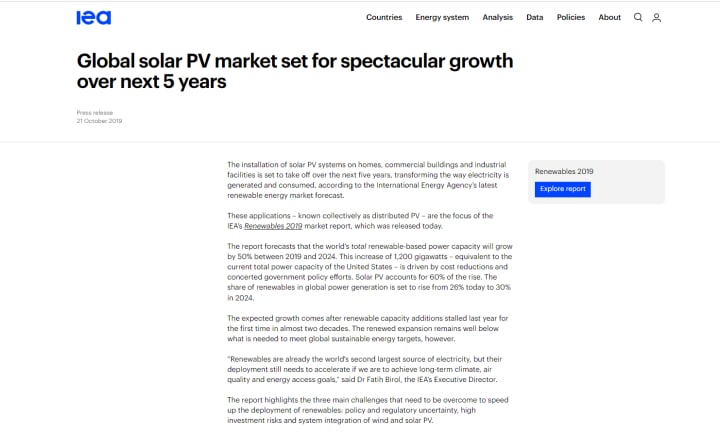
In May 2019, the International Energy Agency discovered that renewable energy deployments had started stagnating for three years, marking a significant decline in investment and fewer projects. Despite the decrease in prices and government initiatives aimed at encouraging action, the conventional economic theory of cheaper products winning out did not seem to hold true.
During this time, fossil fuel giants like Shell were publicly announcing their Net Zero goal for 2050, claiming it would be achieved through a massive increase in renewables. However, upon closer examination, the declining investment and deployment statistics started to make more sense. Shell, it turned out, was not as committed to the renewable transition as they wanted to appear.
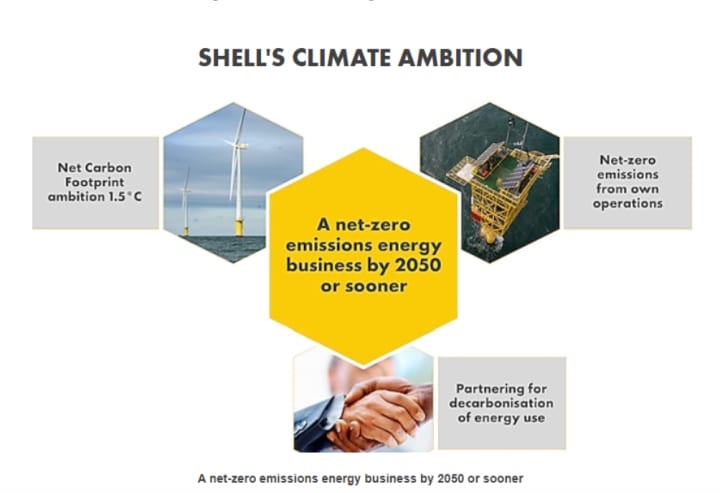
What seemed like bold sustainability statements in the press were actually conditional promises that did not hold Shell accountable for any sustainable action. This highlighted the primary concern when private enterprise considers investing in renewables. Shell outlined three conditions for its transition: firstly, that society (a term that lacked a clear definition) would fulfill the Paris Agreement; secondly, that the venture would be self-funded; and lastly, that Shell would only invest significantly in renewables if it yielded the appropriate profits, which for Shell meant an 8 to 12 percent return on investment.
This last condition was the most important, as the first two were essentially bailout clauses, offering little more than an exit strategy if Shell were pushed out. Unfortunately, profitability is the key factor for Shell and virtually every other fossil fuel company that has made a net zero promise. They place their renewable transition on the condition of achieving high returns on investment, typically 8 to 12 percent. However, the sad reality is that this will not happen, as all estimates indicate that such returns are simply unattainable in the realm of renewables.
Currently, solar and wind-based energy generation are generally not seen as attractive investment opportunities. The availability and affordability of renewable energy options mean that only a few projects can generate returns of more than five to eight percent. Various sources indicate that returns on renewable projects tend to range from six to eight percent, with some even lower figures of four to six percent. While fossil fuel companies like Shell, BP, and Total have received positive publicity for their commitments to transitioning away from fossil fuels, behind the scenes, they know that meeting their profit targets with renewables is unlikely. As a result, they continue to prioritize profitable oil and gas projects. For example, while proclaiming their Net Zero declarations, Total has opened new fossil fuel projects in Uganda, Angola, and Brazil, while Shell has announced 21 new projects worldwide. BP has also successfully increased its daily oil and gas production by 900,000 barrels between 2016 and 2021. Comparatively, their investments in renewables have been minimal, with BP allocating only 2.3 percent of its investments to low-carbon options between 2010 and mid-2018, while Shell allocated 1.3 percent, Chevron 0.23 percent, and Exxon Mobil 0.22 percent. However, it is worth noting that a portion of these investments in solar and wind energy has been used solely for powering new oil fields. This pattern is not limited to fossil fuel companies; asset management giants like BlackRock, Vanguard, and State Street, also known as the big three, have made similar sustainability commitments and introduced ESG funds. Nevertheless, their requirements for these funds are still not stringent enough to match the urgency of combating global warming.
BlackRock CEO Larry Fink explicitly stated that climate change is the most significant issue, considering the substantial assets and significant ownership of shares in the S&P 500 held by three major companies. These companies, responsible for the highest CO2 emissions from holdings in fossil fuel companies, have the resources and corporate ownership to drive sustainability in high carbon industries. However, a 2022 study revealed that the actions of these companies often oppose shareholder resolutions aimed at improving environmental governance, even in their own environmental, social, and governance funds. The combined voting decisions of these companies tend to result in the failure of environmental resolutions, which are typically narrow and piecemeal in nature. This highlights that fossil fuel and massive corporations prioritize profit over sustainability, driven by the demands of the capitalistic economic system. While inexpensive solar energy may seem promising, the narrow profit margins in renewable energy limit investment and deployment. This inherent limitation, where a few individuals can enrich themselves during the transition process, presents a significant obstacle to achieving a more sustainable energy production system. The sad reality is that unless there is a profitable aspect, the transition to renewables will not occur, despite the urgent need to reduce greenhouse gas emissions. Thus, the lack of exploitation opportunities becomes a crucial impediment to sustainable energy transition.
Alright everyone, we are going on a different path. I am going to quickly summarize this book in order to understand the challenges we face when transitioning from fossil fuels to renewable energy. To gain insight, we can observe how we shifted power sources during the Industrial Revolution.
During that time, we transitioned from water power to steam power. This meant that we began using fossil fuel combustion to generate power. While both flowing water and fossil fuels had their advantages, the main advantage of fossil fuel power was its ability to easily produce fire to make a train move. However, in the competition to power factories, water and coal were equivalent options.
The key difference was that water was cheaper. Extracting energy from water required very little human labor, whereas coal required more effort. Considering that waterfalls were plentiful and water power could produce as much power as steam, according to liberal economists, history should suggest that steam and fossil fuels would have limited applications, primarily in transportation. Water power should have dominated industrial production overall.
The reason Steam was favored over water as a source of energy was because it was more effective at exploiting humans. Even though water was cheaper, it was less profitable because it required bringing people to the water source, and if those people went on strike, replacing them was difficult. Fossil fuels, on the other hand, could be brought into cities where there was a large population in need of work. Water also had its limitations, as it sometimes didn't flow, resulting in less productivity. Coal, on the other hand, could be continuously shoveled, allowing for uninterrupted work. Additionally, water sources were harder to collect and privatize, whereas coal mines and oil wells could easily be claimed and protected by force. This is why fossil fuels, particularly coal, became the preferred energy source for the capitalist class.
Now, let's circle back to the present situation with Renewables. While it's often stated that renewables are not profitable, it's more accurate to say that providing renewable energy isn't profitable, especially as governments have stopped guaranteeing high prices for renewable energy providers. This shift in policy, which the fossil fuel industry has lobbied for, has made it difficult for renewable energy providers to generate profits. They used to be able to produce electricity at a low cost and sell it at a high price, but this is no longer sustainable. This has led many fossil fuel companies to exit the energy market. Essentially, the strategy of creating a competitive capitalist market for energy, as seen in countries like Germany, has been so successful that the profit margins no longer justify the investment. In capitalism, monopolies and strategic inefficiencies are necessary to extract profit at the expense of others, and competition becomes the enemy. Currently, this situation makes solar energy provision a risky venture. Furthermore, like water power, solar energy is more difficult to control and defend compared to fossil fuel energy. Protecting a small oil well requires relatively few resources, whereas safeguarding a large solar farm requires a significantly larger security effort.
Where is the money going when companies divest from fossil fuels and invest in renewables? The truth is that the money goes to the parts of the renewable energy process that still involve exploitation and environmental degradation. This includes manufacturing solar technology and extracting rare earth minerals, often in countries with cheap labor and lax environmental regulations. However, it doesn't have to be this way. If we allocate energy effectively and prioritize sustainability over constant economic growth, we could reduce our dependence on these harmful processes. By empowering workers and enforcing environmental regulations, we can minimize the negative impact of renewable energy production. Currently, the profit-driven nature of capitalism perpetuates these issues. While renewable energy is necessary for combating climate change, as long as profit is the driving force, there will be significant drawbacks and the burden will fall on the most exploited communities. This is unacceptable. A capitalist approach alone cannot solve the climate crisis.
About the Creator
Cypro Banker Adversaries: How Cyber Threats Are Challenging Banks and Financial Systems
In the digital age, the banking sector has become a prime target for cyber adversaries — groups and individuals seeking to exploit vulnerabilities for financial gain, espionage, or disruption. Cypriot banks, despite their reputation as a stable financial hub, are not immune to these threats. The term “Cypro banker adversaries” captures the growing spectrum of cyber attacks, ranging from ransomware and malware campaigns to complex state-linked operations targeting banks in Cyprus and beyond.
By Ayesha Lashari7 days ago in Earth
Prosperity Without Relief: Why Many Saudis Feel Squeezed Amid an Economic Boom
Saudi Arabia is frequently portrayed as a nation in the midst of a historic economic transformation. Mega-projects rise from the desert, foreign investment conferences draw global CEOs, non-oil revenues are expanding, and the Kingdom’s Vision 2030 reform agenda is regularly praised as bold and ambitious. On paper, the economy appears dynamic and forward-looking.
By Ayesha Lashari7 days ago in Earth




Comments
There are no comments for this story
Be the first to respond and start the conversation.