
Why We Should Worry About Sun Flares?
Battling the Angry Sun: What's Happening in Space and How it Affects Us

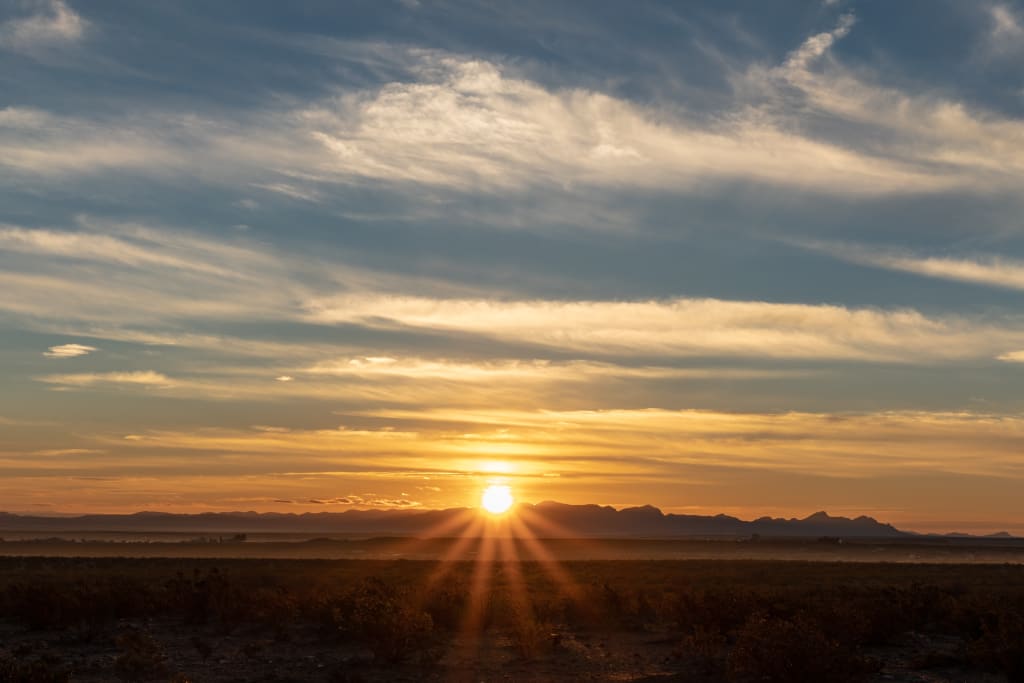
The Sun, the center of our solar system, is not just a giant ball of fire illuminating our days. Recent developments and scientific findings have left many wondering, "What's going on with the Sun?" Some experts have even suggested that the Sun might be getting a little "angry." But what exactly does this mean, and should we be concerned? The short answer is yes, we should be concerned. In this article, we will explore the intriguing world of the Sun, its cycles, and the potential consequences of its increased activity.
The Sun's Active Cycle:
The Sun has its own rhythm, going through an active-calm-active cycle approximately every 22 years, with notable highs and lows occurring every 11 years. These cycles are well-established, even though the exact reason for these patterns remains a mystery. During an active phase, the Sun becomes more "angry," emitting higher levels of high-energy radiation, which can impact Earth in various ways.
Not So Calm Anymore:
Recently, our Sun has been rather calm, to the extent that it's been the calmest in over a century. This calm phase of the Sun's cycle, which typically transitions into an active one, seems to be breaking the mold. What's the significance? The terms "calm" and "active" relate to the Sun's radiation output, specifically the high-energy radiation that it emits.
Measuring Solar Activity with Sunspots:
One of the most straightforward ways to measure solar activity is by observing sunspots. These dark spots on the Sun are not actually dark; they are less bright than the Sun's surface. They occur in pairs and represent magnetic storms in the Sun's plasma. More sunspots typically indicate a more active Sun.
The Butterfly Diagram:
A remarkable graph called the butterfly diagram tracks the 11-year period of sunspot activity. It illustrates how sunspots regularly appear and disappear on the Sun's surface. NASA initially predicted that the current solar cycle, known as cycle 25, would be a calm one. However, observations suggest otherwise.
Solar Cycle 25 - Not So Calm:
Solar Cycle 25 began with the promise of being another calm cycle, with NASA's predictions in line with the previous cycle. However, it's becoming evident that this might not be the case. The Sun has already exceeded the expected number of sunspots, hinting at a more active phase. This means we can expect increased solar radiation reaching Earth over the next few years.
Solar Flares and Their Impact:
Solar flares are powerful electromagnetic explosions on the Sun, often associated with sunspots. These flares release X-ray and gamma radiation at the speed of light, and their classification varies depending on their power. X-class flares are the most dangerous and can impact our communication systems, satellites, and even astronauts in orbit.
CMEs: The Bigger Solar Explosions:
Coronal Mass Ejections (CMEs) are larger and more dangerous than solar flares. These explosions originate from the Sun's corona, a thin and hot layer around the Sun's surface. CMEs can hurl millions of tons of ionized gases into space. When directed towards Earth, these events can cause stunning auroras and potential disruptions to our technological infrastructure.
Monitoring the Sun's Sound Waves:
An exciting project known as "Project Gong" was established to monitor sound waves on the Sun. By studying the Sun's oscillations, we gain insights into its behavior. The Sun's coronal mass ejections are unpredictable, but continuous monitoring helps us understand and potentially prepare for them.
What Lies Ahead:
With the Sun entering an active phase, we can expect more powerful CMEs in the coming years. These ionized gases, known as proton storms, could lead to breathtaking auroras at Earth's magnetic poles, possibly extending to lower latitudes.
The Parker Solar Probe:
To study the Sun up close, NASA launched the Parker Solar Probe. This remarkable spacecraft is orbiting the Sun at a distance of approximately 3.8 million miles, collecting crucial data to help us better understand and predict solar activity.
While the Sun's recent calm phase may have provided us with a sense of security, it's important to remember that the Sun's behavior is far from predictable. Solar activity affects our daily lives more than we might realize, from satellite communication disruptions to breathtaking auroras. As we move into this new phase of solar activity, we must remain vigilant, as it may have a significant impact on our technology and, ultimately, our daily lives. The Sun is, after all, a reminder of the powerful and unpredictable forces at work in our universe, just waiting to be explored and understood.
About the Creator
Safwa Elouizi
Adventurer of words and explorer of ideas. I journey through the realms of creativity and limitless imagination, bringing you tales from the unconventional, knowledge from the extraordinary, and insights into the fascinating.
Keep reading
More stories from Safwa Elouizi and writers in Earth and other communities.
Is There a City Beneath the Bermuda Triangle?
The ruins of a lost civilization, covered in seaweed, damaged by time, hidden in the ocean's depths – this is the mysterious tale of Atlantis. Legends of Atlantis have intrigued people for centuries, its existence dating back 12,000 years, only to be engulfed by the ocean's abyss. While skeptics argue it was just an ordinary island, numerous legends paint Atlantis as a thriving and opulent empire, making it one of the most captivating cities of its era. The rumors persist that Atlantis rests submerged beneath the waves, possibly somewhere in the infamous Bermuda Triangle.
By Safwa Elouizi2 years ago in Earth
Greenland Declares State of Emergency as Scientists Link the Growing Presence of Orcas to Accelerating Ice Melt
In a landmark decision that reflects the intensifying impacts of climate change, the government of Greenland has officially declared a state of environmental emergency—a rare and solemn move that underscores the accelerating transformation of Arctic ecosystems. The catalyst for this declaration? An unusual and growing presence of orcas—also known as killer whales—in waters once locked in sea ice, a phenomenon scientists say reveals the alarming scale of ice melt in the region.
By Sadaqat Ali5 days ago in Earth
6 Minutes of Darkness: Get Ready for the Longest Eclipse of the Century That Will Turn Day Into Night
There are few moments in life when the world seems to pause entirely. The longest eclipse of the century promises to be one of those moments — six unforgettable minutes of darkness in the middle of the day, when the Moon will completely block the Sun and turn daylight into an eerie twilight. For skywatchers, scientists, and curious minds alike, this is more than just another astronomical event. It is a rare cosmic alignment that will remind us how small we are in the vast universe — and how extraordinary our view from Earth can be. What Is a Total Solar Eclipse? A total solar eclipse occurs when the Moon passes directly between the Earth and the Sun, casting its shadow onto Earth’s surface. For observers located within the narrow “path of totality,” the Moon completely covers the Sun’s bright disk. During those precious moments, daylight fades dramatically. The sky darkens. Stars may appear. The Sun’s glowing outer atmosphere — called the corona — becomes visible, forming a shimmering halo around the black silhouette of the Moon. Most total solar eclipses last only two to three minutes at any given location. However, this upcoming event is expected to last close to six minutes in some areas, making it one of the longest eclipse experiences of the 21st century. Why Will This Be the Longest Eclipse of the Century? The duration of a total solar eclipse depends on several astronomical factors aligning perfectly. First, the Moon must be relatively close to Earth in its elliptical orbit, making it appear slightly larger in our sky. At the same time, Earth must be slightly farther from the Sun, which makes the Sun appear marginally smaller. When these two conditions occur together, the Moon can cover the Sun more completely and for a longer period. Additionally, the eclipse path must cross regions near Earth’s equator, where the planet’s rotational speed is greatest. This subtle detail allows the Moon’s shadow to linger just a bit longer over certain locations. When all these cosmic variables align, the result is an extended totality — and in this case, nearly six full minutes of darkness that will turn day into night. What Happens During the Six Minutes of Darkness? As the eclipse approaches totality, the world begins to transform. Shadows sharpen and curve into crescent shapes. The light takes on a strange metallic tone. Temperatures can drop several degrees within minutes. Birds may fall silent or return to their nests. Some animals behave as though night has arrived unexpectedly. Seconds before totality, a dazzling flash known as the “diamond ring effect” appears — a final burst of sunlight peeking around the Moon’s edge. Then, suddenly, the Sun disappears. For six surreal minutes: The sky resembles deep twilight. Bright planets such as Venus or Jupiter may become visible. The Sun’s corona glows in delicate, silver-white strands. A 360-degree sunset effect circles the horizon. It is not complete darkness like midnight, but rather an otherworldly dimness that feels suspended in time. Then, just as abruptly as it began, a thin beam of sunlight reemerges. The diamond ring flashes again. Daylight returns, and life resumes its normal rhythm. Where Will Day Turn Into Night? Only those within the path of totality will experience the full six minutes of darkness. This path is typically narrow, stretching across select regions of continents and oceans. Outside the path, observers will see only a partial eclipse, where the Moon covers part of the Sun but never fully blocks it. While still impressive, a partial eclipse does not produce the dramatic transformation that totality delivers. For those eager to witness the longest eclipse of the century, early planning is essential. Major eclipses often draw travelers from around the globe, filling hotels and creating heavy traffic along the path of totality. For many, it is worth the journey. The Science Behind the Spectacle One of the most fascinating aspects of a total solar eclipse is the cosmic coincidence that makes it possible. The Sun is about 400 times larger than the Moon — but it is also roughly 400 times farther away from Earth. This proportional balance causes both objects to appear nearly the same size in our sky. Because of this rare alignment of size and distance, the Moon can perfectly cover the Sun’s bright surface, revealing the faint corona that is otherwise invisible. Scientists use long eclipses to study the Sun’s outer atmosphere, solar flares, and magnetic fields. Even in an age of advanced satellites and space telescopes, total solar eclipses still offer unique research opportunities. Beyond the science, however, lies the human experience — one that words often struggle to fully capture. A Shared Global Moment Throughout history, solar eclipses have inspired awe, fear, and wonder. Ancient civilizations often viewed them as omens or divine messages. Today, we understand the precise mechanics behind them, yet the emotional impact remains just as powerful. There is something profoundly humbling about watching the Sun — the source of all life on Earth — temporarily vanish. For six minutes, millions of people may look upward together. Strangers may cheer. Some may cry. Others may stand in silent reflection. In a world filled with constant motion and noise, a total solar eclipse forces us to pause. It reminds us that we are all part of the same cosmic dance. How to View the Eclipse Safely While totality is safe to view with the naked eye, every other stage of the eclipse requires proper eye protection. Looking directly at the Sun without certified eclipse glasses can cause permanent eye damage. To stay safe: Use ISO-certified eclipse glasses. Never rely on regular sunglasses. Ensure cameras, telescopes, and binoculars have approved solar filters. Remove glasses only during totality, and replace them immediately when sunlight returns. Preparation ensures that the experience remains both unforgettable and safe. Why You Shouldn’t Miss It The longest eclipse of the century is not just another date on the calendar. It is a once-in-a-generation opportunity to witness the universe in motion. Six minutes may not seem long in everyday life. But when the Sun disappears and the sky darkens in the middle of the afternoon, those six minutes stretch into something extraordinary. It is a reminder of the beauty of science. A demonstration of celestial precision. A shared human experience under one sky. When day turns into night, even briefly, the world feels different. And for six remarkable minutes of darkness, we will stand together beneath the Moon’s shadow — watching history unfold above us.
By Aqib Hussainabout 2 hours ago in Earth



Comments (2)
wow this is great job you can also jin my friends and read what i have prepared for you
The Sun is like our very own cosmic neighbor, and this article is a fantastic exploration of its mysteries. We must continue to learn and adapt.