
How Black Holes Form: Understanding Stellar and Supermassive Black Hole Creation
A Deep Dive into the Mechanisms Behind Black Hole Formation in the Universe
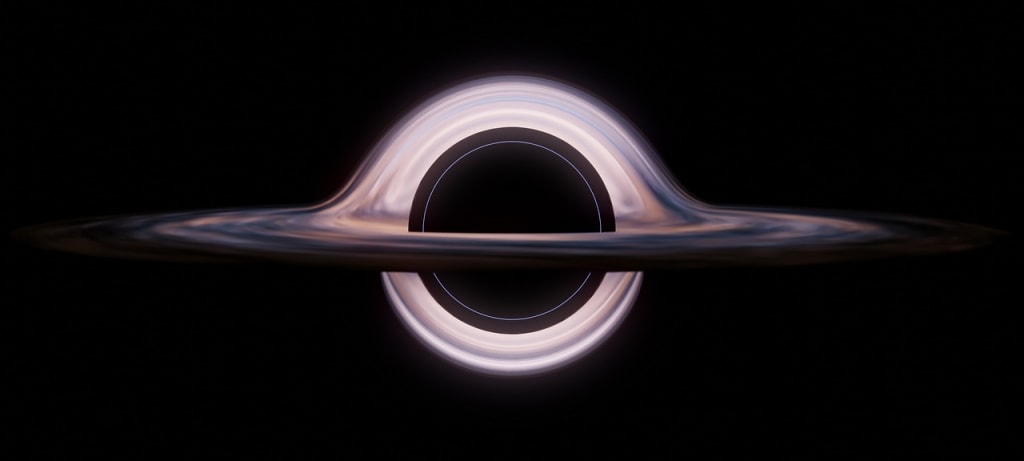
Black holes are among the most enigmatic and fascinating objects in the universe. Defined as regions of space where gravitational forces are so strong that nothing, not even light, can escape, black holes challenge our understanding of physics and the nature of reality. Studying how they form not only sheds light on these cosmic giants but also enhances our comprehension of stellar evolution, galactic dynamics, and the fundamental laws of nature. In this article, we will explore the various mechanisms through which black holes come into existence.
1. Stellar Black Holes:
Formation from Massive Stars:
The most common type of black hole is the stellar black hole, which forms from the remnants of massive stars. The lifecycle of a massive star, typically one with a mass greater than eight times that of our Sun, unfolds over millions of years through several stages:
1. Hydrogen Burning: The star fuses hydrogen into helium in its core.
2. Helium Burning: As hydrogen is depleted, helium fusion begins, leading to the formation of heavier elements.
3. Supernova Explosion: When the core's nuclear fuel is exhausted, it can no longer support itself against gravitational collapse. The outer layers are expelled in a violent supernova explosion, while the core collapses under its own gravity.
Characteristics of Stellar Black Holes:
The remnants left behind after a supernova can form a stellar black hole if the core's mass exceeds approximately three solar masses. These black holes typically range from about 3 to several tens of solar masses and are detected through their interaction with nearby matter, often forming an accretion disk that emits X-rays.
2. Supermassive Black Holes:
Definition and Significance in Galaxies:
Supermassive black holes (SMBHs) reside at the centers of most galaxies, including our Milky Way. They possess masses ranging from millions to billions of solar masses and play a crucial role in galaxy formation and evolution.
Theories of Formation:
The origins of supermassive black holes remain a topic of active research. Several theories have been proposed:
- Direct Collapse of Gas Clouds:In the early universe, dense gas clouds may have collapsed directly into supermassive black holes without forming stars first.
- Merging of Smaller Black Holes: SMBHs could form through the merger of smaller black holes resulting from stellar evolution.
- Accretion from Surrounding Matter: Over time, smaller black holes can grow significantly by accreting gas and dust from their surroundings.
3. Formation Mechanisms:
Stellar Collapse:
Stellar collapse is a well-understood mechanism for forming black holes. When a massive star exhausts its nuclear fuel, its core collapses under gravity's influence, leading to an implosion that results in a black hole if sufficient mass remains.
Conditions for Black Hole Formation:
For a star to become a black hole, it must have a core mass exceeding about three solar masses after the supernova event. This threshold is critical; below this mass, neutron degeneracy pressure can halt collapse.
Direct Gas Collapse:
In regions with high-density gas clouds in the early universe, conditions may have favored direct collapse into supermassive black holes without forming stars first. This scenario could explain the presence of SMBHs observed in distant galaxies.
4. Accretion and Growth:
Once formed, black holes can grow through a process known as accretion. Matter falling into a black hole forms an accretion disk—a swirling disk of gas and debris heated to extreme temperatures as it spirals inward.
Role of Accretion Disks:
Accretion disks emit significant amounts of radiation, particularly X-rays, making them detectable by astronomers. The energy released during accretion can also influence star formation in surrounding regions and affect galaxy dynamics.
5. Theoretical Perspectives:
Hawking Radiation and Black Hole Thermodynamics:
Theoretical physicist Stephen Hawking proposed that black holes are not entirely black; they emit radiation due to quantum effects near their event horizons. This phenomenon suggests that black holes can lose mass over time and may eventually evaporate completely.
Quantum Effects Near the Event Horizon:
The study of quantum mechanics near black holes raises profound questions about information loss and the fundamental nature of reality. These topics continue to inspire debate among physicists as they seek to unify general relativity with quantum mechanics.
Conclusion:
Black holes represent one of the universe's most intriguing mysteries, with their formation processes illuminating key aspects of astrophysics and cosmology. From stellar remnants collapsing under gravity to supermassive giants at galactic centers, understanding how these cosmic entities form enhances our grasp of the universe's evolution. As research continues to advance with new observational technologies and theoretical frameworks, we may soon uncover even more secrets hidden within these dark celestial phenomena.
About the Creator
Can You Start a Legal Transcription Job Without Certification?
Legal transcription is quietly becoming one of the most attractive remote careers in the United States. Courts, law firms, insurance companies, and legal agencies generate thousands of hours of recorded material every single day. Depositions. Hearings. Witness statements. Client meetings. Investigations.
By Mahesh Kumar6 days ago in Education




Comments
There are no comments for this story
Be the first to respond and start the conversation.