
New Review Uncovers Upsetting Ascent in Malignant growth Among Gen X and Twenty to thirty year olds
"New Review Uncovers Alarming Rise in Cancer Rates Among Gen X and Millennials"

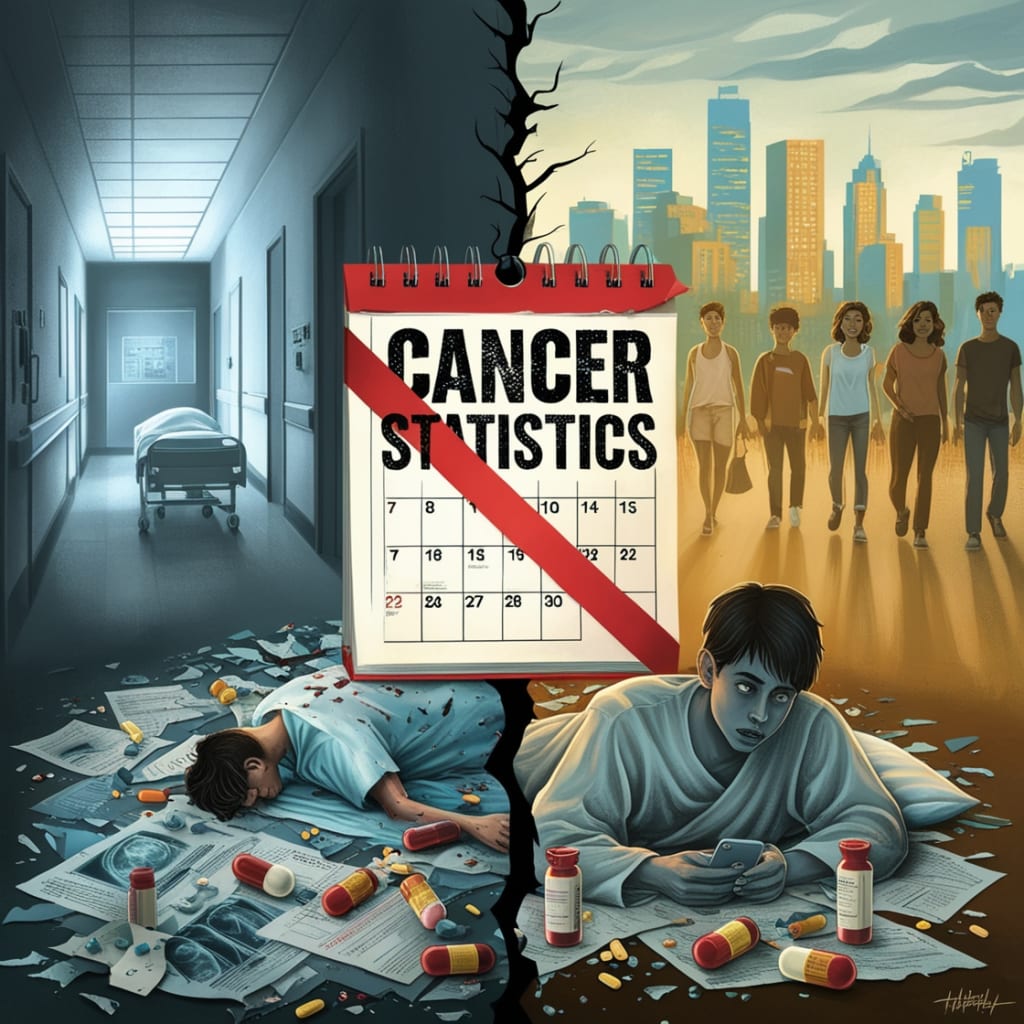
Ongoing discoveries from an American Malignant growth Society concentrate on show increasing disease rates among more youthful ages, with expansions in occurrence and mortality across numerous disease types. This generational change in disease risk features the basic requirement for designated wellbeing mediations and further developed admittance to medical services.
A new extensive review directed by the American Malignant growth Society (ACS) demonstrates that occurrence rates for 17 of the 34 concentrated on disease types, like bosom, pancreatic, and gastric tumors, have been expanding in dynamically more youthful populaces. Furthermore, the investigation discovered that death rates have increased close by the occurrence rates for explicit diseases, including liver (in females just), uterine corpus, gallbladder, testicular, and colorectal tumors. The discoveries were as of late distributed in the diary The Lancet General Wellbeing.
"These discoveries add to developing proof of expanded malignant growth risk in post-Gen X-er ages, developing past discoveries of beginning stage colorectal disease and a couple of heftiness related tumors to envelop a more extensive scope of malignant growth types," said Dr. Hyuna Sung, lead creator of the review and a senior head researcher of observation and wellbeing value science at the American Malignant growth Society. "Birth associates, gatherings characterized by their introduction to the world year, share extraordinary social, financial, political, and environment conditions, which influence their openness to malignant growth risk factors during their significant formative years. In spite of the fact that we have distinguished malignant growth patterns related with birth years, we don't yet have an unmistakable clarification for why these rates are increasing."
Concentrate on Philosophy and Nitty gritty Discoveries
In this examination, analysts got frequency information from 23,654,000 patients determined to have 34 kinds of malignant growth and mortality information from 7,348,137 passings for 25 sorts of disease for people matured 25-84 years for the period Jan 1, 2000, to Dec 31, 2019, from the North American Relationship of Focal Disease Libraries and the U.S. Public Place for Wellbeing Measurements, individually. To think about disease rates across ages, they determined birth associate explicit occurrence rate proportions and death rate proportions, adapted to mature impact and period impact, by birth years, isolated by five-year stretches, from 1920 to 1990.
Analysts found that occurrence rates expanded with each progressive birth accomplice brought into the world since roughly 1920 for eight of 34 diseases. Specifically, the frequency rate was around a few times higher in the 1990 birth companion than in the 1955 birth partner for pancreatic, Kidney, and little digestive malignant growths in both male and female people; and for liver disease in female people.
Furthermore, frequency rates expanded in more youthful partners, after a decrease in more seasoned birth companions, for nine of the excess diseases including bosom malignant growth (estrogen-receptor positive just), uterine corpus disease, colorectal malignant growth, non-cardia gastric disease, gallbladder disease, ovarian malignant growth, testicular malignant growth, butt-centric malignant growth in male people, and Kaposi sarcoma in male people. Across malignant growth types, the occurrence rate in the 1990 birth partner went from 12% for ovarian disease to 169% for uterine corpus disease higher than the rate in the birth companion with the least frequency rate. Strikingly, death rates expanded in progressively more youthful birth associates close by frequency rates for liver disease (female just), uterine corpus, gallbladder, testicular, and colorectal tumors.
Suggestions and Future Worries
"The expansion in malignant growth rates among this more youthful gathering shows generational changes in disease risk and frequently fills in as an early sign of future disease trouble in the country. Without successful populace level mediations, and as the raised gamble in more youthful ages is continued as people age, a general expansion in malignant growth weight could happen from here on out, ending or turning around many years of progress against the illness," added Dr. Ahmedin Jemal, senior VP, observation and wellbeing value science at the American Malignant growth Society and senior creator of the review. "The information features the basic need to recognize and address hidden risk factors in Gen X and Millennial populaces to illuminate anticipation techniques."
"The rising malignant growth trouble among more youthful ages highlights the significance of guaranteeing individuals of any age approach reasonable, extensive health care coverage, a vital calculate disease results," said Lisa Lacasse, leader of the American Disease Society Malignant growth Activity Organization (ACS CAN). "With that in mind, ACS CAN will proceed with our longstanding work to ask legislators to extend Medicaid in states that presently can't seem to do as such as well as keep on supporting for making super durable the improved Reasonable Consideration Act charge sponsorships that have made the way for admittance to really focus on millions."
Reference: "Contrasts in malignant growth rates among grown-ups brought into the world somewhere in the range of 1920 and 1990 in the USA: an examination of populace based disease vault information" by Hyuna Sung, Chenxi Jiang, Priti Bandi, Adair Minihan, Miranda Fidler-Benaoudia, Farhad Islami, Rebecca L Siegel and Ahmedin Jemal, August 2024, The Lancet General Wellbeing.
About the Creator
Arif zaman
Health advocate focused on nutrition, fitness, and mental wellness. Committed to empowering individuals for a healthier, balanced lifestyle.
Keep reading
More stories from Arif zaman and writers in Education and other communities.
The Whispering Cat
The Whispering Cat : In the quiet town of Oakridge, where the streets meandered through cozy houses and gardens, lived a woman named Eliza with her peculiar feline friend, Marmalade. Marmalade was no ordinary cat; his fur was a mosaic of orange and cream, and he had eyes that seemed to hold the secrets of the universe. He was also known for his extraordinary ability to communicate in whispers that only Eliza could hear.
By Arif zamanabout a year ago in Education
When Is Ramadan 2026, and How Is the Moon Sighted?
Ramadan, the holiest month in Islam, is observed by more than a billion Muslims worldwide through fasting, prayer, and reflection. Each year, its start date shifts because it follows the Islamic lunar calendar rather than the Gregorian calendar. This often leads to questions about when Ramadan will begin and how its arrival is determined. In 2026, Ramadan is expected to begin in the evening of Tuesday, February 17, and end at sunset on Wednesday, March 18, depending on the sighting of the moon. As with every Islamic month, the precise start date will be confirmed only after the new crescent moon is observed. Why Ramadan’s Date Changes Every Year The Islamic calendar is based on lunar cycles, with each month beginning when the new crescent moon (hilal) is sighted. A lunar year is about 354 days long — roughly 11 days shorter than the solar year used in the Gregorian calendar. As a result, Ramadan moves earlier each year, cycling through all seasons over a 33-year period. This shifting calendar means Muslims sometimes fast during long summer days and, in other years, during shorter winter days. The movement of Ramadan across the seasons is seen as a reminder of the spiritual nature of fasting rather than its physical difficulty. How the Moon Is Sighted Moon sighting is a deeply rooted religious and cultural practice. Traditionally, Muslim scholars and local committees attempt to observe the new crescent moon shortly after sunset on the 29th day of the preceding month, Sha’ban. If the moon is seen, Ramadan begins the following day. If it is not seen, Sha’ban completes 30 days and Ramadan starts one day later. In many countries, official moon sighting committees gather at specific observation points, often using telescopes and modern optical equipment alongside traditional naked-eye observation. Witnesses who claim to see the crescent must meet certain conditions, including reliability and clarity of vision, before their testimony is accepted. Weather plays a major role in moon sighting. Cloud cover, pollution, or haze can make it impossible to see the crescent even if it is astronomically present. This is why different countries sometimes begin Ramadan on different days. Astronomy vs. Physical Sighting There is an ongoing discussion in the Muslim world about whether Ramadan should be determined solely by astronomical calculations or by physical moon sighting. Some countries and Islamic organizations use scientific data to predict when the moon can be seen, while others insist on direct visual confirmation in accordance with traditional teachings. Supporters of astronomical calculation argue that modern science allows highly accurate predictions and promotes unity by avoiding confusion. Others believe that physically seeing the moon is a religious requirement and part of the spiritual significance of Ramadan’s arrival. As a result, Muslims in different regions — and sometimes even within the same country — may start fasting on different days depending on which method they follow. Global Differences in Moon Sighting Countries in the Middle East, South Asia, and Africa often rely on national moon sighting authorities. In contrast, Muslim communities in Europe and North America may follow local councils or the announcements of major Islamic institutions abroad. For example, some communities wait for sightings from Saudi Arabia or their country of origin, while others rely on local sightings or scientific visibility charts. This diversity reflects the global nature of Islam and the different legal and cultural traditions within it. Spiritual Meaning of Ramadan Beyond its calendar mechanics, Ramadan is a time of intense spiritual focus. Muslims fast from dawn until sunset, refraining from food, drink, and other physical needs. The fast is meant to promote self-discipline, empathy for the poor, and closeness to God. Daily prayers increase, charity is emphasized, and families gather for the evening meal known as iftar. The month also includes Laylat al-Qadr, the “Night of Power,” believed to be the night when the first verses of the Quran were revealed. Preparing for Ramadan 2026 As Ramadan 2026 approaches in February, Muslim families and communities will begin preparations well in advance. Mosques plan prayer schedules, charities organize food drives, and individuals adjust their routines for fasting and worship. Because the start date depends on moon sighting, official announcements are typically made the night before Ramadan begins. Until then, the expected date remains provisional. Conclusion Ramadan 2026 is expected to begin around February 17, but its true start will be confirmed by the sighting of the new moon. This centuries-old practice continues to unite faith, tradition, and astronomy in a unique way. Whether determined by telescopes or by the naked eye, the arrival of Ramadan marks a sacred time of reflection, discipline, and spiritual renewal for Muslims around the world.
By Fiaz Ahmed 3 days ago in Education
Why Virtual Power Plants Are Redefining Brazil’s Energy Management?
Brazil Virtual Power Plants and Their Growing Importance Brazil’s energy landscape is evolving as digital technologies and renewable resources become more deeply integrated into electricity networks. Among the most important innovations supporting this transformation is the concept of virtual power plants. Instead of relying only on large, centralized facilities, energy systems are increasingly coordinated through networks of distributed assets working together.
By deepanshu Thakur6 days ago in Education



Comments (2)
You did great for knowledge you bring out
Thanks for sharing