
Over 250,000 Korean Cultural Artifacts Located Overseas: Heritage Agency
Formal / News Style Cultural Heritage Administration reports widespread dispersal of Korean artifacts worldwide South Korea seeks to document and repatriate artifacts scattered across international collections 🔹 Neutral & Informative More than a quarter-million Korean cultural treasures currently held abroad Heritage agency highlights challenges in preserving and reclaiming national artifacts 🔹 Impactful South Korea emphasizes the importance of recovering its dispersed cultural legacy

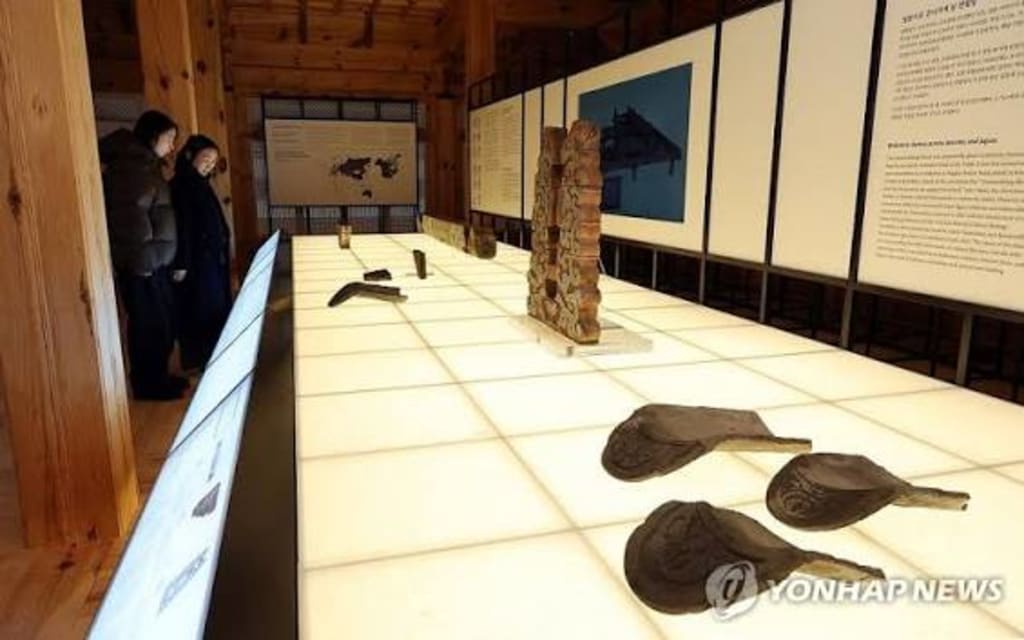
South Korea’s Cultural Heritage Administration (CHA) has reported that more than 250,000 Korean cultural artifacts are currently held outside the country, highlighting ongoing challenges related to heritage preservation, repatriation, and international cooperation. The announcement underscores the widespread dispersal of Korean cultural property across museums, private collections, and archaeological holdings worldwide.
Scope of Korean Cultural Dispersal
According to the CHA, the artifacts range from ancient pottery, calligraphy, and Buddhist statues to royal court objects and historical manuscripts. Many of these items were taken during periods of foreign occupation, colonial rule, or illicit trade, while others were legally acquired by international museums or collectors.
The CHA emphasized that the dispersed nature of these artifacts complicates efforts to document, protect, and eventually repatriate them to South Korea. “Korean cultural heritage represents our national identity and history,” said a CHA spokesperson. “While many artifacts are preserved overseas, their absence from the homeland diminishes opportunities for Koreans to engage with their own cultural legacy.”
Efforts Toward Repatriation
South Korea has been actively pursuing repatriation initiatives for decades. These efforts include diplomatic negotiations, legal claims, and cooperative agreements with foreign institutions. Notable successes include the return of significant royal court artifacts from Japan and the United States in recent years.
The CHA has established specialized task forces to track the location and ownership of Korean artifacts abroad. This includes digitizing records, collaborating with foreign museums, and conducting provenance research to strengthen claims for repatriation.
International Challenges
Repatriation, however, is a complex and often contentious process. Many foreign institutions argue that artifacts acquired legally cannot be reclaimed, while others cite cultural exchange and conservation benefits. Additionally, political considerations can influence negotiations, especially when dealing with countries that have historical claims or disputes with Korea.
Experts also note the challenge of verifying authenticity and tracing provenance for items scattered over multiple centuries and locations. “It’s not just about asking for objects back,” said a cultural heritage scholar. “It requires thorough documentation, international legal frameworks, and cooperative relationships with the institutions holding these items.”
Cultural and Educational Impact
The dispersal of artifacts has implications beyond legal and diplomatic concerns. Cultural scholars argue that access to original works is critical for education, research, and public awareness. Museums and universities in Korea have long relied on replicas or digital images of key artifacts, limiting the depth of study available to students and researchers.
By advocating for repatriation and international loans, South Korea aims to ensure that both domestic and international audiences can engage with the nation’s rich cultural history. The CHA also promotes temporary exhibitions abroad to raise awareness about Korea’s artistic and historical achievements.
Strategic Plans and Digital Initiatives
To address these challenges, the CHA is investing in digital heritage projects, including the creation of an online repository cataloging all known Korean artifacts worldwide. This platform allows scholars, policymakers, and the public to access detailed information about the artifacts’ history, condition, and current location.
The agency has also proposed international agreements to facilitate temporary exhibitions, collaborative research, and long-term loans, fostering a cooperative approach rather than confrontational claims. This strategy aims to strengthen South Korea’s influence in global heritage circles while maximizing access to its cultural treasures.
Looking Ahead
The announcement of over 250,000 overseas artifacts serves as a reminder of both Korea’s rich historical legacy and the challenges of preserving and reclaiming it. Officials stress that continued international cooperation, legal advocacy, and public engagement are essential to ensure that Korean cultural heritage can be appreciated by future generations.
“The preservation and return of cultural artifacts are not just a national priority—they are part of the global responsibility to protect humanity’s shared heritage,” the CHA said. “We will continue to work diligently with international partners to recover and safeguard these treasures.”
The report also reinforces the need for awareness campaigns to highlight the significance of cultural heritage and the ongoing efforts to repatriate key artifacts.
About the Creator
Fiaz Ahmed
I am Fiaz Ahmed. I am a passionate writer. I love covering trending topics and breaking news. With a sharp eye for what’s happening around the world, and crafts timely and engaging stories that keep readers informed and updated.
Keep reading
More stories from Fiaz Ahmed and writers in Education and other communities.
When Is Ramadan 2026, and How Is the Moon Sighted?
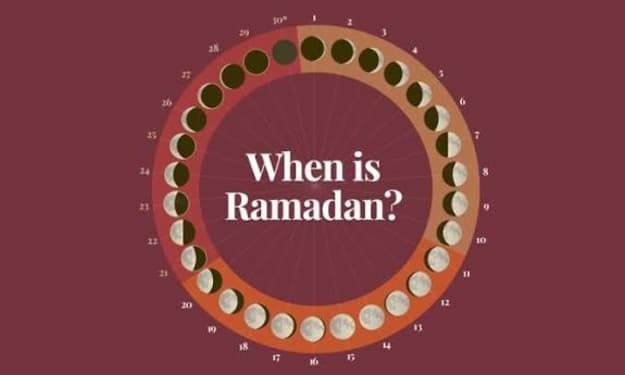
Ramadan, the holiest month in Islam, is observed by more than a billion Muslims worldwide through fasting, prayer, and reflection. Each year, its start date shifts because it follows the Islamic lunar calendar rather than the Gregorian calendar. This often leads to questions about when Ramadan will begin and how its arrival is determined. In 2026, Ramadan is expected to begin in the evening of Tuesday, February 17, and end at sunset on Wednesday, March 18, depending on the sighting of the moon. As with every Islamic month, the precise start date will be confirmed only after the new crescent moon is observed. Why Ramadan’s Date Changes Every Year The Islamic calendar is based on lunar cycles, with each month beginning when the new crescent moon (hilal) is sighted. A lunar year is about 354 days long — roughly 11 days shorter than the solar year used in the Gregorian calendar. As a result, Ramadan moves earlier each year, cycling through all seasons over a 33-year period. This shifting calendar means Muslims sometimes fast during long summer days and, in other years, during shorter winter days. The movement of Ramadan across the seasons is seen as a reminder of the spiritual nature of fasting rather than its physical difficulty. How the Moon Is Sighted Moon sighting is a deeply rooted religious and cultural practice. Traditionally, Muslim scholars and local committees attempt to observe the new crescent moon shortly after sunset on the 29th day of the preceding month, Sha’ban. If the moon is seen, Ramadan begins the following day. If it is not seen, Sha’ban completes 30 days and Ramadan starts one day later. In many countries, official moon sighting committees gather at specific observation points, often using telescopes and modern optical equipment alongside traditional naked-eye observation. Witnesses who claim to see the crescent must meet certain conditions, including reliability and clarity of vision, before their testimony is accepted. Weather plays a major role in moon sighting. Cloud cover, pollution, or haze can make it impossible to see the crescent even if it is astronomically present. This is why different countries sometimes begin Ramadan on different days. Astronomy vs. Physical Sighting There is an ongoing discussion in the Muslim world about whether Ramadan should be determined solely by astronomical calculations or by physical moon sighting. Some countries and Islamic organizations use scientific data to predict when the moon can be seen, while others insist on direct visual confirmation in accordance with traditional teachings. Supporters of astronomical calculation argue that modern science allows highly accurate predictions and promotes unity by avoiding confusion. Others believe that physically seeing the moon is a religious requirement and part of the spiritual significance of Ramadan’s arrival. As a result, Muslims in different regions — and sometimes even within the same country — may start fasting on different days depending on which method they follow. Global Differences in Moon Sighting Countries in the Middle East, South Asia, and Africa often rely on national moon sighting authorities. In contrast, Muslim communities in Europe and North America may follow local councils or the announcements of major Islamic institutions abroad. For example, some communities wait for sightings from Saudi Arabia or their country of origin, while others rely on local sightings or scientific visibility charts. This diversity reflects the global nature of Islam and the different legal and cultural traditions within it. Spiritual Meaning of Ramadan Beyond its calendar mechanics, Ramadan is a time of intense spiritual focus. Muslims fast from dawn until sunset, refraining from food, drink, and other physical needs. The fast is meant to promote self-discipline, empathy for the poor, and closeness to God. Daily prayers increase, charity is emphasized, and families gather for the evening meal known as iftar. The month also includes Laylat al-Qadr, the “Night of Power,” believed to be the night when the first verses of the Quran were revealed. Preparing for Ramadan 2026 As Ramadan 2026 approaches in February, Muslim families and communities will begin preparations well in advance. Mosques plan prayer schedules, charities organize food drives, and individuals adjust their routines for fasting and worship. Because the start date depends on moon sighting, official announcements are typically made the night before Ramadan begins. Until then, the expected date remains provisional. Conclusion Ramadan 2026 is expected to begin around February 17, but its true start will be confirmed by the sighting of the new moon. This centuries-old practice continues to unite faith, tradition, and astronomy in a unique way. Whether determined by telescopes or by the naked eye, the arrival of Ramadan marks a sacred time of reflection, discipline, and spiritual renewal for Muslims around the world.
By Fiaz Ahmed 2 days ago in Education
Why the Foreign Exchange Market Is Powering the Global Financial System?
In a globalized economy, currency is important as it enables trade between different nations, allows international investment and enables e-commerce. The foreign exchange market enables the exchange of foreign currencies. The foreign exchange market is a global decentralized or over-the-counter market for trading currencies. Currencies are traded against each other in terms of their relative values, and the market continues to grow as businesses, governments, and individuals engage in international trade.
By Akshay Kumara day ago in Education
The Bio-Logic Era Inside China’s $9 Billion Premium Skincare Ascent
The era of the "one-size-fits-all" luxury cream is officially over. Walking through the beauty halls of the Tianshan District or scrolling through a live-stream on Douyin in 2026, it becomes clear that the Chinese beauty consumer is now the most demanding on the planet. I call them "Skin-Intellectuals" shoppers who can break down a chemical formula with the precision of a lab technician and who value clinical proof over celebrity endorsements.
By Neeraj kumar2 days ago in Education



Comments
There are no comments for this story
Be the first to respond and start the conversation.