
Ramadan Mubarak – A Month of Mercy, Forgiveness, and Spiritual Transformation
Renewing the Heart Through Worship, Patience, and the Light of the Qur’an. Embracing Taqwa, Mercy, and the Sunnah in the Blessed Month of Fasting
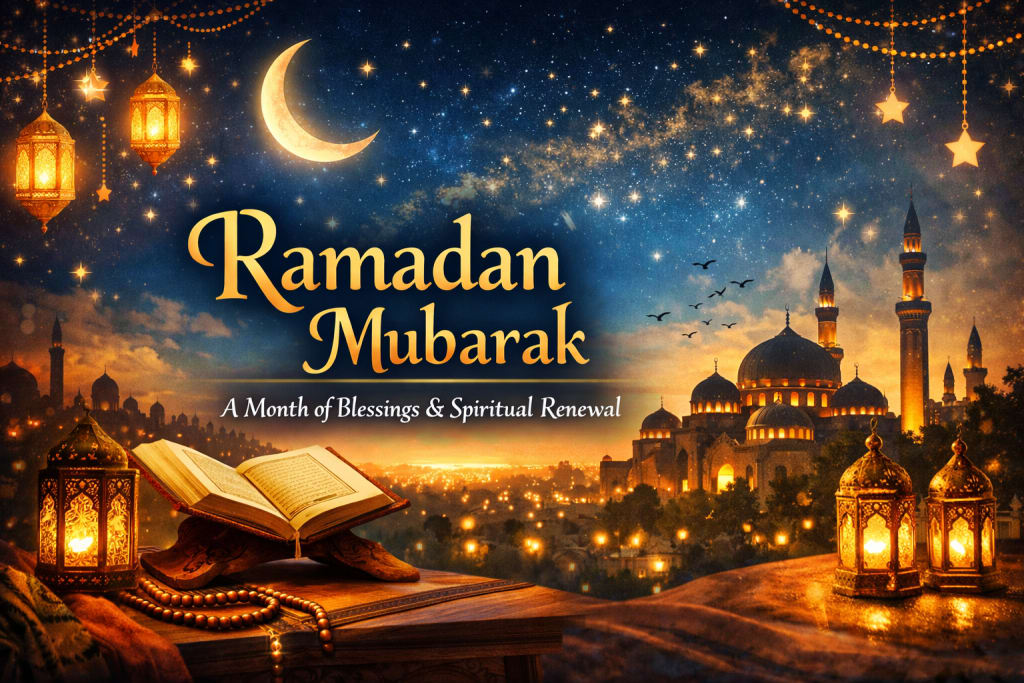
Ramadan is not just a month in the Islamic calendar — it is a divine season of mercy, forgiveness, and spiritual elevation. It is the month in which Allah Almighty revealed the Noble Qur’an as guidance for humanity, a criterion between truth and falsehood, and a light for those who seek righteousness.
“Ramadan is the month in which the Qur’an was revealed…”
— Surah Al-Baqarah 2:185
For Muslims, Ramadan is a sacred opportunity to reconnect with their Creator, purify their hearts, and renew their faith. It is a month in which the doors of Paradise are opened, the doors of Hell are closed, and the devils are restrained. It is a time when mercy descends, forgiveness is granted, and sincere repentance is accepted.
The Obligation and Purpose of Fasting
Fasting in Ramadan is one of the five pillars of Islam. It is obligatory upon every adult, sane, and physically capable Muslim. However, fasting is not merely abstaining from food and drink from dawn to sunset. Its deeper purpose is to develop Taqwa — consciousness of Allah.
Through fasting, a believer learns:
- Self-discipline
- Patience
- Gratitude
- Control over desires
- Awareness that Allah sees all actions
When a person refrains from lawful things like food and drink for the sake of Allah, it strengthens their ability to avoid unlawful actions as well. Ramadan trains the soul to submit sincerely to Allah’s commands.
The Prophet Muhammad ﷺ taught that whoever fasts Ramadan with faith and seeks reward from Allah will have their previous sins forgiven. This shows that fasting is not just a ritual — it is a path to spiritual cleansing.
“O you who believe! Fasting has been prescribed for you…” (Al-Baqarah 2:183)
Ramadan and the Qur’an
Ramadan is the month of the Qur’an. It was in this blessed month that the revelation began. Therefore, Muslims increase their recitation, reflection, and understanding of the Qur’an during this time.
The righteous predecessors would dedicate themselves to Qur’an recitation in Ramadan more than any other month. Many aim to complete the entire Qur’an at least once during the month.
The Qur’an softens hearts, removes darkness, and strengthens faith. Ramadan gives us the perfect environment to reconnect with the Book of Allah.
“Whoever fasts Ramadan with faith and seeking reward from Allah, his past sins will be forgiven.” (Authentic)
Laylatul Qadr – The Night of Power
One of the greatest blessings of Ramadan is Laylatul Qadr — the Night of Power. This night is better than a thousand months. Worship performed during this night carries reward greater than decades of worship.
It falls in the last ten nights of Ramadan, especially on the odd nights. The Prophet ﷺ would increase his worship during these final nights — praying, making du’a, and encouraging his family to do the same.
This night is an opportunity for forgiveness, acceptance of prayers, and transformation of destiny by the will of Allah.
“Indeed We revealed it (the Qur’an) on the Night of Decree…” (Al-Qadr)
The Sunnah Practices of Ramadan
According to the teachings of Ahl-us-Sunnah, Ramadan should be observed with sincerity and following the Sunnah of the Prophet ﷺ. Important practices include:
1. Taraweeh Prayer
Special night prayers performed after Isha during Ramadan. These prayers revive the heart and strengthen the connection with Allah.
2. Increased Charity
The Prophet ﷺ was the most generous of people, and he was even more generous in Ramadan. Giving charity in this month brings multiplied reward.
3. Du’a and Istighfar
Ramadan is the month of supplication and repentance. A believer should frequently ask Allah for forgiveness and mercy.
4. Zakat al-Fitr
Given before Eid prayer to purify the fast and help the poor celebrate Eid.
Ramadan: A Complete Spiritual Reset
Ramadan is a complete spiritual reset for the believer. It reforms character, strengthens faith, and cleanses the heart.
A true Ramadan is not only about hunger — it is about:
- Guarding the tongue from lies and gossip
- Protecting the eyes from sin
- Avoiding anger and arguments
- Helping the poor and needy
- Strengthening family ties
If a person finishes Ramadan the same way they entered it, they have not fully benefited from it. The goal is transformation.
Frequently Asked Questions (FAQs) About Ramadan
1. Why is Ramadan so important in Islam?
Ramadan is important because it is the month of Qur’an revelation, one of the five pillars (fasting), and a time when Allah grants immense mercy and forgiveness.
2. Who is required to fast?
Every adult Muslim who is physically and mentally capable must fast. Those who are sick, traveling, elderly, pregnant, or menstruating are exempt according to Islamic law, with specific rulings.
3. What breaks the fast?
Eating, drinking, and marital relations during fasting hours intentionally break the fast. Deliberate vomiting also invalidates the fast.
4. What is Laylatul Qadr?
Laylatul Qadr is the Night of Power in the last ten nights of Ramadan. Worship on this night is better than worship of a thousand months.
5. Can someone fast but still commit sins?
While the fast remains valid legally, sins reduce its spiritual reward. The Prophet ﷺ warned that some people gain nothing from fasting except hunger if they do not avoid sinful behavior.
6. What is the reward of fasting?
The reward of fasting is immense. Allah has promised a special gate in Paradise called Ar-Rayyan for those who fast sincerely.
7. Why do Muslims pray Taraweeh?
Taraweeh is a Sunnah prayer performed during Ramadan nights. It increases devotion and strengthens community unity.
Final Reflection
Ramadan is a divine invitation. It is an opportunity to return to Allah, correct our mistakes, purify our intentions, and strengthen our faith.
May this Ramadan bring mercy to our homes, forgiveness to our sins, light to our hearts, and acceptance of our worship.
Ramadan Mubarak.
About the Creator
Keep reading
More stories from M Irfan Zafar and writers in Education and other communities.
Trump Announces Ceasefire Between Israel and Iran
Introduction After 12 days of escalating conflict marked by missile strikes, air raids, and tense diplomacy, U.S. President Donald Trump announced a "complete and total ceasefire" between Israel and Iran on June 23, 2025. This declaration, made on Trump’s social media platform Truth Social, signaled a potential end to one of the most dangerous flare-ups in the Middle East in recent years. The ceasefire announcement comes amid ongoing uncertainty about its implementation and the fragile state of regional peace.
By M Irfan Zafar8 months ago in Journal
After 10-Year Delay, NSE IPO Back on Track - Planify
The long-awaited NSE IPO appears to be back on track after nearly a decade of regulatory hurdles and strategic recalibration. The renewed momentum has triggered a sharp rally in NSE unlisted shares, which have surged to 6-month highs, reflecting growing investor confidence in India’s largest stock exchange operator.
By Arjun Bhatt7 days ago in Education




Comments
There are no comments for this story
Be the first to respond and start the conversation.