
The Assembly Line Classroom: Why We're Still Educating Children for a World That No Longer Exists
How Industrial-Age Schooling Crushes Curiosity and Fails to Prepare Young Minds for the Future
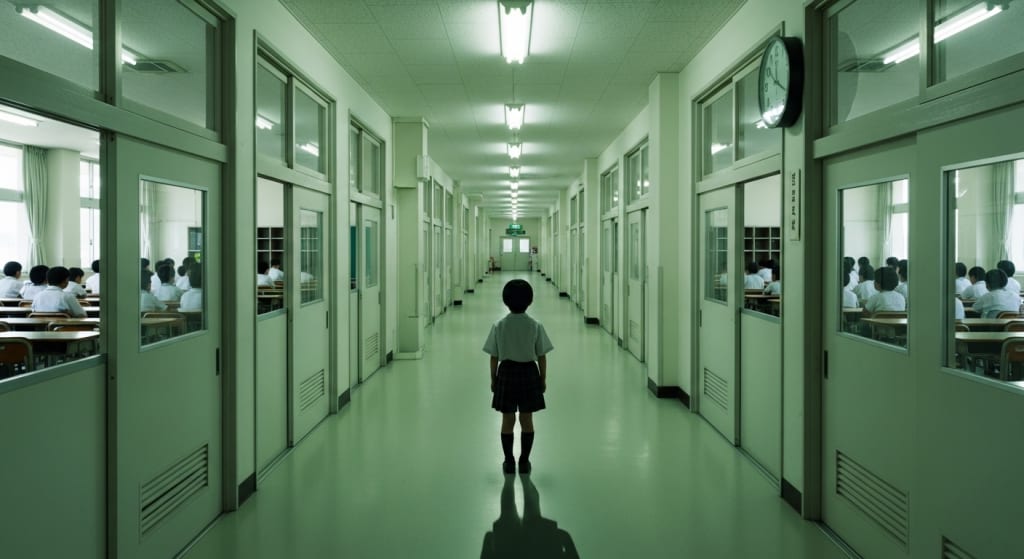
The school bell was invented for factories, not for minds. It was designed to regulate the movement of workers, to segment time into manageable units, to condition human beings to respond obediently to external signals. When we imported it into education, we imported something more than a scheduling tool—we imported a philosophy. We built our schools on the factory model because we were, at the time, educating children for factory jobs. The problem is that the factories have closed, the economy has transformed, the world has digitized, and the bell still rings.
We are teaching twenty-first-century children with a nineteenth-century blueprint, and the mismatch is quietly devastating a generation of learners. The assembly line classroom—with its standardized curriculum, its age-based cohorts, its ranking and sorting, its obedience to the clock—was never designed to nurture curiosity, creativity, or critical thinking. It was designed to produce compliant workers who could follow instructions, tolerate boredom, and accept external evaluation as the measure of their worth. It succeeded admirably at that task. The tragedy is that we have not yet admitted how thoroughly that task has changed.
Walk into almost any classroom in the developed world, and you will see the same architecture of learning that your grandparents saw. Desks in rows. Teacher at the front. Knowledge transmitted from the one who knows to the thirty who do not. Students rewarded for correct answers, penalized for wrong ones, sorted into categories that will follow them for the rest of their educational lives. The curriculum is determined not by what children need or wonder about, but by what can be tested. The pace is set not by when understanding dawns, but by when the calendar says it must.
This system produces measurable outcomes, which is why we cling to it. We can quantify the results, compare them across districts and nations, declare winners and losers, pat ourselves on the back for improvements in math scores or reading proficiency. But what we cannot measure is what has been lost in the process: the intrinsic motivation to learn, the joy of discovery, the willingness to fail and try again, the capacity for divergent thinking that every innovator who ever changed the world possessed in abundance.
Consider what happens to a child's natural curiosity under this regime. Young children are born scientists—experimenting, questioning, testing hypotheses about how the world works. They ask why the sky is blue, where the moon goes during the day, what makes plants grow. By the time they finish elementary school, most have stopped asking. They have learned that questions are disruptions, that curiosity is inefficient, that the goal is not understanding but correct answers. The light in their eyes dims not because they have learned everything but because they have learned that learning is something done to them, not something they do.
The damage runs deeper than boredom. The assembly line model sorts children into winners and losers at an age when they lack the perspective to understand that these judgments are arbitrary. A child who learns differently, who thinks differently, who asks different questions, is labeled deficient. A child whose mind wanders, who cannot sit still, who needs to move and touch and build, is diagnosed and medicated. We have pathologized the very diversity of thought that our complex world most desperately needs. The students who fit the mold succeed; the ones who might bend it, break it, or redesign it entirely are too often broken themselves.
This system persists because it serves purposes beyond education. It sorts young people into social and economic hierarchies with the appearance of meritocratic fairness. It provides custodial care for children while parents work. It offers measurable data to politicians who need to demonstrate results. It employs millions of adults who were themselves trained in this system and struggle to imagine alternatives. The inertia is immense, the vested interests enormous, the fear of change paralyzing.
But the cost of maintaining this inertia grows steeper by the year. The world our children will inherit bears no resemblance to the world this system was designed for. Artificial intelligence is rendering memorized knowledge obsolete; what matters now is not what you know but what you can do with what you know. The stable careers that rewarded compliance and endurance are disappearing; the emerging economy rewards adaptability, creativity, and the ability to learn continuously. Global challenges—climate change, political polarization, technological disruption—require minds that can synthesize across disciplines, not minds that have been trained to stay in their lane.
The future belongs not to those who scored highest on standardized tests, but to those who retained the courage to ask uncomfortable questions, the resilience to fail publicly, the imagination to see what others overlook. These qualities are not cultivated by the assembly line. They are, in fact, systematically suppressed by it.
What would education look like if we designed it for the world that is coming, not the world that has been? It would look less like a factory and more like a studio, a laboratory, a garden. It would recognize that children learn at different paces and in different ways, and it would adapt to them rather than forcing them to adapt to it. It would value questions above answers, process above product, collaboration above competition. It would measure success not by how much students can recall on a Tuesday morning in May, but by what they can create, build, and contribute when no one is watching.
It would replace the teacher as lecturer with the teacher as guide—someone who does not simply transmit information (which students can now access instantly through devices in their pockets) but who helps them navigate it, evaluate it, synthesize it, and apply it. It would recognize that the most important skills—critical thinking, empathy, communication, resilience—cannot be taught through worksheets but must be practiced through authentic challenges and real-world problems. It would treat failure not as a final judgment but as essential data in the process of growth.
It would, above all, trust children. Trust them to be curious. Trust them to pursue what matters to them. Trust them to struggle, to ask for help, to find their own path. The assembly line model trusts nothing except the system itself. It trusts the curriculum, the test, the clock. It does not trust the child, and in that distrust, it teaches the child not to trust themselves.
There are schools, scattered across the world, that have broken the mold. They have no bells. No grades. No standardized curriculum. Students pursue projects they care about, at their own pace, in collaboration with peers and mentors. They are often dismissed as experiments, as impractical, as incapable of scaling. But they produce graduates who know how to think, how to learn, how to adapt—graduates who did not have to unlearn everything school taught them before they could begin to build a life.
The question is not whether such approaches can work. They do. The question is whether we have the courage to abandon the familiar failures we have learned to tolerate for the unfamiliar possibilities that might actually serve our children. The factory model will not collapse on its own. It is too entrenched, too funded, too woven into the fabric of our institutions and expectations. It will change only if we demand that it change—as parents, as citizens, as human beings who remember what it felt like to sit in those rows and watch the clock and wonder why the world outside the window was so much more interesting than anything happening inside the room.
The children are waiting. The future is coming. The bell is about to ring. The only question is whether we will finally have the wisdom to stop answering it.
About the Creator
HAADI
Dark Side Of Our Society
Hard Hats Over Diplomas
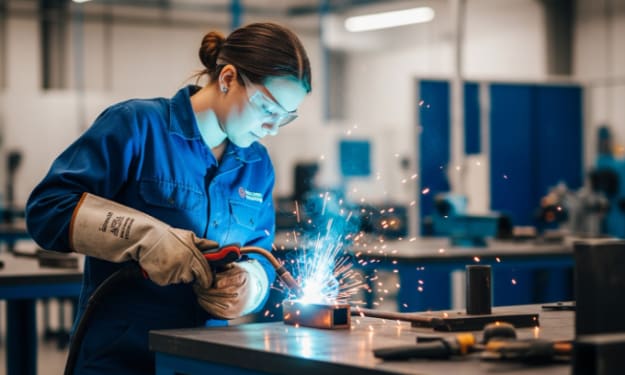
The traditional path toward professional success formerly followed a singular trajectory through a four-year university. Generations accepted the mounting debt and the promise of a white-collar desk as the only legitimate marks of achievement.
By Angela Ashabout 3 hours ago in Education


Comments
There are no comments for this story
Be the first to respond and start the conversation.