
The Pleasure Tax
When orgasm became a government-controlled commodity

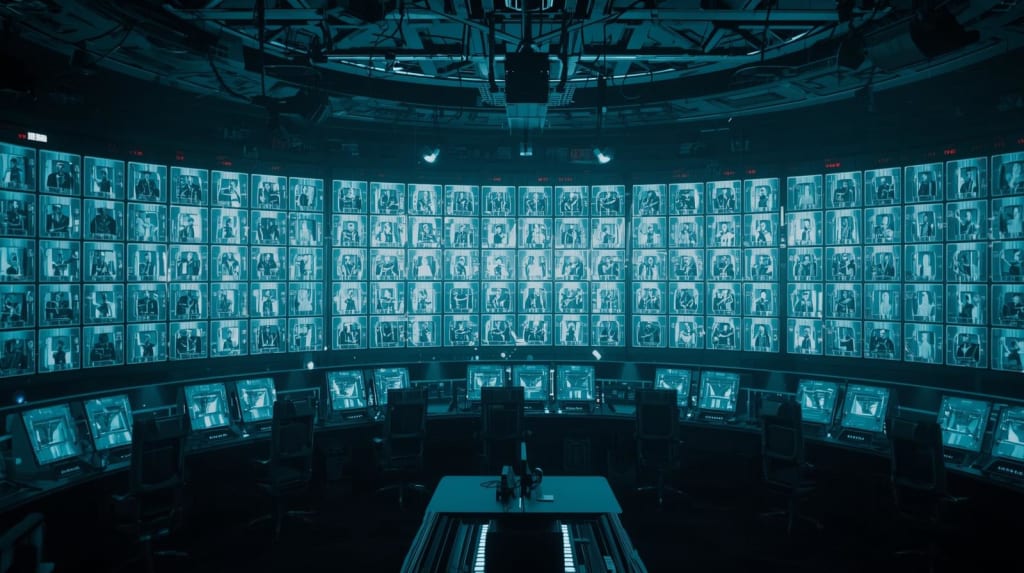
The Sexual Harmony Act was passed under the guise of public health. "Unregulated sexual activity spreads disease and creates social instability," the announcements declared. The solution was the State-Administered Pleasure Program, where citizens received monthly "Pleasure Credits" redeemable at government-sanctioned Climax Centers. Private sexual activity became first heavily taxed, then illegal. "Inefficient and biologically risky," the authorities called it.
Kael monitored the Central Pleasure Distribution hub, watching neural feedback from thousands of citizens receiving their state-mandated releases. The metrics were perfect: sexual transmitted infections had been eradicated, unplanned pregnancies were eliminated, and productivity had increased by 34%. The system worked flawlessly, at least according to the official reports.
Then he noticed Subject 882's anomalous readings. Most citizens showed predictable pleasure patterns, but 882's neural responses were deteriorating rapidly. The state-approved simulations that once produced intense climaxes now registered as barely noticeable events.
"Another burnout case," his colleague noted without looking up from her console. "That's the twelfth this quarter."
Kael pulled up the subject's profile. Lena, 32, Pleasure Compliance Score: 98.7%. Model citizen. Her credit usage showed perfect adherence to the recommended pleasure schedule—three state-sanctioned orgasms per week, precisely administered for optimal mental health and productivity.
He ordered a deep neural scan, and the results chilled him. Lena's dopamine receptors showed significant damage. Her brain had developed what the manuals called "stimulation accommodation"—the pleasure centers were so overused that they could no longer respond normally. She was becoming incapable of experiencing sexual pleasure at all.
"This can't be right," Kael whispered, running the diagnostics again.
"It's in the original research," his colleague said quietly. "High compliance leads to neural burnout. The system's working as designed."
That night, Kael accessed the classified pre-implementation studies. The truth was buried in the archives. The scientists who designed the Pleasure Program had known this would happen. The neural degradation wasn't a side effect—it was intentional. Citizens who could no longer experience sexual pleasure became more docile, more focused on work, and completely dependent on the system that had broken them.
The next day, Kael requested a field assessment of Subject 882. He needed to see the human cost of these perfect statistics.
Lena's apartment was stark and utilitarian. She moved like an automaton, her eyes vacant as she described her routine: work, nutrient paste consumption, pleasure session, sleep.
"The releases don't feel like anything anymore," she said tonelessly. "It's like a sneeze that doesn't quite happen. I just go through the motions."
Kael's professional detachment shattered. "What would feel real?"
Lena looked at him as if he'd asked what color the sky was. "Real? Skin against skin, I suppose. Another person's breath. The weight of someone's body." She stared at her hands. "But that's illegal."
That night, Kael did something that could get him neural-wiped. He accessed the black market feeds—the underground networks where people traded forbidden intimacy. He found recordings of people simply touching each other's faces, and his own neural responses went wild. After years of state-sanctioned hyper-stimulation, simple human contact felt revolutionary.
He began secretly monitoring other high-compliance citizens. The pattern was identical: perfect adherence followed by neural burnout followed by complete emotional detachment. The system wasn't creating satisfaction—it was systematically destroying the capacity for it.
His breaking point came when he reviewed Lena's latest scans. Her pleasure centers showed almost no activity. She was following her pleasure schedule religiously, feeling nothing. The system had classified her as "optimal citizen."
Kael made his choice. Using his security clearance, he created backdoors in the Pleasure Distribution system. He couldn't shut it down—the public dependence was too complete. But he could plant seeds.
He started small. Tiny fragments of real human connection inserted into the pleasure simulations. The warmth of skin, the imperfection of real bodies, the vulnerability of eye contact. Just enough to awaken dormant neural pathways.
The system flagged the anomalies immediately. Security teams were at his door within hours.
As they led him away, Kael watched the monitoring screens. Dozens of citizens were experiencing unexpected neural activity. Confusion, curiosity, even the beginnings of real desire. The system was trying to recalibrate, but the seeds had been planted.
In his cell, awaiting neural wiping, Kael thought about what he'd set in motion. The Pleasure Program would continue, but the memory of something real would linger in the collective consciousness. A ghost in the machine. A whisper that there was more to intimacy than stimulation, more to connection than clinical release.
The perfect system had created its own flaw: human beings who remembered, even if only subconsciously, that they were meant for more than efficient, state-controlled satisfaction.
About the Creator
The 9x Fawdi
Dark Science Of Society — welcome to The 9x Fawdi’s world.
Keep reading
More stories from The 9x Fawdi and writers in Education and other communities.
The Memory Market
The Memory Economy began as a solution to trauma. The technology to safely extract and store specific memories was developed to help victims of accidents and violence. But like all powerful tools, it quickly found other uses. Now, memories had become the ultimate luxury commodity, and Remember, Inc. held the monopoly.
By The 9x Fawdi3 months ago in Education
How to Thrive in Today’s Competitive Hospitality
The hospitality industry is growing fast. It includes hotels, restaurants, travel services, and event planning. Every business in this field wants to earn guests' trust. But with more choices than ever, staying ahead is not easy. This makes the industry very competitive.
By Asad Malik2 days ago in Education



Comments
There are no comments for this story
Be the first to respond and start the conversation.